



Odense
Odense is Denmark's third-largest city and the birthplace of Hans Christian Andersen, the world-famous author of fairy tales like The Little Mermaid and The Ugly Duckling. Its compact old town has cobbled lanes, half-timbered courtyards, and a cathedral where a medieval Danish king is buried.
This city suits travelers who want an easy, walkable city break with real history but fewer crowds than Copenhagen. Most sights sit within a 20-minute walk of each other, so two or three nights is enough to see the highlights and still fit in a day trip to the Funen countryside.

Odense – Planning a Trip?
Build your day-by-day itinerary in the Tripomatic app.


When to visit
Spring and autumn are mild and good for walking the old town. Summer (June to August) is the warmest and busiest season, with outdoor cafés and river boat trips running. Winter is cold and often grey, with snow common from December to February.
Plan around the H.C. Andersen Festivals in August, when the city stages open-air theater, a costumed parade, and free concerts based on Andersen's fairy tales.
Best time to visit: July, August
Top sights



Start at H. C. Andersens Hus, the striking modern museum that traces the life of Denmark's best-known writer through immersive, story-based exhibits — allow at least two hours.
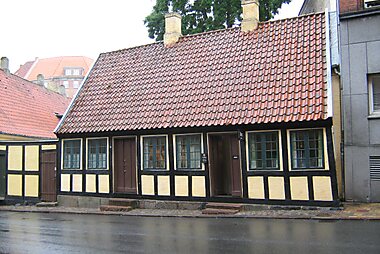
A short walk away, H. C. Andersens Barndomshjem is the small house where Andersen actually grew up, from age two to fourteen; visit both to see the contrast between the myth and the modest reality.
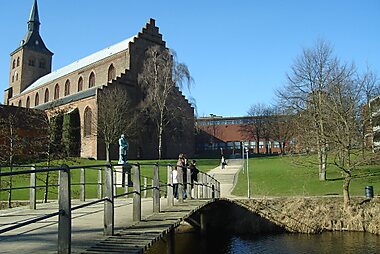
Odense Cathedral dominates the old town skyline. Its crypt holds the remains of King Canute IV, murdered in Odense in 1086 and later made Denmark's patron saint.
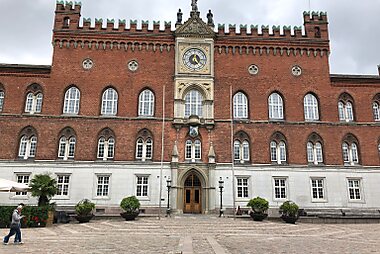
Facing the main square, Odense Town Hall is a 19th-century building in an Italian Historicist style, worth a look even from outside.
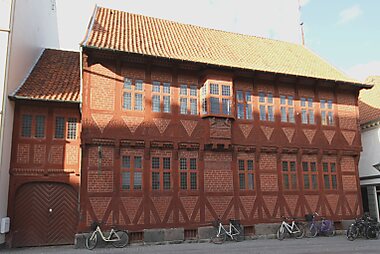
Møntergården fills a courtyard of Renaissance half-timbered houses with exhibits on the city's history from Viking times onward.
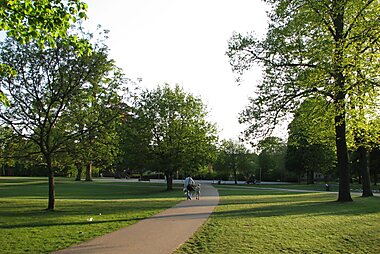
Next to the former royal palace, Kongens Have is a formal park with century-old trees and a statue of Andersen, laid out in the 1720s.
On the edge of the city, The Funen Village recreates a 19th-century Funen village with relocated historic buildings — a good half-day trip for families.
Odense Zoo is one of Denmark's most-visited zoos, known for its large enclosures and an indoor rainforest habitat.
Featured Lists

Odense Essentials
Odense highlights the legacy of Hans Christian Andersen through his childhood home and the surrounding historic district. The city's medieval roots are preserved in the Gothic architecture of St. Canute’s Cathedral and the 13th-century Saint Hans Church. Cultural landmarks include the Brandts art center, housed in a former textile factory, and the Danish Railway Museum. Green spaces like the formal King’s Garden and Eventyrhaven provide central retreats, while Møntergården offers a look at local life through preserved half-timbered houses.
14 places


What to experience
A few things about Odense are worth doing, not just seeing.
- Follow the self-guided H.C. Andersen trail through the old town, tracing the streets and courtyards linked to his life and stories.
- Take a boat trip along the Odense River with Odense Aafart, a family-run service that has run boats between Munke Mose and the Fruens Bøge woods since 1882.
- Cycle or walk the shaded riverside path through Fruens Bøge forest, a route Andersen himself is said to have walked.
Tours & Activities
Odense — Map

 Open the interactive map
 Day trips
Funen's countryside and neighboring towns are easy to reach from Odense, most within an hour.
- Nyborg — about 20 min by train. A former royal seat with a well-preserved medieval castle where Danish kings once held the Danehof, an early national assembly.
- Kerteminde — about 25 min by train. A small fishing town near the Ladby Viking ship burial site, with an aquarium focused on the local fjord and the Great Belt.
- Egeskov Castle, near Kværndrup — about 40 min by car or bus. One of Europe's best-preserved moated Renaissance castles, with extensive gardens and a large vintage car collection.
- Svendborg — about 45 min by train. A harbor town on the south coast and the main gateway to the South Funen Archipelago's islands.
Getting there
- By air: Copenhagen Airport (CPH) is Denmark's main international gateway, roughly 1.5–2 hours from Odense by train or car across the Great Belt Bridge. Billund Airport, about an hour's drive west, is a closer option with a smaller range of international and domestic connections.
- By train: Odense Station sits on the main line linking Denmark's largest cities with Jutland; direct InterCity trains run roughly every hour from Copenhagen (about 1.5 hours) and from Aarhus (about 1.5 hours).
- By bus: Long-distance coaches connect Odense with Copenhagen and other Danish cities — usually slower but cheaper than the train.
Getting around
- Public transit: Buses and the Odense Letbane light rail line run through downtown and out to other parts of the city. Denmark's national travel-card system, Basiskort, and the FynBus and DSB apps cover ticket purchase; FynBus has full route and fare details.
- Taxi / ride-hailing: Metered taxis are easy to find at the station; app-based ride-hailing has a limited presence outside Copenhagen.
- On foot / cycling: The old town is flat and easy to explore on foot. Odense is one of Denmark's most bike-friendly cities, with an extensive network of cycle lanes; renting a bike is a practical way to reach the Funen Village or the zoo.
Driving
- Is a car worth it? Not for the city itself — the center is small and walkable. Useful for reaching Egeskov Castle or the smaller Funen towns at your own pace.
- Parking: Paid P-zones cover the city center; pay by app or ticket machine. Free park-and-ride lots sit near the light rail line on the edge of town.
- Restrictions: Denmark's low-emission zone rules cover older diesel vehicles, including some older diesel passenger cars, in central Odense. A standard rental car meets the requirement; only an older diesel vehicle needs to check.
Food & drink
Odense's food scene centers on traditional Danish cooking, with a growing number of modern bistros mixed in. Smørrebrød and Danish pastries are easy to find in bakeries and cafés across downtown.
For a concentrated choice of cafés and restaurants, head to the pedestrian streets around Vestergade, or to Brandts, the city's converted textile-factory arts complex, which has several cafés inside its courtyard.
Safety & health
Odense is a safe city for travelers, with low rates of violent crime. The usual precautions apply around the train station late at night and in busy nightlife areas on weekends, where petty theft and pickpocketing occasionally happen.
History
Odense takes its name from Odin, the chief god of Norse mythology, and was likely a pre-Christian shrine site before becoming a Christian town — it is first mentioned in writing in the late 10th century, making it one of Denmark's oldest cities. In 1086, King Canute IV was killed by rebellious farmers here; he was later canonized as Denmark's patron saint, and his remains rest in the crypt of Odense Cathedral, built in his honor. Nearby, Odense Palace began as a monastery before passing to the Crown after the Reformation, later becoming a royal residence and government building.
The city's best-known son is Hans Christian Andersen, born here in 1805 to a poor shoemaker's family. He left for Copenhagen as a teenager and rarely returned, but Odense has embraced his legacy ever since — from the exhibits at H. C. Andersens Hus to the streets of his childhood, preserved around H. C. Andersens Barndomshjem.
Country facts
Quick practical facts for Denmark at a glance:
- Currency
- Danish Krone DKK kr · Card payments · Widely accepted
- Emergency numbers
- 112
- Electricity
- 230 V · 50 HzType C / Type E / Type F / Type K
- Languages
- Danish
- Tap water
- Safe to drink
- Driving side
- Right
- Calling code
- +45


Odense – Plan Your Days
Turn the places from this guide into a real itinerary, with smart routing, time estimates, and everything you need for a perfect trip.




