



Pec pod Sněžkou
Pec pod Sněžkou is a small mountain village at the foot of Sněžka, the highest peak in the Czech Republic, in the heart of the Giant Mountains (Krkonoše) range near the Polish border. Fewer than a thousand people live here year-round, but the valley fills with skiers in winter and hikers in summer, its wooden hotels and lift stations climbing straight up from the village toward the ridge.
The town grew from a small tin-mining settlement into the country's best-known mountain resort, and it still works as a base rather than a sightseeing stop. It suits travelers who want mountain air and physical activity over museums and city streets: skiing or snowshoeing in winter, hiking to the summit and across the national park's high moorland in summer.

Pec pod Sněžkou – Planning a Trip?
Build your day-by-day itinerary in the Tripomatic app.


When to visit
Winter (December–March) is Pec's main season: snow above the village is reliable, and the resort's lifts and cross-country trails usually run from before Christmas into March. Summer (June–September) is quieter and cooler, and it is the best time for hiking to the summit and across the national park's high moorland; August is usually the warmest and sunniest month. The village gets busiest during the Christmas and New Year school holidays, when mountain huts and lift lines fill fast — book lodging well ahead if visiting then.
Best time to visit: August
Even on a mild day in the valley, wind and cold on the exposed ridge above the village can catch hikers out — dress in layers for any walk above the tree line, in any season.
Top sights


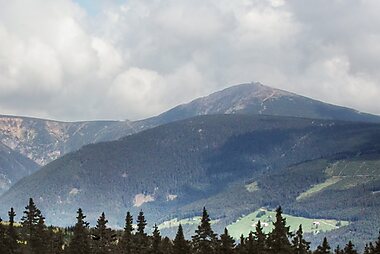

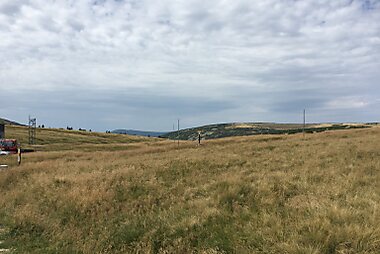


Sněžka is the highest point in the Czech Republic at 1,603 meters, its summit straddling the border with Poland and topped by a small chapel and a post office.
Sněžka Cable Car Station carries visitors most of the way up in a two-section cable car, turning a multi-hour climb into a short, scenic ride — though it pauses in high wind or poor visibility.
Krkonoše National Park covers most of the mountains around Pec and, together with its Polish neighbor, forms a UNESCO-recognized transboundary biosphere reserve protecting rare alpine plants and glacial landforms found nowhere else in the country.
Studniční hora is the third-highest peak in the country, a flat, wind-scoured summit ringed by glacial cirques inside the park's most strictly protected zone.
Luční hora is the second-highest peak, rising just behind it with a broad, plateau-like top that makes for easy walking once the height is gained.
Úpské rašeliniště is the range's largest high-altitude peat bog, crossed by a boardwalk trail through a landscape of peat pools and cold-climate plants that survive nowhere else in the Czech Republic.
rozhledna Hnědý vrch is a 31-meter lookout tower a short walk from the village, giving a wide panorama over the surrounding peaks without the climb to the main ridge.
Obří důl is a dramatic U-shaped glacial valley below Sněžka, its slopes scarred by old iron and copper mining and its floor crossed by a trail past waterfalls.
Featured Lists

Pec pod Sněžkou's Crown Jewels
Pec pod Sněžkou serves as the primary gateway to the eastern Krkonoše Mountains. This selection features the ascent to Sněžka, the highest peak in the Czech Republic at 1,603 meters, accessible via a two-stage gondola lift or through the glacial scenery of Obří důl. Highlights include the modern Poštovna post office on the summit, the high-altitude brewery at Luční bouda, and historic mountain huts like Výrovka and Dom Śląski. The area encompasses the third highest peak, Studničná hora, and the protected landscapes of Krkonoše National Park.
15 placesPec pod Sněžkou Ski Lifts
This collection details the transport infrastructure of the SkiResort Černá hora – Pec, specifically within the Pec pod Sněžkou and Velká Úpa sectors. It includes the gondola system leading toward the summit of Sněžka, the Hnědý vrch chair lift providing access to a local observation tower, and high-speed facilities like the Zahrádky Express. The list also covers essential T-bars, Poma lifts for intermediate terrain, and specialized magic carpets located within the LivePark beginner zones.
13 places
Alpine Huts and Chalets
This collection features traditional Krkonoše mountain huts (boudy) situated around Pec pod Sněžkou and the ridges of the Giant Mountains. These establishments, ranging from historic chalets like Výrovka at 1,363 meters to eco-farms like Lesní bouda, provide high-altitude accommodation and regional cuisine. Many are located along major hiking trails near Sněžka and Liščí hora, serving as essential rest stops and weather shelters for mountain trekkers.
20 places
What to experience
Pec has plenty to do beyond sightseeing — a few things worth building a day around:
- Ride Sněžka Cable Car Station's cable car up for sunrise or sunset, when the light on the surrounding peaks is best and the crowds are thinnest.
- Soak in the beer spa at Luční bouda, a wooden tub filled with warm water and spent brewing ingredients from the hotel's own high-altitude brewery.
- Take a run down the summer toboggan track at Relaxpark Pec, which reaches speeds most first-time riders don't expect.
- Ski or snowboard the connected runs of the Černá hora–Pec resort, one of the country's larger ski areas, without needing to drive anywhere.
- Once the snow sets in, snowshoe or cross-country ski the marked winter trails through Krkonoše National Park.
Tours & Activities
Pec pod Sněžkou — Map

 Open the interactive map
 Day trips
Pec makes a good base for exploring the rest of the Krkonoše ridge and the towns below it — here are the best options, closest first.
- Svoboda nad Úpou — ≈15 min by car or bus. A small riverside town in the valley below, useful for a quieter lunch stop away from the resort crowds.
- Vrchlabí — ≈25 min. The administrative gateway to Krkonoše National Park, with the park's own museum and a restored historic square.
- Karpacz — ≈25–30 min, across the Polish border. Home to Wang, a 12th-century Norwegian stave church moved here piece by piece in the 19th century, plus its own cable car and toboggan runs.
- Trutnov — ≈30–35 min. The region's largest town, with a historic arcaded square and a fuller range of shops and services than Pec itself has.
- Adršpach — ≈1.5 hours. The Adršpach–Teplice Rocks, a maze of tall sandstone towers and narrow canyons explored on foot or, in one stretch, by raft — worth the longer drive.
Where to explore
Pec sits within the Giant Mountains (Krkonoše), the mountain range that runs the length of the Czech-Polish border and gives the whole region its outdoor character. Two other classic Krkonoše resort villages make natural additions to a longer stay: Janské Lázně, a quieter spa town built around thermal springs on the range's southern edge, and Špindlerův Mlýn, the range's largest and liveliest resort, reached over the ridge or around it by road.
Getting there
- By air: Prague Airport (PRG) is the main international gateway, about 2.5–3 hours away by car or transfer. Wrocław Airport (WRO) in Poland is a possible alternative for some routes, though it has fewer international connections and involves crossing the border.
- By train: There is no station in Pec itself. The nearest useful stops are at Svoboda nad Úpou and Trutnov, both reached from Prague or Hradec Králové with a change via Czech Railways; from either, finish the trip by bus or taxi.
- By bus: Direct long-distance coaches run from Prague's Florenc bus station to Pec pod Sněžkou, taking roughly 3 hours; regional buses also connect from Trutnov and Vrchlabí.
Getting around
- Public transit: Regional buses connect Pec with Špindlerův Mlýn, Trutnov and Vrchlabí; buy tickets from the driver or through the regional IREDO transport app. There is no train or tram service in the village itself.
- Taxi: A handful of local firms run airport transfers and late-night rides in ski season; there is no ride-hailing coverage here.
- On foot: The village center is small and easy to walk, but most sights sit up on the mountain and need a lift, a marked trail, or a car to reach. Summer brings a network of dedicated mountain-bike trails alongside the hiking paths.
Driving
- Is a car worth it?: Not for the village itself — Pec is small and walkable — but yes for reaching the wider Krkonoše region, since public transport between resort towns is limited.
- Parking: Paid lots sit at the edges of the village, including near the Hnědý vrch cableway; central spaces fill early in ski season, so arrive early or plan to walk in from an outer lot.
- Winter driving: Snow chains or winter tires are legally required on mountain roads in winter conditions, and some minor roads close temporarily after heavy snowfall.
Food & drink
Mountain hut food is the local specialty here: hearty goulash, potato pancakes (bramboráky), sausages, and mugs of hot mulled wine (svařák) served at the wooden boudy along the hiking trails. It is built to refuel a day outdoors, not for a leisurely restaurant meal.
For something more distinctive, stop at Luční bouda, whose restaurant and on-site brewery sit at over 1,400 meters, one of the highest-altitude breweries in the country, and serve their own Paroháč beer alongside bread from the hotel's bakery.
Safety & health
Pec is a very safe place to visit; petty crime and scams are rare. The real risks come from the mountain itself: weather on the ridge can turn quickly, and hikers caught out in poor visibility or an afternoon storm above the tree line are a common reason for mountain rescue call-outs. Stick to marked trails, check the forecast before a summit attempt, and carry proper layers even on a clear morning — conditions at 1,600 meters can be very different from the village.
In winter, stay on marked and patrolled slopes; backcountry and off-piste terrain can carry avalanche risk, and conditions are not always signed as clearly as in the Alps.
History
Pec's name comes from the Czech word for "furnace" — a reminder that the village began as an iron, copper and arsenic mining settlement in the early 16th century. Mining continued here until 1959, but from the second half of the 19th century onward tourism grew alongside it, as visitors began climbing Sněžka for the view and staying overnight in simple huts along the way.
Some of those huts became local landmarks in their own right. Luční bouda, the oldest and largest hut on the ridge, traces back to the late 16th century; it burned down completely in 1938 and was rebuilt just two years later. Obří bouda once played a similar role lower in the valley for more than a hundred years before falling into disrepair and being pulled down in 1982 — only its ruins remain today. Skiing arrived in the region at the turn of the 20th century and gradually turned Pec from a summer mountaineering base into the year-round resort it is now.
Country facts
Quick practical facts for the Czech Republic at a glance:
- Currency
- Czech Koruna CZK Kč · Card payments · Commonly accepted
- Emergency numbers
- 112
- Electricity
- 230 V · 50 HzType C / Type E
- Languages
- Czech
- Tap water
- Safe to drink
- Driving side
- Right
- Calling code
- +420


Pec pod Sněžkou – Plan Your Days
Turn the places from this guide into a real itinerary, with smart routing, time estimates, and everything you need for a perfect trip.




