



Czech Republic
The Czech Republic, a Central European country and part of the Schengen Area, offers a captivating blend of history, culture, and natural beauty. Travelers can explore magnificent castles, charming medieval towns, and vibrant cities, making it ideal for those seeking rich cultural experiences and picturesque landscapes.
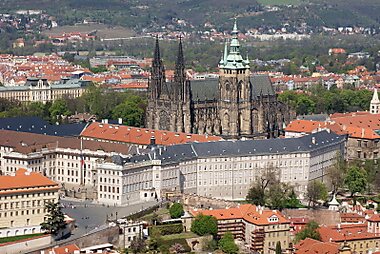
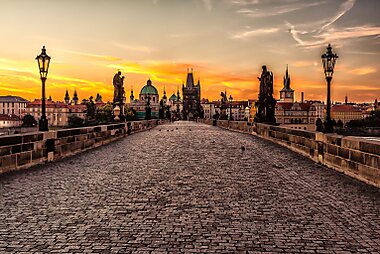
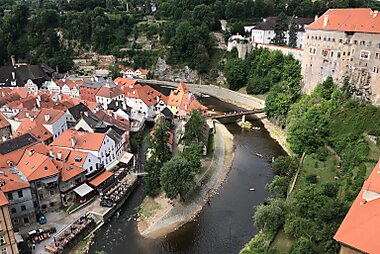
Beyond the iconic capital of, the country diversifies into distinct regions. Bohemia in the west boasts historic spa towns and dramatic rock formations, while Moravia to the east is known for its rolling vineyards, folk traditions, and cities like and. Visitors can also discover UNESCO World Heritage sites such as Historic Centre of Český Krumlov and Jewish Quarter in Třebíč.


Czech Republic – Planning a Trip?
Build your day-by-day itinerary in the Tripomatic app.


Money & payments
The local currency is the Czech koruna. While card payments are common in most establishments, carrying some cash is advisable for smaller purchases, especially in rural areas, local markets, or for some public transport tickets. ATMs are widely available in towns and cities.
For budget travelers, daily expenses typically include hostel accommodation, street food, and public transport. Mid-range visitors can expect to spend more on comfortable hotels, restaurant meals, and entry fees to popular attractions.
Featured Lists


Tours & Activities
Czech Republic — Map

 Open the interactive map
 Tipping
Tipping is customary in the Czech Republic and is a way to show appreciation for good service.
In restaurants, a tip of 5-10% is common. When paying by card, specify the total amount (including tip) to the server before they process payment. Otherwise, leave cash on the table. For bars and cafes, round up the bill or leave a small amount of cash.
For taxi drivers, round up the fare to the nearest convenient amount. Hotel staff, such as housekeepers and porters, appreciate small cash tips. Tour guides can be tipped 100-200 CZK per person for a good half-day tour.
10%
round up
round up
1-2 EUR/day
10-15%
Electricity
The Czech Republic uses Type C and E plugs at 230 V / 50 Hz — standard European outlets; most modern chargers work without an adapter.
Language
The official language of Česko is Czech. In major cities and tourist areas like,, and, English is widely spoken, particularly among younger people and in the service industry. Outside these areas, especially in smaller towns and rural regions, English proficiency may be limited. Learning a few basic Czech phrases will be appreciated and useful.
Staying connected
Getting a local SIM or eSIM is straightforward. Major providers like O2, Vodafone, and T-Mobile have stores in airports, train stations, and shopping centers, and no ID registration is required for prepaid SIMs. Free Wi-Fi is widely available in cafés, hotels, and public spaces.
Safety & emergencies
The Czech Republic is generally a safe country for travelers, with violent crime being rare. The primary concern for tourists is petty theft, particularly pickpocketing. This is most common in crowded areas, especially around major attractions, public transport hubs, and busy squares in cities like.
Always be vigilant and keep your valuables secure, especially in crowded tourist zones. Be cautious of unsolicited offers or distractions, which can be tactics used by pickpockets.
Health
Tap water in the Czech Republic is safe to drink.
Pharmacies (lékárna) are widely available in towns and cities, typically marked with a green cross. They usually operate during standard business hours. For after-hours needs, a rotating roster of emergency pharmacies provides 24/7 service; check local listings for the nearest option.
For most travelers, no specific vaccinations are required beyond routine immunizations. If you plan extended stays in rural or forested areas, particularly from spring to autumn, consider vaccination against tick-borne encephalitis (TBE).
Visas & entry
The Czech Republic is part of the Schengen Area. Citizens of EU, EEA, and Switzerland can enter and reside freely. Many non-EU nationalities, including those from the US, Canada, UK, Australia, and New Zealand, can enter visa-free for short stays of up to 90 days within any 180-day period. Other travelers typically need a Schengen visa.
Visa and entry requirements change frequently. Verify current requirements with the official immigration authority or your country's embassy before travel. Czech MFA – information for foreigners
Etiquette
Czech people are generally polite and reserved. A simple "Dobrý den" (good day) or "Děkuji" (thank you) is always appreciated.
When visiting churches or religious sites, dress modestly by covering your shoulders and knees. Asking permission before photographing individuals is respectful. Bargaining is not common in shops or restaurants; prices are usually fixed. It may occur at flea markets.
Holidays & opening hours
Public holidays in the Czech Republic typically mean banks and many shops are closed, and public transport may run on a reduced schedule. Plan ahead for these days.
Most shops operate Monday to Saturday, with shorter hours on Saturdays. Banks are generally open weekdays, closing earlier on Fridays. Many museums and attractions are closed on Mondays.
Getting around
- By train: The national rail network, operated by České dráhy (ČD), is reliable and connects major cities like,, and. For better prices, book tickets in advance online, especially on popular routes. Other operators like RegioJet and Leo Express also serve select routes.
- By bus: An extensive network of inter-city buses, including operators like FlixBus and RegioJet, serves destinations across the country. Buses often reach smaller towns not on the rail network and can be a cheaper alternative to trains.
- By car: A motorway vignette is required for using motorways and expressways. A 10-day vignette costs approximately 300 CZK (~12 EUR) and can be purchased online at edalnice.cz or at petrol stations. Roads are generally well-maintained.
- Public transport (city): Major cities like,, and have efficient public transport systems (trams, buses, metro in Prague). Tickets can often be purchased directly on board using contactless bank cards or via mobile apps.
Driving
Driving in the Czech Republic is generally straightforward, but be aware of key local regulations.
Key Driving Rules
- Speed limits:
- Built-up areas: 50 km/h
- Rural roads: 90 km/h
- Motorways: 130 km/h (some sections 110 km/h)
- Alcohol: A strict zero-tolerance policy (0.00% BAC) applies to all drivers.
- Headlights: Dipped headlights or daytime running lights are mandatory year-round, at all times.
- Mandatory equipment: Carry a reflective vest (for all occupants if outside the car on the road), a first-aid kit, and a warning triangle. Winter tyres are mandatory from November 1 to March 31 if winter conditions are present or signposted.
Motorway Vignettes and Tolls Motorways require an electronic vignette (e-vignette).
- Purchase online at edalnice.cz, or at post offices and petrol stations.
- A 10-day vignette costs approximately 300 CZK (~12 EUR).
- Some cities, like Prague, have low-emission zones (LEZs). While enforcement for tourist vehicles may vary, it's advisable to check local regulations before driving into city centers.
Parking
- Paid-parking zones are common in city centers, though rules vary by city (Prague and Brno use different systems) — check local signage or a parking app on arrival.
- Payment is typically via mobile apps or parking meters.
- Blue zones are usually reserved for residents.
- Underground parking garages are widely available in city centers.
Fuel
- Fuel stations are mostly self-service and accept card payments.
- Petrol is labelled "Natural 95" or "Natural 98". Diesel is "Nafta".
Electric Vehicles
- The EV charging network is expanding, particularly in urban areas and along main transport corridors.
- Major providers include ČEZ, E.ON, and PRE. Using their specific apps or universal charging apps like PlugShare is recommended.
- Costs for charging vary by provider and power output.
Food & drink
Czech cuisine is hearty, emphasizing meat, potatoes, and rich sauces. Lunch is often the most substantial meal of the day, with many locals eating at work canteens or traditional pubs (hospody). Dinner tends to be lighter, and dining out at a pub for a traditional meal is a common social activity. Staples like dumplings (knedlíky) accompany many dishes.
Notable dishes to try include svíčková (marinated beef sirloin in a cream sauce), guláš (goulash, often served with dumplings), and vepřo-knedlo-zelo (roast pork with dumplings and sauerkraut). For a quick bite, look for smažený sýr (fried cheese) or chlebíčky (open-faced sandwiches). While popular with tourists, trdelník (a sweet pastry) is actually of Slovak origin and not a traditional Czech dish.
The Czech Republic is famous for its beer (pivo), which is often cheaper than bottled water in restaurants. Popular brands include Pilsner Urquell and Budweiser Budvar. Moravian wines are also increasingly recognized, particularly white varieties. Other local drinks include Becherovka (a herbal liqueur), Slivovice (plum brandy), and Kofola, a distinct local cola.
Where to explore
The Czech Republic's must-see towns span its two historic regions, Bohemia and Moravia. Start with the capital, then head west to the spa town of and the brewing city of. South Bohemia is home to the fairy-tale town of — its UNESCO-listed old town is centred on Historic Centre of Český Krumlov — and the regional hub. East of Prague, the UNESCO towns of, famed for its Gothic ossuary, and, with its arcaded Renaissance square, make easy day trips, while and anchor the east and north.
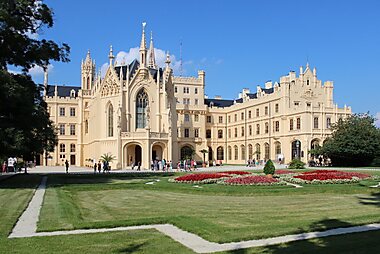
In Moravia, explore, a dynamic city known for its modernist architecture, and the wine town of, close to chateaux like Lednice Château (Lednice Chateau). Further north, boasts a magnificent Baroque column, while offers a taste of the country's industrial heritage.
Czech Republic – Plan Your Trip
Pick the places you want to see and Tripomatic turns them into a day-by-day route, with smart routing, time estimates, and everything you need for a perfect trip.




