



Usti nad Labem
Ústí nad Labem is an industrial river city in the deep Elbe valley, about halfway between Prague and Dresden. Steep wooded hills and basalt cliffs rise straight from the river, so green viewpoints are never far from the centre. The city was badly damaged by bombing in 1945, and much of the centre is post-war. Do not expect a pretty historic old town.
What rewards a visit is the setting. A Gothic castle stands on a cliff above the river, a cable car climbs to a hilltop château, and the Elbe cycle route and the Central Bohemian Uplands start at the edge of town. Ústí suits one or two nights for travellers who like views, walking and cycling, or as an easy base for trips into North Bohemia and Saxony. The painter Anton Raphael Mengs was born here in 1728.

Usti nad Labem – Planning a Trip?
Build your day-by-day itinerary in the Tripomatic app.


When to visit
Late spring to early autumn is the best time. The valley is green, the hiking paths are dry, and the castle and viewpoints have their full opening hours. Summer days are warm, and short storms are common. Winters are cold and grey, and some sights close or shorten their hours.
The biggest annual event is the Ústí nad Labem Half Marathon in September. It is part of the RunCzech series and follows a fast course along the Elbe. Book accommodation early if you plan to visit that weekend.
Best time to visit: May, June, August, September
Top sights
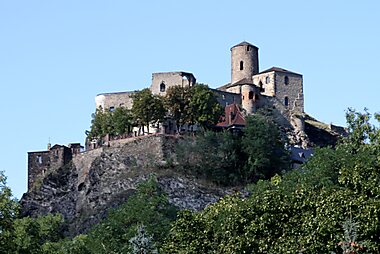


Střekov Castle is the city's signature sight, a 14th-century castle on a sheer rock above the Elbe. Its romantic ruins inspired Richard Wagner and the painter Ludwig Richter. Today it is owned by the Lobkowicz family and is open to visitors.
Větruše Cable Car lifts you from the Forum shopping centre near the main station up to Větruše hill in a few minutes. It is one of the longest cable cars in the country without any support pillars, and the ride gives wide views over the city.
At the top, Větruše Château is a 19th-century excursion château with a lookout tower, a restaurant and a hotel. The terrace looks straight down at the river, the bridges and the castle.
Church of the Assumption of the Virgin Mary is the main church in the centre. Its tower leans almost two metres out of line after bomb damage in 1945, and it is often called one of the most tilted towers in Europe.
Ústí nad Labem City Museum fills a large neo-Renaissance building near the centre. It covers the region's history, nature and industry, and it hosts "Our Germans", an exhibition about the German-speaking people who shaped this area for centuries.
Mariánský Bridge is a modern cable-stayed road and footbridge from 1998 with one leaning pylon. It won international design awards and frames the rocky cliff of Mariánská skála on the city side.
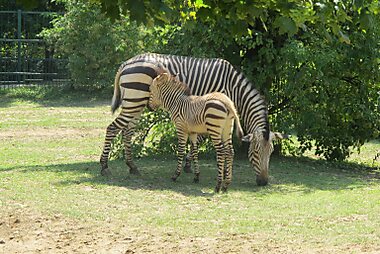
Ústí nad Labem Zoo sits on a hillside above the Krásné Březno district. It is known for its orangutans and makes a good half-day stop with children.
Erben Lookout is a stone lookout tower on the hills north-east of the centre. From the top you see the Elbe valley, the Ore Mountains and the cone of Milešovka.
Vaňov Waterfall is a short waterfall over basalt rocks near Vaňov, south of the centre. Combine it with the forest trails and viewpoints above the river.
Featured Lists

What to experience
Ústí's best moments happen outdoors, on the river and on the hills around it.
- Ride the cable car at sunset. Go up to Větruše in the early evening, then watch the light change over the valley and Střekov Castle from the château terrace.
- Cycle the Elbe cycle route. Rent or bring a bike and follow the river south through the Porta Bohemica gorge towards Litoměřice, with vineyards and volcanic hills on both sides.
- Climb or watch climbers on Mariánská skála. This basalt cliff right by the river and the bridge is a popular city climbing crag.
- See an opera or ballet. North Bohemian Opera and Ballet Theatre stages opera, operetta and ballet in an early-20th-century theatre, at prices far below Prague.
- Run or cheer at the half marathon. In September, the city fills with runners for the RunCzech race along the Elbe.
Tours & Activities
Usti nad Labem — Map

 Open the interactive map
 Day trips
Ústí sits on the main rail line along the Elbe, so the best day trips are quick and easy by train.
- Teplice — about 20–30 min by train. A historic spa town with a château, colonnades and spa parks.
- Děčín — about 20 min by train down the Elbe. A large riverside château and the Pastýřská stěna rock viewpoint over the gorge.
- Litoměřice — about 30–40 min by train or bus. A well-preserved old town with one of the largest squares in the country and a wine tradition.
- Terezín — about 25 min by train to Bohušovice nad Ohří, then a short bus ride. The former fortress town and Nazi ghetto, with its memorial and museums, is a serious but essential visit.
- Bohemian Switzerland National Park — about 1 hour by train to Děčín, then bus to Hřensko. Sandstone rock towns, gorges and the Pravčická brána rock arch.
- Dresden — under an hour by EuroCity train. The baroque capital of Saxony, with the Zwinger, the Frauenkirche and major art galleries.
Getting there
- By air: The nearest major airport is Václav Havel Airport Prague (PRG), about 90 km away. Take the airport bus to Prague main station, then a direct train to Ústí (about 1 h 15 min). Dresden Airport in Germany is an alternative with fewer flights.
- By train: Ústí nad Labem hlavní nádraží lies on the main line from Prague to Dresden and Berlin. EuroCity and regional trains run to Prague in about 1 h 15 min and to Dresden in under an hour. Book on České dráhy.
- By bus: Private coach companies connect Ústí with Prague, but the train is usually faster and more frequent.
- By car: The D8 motorway between Prague and Dresden passes just west of the city.
Getting around
- Public transport: Trolleybuses and buses cover the city. You can tap a contactless bank card or phone on the terminal inside the vehicle to pay for a ticket. Details and timetables are on the Ústí public transport (DPMÚL) site.
- Cable car: The Větruše cable car is run by the same city transport company and has its own fares.
- On foot: The compact centre, the main station and the cable car are all within walking distance. The sights on the hills and across the river need a bus, the cable car or steep walks.
- Cycling: The Elbe cycle route runs along the river through the city and is flat and well marked. Cycling in the hilly districts is hard work.
Driving
- Is a car worth it? Not for a city stay. The trains and city transport are good, and the best day trips are by rail. A car helps only for remote villages and hiking trailheads in the uplands.
- Parking: Use the paid car parks at the shopping centres near the main station, or pay-and-display street zones. You can pay at machines or by a parking app.
- Restrictions: The small pedestrian zone around Mírové náměstí is closed to through traffic.
Food & drink
Local food is classic Czech: roast pork with dumplings, goulash, fried cheese and hearty soups. The regional beer is Březňák, brewed in nearby Velké Březno, and you will find it on tap across the city.
For a meal with local beer, Na Rychtě Brewery brews its own beer in the city centre. Otherwise, most restaurants and cafés cluster around Mírové náměstí and the pedestrian streets nearby. The restaurant at Větruše is the place to eat with a view.
Safety & health
Ústí is generally safe for visitors, and violent crime against tourists is rare. Like many industrial cities, it has a few poorer districts with social problems. Stay in the centre and use taxis or public transport late at night.
- Watch your bag in crowded trolleybuses and around the main station.
- Wear good shoes for the steep, sometimes uneven paths to the viewpoints.
- Tap water is safe to drink.
History
Ústí grew at a strategic point where the Elbe leaves the uplands. In the 14th century, Střekov Castle was built on its rock to guard the river and collect tolls from boats.
In the 19th century, German-speaking Aussig became one of the most industrial cities in Bohemia. River trade, coal and big chemical and soap factories made it rich. Ústí nad Labem City Museum and North Bohemian Opera and Ballet Theatre date from this confident era.
The 20th century was hard. Allied bombs destroyed much of the centre in April 1945 and tilted the tower of Church of the Assumption of the Virgin Mary. On 31 July 1945, after an explosion at a munitions store, a mob attacked German civilians, and many were killed, some on the old bridge over the Elbe. A plaque on the bridge now remembers the victims. After the war, the German population was expelled, and the city was rebuilt in a mostly modern style.
Country facts
Quick practical facts for the Czech Republic at a glance:
- Currency
- Czech Koruna CZK Kč · Card payments · Commonly accepted
- Emergency numbers
- 112
- Electricity
- 230 V · 50 HzType C / Type E
- Languages
- Czech
- Tap water
- Safe to drink
- Driving side
- Right
- Calling code
- +420


Usti nad Labem – Plan Your Days
Turn the places from this guide into a real itinerary, with smart routing, time estimates, and everything you need for a perfect trip.




