


Prague
Prague is characterized by its layers of history and striking architecture. Known as the "City of a Hundred Spires," it offers a journey through time, from medieval alleyways to grand Baroque squares. Cobblestone streets, hidden courtyards, and the dramatic backdrop of its castle, all set along the winding Vltava River, contribute to the city's distinctive atmosphere.
This historical capital provides a rich cultural experience, blending centuries of heritage with a lively contemporary atmosphere. It offers opportunities for exploring Central European history and art, a heritage reflected in the works of its famous son, Franz Kafka.

Prague – Planning a Trip?
Build your day-by-day itinerary in the Tripomatic app.
When to visit
Prague is enjoyable throughout the year, with each season offering a different charm. Spring and autumn bring pleasant, mild weather, ideal for exploring the city's historic districts. Summers are warm, perfect for riverside activities and outdoor dining. Winters are cold, often with snow, creating a picturesque, festive atmosphere, especially during the popular Christmas markets.
Best time to visit: June, August, September
Top sights
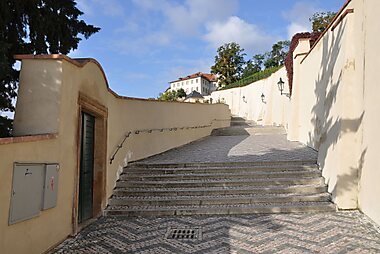

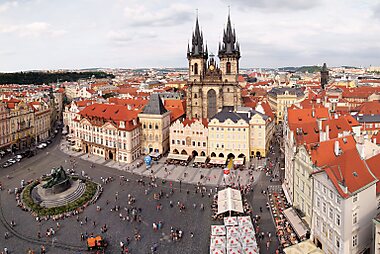
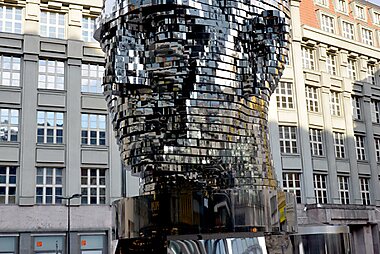
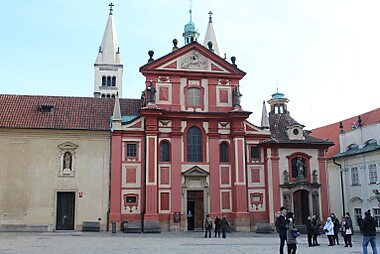
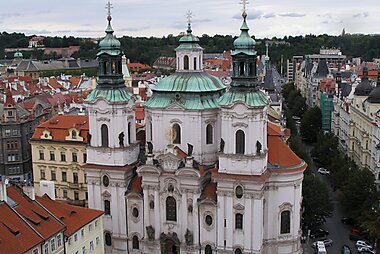
Prague's historic center is rich with landmarks. Here are some of the most essential sights for first-time visitors:
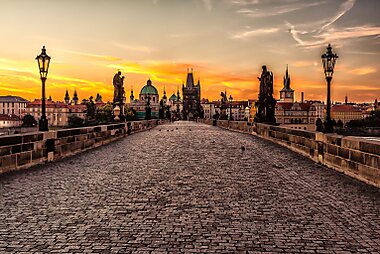
Charles Bridge is a historic 14th-century stone bridge. While the bridge itself dates to the 14th century, its iconic ~30 Baroque statues were added later, mostly between 1683 and 1714, and are now largely replicas. Stroll across it for iconic views of the city and Prague Castle. Charles Bridge
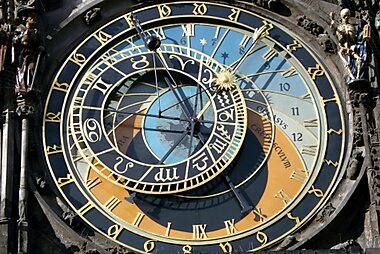
Witness the Staroměstský orloj, the world's oldest astronomical clock still in use, on the Old Town City Hall. Watch its hourly show of moving figures. Astronomical Clock
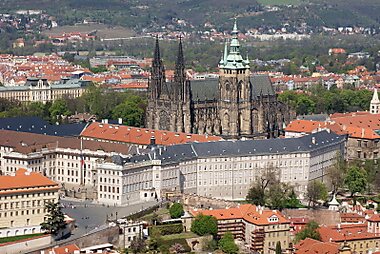
Explore Pražský hrad, a vast complex that has served as the seat of Czech rulers for nearly a millennium. It houses churches, gardens, and palaces. Prague Castle
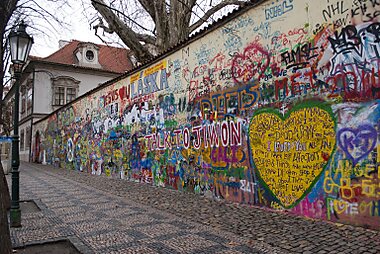
Visit the Zeď Johna Lenona, a wall covered in John Lennon-inspired political graffiti. The artwork constantly changes, reflecting current events. John Lenon's wall
See the striking Franz Kafka's Head, a 10.6-meter kinetic sculpture by David Černý. Its rotating layers reveal the writer's face. Franz Kafka's Head
Climb the Staroměstská radnice tower for panoramic views of Old Town Square. This historic city hall is a central landmark. Old Town City Hall
Discover Vyšehrad, a historic fort built on a hill overlooking the Vltava River. It offers impressive views and a tranquil atmosphere. Vysehrad
Wander through the Old Jewish Cemetery, a historic burial site with thousands of tombstones stacked over centuries. It offers a poignant glimpse into Prague's Jewish history. Old Jewish Cemetery
Featured Lists


Prague Castles and Palaces
From the sprawling, thousand-year-old Prague Castle complex to Baroque noble residences like Wallenstein and Schwarzenberg Palace, this collection traces Bohemia's seats of power — royal, ecclesiastical, and aristocratic — across the city, including the Gothic Old Town City Hall and the Baroque Troja Chateau across the river.
10 places


Audio Guides – Prague
Explore on foot with a self-guided audio tour that narrates each stop as you reach it.

Prague's Top Sights
97 min4.1 km12 stops
Walk Prague's classic Royal Route, from the medieval Powder Tower through Old Town Square's astronomical clock, across the storied Charles Bridge, and up through the Lesser Town to the towering ramparts of Prague Castle and Saint Vitus Cathedral. Twelve stops covering the city's most iconic landmarks and the gems along the way, roughly two hours on foot — the essential first walk for any first-time visitor to Prague. The walk starts at Powder Tower on Náměstí Republiky, right by the metro station.

Prague with Kids
64 min2.7 km8 stops
Turn a walk through Prague's Old Town, across Charles Bridge and up to the Castle into a real treasure hunt built on legends, not lectures. At each of eight stops your family chases a clue hidden inside a story — a clockmaker blinded by jealous councilors, a bridge built with eggs, an alchemist's tiny golden house — and solves a hands-on puzzle before the next legend sends you onward. No apps, no props, just sharp eyes and a nose for treasure. Starts at Old Town Square, minutes from Staroměstská metro, and finishes at Golden Lane's colorful alchemist houses, right next to the Castle's Toy Museum.

Hear Prague's audio tours
2 walks in Audio Guides by Tripomatic


What to experience
- Gather in Old Town Square to watch the hourly show of the Astronomical Clock on the Old Town Hall.
- Stroll across the medieval Charles Bridge, admiring its Baroque statues and the views from the bridge towers like Lesser Town Bridge Tower and Old Town Bridge Tower.
- Ride the Petrin Funicular funicular up Petřín Hill for sweeping panoramic views of the city.
- Wander the charming, narrow streets of Lesser Town (Lesser Town), discovering hidden courtyards and Baroque architecture.
- Experience Prague's vibrant cultural scene by attending an opera at the National Theatre or a classical concert at the Rudolfinum.
- Seek out David Černý's kinetic sculpture, Franz Kafka's Head, a rotating head of Franz Kafka.
Tours & Activities
Prague — Map

 Open the interactive map
 Day trips
Prague makes an excellent base for exploring the Czech Republic's rich history and picturesque landscapes. Consider these popular day trips:
- Kutná Hora: Travel approximately 1 hour by train or bus to this UNESCO World Heritage site. Explore the medieval silver mining town, visit the stunning St. Barbara's Church, and see the unique Sedlec Ossuary (Bone Church).
- Karlštejn Castle: Reachable in about 40 minutes by train, this impressive Gothic castle was built by Emperor Charles IV. It is one of the most famous castles in the Czech Republic, set in a beautiful forested area.
- Plzeň: Head west for about 1.5 hours by train or bus to the birthplace of Pilsner beer. Take a tour of the Pilsner Urquell Brewery and explore the historic city center.
- Český Krumlov: This picturesque UNESCO-listed town, with its majestic castle and charming medieval streets, is a longer trip (approximately 2.5–3 hours by bus or car). It is ideal for a full day or even an overnight stay.
Getting there
- By air: Václav Havel Airport Prague (PRG) serves the city. The Airport Express bus offers direct service to Prague's main train station in about 35 minutes. Public transport buses also connect to the metro for city center access.
- By train: Prague's main railway station, Praha hlavní nádraží, is a hub for connections to major European cities including Berlin, Vienna, and Budapest.
- By bus: Long-distance buses arrive at Praha Florenc bus station, with services connecting to cities across Europe.
Getting around
- Prague has an integrated public transport network of metro, trams, and buses. Tickets can be purchased using a contactless bank card directly on board trams and buses, or at metro station entrances. You can also buy tickets via the PID Lítačka mobile app or from ticket machines. For official information, see Prague Public Transport Company.
- Ride-hailing services like Uber and Bolt operate throughout the city.
- The city center is very walkable, making it easy to explore many sights on foot. Cycling is also possible, though some areas are hilly.
Food & drink
Prague's culinary scene offers a blend of hearty traditional Czech dishes and modern international cuisine. Expect rich, comforting meals often featuring roasted meats, dumplings, and thick sauces. Local specialties include svíčková (marinated beef sirloin with a creamy vegetable sauce), guláš (goulash, often served with bread dumplings), and smažený sýr (fried cheese). For a sweet treat, trdelník (a spit-roasted pastry coated in sugar and nuts) is a popular street food found throughout the city, particularly in tourist areas. Czech beer is an integral part of the dining experience, with numerous local breweries and pubs.
For a deep dive into Czech brewing culture, consider visiting Prague Beer Museum, which showcases a wide variety of local beers. Dining options are plentiful around Old Town (Old Town) and Lesser Town (Lesser Town), ranging from casual eateries to fine dining. While many establishments cater to tourists, seeking out smaller, less central restaurants often yields more authentic and affordable experiences. Tipping around 10% is customary for good service in restaurants.
Safety & health
Prague is generally a safe city for visitors. The main concerns for tourists are petty crimes and common scams.
- Pickpocketing is frequent in crowded areas such as Charles Bridge, Old Town, and on public transport. Always keep valuables secure and out of sight.
- Taxi overcharging can occur. Use ride-hailing apps or pre-book reputable taxis.
- Currency exchange scams are possible. Only use official banks or ATMs for cash withdrawals.
- Be wary of overly friendly strangers offering unsolicited help or directions, especially near tourist attractions.
History
Prague's history began in the 9th century, with Prague Castle serving as the seat of Czech rulers for nearly a thousand years. Nearby, Vysehrad also became an important royal stronghold. The city experienced a golden age in the 14th century under Emperor Charles IV. He oversaw the construction of the iconic Charles Bridge and founded Emmaus Monastery. Much of what you see in Old Town today reflects this era, including the 600-year-old Astronomical Clock on Old Town City Hall.
Over centuries, Prague endured periods of religious reform, such as the Hussite Wars, and long periods under Habsburg rule. These shaped the Baroque architecture visible in Lesser Town. Sites like the 13th-century Old New Synagogue stand as testament to its resilience. More recently, the John Lenon's wall emerged as a symbol of peace and resistance during the Communist era.
Country facts
Quick practical facts for the Czech Republic at a glance:
- Currency
- Czech Koruna CZK Kč · Card payments · Commonly accepted
- Emergency numbers
- 112
- Electricity
- 230 V · 50 HzType C / Type E
- Languages
- Czech
- Tap water
- Safe to drink
- Driving side
- Right
- Calling code
- +420


Prague – Plan Your Days
Turn the places from this guide into a real itinerary, with smart routing, time estimates, and everything you need for a perfect trip.




