



Vatican City
Vatican City is the smallest country in the world, less than a square kilometer of walled hill inside Rome. It has been the independent seat of the Catholic Church since the Lateran Treaty of 1929, which ended decades of dispute between the Holy See and Italy. The Pope governs it as an absolute monarchy, and its roughly 800 residents are mostly clergy, Swiss Guards, and Vatican staff.
Most visitors come for Saint Peter's Basilica, Sistine Chapel, and Vatican Museums, home to some of the world's best-known religious art and architecture. Vatican City suits travelers interested in art, history, and faith. It works best as a half-day or full-day visit added to a longer stay in Rome, since the country has no hotels and no restaurant scene open to the public outside the Vatican Museums.


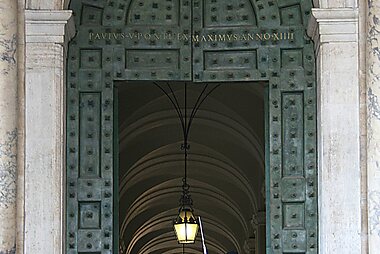

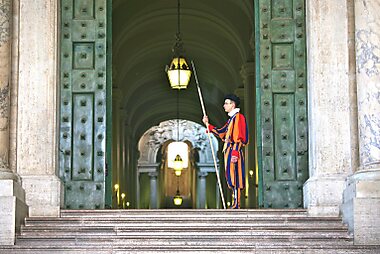
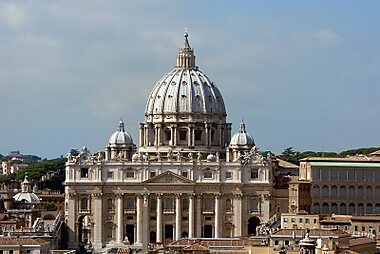
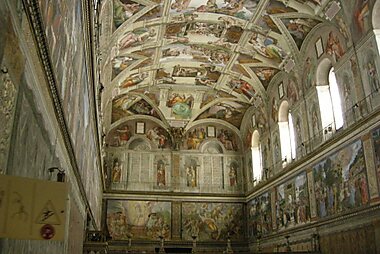
Vatican City – Planning a Trip?
Build your day-by-day itinerary in the Tripomatic app.


Money & payments
Vatican City uses the euro under a monetary agreement with the European Union, even though it is not a member state. Card payments work at the Vatican Museums ticket counters, the gift shops, and the museum cafeteria. Keep a little cash for the Vatican Post office if you want to buy stamps or send a postcard with a Vatican postmark, a popular souvenir among visitors.
Featured Lists

Vatican City Essentials
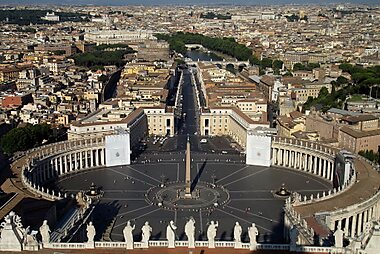
Vatican City contains the world's most significant collection of Renaissance and Baroque masterpieces. This enclave houses Saint Peter’s Basilica, the largest church in Christendom, featuring Michelangelo’s dome and Bernini’s bronze baldachin. The Vatican Museums span several miles of galleries, culminating in the Sistine Chapel's ceiling frescoes and "The Last Judgment." Below the basilica lies the Vatican Necropolis, an ancient burial ground containing the purported tomb of Saint Peter. The monumental St. Peter’s Square, framed by Bernini’s quadruple colonnade, centers on an ancient Egyptian obelisk.
12 places
Vatican City Highlights
Vatican City contains one of the world's most significant concentrations of Renaissance art and religious architecture. This collection spans the Vatican Museums’ extensive galleries, featuring classical sculptures and Renaissance masterpieces, culminating in the Sistine Chapel’s iconic frescoes. Saint Peter’s Basilica showcases architectural contributions from Michelangelo and Bernini, while the surrounding square serves as a monumental Baroque forecourt. The site preserves centuries of papal history through its treasury, art galleries, and sacred ceremonial spaces.
6 places

Tours & Activities
Vatican City — Map

 Open the interactive map
 Tipping
€5–10 per person
Vatican City has almost no restaurant or hotel scene of its own, so most tipping situations from a normal trip do not apply here. If you hire a private guide for the Vatican Museums or the basilica, a small tip at the end is appreciated but not required. Staff at the museum cafeteria and gift shops do not expect a tip.
Electricity
Vatican City runs on the same electrical system as the rest of Rome, since it draws its power from Italy. Bring a European-style adapter if your devices use a different plug shape.
Language
Italian is Vatican City's working language, and Latin remains its official language for law and ceremony, one of the only places in the world where Latin still has a real legal role. English is spoken at ticket counters and by most staff who deal with visitors, so getting around as an English speaker is easy.
Safety & emergencies
Vatican City is extremely safe. Its own police force, the Corpo della Gendarmeria, and the Swiss Guard keep close watch, especially around St. Peter's Square and the basilica. The main risk is pickpocketing in the crowds and queues, the same as anywhere popular in Rome. Keep bags zipped and valuables out of back pockets, especially during papal audiences and Mass.
Health
Tap water is safe to drink throughout Vatican City, and free drinking-water fountains are dotted around the grounds and inside the Vatican Museums. The Vatican Pharmacy runs a public counter near St. Peter's Square, so basic medicine is available without leaving the country. For anything more, pharmacies in Rome's Borgo and Prati neighborhoods just outside the walls are just as close, and several stay open late.
Visas & entry
Vatican City has no border control or passport checks of its own. Crossing from Rome into St. Peter's Square or the Vatican Museums is unrestricted and does not require showing a passport. Anyone allowed into Italy under the Schengen rules can visit Vatican City freely; there is no separate Vatican visa.
Visa and entry requirements change frequently. Verify current requirements with the official immigration authority or your country's embassy before travel.
Etiquette
Vatican City enforces a strict dress code, and guards do turn people away. Cover your shoulders and knees to enter Saint Peter's Basilica or the Vatican Museums, no tank tops, shorts above the knee, or bare midriffs, for men and women alike. Keep your voice down and remove hats inside the basilica and its chapels.
Photography without flash is allowed in most areas, but it is forbidden inside Sistine Chapel, guards enforce this strictly. During a papal audience or Mass, dress and behave as you would for any church service.
Holidays & opening hours
Vatican City follows its own calendar of religious and state holidays alongside the ones observed in Italy. The Vatican Museums close on these days and on Sundays, except for the last Sunday of each month, when entry is free and the museums are far busier than usual.
Shops and the post office keep shorter hours than central Rome, and much of daily life pauses for Mass on major feast days.
Getting around
Vatican City is small enough to see entirely on foot, and there is no public transport inside its walls.
- By metro: Rome's Metro Line A stops at Ottaviano-San Pietro, a 10-minute walk from St. Peter's Square.
- By bus: several Rome city bus routes stop right outside the Vatican walls, near the metro station and the Vatican Museums entrance.
- On foot: most sights sit within a 15-minute walk of each other; comfortable shoes matter more than any transport plan, especially for the queue outside the Vatican Museums.
Vatican City sits entirely inside Rome, so getting there really means getting to that part of Rome.
Driving
Vatican City is not a driving destination. Its streets are mostly closed to public traffic, and there is nowhere for a visitor to rent or park a car inside its walls.
- Parking: there is no visitor parking inside Vatican City; park in Rome and walk in, or use public transport.
- Fuel: there are no public fuel stations inside Vatican City.
Food & drink
Vatican City has no restaurants open to the public outside the Vatican Museums, which run several visitor cafés, a self-service restaurant, and a small pizzeria for ticket holders. Beyond the museums, almost everyone eats in Rome, in the streets around Borgo and Prati just outside the walls. What you find there is Roman cooking: thin, crisp pizza al taglio sold by weight, and trattorias serving the city's classic pasta dishes.
Breakfast in the neighborhood is a quick espresso and a cornetto at the counter, standing up, the way most Romans do it. Lunch and dinner run later than in northern Europe, and a full restaurant meal comes in courses: a starter, a pasta dish, then meat or fish. Look for carbonara, cacio e pepe, and amatriciana on nearly every nearby menu, supplì as a fried snack, and gelato for something sweet.
Where to explore
Vatican City is a single walled city-state with no towns or districts of its own. Everything beyond St. Peter's Square and the Vatican Museums is Rome, the city that surrounds it on every side. Most visitors stay in Rome and treat Vatican City as a half-day or full-day excursion from there, often combined with nearby Castel Sant'Angelo and the Borgo and Prati neighborhoods just outside the Vatican walls.


Vatican City – Plan Your Days
Turn the places from this guide into a real itinerary, with smart routing, time estimates, and everything you need for a perfect trip.

