


Rome
Rome is Italy's capital and one of the most visited cities in the world. Over two thousand years of history sit within a single walkable center: ancient ruins, Renaissance churches, and Baroque fountains stand side by side. The Vatican, home to the Pope, forms its own small independent state inside Rome's borders. A visit suits travelers who want to see world-famous monuments up close and don't mind crowds and heat in peak season.
The city rewards slow exploration on foot. Meals stretch over hours, and every neighborhood keeps its own daily rhythm, from morning markets to the evening passeggiata. Painters and sculptors from Michelangelo to Caravaggio worked here, and their art still fills the city's churches and museums. Rome works well for a first trip to Italy, a history-focused city break, or a stop on a longer tour that also takes in Florence or Naples.

Rome – Planning a Trip?
Build your day-by-day itinerary in the Tripomatic app.
When to visit
Spring (April–June) and fall (September–October) are the best times to visit, with mild days and lighter crowds than summer. Summer turns hot and packed with tour groups. Winter is cool and rainy but much quieter, and Christmas brings festive lights and Nativity scenes across the city.
Plan around Easter week if possible. The Pope leads a Good Friday torchlit procession at the Colosseum and celebrates Easter Sunday Mass at St. Peter's Square, drawing large crowds to both.
Best time to visit: April, May, October
Summer afternoons get intensely hot, so save the biggest outdoor sights for morning or evening and rest indoors midday.
Top sights



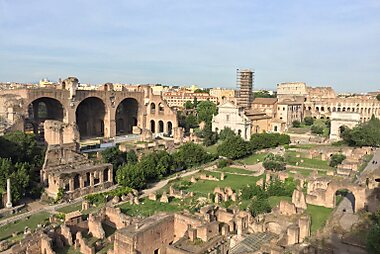


Colosseum is Rome's most famous monument, the largest amphitheater ever built in the Roman Empire and once host to gladiator fights in front of 50,000 spectators.
Next to it, Roman Forum was the political and commercial heart of ancient Rome. Temple ruins, arches, and government buildings fill this sprawling site that once ran the empire.
Pantheon is the best-preserved building from ancient Rome, a temple turned church whose dome has stood unsupported for almost 1,900 years.
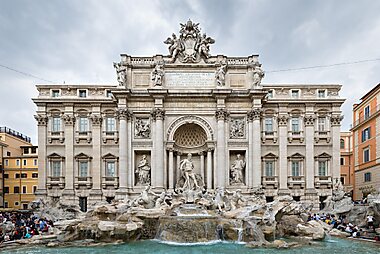
Trevi Fountain is Rome's largest and most theatrical Baroque fountain, built into the side of a palazzo where three roads meet.
Vatican Museums hold one of the world's greatest art collections, ending at the Sistine Chapel, where Michelangelo's ceiling and Last Judgment cover every surface.
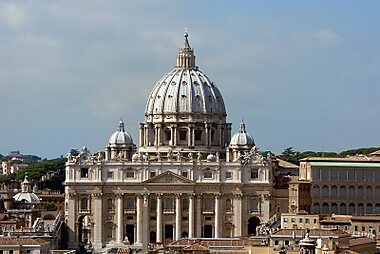
Saint Peter's Basilica is the largest church in the world and the spiritual center of the Catholic faith. Michelangelo's Pietà stands inside, and you can climb the dome for a view over the city.
Navona Square is an elegant Baroque square built over an ancient stadium, ringed with cafes and centered on Bernini's Fountain of the Four Rivers.
Spanish Steps is a sweeping 18th-century staircase that has been a favorite meeting spot for centuries.
Featured Lists


Ancient Ruins
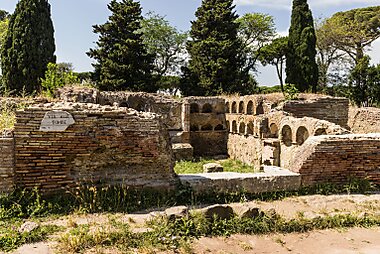
This collection spans the architectural evolution of Rome, from the Republican temples of Largo di Torre Argentina to the Imperial grandeur of the Colosseum and Pantheon. Explore the political heart of the empire at the Roman Forum and Caesar’s Forum, or descend into the extensive subterranean tunnels of the Catacombs of Saint Calixt and Domitilla. Beyond the city center, the well-preserved harbor ruins of Ostia Antica and the monumental arches of Parco degli Acquedotti reveal the complex infrastructure and daily life of the ancient Roman world.
17 places


Fountains & Monuments
Rome’s urban landscape is defined by centuries of monumental artistry, from the ancient engineering of the Colosseum and the Pantheon’s massive concrete dome to the Baroque mastery of Bernini’s Triton Fountain and the grand colonnade at St. Peter's Square. This collection highlights the city's hydraulic heritage through the iconic Trevi Fountain and the Renaissance-era Turtle Fountain, alongside ancient Egyptian obelisks like the Montecitorio. These landmarks represent a chronological journey from the Roman Empire’s triumphal arches to the ornate marble displays of the Papal era.
15 places


Audio Guides – Rome
Explore on foot with a self-guided audio tour that narrates each stop as you reach it.

Rome in a Day
93 min4.6 km9 stops
This one-day walk links Rome's most iconic sights: the Colosseum, the Roman Forum, the Capitoline Hill, the Vittoriano at Piazza Venezia, the Pantheon, and the Trevi Fountain, finishing at the Spanish Steps, with two hidden gems worked in along the way. The route traces about four and a half kilometers north from ancient Rome into the Baroque quarter, so the ruins and the longer walking come early and the day winds down among cafes and shopping near the finish. Expect crowds, cobblestones, and plenty of reasons to slow down - bring comfortable shoes and a good part of a day. The walk begins at the Colosseum, a short walk from the Colosseo metro station.

Caravaggio's Violent Rome
61 min3.0 km6 stops
Follow the most revolutionary painter of his age through the Rome that made him famous and then destroyed him. From the church that launched his career to the square where his temper first got him into real trouble, this walk traces Caravaggio's masterpieces alongside his police record — brawls, a stabbing, and finally a fatal 1606 duel that made him a wanted man for the rest of his short life. Starts near Piazza Venezia, ends at the river.

Hear Rome's audio tours
2 walks in Audio Guides by Tripomatic


What to experience
- Toss a coin into the Trevi Fountain over your shoulder, the classic ritual said to guarantee a return trip to Rome.
- Rent a rowboat on the lake in Villa Borghese Park for a quiet afternoon away from the crowds.
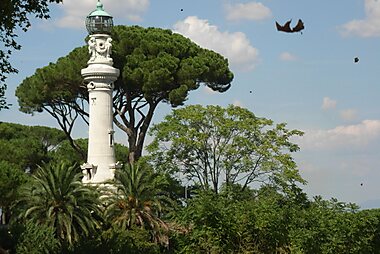
- Watch the sunset over the city from Faro del Gianicolo, where a cannon still fires at noon each day.
- Join the evening aperitivo hour in Trastevere, when bars fill the narrow streets with small plates and spritzes before dinner.
Tours & Activities
Rome — Map

 Open the interactive map
 Day trips
Rome makes a good base for day trips, from nearby Roman ruins to Renaissance villas and wine country.
- Ostia Antica (≈30 min by train): a huge, well-preserved Roman port city with far fewer crowds than the Colosseum or Forum.
- Castel Gandolfo (≈45 min by train or car): a small lakeside town on Lake Albano, long used as the Pope's summer residence.
- Tivoli (≈1 hour by train or bus): home to two UNESCO World Heritage sites, the fountain-filled Renaissance gardens of Villa d'Este and the vast ruins of Hadrian's Villa.
- Orvieto (≈1.5 hours by train): a hilltop town in Umbria with a striped Gothic cathedral and an underground city of Etruscan caves and tunnels.
Getting there
- By air: Most international flights land at Fiumicino Airport (FCO), about 30 km from the center. The Leonardo Express train runs direct to Termini station in 32 minutes; regional trains and buses cost less but take longer. Budget and some European carriers use the smaller Ciampino Airport (CIA), connected to the center by bus in about 40 minutes. Rome Airports
- By train: Roma Termini is the main station, with frequent high-speed trains to Florence (≈1.5h), Milan (≈3h), Naples (≈1h), and Venice (≈4h). Trenitalia
- By bus: Long-distance coaches, including international routes, arrive at Tiburtina station, Rome's second-largest transport hub.
Getting around
- Metro: Three lines (A, B, C) cover major sights but skip much of the historic center; trains run roughly 5:30–23:30 (later on Fridays and Saturdays). Tap a contactless bank card or phone directly at the gate — no separate ticket needed. Or buy a paper ticket valid for 100 minutes across metro, bus, and tram from machines or tobacco shops. ATAC
- Bus and tram: Denser coverage than the metro, useful for reaching the Vatican and Trastevere; same ticket and tap-to-pay system as the metro.
- On foot: The historic center is compact and best explored on foot, but expect cobblestones, hills, and heavy pedestrian crowds around major sights.
- Taxi: Use only official white taxis from a taxi stand or booked by phone or app; agree on a price or confirm the meter is running before you get in.
Driving
- Is a car worth it?: No. Central Rome's narrow one-way streets, heavy traffic, and restricted zones make driving stressful and slow; walking, the metro, and taxis cover the city center far better.
- Restrictions: A ZTL (limited traffic zone) covers most of the historic center and is watched by cameras. Entering without a permit brings an automatic fine, even for tourists just passing through.
- Parking: Park at a garage or a metro park-and-ride on the outskirts and take the train in; street parking within the ZTL is scarce, expensive, and easy to get wrong.
- A car is only useful for exploring the wider Lazio countryside independently — see Day Trips.
Food & drink
Roman cuisine centers on a handful of simple pasta dishes done exactly right. Try cacio e pepe (pecorino and black pepper), carbonara (egg, guanciale, and pecorino, no cream), and amatriciana (tomato and guanciale). Also look for supplì, fried rice balls with a molten mozzarella center, and Roman-style pizza, thinner and crisper than the Neapolitan kind.
For a busy food market, browse the stalls at Campo de' Fiori each morning. The old Jewish Ghetto, a short walk away, is known for carciofi alla giudia, whole artichokes flattened and deep-fried until crisp. Testaccio is another good neighborhood for eating away from tourist-menu restaurants near the main sights.
Safety & health
Rome is generally safe for tourists, including at night in the main tourist areas. The biggest risks are petty theft and scams rather than violent crime.
- Pickpocketing is common on crowded buses and the metro, around Termini station, and at major sights like the Colosseum and Trevi Fountain. Keep bags zipped and in front of you.
- Avoid unlicensed taxi touts outside the airport and Termini; use official white taxis or a licensed app instead.
- Street vendors selling friendship bracelets or roses near tourist sites can be pushy; a firm no is enough.
- Tap water is safe to drink, including from the small public drinking fountains (nasoni) found across the city.
History
Legend says Rome was founded in 753 BC by Romulus, who killed his twin brother Remus in a dispute over where to build the city. Over the following centuries, Rome grew from a small settlement into the capital of an empire that stretched from Britain to the Middle East. Much of that power was run from Roman Forum, and its scale is still visible at Colosseum, built to entertain the public with games and executions.
After the empire fell, the city became the seat of the Catholic Church. Popes rebuilt Rome as a religious and artistic capital. They commissioned the Renaissance and Baroque work that still fills its churches and squares, including Saint Peter's Basilica, built over the site of St. Peter's tomb. Castle of the Holy Angel began as the emperor Hadrian's mausoleum and was later turned into a papal fortress, with a passage connecting it to the Vatican.
Rome became the capital of a newly unified Italy in 1870, ending centuries of direct papal rule over the city.
Country facts
Quick practical facts for Italy at a glance:
- Currency
- Euro EUR € · Card payments · Widely accepted
- Emergency numbers
- 112
- Electricity
- 230 V · 50 HzType C / Type F / Type L
- Languages
- Italian
- Tap water
- Safe to drink
- Driving side
- Right
- Calling code
- +39


Rome – Plan Your Days
Turn the places from this guide into a real itinerary, with smart routing, time estimates, and everything you need for a perfect trip.




