



Royaume-Uni
The United Kingdom brings together four nations — England, Scotland, Wales, and Northern Ireland — each with its own identity, cities, and countryside. From London's global pull to the Scottish Highlands and the Welsh coast, the range of landscape and culture is larger than the UK's compact size suggests.
It suits travelers who enjoy history, literature, and variety: castles and cathedrals sit alongside major museums, live music, and an enormous range of countryside walking. Most first-time visitors center a trip on London, then add either a second city, such as Edinburgh, Bath, or York, or a rural region like the Lake District or the Scottish Highlands.



Royaume-Uni – Tu prépares un voyage ?
Crée ton itinéraire jour par jour dans l'application Tripomatic.


Argent et paiements
The UK uses the pound sterling, not the euro. Contactless card payment is the default almost everywhere, including buses and the London Underground — tapping a bank card or phone directly at the gate is usually cheaper than buying a paper ticket. Cash is rarely needed but still accepted at most small shops and markets.
Listes recommandées


Historic Castles & Fortifications
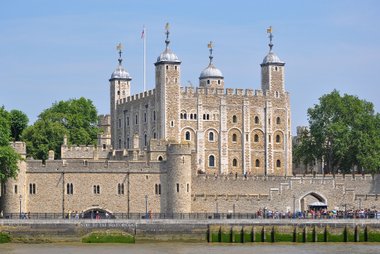
A selection of 20 fortified sites across the United Kingdom, spanning Iron Age hill forts, Roman forts along Hadrian’s Wall, medieval castles and ruined 19th‑century estates. Entries highlight surviving curtain walls, motte-and-bailey earthworks, Renaissance state apartments, national‑trust properties and coastal artillery forts, with locations from Shetland to Cornwall.
20 lieux


Visites et activités
Royaume-Uni — Carte

Pourboires
10 à 12,5 %, parfois ajouté en tant que frais de service
pas courant ; offrir un verre au barman est plus fréquent
arrondir à l'unité supérieure ou 10 %
1 à 2 £/jour, facultatif
5 à 10 £ pour une excursion d'une journée complète
Many restaurants add a 12.5% service charge automatically to the bill — check before adding a further tip. Tipping is not expected in pubs when ordering at the bar, and taxi drivers are usually just rounded up rather than given a fixed percentage.
Électricité
The UK uses Type G plugs (three rectangular pins) at 230 V / 50 Hz — different from the rest of Europe, so an adapter is needed even when arriving from elsewhere in the EU.
Langue
English is the UK's dominant language, with Welsh, Scottish Gaelic, and Irish also officially recognized in parts of Wales, Scotland, and Northern Ireland. Regional accents can be strong, especially in Scotland, Wales, and parts of northern England, but communication is rarely an issue for English speakers.
Rester connecté
Prepaid SIM cards and eSIMs are widely available at supermarkets, phone shops, and airport kiosks, with no ID or registration required. Coverage is strong nationwide, including on most rural rail lines, though some remote parts of Scotland and Wales have patchy signal.
Sécurité et urgences
The UK is a safe country for tourists, with violent crime against visitors rare. The main risks are pickpocketing on crowded transport and in busy tourist areas, and bag theft in pubs and cafes — keep bags in sight.
Santé
Tap water is safe to drink throughout the UK. Pharmacies (chemists), including major chains like Boots, are widespread and can advise on minor ailments; some keep extended hours in larger cities. Visitors are not automatically covered by the NHS for most treatment, so travel insurance is worth carrying. No special vaccinations are required for entry.
Visas et formalités d'entrée
Visitors from the EU, US, Canada, Australia, and many other countries can enter the UK visa-free for tourism, typically for up to 6 months. Most visa-exempt visitors, including EU citizens, must also apply online in advance for an Electronic Travel Authorisation (ETA) before travel; a smaller number of nationalities need a full visa instead.
Visa and entry requirements change frequently. Verify current requirements with the official immigration authority or your country's embassy before travel.
Savoir-vivre
Queueing is taken seriously — join the back of the line and wait your turn, whether at a bus stop or a shop counter. In pubs, order and pay at the bar rather than waiting for table service, unless a sign says otherwise. "Please" and "thank you" are used frequently, even in short exchanges.
Punctuality matters for reservations and appointments. Dress modestly when visiting cathedrals and other religious sites.
Jours fériés et horaires
Public holidays vary slightly between England, Scotland, Wales, and Northern Ireland. Most shops stay open on holidays, though transport can run a reduced or Sunday-style timetable.
In England and Wales, large shops are legally restricted to six hours of trading on Sundays, typically opening late morning; Scotland has no such restriction. Smaller shops everywhere often open longer.
Se déplacer
- By train: the rail network reaches most of the country, though tickets can be expensive if not booked ahead — advance fares are usually far cheaper than paying on the day. Book via National Rail.
- By air: domestic flights connect London to Scotland and Northern Ireland quickly, and are often worth it for longer distances such as London to Edinburgh or Belfast.
- By bus: long-distance coaches are the cheapest way to travel between cities, though slower than the train.
Within cities, London's Underground and bus network runs on a contactless-friendly system, while Edinburgh, Manchester, and Liverpool rely mainly on buses and trams.
Conduite
- Key rules: the UK drives on the left, the opposite side to most of Europe — a real adjustment for visitors renting a car. Speed limits and road signs are in miles per hour, not kilometers.
- Tolls and vignettes: no general motorway vignette; a few crossings charge directly, including the M6 Toll and the Dartford Crossing.
- Congestion and LEZs: central London has a daily Congestion Charge and an Ultra Low Emission Zone (ULEZ) covering a much wider area — check a vehicle's eligibility before driving into the city.
- Parking: on-street parking in cities is usually metered or pay-by-app; double yellow lines mean no parking at any time.
- Fuel: stations are self-service; pay by card at the pump or inside. Petrol is labeled Unleaded or Super Unleaded; diesel is labeled Diesel.
- Electric vehicles: charging points are common in cities and at motorway service stations, with major networks including BP Pulse, Ionity, and Gridserve; most require an app or contactless card.
Gastronomie
British food has moved well beyond its old reputation. A cooked breakfast — eggs, bacon, sausage, baked beans, and toast — remains common at weekends, and Sunday lunch, usually a roast dinner with all the trimmings, is still a weekly ritual for many families.
Fish and chips remains the best-known national dish, traditionally eaten wrapped, by the seaside or on a park bench. Curry houses are just as central to British food culture, a legacy of South Asian immigration — chicken tikka masala is sometimes called the country's unofficial national dish. Pubs serve everything from a pie and a pint to modern gastropub cooking, and afternoon tea, with scones, clotted cream, and finger sandwiches, remains a popular treat rather than an everyday habit.
Où s'aventurer
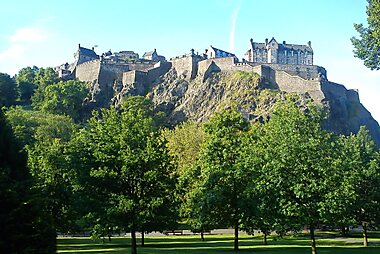
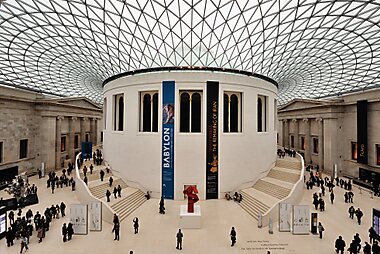
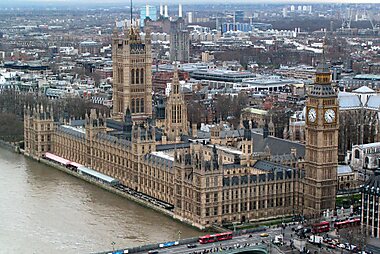
London is the obvious starting point for most visits, with major museums, royal landmarks, and a nightlife and food scene to match any global city. Edinburgh, Scotland's capital, pairs a dramatic hilltop castle with a compact, walkable old town, especially lively during its August festivals.
Manchester and Liverpool in the north of England both trade on strong music and football heritage, with Liverpool's waterfront and Beatles history drawing visitors on their own. Oxford and its university colleges are an easy day trip or overnight from London, while Bath is known for its Roman baths and honey-colored Georgian streets.
Royaume-Uni – Planifie ton voyage
Choisis les lieux que tu veux voir et Tripomatic les transforme en un itinéraire jour par jour, avec des itinéraires intelligents, des estimations de temps et tout ce dont tu as besoin pour un voyage parfait.




