


Augsburg
Augsburg is a Roman city in the Swabian part of Bavaria. It has a long past as a trading and banking centre. The old town has Renaissance houses, fountains, canals and large churches.
It suits a one- or two-night stop. The sights are close together and the pace is calmer than in Munich. Bertolt Brecht and Leopold Mozart were both born here.

Augsburg – Utazást tervezel?
Állítsd össze a napi útvonalad a Tripomatic alkalmazásban.


Mikor érdemes utazni
Late spring to early autumn is the best time for walking and outdoor cafés. Winters are cold with frost, and many days are grey.
The Christkindlesmarkt fills the square in front of the town hall in Advent.
A legjobb időszak a látogatásra: augusztus, szeptember
Főbb látnivalók
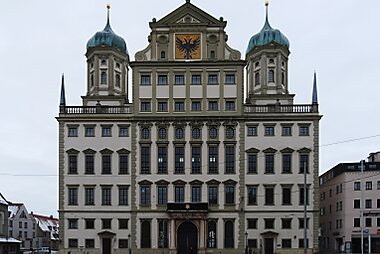
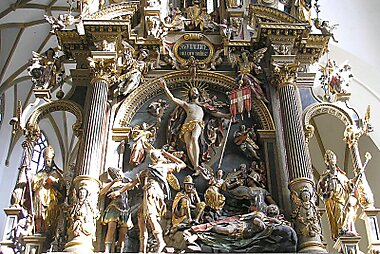
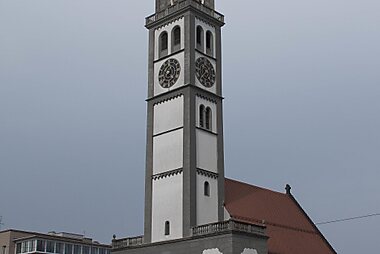
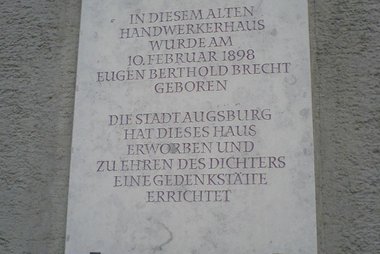
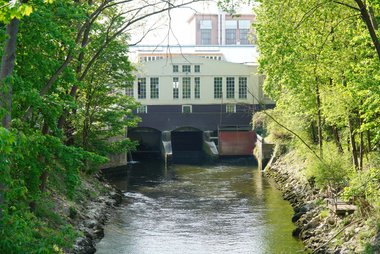
- Rathaus is a Renaissance building from 1620. Go inside to see the Golden Hall.
- Perlachturm stands next to the town hall. Climb it for views over the old town.
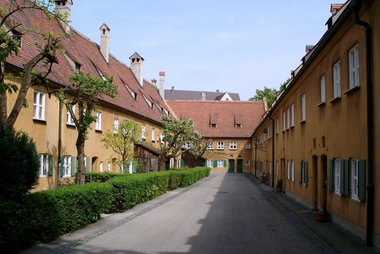
- Fuggerei is a walled housing complex for people in need. It has been in use for centuries. One apartment is a museum.
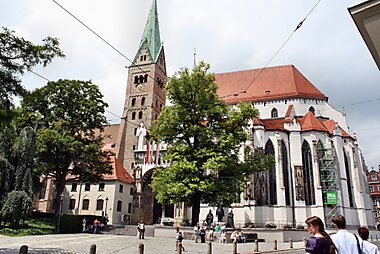
- Dom Mariä Heimsuchung is the city's cathedral, north of the main square.
- St. Ulrich und Afra has a Catholic church and a Lutheran church side by side. It is at the southern end of the old town.
- Augsburger Wassermanagement-System is the canal, tower and fountain network that became a UNESCO World Heritage Site in 2019.
- Brechthaus is the birthplace of the writer Bertolt Brecht, born in 1898.
- Maximilianstraße is the wide main street with fountains and merchant houses. It links the town hall area with the southern old town.
Kiemelt listák


Élmények
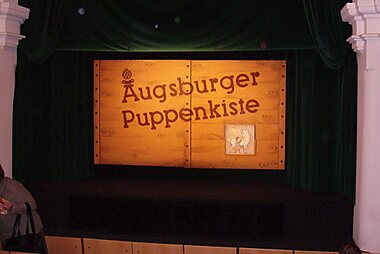
- Watch a marionette show at the Augsburger Puppenkiste. The theatre is known across Germany for its television puppet series.
- Visit the Christkindlesmarkt on the square in front of the town hall in Advent.
- See the Eiskanal, the artificial whitewater course that hosted the whitewater events at the 1972 Olympics.
Túrák és tevékenységek
Augsburg — Térkép

 Interaktív térkép megnyitása
Egynapos kirándulások
Augsburg has good rail links. These trips are listed from closest to farthest.
- Munich: 30 to 60 minutes by train. Bavaria's capital has big museums, the old town and beer halls.
- Ulm: about 1 hour by train. See the Gothic minster and the riverside old quarter.
- Nördlingen: about 1 to 1.5 hours by train. A medieval town with a complete town wall that you can walk.
- Nuremberg: about 1 to 1.5 hours by train. It has a castle and a large old town.
- Fussen: about 2 hours by train. It is the base for visits to the royal castles near the Alps.
Mit érdemes felfedezni
More places in Bavaria and nearby regions:
- Heading north: Ingolstadt and Regensburg.
- Towards the Alps: Garmisch-Partenkirchen, Allgau and Kempten.
- Lakes: Lake Starnberg and Lindau.
Odajutás
- By air: The main airport is Munich (MUC). Take a train to Munich main station, then a train to Augsburg. Allow about 1.5 to 2 hours in total.
- By train: Augsburg main station is on the main line between Munich and Stuttgart. Direct trains run to Munich, Ulm, Stuttgart and Nuremberg. Book at Deutsche Bahn.
Közlekedés
- Public transit: Trams and buses cover the city. Buy tickets in the meinAVV app or at ticket machines at stops. The Deutschlandticket is valid on the network. Plan journeys at AVV Augsburg.
- On foot or by bike: The old town is compact and flat. Most sights are within a 20-minute walk of the town hall.
Ételek és italok
Swabian dishes are the local food. Try Käsespätzle (cheese noodles), Maultaschen (filled pasta) and Zwetschgendatschi, a plum cake from the region.
For a meal, go to the Lechviertel, the canal quarter with small restaurants. Maximilianstraße and the streets around the town hall also have many cafés and restaurants.
Biztonság és egészség
Augsburg is a safe city for visitors. Violent crime against tourists is rare.
- Pickpockets work in crowds. Watch your bag at the main station, on trams and at the Christmas market.
- Keep valuables out of parked cars.
Történelem
Romans founded the city in 15 BC as Augusta Vindelicorum. The Fugger family made it a banking centre in the 16th century. Their housing complex, Fuggerei, is still in use.
The Peace of Augsburg in 1555 allowed Lutheran and Catholic rulers in the Holy Roman Empire to practise their own faith. The Catholic and Lutheran churches next to each other at St. Ulrich und Afra show this shared past.
The Renaissance Rathaus dates from 1620. The city's canals and fountains are part of the UNESCO listing of 2019.
Országinformációk
Quick practical facts for Germany at a glance:
- Pénznem
- euró EUR € · Bankkártyás fizetés · Gyakran elfogadott
- Segélyhívó számok
- 112 Mentők · Tűzoltóság
- Elektromos hálózat
- 230 V · 50 HzC típus / F típus
- Nyelvek
- német
- Csapvíz
- Biztonságosan iható
- Közlekedés iránya
- Jobb oldali
- Nemzetközi előhívó
- +49


Augsburg – Tervezd meg a napjaidat
Alakítsd át az útikönyvben szereplő helyeket valódi útitervvé okos útvonaltervezéssel, időbecslésekkel és mindennel, ami a tökéletes utazáshoz kell.


Kapcsolódó úti célok

Data: © OpenStreetMap contributors, Wikidata, Wikipedia, Tripomatic, Official websites. Tours by GetYourGuide. We earn commission from bookings. Travel guide generated with AI.
Tervezd meg utazásodat a Tripomatic segítségével
- Mesterséges intelligenciával támogatott tervezésKészíts egy kész napot egyetlen koppintással, bízd a kívánságlistád elosztását az utazásodban az AI-ra, vagy tervezz meg mindent csevegve.
- Utazási figyelmeztetésekHivatalos figyelmeztetések, zord időjárás, sztrájkok és természeti veszélyek az utazásod egyes napjain szereplő helyekre vonatkozóan.
- Munkaszüneti napok és eseményekNézd meg az utazásod napjaira eső ünnepeket, fesztiválokat és zárvatartásokat, és hogy mit jelentenek a terveid szempontjából.
- KöltségbecslésAI-alapú költségbontás, hogy már indulás előtt pontosan tudd, mekkora költségvetéssel számolj.
- Túrák és jegyekFoglalj vezetett túrákat, soron kívüli jegyeket és élményeket közvetlenül az útitervedben.