


Augusta
Augsburg is a Roman city in the Swabian part of Bavaria. It has a long past as a trading and banking centre. The old town has Renaissance houses, fountains, canals and large churches.
It suits a one- or two-night stop. The sights are close together and the pace is calmer than in Munich. Bertolt Brecht and Leopold Mozart were both born here.

Augusta – Stai pianificando un viaggio?
Costruisci il tuo itinerario giorno per giorno nell'app Tripomatic.


Quando andare
Late spring to early autumn is the best time for walking and outdoor cafés. Winters are cold with frost, and many days are grey.
The Christkindlesmarkt fills the square in front of the town hall in Advent.
Periodo migliore per la visita: agosto, settembre
Attrazioni principali
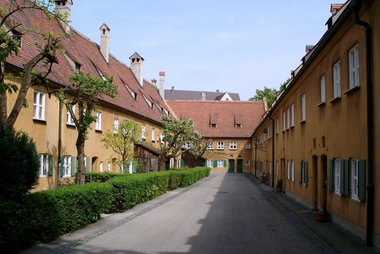
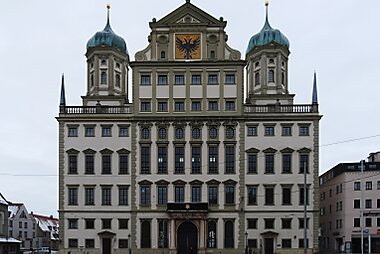
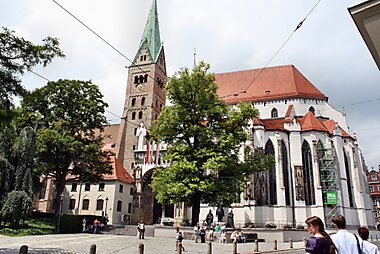
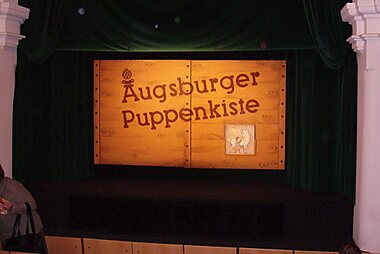
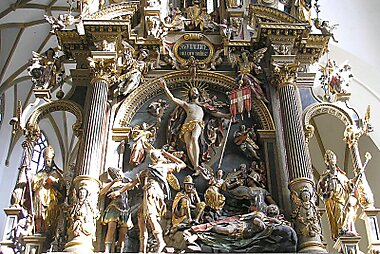
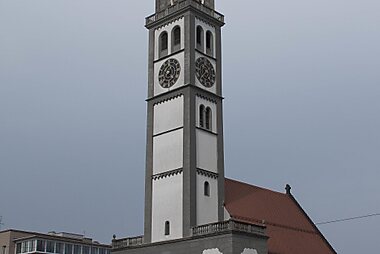
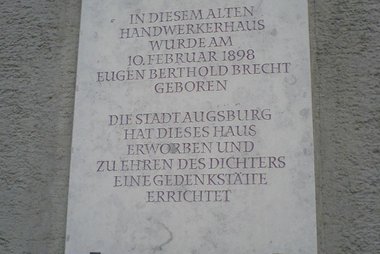
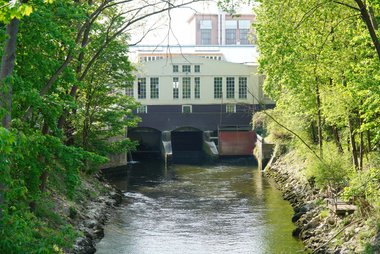
- Rathaus is a Renaissance building from 1620. Go inside to see the Golden Hall.
- Perlachturm stands next to the town hall. Climb it for views over the old town.
- Fuggerei is a walled housing complex for people in need. It has been in use for centuries. One apartment is a museum.
- Dom Mariä Heimsuchung is the city's cathedral, north of the main square.
- St. Ulrich und Afra has a Catholic church and a Lutheran church side by side. It is at the southern end of the old town.
- Augsburger Wassermanagement-System is the canal, tower and fountain network that became a UNESCO World Heritage Site in 2019.
- Brechthaus is the birthplace of the writer Bertolt Brecht, born in 1898.
- Maximilianstraße is the wide main street with fountains and merchant houses. It links the town hall area with the southern old town.
Elenchi in evidenza


Cosa provare
- Watch a marionette show at the Augsburger Puppenkiste. The theatre is known across Germany for its television puppet series.
- Visit the Christkindlesmarkt on the square in front of the town hall in Advent.
- See the Eiskanal, the artificial whitewater course that hosted the whitewater events at the 1972 Olympics.
Tour e attività
Augusta — Mappa

 Apri la mappa interattiva
Gite in giornata
Augsburg has good rail links. These trips are listed from closest to farthest.
- Munich: 30 to 60 minutes by train. Bavaria's capital has big museums, the old town and beer halls.
- Ulm: about 1 hour by train. See the Gothic minster and the riverside old quarter.
- Nördlingen: about 1 to 1.5 hours by train. A medieval town with a complete town wall that you can walk.
- Nuremberg: about 1 to 1.5 hours by train. It has a castle and a large old town.
- Fussen: about 2 hours by train. It is the base for visits to the royal castles near the Alps.
Cosa esplorare
More places in Bavaria and nearby regions:
- Heading north: Ingolstadt and Regensburg.
- Towards the Alps: Garmisch-Partenkirchen, Allgau and Kempten.
- Lakes: Lake Starnberg and Lindau.
Come arrivare
- By air: The main airport is Munich (MUC). Take a train to Munich main station, then a train to Augsburg. Allow about 1.5 to 2 hours in total.
- By train: Augsburg main station is on the main line between Munich and Stuttgart. Direct trains run to Munich, Ulm, Stuttgart and Nuremberg. Book at Deutsche Bahn.
Come muoversi
- Public transit: Trams and buses cover the city. Buy tickets in the meinAVV app or at ticket machines at stops. The Deutschlandticket is valid on the network. Plan journeys at AVV Augsburg.
- On foot or by bike: The old town is compact and flat. Most sights are within a 20-minute walk of the town hall.
Cibo e bevande
Swabian dishes are the local food. Try Käsespätzle (cheese noodles), Maultaschen (filled pasta) and Zwetschgendatschi, a plum cake from the region.
For a meal, go to the Lechviertel, the canal quarter with small restaurants. Maximilianstraße and the streets around the town hall also have many cafés and restaurants.
Sicurezza e salute
Augsburg is a safe city for visitors. Violent crime against tourists is rare.
- Pickpockets work in crowds. Watch your bag at the main station, on trams and at the Christmas market.
- Keep valuables out of parked cars.
Storia
Romans founded the city in 15 BC as Augusta Vindelicorum. The Fugger family made it a banking centre in the 16th century. Their housing complex, Fuggerei, is still in use.
The Peace of Augsburg in 1555 allowed Lutheran and Catholic rulers in the Holy Roman Empire to practise their own faith. The Catholic and Lutheran churches next to each other at St. Ulrich und Afra show this shared past.
The Renaissance Rathaus dates from 1620. The city's canals and fountains are part of the UNESCO listing of 2019.
Informazioni sul paese
Quick practical facts for Germany at a glance:
- Valuta
- euro EUR € · Pagamenti con carta · Comunemente accettata
- Numeri di emergenza
- 112 Ambulanza · Vigili del fuoco
- Elettricità
- 230 V · 50 HzTipo C / Tipo F
- Lingue
- tedesco
- Acqua del rubinetto
- Potabile
- Senso di marcia
- A destra
- Prefisso telefonico
- +49


Augusta – Pianifica le tue giornate
Trasforma i luoghi di questa guida in un vero itinerario, con percorsi intelligenti, stime dei tempi e tutto il necessario per un viaggio perfetto.


Destinazioni correlate

Data: © OpenStreetMap contributors, Wikidata, Wikipedia, Tripomatic, Official websites. Tours by GetYourGuide. We earn commission from bookings. Travel guide generated with AI.
Pianifica il tuo viaggio con Tripomatic
- Pianificazione con IAOttieni una giornata pronta in un tocco, lascia che l'IA distribuisca la tua lista dei desideri lungo il viaggio o pianifica tutto chattando.
- Avvisi di viaggioAvvisi ufficiali, maltempo, scioperi e calamità naturali per i luoghi di ogni giorno del tuo viaggio.
- Giorni festivi ed eventiScopri giorni festivi, festival e chiusure nei giorni del tuo viaggio e cosa comportano per i tuoi programmi.
- Stima dei costiDettaglio dei costi di viaggio calcolato dall'IA per sapere quanto mettere a budget prima di partire.
- Tour e bigliettiPrenota tour, biglietti prioritari e attività direttamente all'interno del tuo piano.