


San Sebastián
San Sebastián (Donostia in Basque) is a city on the Bay of Biscay in northern Spain, about 20 km from the French border. It has a curved city beach, a compact Old Town and green hills at both ends of the bay.
It suits a relaxed trip of two to four nights. Most people come to walk, swim in summer and eat pintxos, the small snacks served in the bars. The city is also a good base for the Basque coast and the French Basque Country.

San Sebastián – Stai pianificando un viaggio?
Costruisci il tuo itinerario giorno per giorno nell'app Tripomatic.


Quando andare
Summer is the warmest and driest time for the beach. Spring and autumn are mild, with frequent rain. Winter is cool and wet.
The biggest event is the San Sebastián International Film Festival. It runs in September and has been held since 1953. Screenings and parties fill the city, so book hotels early.
Periodo migliore per la visita: giugno, luglio, agosto, settembre
Attrazioni principali


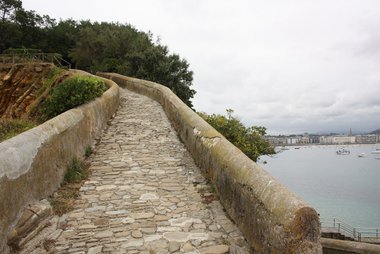
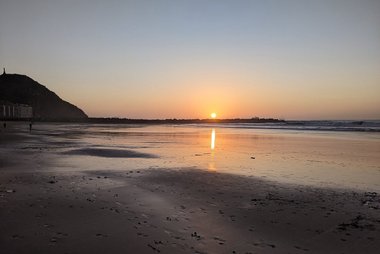
- Kontxa hondartza is the city's main beach, a long curve of sand along the bay. It is the place for a swim or a walk on the promenade.
- At the western end of the bay, at the foot of Mount Igueldo, The Comb of the Wind is a group of steel sculptures by Eduardo Chillida. They sit in the rocks, and the waves hit the nearby blowholes.
- Urgull is the hill next to the Old Town. Walk up for views over the bay and the city.
- Palacio Real de Miramar was finished in 1893 as a summer home for Queen Maria Cristina. The gardens are open to the public at set hours.
- Mount Igueldo Amusement Park sits on top of Mount Igueldo. A funicular from the foot of the hill has run to the top since 1912.
- Santa Clara Island lies in the middle of the bay. It has a lighthouse and a small beach that appears at low tide.
- San Telmo Museoa is in a former 16th-century monastery at the foot of Urgull. It shows the culture and history of the Basque people.
- Santa Maria basilika is a basilica in the heart of the Old Town, where most pintxos bars are.
Elenchi in evidenza

Donostia/San Sebastián Essentials
This collection highlights the architectural and natural landmarks of Donostia/San Sebastián. It spans from the Belle Époque elegance of the City Hall and Miramar Palace to the contemporary Basque art of Eduardo Chillida’s Peine del Viento. Explore the historic Old Town via Plaza de la Constitución, visit the 18th-century Basilica of Saint Mary of the Chorus, and view the city from the heights of Monte Urgull and Monte Igueldo. The list also includes the Kursaal Congress Centre, a modern symbol of the city's international film and jazz festivals.
12 luoghi

Coastal Highlights & Parks
This collection highlights the diverse landscapes of San Sebastián, from the iconic shell-shaped La Concha and its neighbor Ondarreta to the secluded Santa Clara Island cove. It includes historic green spaces like the English-style Aiete Park and the peacock-inhabited Cristina Enea. Cultural landmarks such as the open-air Chillida Leku museum and the 19th-century Igeldo Lighthouse provide vantage points over the Bay of Biscay, while Gipuzkoa Plaza offers a central retreat with its historic floral clock.
10 luoghi

Cosa provare
Events and rituals worth planning around:
- Tamborrada: on 20 January, groups dressed as cooks and soldiers march and play drums through the city for 24 hours.
- Semana Grande: in mid-August, with fireworks over the bay every night.
- Jazzaldia: a jazz festival in the last week of July.
- Basque Week: in early September, ending with the rowing race for the Flag of La Concha.
- Boat to Santa Clara island: boats leave from the port. The direct crossing takes about 5 minutes. They run daily from June to September.
Tour e attività
San Sebastián — Mappa

Gite in giornata
- Pasaia: a working harbour about 5 km east of the centre, set at the foot of Mount Ulia.
- Hondarribia: about 15 km east, next to the airport. It has a walled old quarter and a fishing harbour area.
- Hendaye: about 40 minutes by Euskotren from Amara station, with trains every 30 minutes. It is across the border in France, with a long beach.
- Biarritz, Bayonne and Saint-Jean-de-Luz: continue from Hendaye on French regional trains. Biarritz is a seaside resort, and Bayonne has an old town.
- Bilbao: about 2 hours 40 minutes by Euskotren, with trains every hour. The trip is long, but Bilbao has a lot to see.
Cosa esplorare
Across the border in the French Basque Country:
- Hendaye is the closest, at the end of the Euskotren line.
- Saint-Jean-de-Luz and Biarritz are seaside towns further up the coast.
- Bayonne is a city with a historic centre.
Come arrivare
- By air: San Sebastián Airport is in neighbouring Hondarribia, about 15 km east. Most flights are within Spain, mainly to Madrid. Hourly Lurraldebus line BI01 runs between the airport and the city bus station. Many visitors fly into Biarritz (about 50 km) or Bilbao (about 98 km) instead.
- By train: The Renfe station is a 10-minute walk from the centre. Renfe trains to Madrid take about 5.5 hours or more. Direct Alvia trains to Barcelona take about 6 hours. Euskotren trains from Amara station go to Bilbao (about 2 hours 40 minutes, hourly) and to Hendaye in France. Book Renfe on Renfe and Euskotren on Euskotren.
- By bus: The central bus station is underground, next to the train station.
Come muoversi
- Public transit: Dbus city buses cover the town. Timetables and fares are on Dbus.
- On foot: The centre, the Old Town and the beaches are all close together. Walking is the easiest way to see the city.
Cibo e bevande
Pintxos are the main local food. They are small snacks on bread, served on the bar counter. Many people move from bar to bar and order one or two things in each.
The Old Town is the best-known area for pintxos bars. The city has many Michelin-starred restaurants so book far ahead for those.
Two local drinks: txakoli, a dry, slightly sparkling white wine from the coast near Getaria, and cider, which is poured from a height straight from the barrel. The cider museum Sagardoetxea - Euskal Sagardoaren Museoa is in nearby Astigarraga.
Sicurezza e salute
San Sebastián has no special safety issues for visitors. Use normal care with bags in crowded places such as festivals.
Swim only when the beach flag is green, and take care with sea currents, especially at Zurriola.
The European emergency number is 112.
Storia
The city received its charter in the 12th century. In 1813, British and Portuguese troops attacked the town after a siege and burned most of it. Only the street at the foot of the hill, now 31 August Street, survived. Walk the Old Town streets to see what was rebuilt.
From 1885, Queen Maria Cristina spent every summer here. She stayed at Palacio Real de Miramar, and the royal visits made the city a fashionable seaside resort. San Sebastián was a European Capital of Culture in 2016, together with Wrocław.
Informazioni sul paese
Quick practical facts for Spain at a glance:
- Valuta
- euro EUR € · Pagamenti con carta · Ampiamente accettata
- Numeri di emergenza
- 112
- Elettricità
- 230 V · 50 HzTipo C / Tipo F
- Lingue
- spagnolo
- Acqua del rubinetto
- Potabile
- Senso di marcia
- A destra
- Prefisso telefonico
- +34


San Sebastián – Pianifica le tue giornate
Trasforma i luoghi di questa guida in un vero itinerario, con percorsi intelligenti, stime dei tempi e tutto il necessario per un viaggio perfetto.


Destinazioni correlate

Data: © OpenStreetMap contributors, Wikidata, Wikipedia, Tripomatic, Official websites, geoBoundaries (CC BY 4.0). Tours by GetYourGuide. We earn commission from bookings. Travel guide generated with AI.