


Segovia
Segovia is a small walled city about 90 km northwest of Madrid. It stands on a rocky ridge at about 1,000 m. The old town and its Roman aqueduct are a UNESCO World Heritage Site.
The old town is compact and easy to walk. Roman, Romanesque and Gothic buildings stand within a few streets of each other. Most visitors come for the day from Madrid. An overnight stay gives you the quiet streets after the day groups leave. Segovia suits one or two nights of history, architecture and roast meat, and it is cooler than Madrid in summer.

Segovia – Reis plannen?
Stel je dagelijkse reisroute samen in de Tripomatic-app.


Beste reistijd
Spring and early autumn are the most comfortable seasons. Summer days are hot and dry, but nights stay cool. Winters are cold, with frost on many mornings and some snow.
The biggest event is the San Juan y San Pedro fiesta in the last week of June. It has concerts, bull events, street parades and fireworks over the aqueduct. Book rooms early if you plan to come then.
Beste reistijd: mei, juni, juli, augustus, september
Topbezienswaardigheden
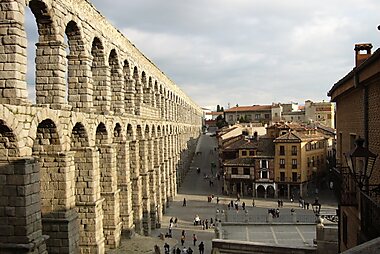




- Aqueduct of Segovia is the Roman aqueduct that crosses the old town on 167 granite arches. It is about 28 m high and has no mortar between the stones. See it from the Plaza del Azoguejo, where it is tallest.
- Alcázar de Segovia is a royal fortress on a rock at the western end of the old town. Kings of Castile lived here. You can visit the royal rooms and climb the tower for views over the roofs and the plain.
- Segovia Cathedral is a late Gothic cathedral from the 16th century. It stands on the Plaza Mayor, and its tall tower is visible from across the old town.
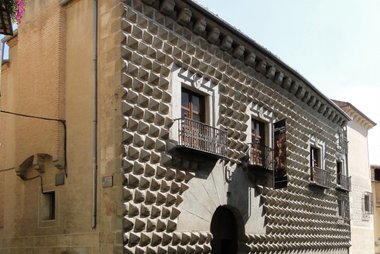
- Casa de los Picos is a 15th-century house with a front covered in pointed granite studs. It is a short walk from the aqueduct and shows how rich the city was in the wool trade.
- Iglesia de la Veracruz is a Romanesque church outside the walls. It has an unusual 12-sided shape and dates from the early 13th century.
- Monasterio Jerónimo Santa María del Parral is a 15th-century monastery in the Eresma valley, below the city walls. It has a Gothic church.
Aanbevolen lijsten


Segovia's Historical Treasures
Segovia’s historical landscape is defined by its UNESCO-listed monuments and diverse religious architecture. The city features a remarkably preserved 1st-century Roman aqueduct and the Alcázar, a medieval fortress and former royal palace. Beyond these landmarks, the collection includes the late Gothic Cathedral and several Romanesque churches like San Martín and San Millán, showcasing porticoed galleries and Mudejar influences. Archaeological sites like the Abrigo del Molino offer insights into prehistoric activity, while the Azud marks the hydraulic engineering origins of the city's Roman water system.
11 plaatsen

Parks and Gardens
Segovia's green spaces range from intimate urban squares like Plaza de la Merced to expansive riverside meadows at Pradera de San Marcos. The city’s botanical garden showcases diverse local flora, while the Jardin de los Poetas and Mirador del Alcázar provide strategic vantage points for viewing the medieval city walls and the Alcázar fortress. These parks offer a mix of historical monastic grounds, educational arboretums, and quiet neighborhood escapes along the Eresma River valley.
9 plaatsenWat te beleven
- Watch the sun set over the Alcázar from the viewpoint at the Pradera de San Marcos. The castle stands on its rock across the valley.
Tours en activiteiten
Segovia — Kaart

 Interactieve kaart openen
Dagtochten
Segovia is a good base for short trips. These three are the best, from closest to farthest.
- La Granja de San Ildefonso (about 11 km, 20 minutes by bus or car): a royal palace with large gardens and fountains.
- Pedraza (about 35 km, 40 minutes by car): a walled medieval village with a stone main square. It is easiest to reach by car.
- Avila (about 65 km, 1 hour by car or bus): a city with a complete medieval wall that you can walk on.
Plaatsen om te ontdekken
Other historic cities in Castile and León:
- Nearby: Avila for medieval walls, and Salamanca for its old university city.
- Further north: Valladolid city, Burgos and León.
- Wine and mountains: Ribera del Duero for red wine, and Sierra de Gredos for hiking.
Bereikbaarheid
- By air: Segovia has no airport. Fly to Madrid-Barajas (MAD), about 90 km away, then continue by train or bus from Madrid.
- By train: Fast Avant trains from Madrid Chamartín reach Segovia-Guiomar in about 30 minutes. The station is outside the centre. City bus 11 takes about 15 minutes to the aqueduct. Book on Renfe.
- By bus: Direct buses from Madrid Moncloa take about 1 hour 20 minutes or more. They arrive at the Segovia bus station.
- Plan your visit with the Segovia tourism office.
Vervoer ter plaatse
- On foot: The old town is small, and most sights are within 20 minutes of each other. Streets are steep and cobbled.
- City bus: Line 11 links Guiomar station with the aqueduct. Line 12 goes to the bus station.
- Cycling: The hills make cycling hard for most visitors.
Autorijden
- Is a car worth it?: Not for the city. A car helps only for day trips to villages.
- Parking: Park outside the walls or in an underground car park near the aqueduct, then walk.
- Restrictions: The walled centre is a low-emission zone. Many older cars may not enter or park there, and fines apply. Check the rules before you drive in.
Eten en drinken
Segovia is famous for cochinillo asado, roast suckling pig with crisp skin and soft meat. Other local dishes are judiones de La Granja, large white beans stewed with pork, and ponche segoviano, a sponge cake with cream and marzipan.
Restaurants cluster around the Plaza del Azoguejo, the Plaza Mayor and Calle Cervantes. Book ahead for weekend lunch, because roast pig is the main order in most places.
Veiligheid en gezondheid
Segovia is very safe for visitors. Petty theft is rare, but keep your bag closed in crowds near the aqueduct and on fiesta nights.
The old town is steep and cobbled, so wear flat shoes. Winter mornings can be icy, and the summer sun is strong at this altitude.
Geschiedenis
Romans built the aqueduct in the 1st or early 2nd century to bring water about 15 km from the mountains. Aqueduct of Segovia still stands in the middle of the city.
In the Middle Ages Segovia was a favourite home of the kings of Castile, who lived in Alcázar de Segovia. Isabella was proclaimed queen of Castile in Segovia in 1474. A fire in 1862 destroyed the castle roofs, and the castle was rebuilt with its present turrets.
The city grew rich on wool in the 15th and 16th centuries. Houses such as Casa de los Picos date from that time, and Segovia Cathedral was built to replace an older cathedral destroyed in the Comuneros revolt.
Feiten over het land
Quick practical facts for Spain at a glance:
- Valuta
- Euro EUR € · Betalen met kaart · Algemeen geaccepteerd
- Noodnummers
- 112
- Elektriciteit
- 230 V · 50 HzType C / Type F
- Talen
- Spaans
- Kraanwater
- Veilig om te drinken
- Rijrichting
- Rechts
- Landnummer
- +34


Segovia – Plan je dagen
Zet de plaatsen uit deze gids om in een echte reisroute, met slimme routes, tijdsinschattingen en alles wat je nodig hebt voor een perfecte reis.


Gerelateerde bestemmingen



Data: © OpenStreetMap contributors, Wikidata, Wikipedia, Tripomatic, Official websites, geoBoundaries (CC BY 4.0). Tours by GetYourGuide. We earn commission from bookings. Travel guide generated with AI.