


Padwa
Padua is a university city with one of the oldest universities in Europe, and students still set the pace of daily life. It is a city of arcaded streets, busy market squares and early-evening drinks outdoors. It is also a major pilgrimage centre, because Saint Anthony is buried here.
The city has two UNESCO World Heritage sites: its 14th-century fresco cycles, led by Giotto's work in the Scrovegni Chapel, and the oldest university botanical garden still in its original place. Padua suits a two- or three-night stay focused on art and history. It is also a calmer and cheaper base for day trips to Venice.

Padwa – planujesz wycieczkę?
Stwórz swój plan podróży dzień po dniu w aplikacji Tripomatic.


Kiedy jechać
May, September and October are the best months, with warm days and fewer crowds. July and August are hot and humid. Winter is cold and often foggy, but the main sights are indoors and quiet.
The biggest event is the Feast of Saint Anthony on 13 June. Pilgrims from all over Italy and abroad come to the Basilica, and a large procession carries the saint's statue and relics through the streets in the evening. Book a room early if you plan to visit in mid-June.
Najlepszy czas na wizytę: maj, wrzesień, październik
Główne zabytki


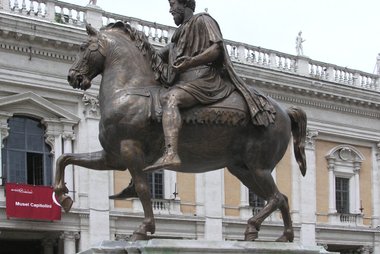

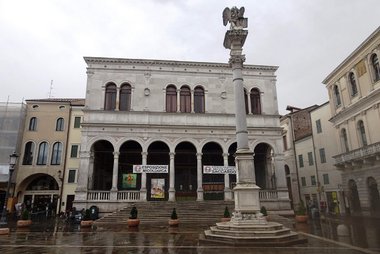
Most sights are in the compact old centre, and a few are a short walk south around the Basilica.
- Scrovegni Chapel holds Giotto's fresco cycle, finished around 1305 and a turning point in Western painting. Advance booking for a timed entry is required; you spend about 15 minutes inside after a short wait in a climate-controlled room. A full-price ticket usually also covers the nearby city museums. Scrovegni Chapel tickets
- Musei Civici agli Eremitani sits next to the chapel, with Roman finds and an art gallery that includes a crucifix by Giotto.
- Church of the Eremitani is next door. Its Ovetari Chapel shows what survived of Andrea Mantegna's frescoes after a 1944 bombing.
- Basilica of Saint Anthony of Padua is the city's great pilgrimage church, with many domes and the tomb of Saint Anthony inside. It is free to enter; cover shoulders and knees.
- Equestrian statue of Gattamelata stands in the square in front of the Basilica. Donatello cast this bronze horse and rider in the 15th century.
- Palazzo della Ragione is a huge medieval hall of justice with a vast wooden roof and walls covered in frescoes. It stands between two market squares.
- Piazza delle Erbe and Piazza dei Signori are the heart of city life. Morning markets fill the squares, and the bars fill up in the early evening.
- Palazzo del Bo is the historic seat of the university. Entry is by ticketed tour only. Tours include the first permanent anatomical theatre (1595) and the hall with Galileo's chair, so book ahead.
- Prato della Valle is one of the largest squares in Europe: an oval island ringed by a canal and 78 statues.
- Orto Botanico di Padova was founded in 1545. It still has a palm planted in 1585, and modern glasshouses show plants from different climates.
Polecane zestawienia


Museums & Art Galleries
Padova’s museums span centuries of scientific discovery and artistic innovation. The Civic Museum complex includes the Scrovegni Chapel’s frescoes, while the Diocesan Museum showcases religious artifacts in a 15th-century palace. Scientific heritage is represented by the La Specola observatory and the Giovanni Poleni Physics Museum. Specialized collections range from the history of medicine at MUSME and pre-cinema optics at Palazzo Angeli to Esapolis, a major insectary, and the Veneto Toy Museum.
9 miejsc

Czego warto doświadczyć
Padua's best moments are tied to its markets, its students and its saint.
- Market morning under the Salone: food stalls fill the squares on both sides of the Palazzo della Ragione from Monday to Saturday, and the covered shops below the great hall sell cheese, cured meats and fresh pasta. Go before noon.
- Spritz hour in the squares: from about 6 pm, students and locals gather in Piazza delle Erbe, Piazza della Frutta and Piazza dei Signori for a spritz.
- Saturday market at Prato della Valle: nearly 200 stalls set up around the oval square, selling clothes, plants and food.
- The saint's tomb: pilgrims queue in the Basilica to lay a hand on the tomb of Saint Anthony and leave written prayers. Visitors are welcome to join quietly.
- Giotto after dark: in some seasons the Scrovegni Chapel also opens for evening visits, called Giotto Under the Stars. Book these ahead, as for daytime visits.
- By boat to Venice: from spring to autumn, tourist boats cruise down the Brenta Riviera from Padua to Venice, stopping at Venetian villas on the way.
Wycieczki i aktywności
Padwa — Mapa

 Otwórz interaktywną mapę
Wycieczki jednodniowe
Padua sits on the main railway line across the Veneto, and several good day trips are less than an hour away.
- Abano Terme and the Euganean Hills (≈15 min by train to the Terme Euganee station): spa towns with thermal pools, and green volcanic hills with vineyards and walking trails behind them.
- Vicenza (≈15–25 min by train): a UNESCO-listed city of buildings by the architect Andrea Palladio, including the Teatro Olimpico.
- Villa Pisani at Stra (≈30 min by bus): the grandest of the Venetian villas on the Brenta Riviera, with a large park and a hedge maze.
- Venice (≈25–50 min by train): close enough for an easy day out, and staying in Padua is usually cheaper.
- Arquà Petrarca (≈30 min by car): a stone village in the Euganean Hills where the poet Petrarch spent his last years. His house is now a museum. Without a car, take the train to Monselice and then a taxi.
- Verona (≈40–60 min by train): the Roman Arena, medieval squares and the city of Romeo and Juliet.
- Ferrara (≈1 h–1 h 15 min by train): a Renaissance city with a moated castle and long, flat walls you can cycle around.
- Bologna (≈1 h by high-speed train): towers, arcades and a famous food scene.
Gdzie warto się udać
Padua is in the Veneto region, between the Venetian lagoon and the foothills of the Alps.
- Art cities on the railway line: Venice, Vicenza and Verona are all within an hour by train.
- Towards the lagoon and the hills: Chioggia is a fishing town of canals at the southern end of the lagoon, and Asolo is a small hill town to the north, best reached by car.
- South of the Po: Ferrara and Bologna are about an hour away by train.
Jak dotrzeć
- By air: Venice Marco Polo Airport is the main gateway, linked to Padua bus station, next to the railway station, by a direct Busitalia bus about every 30 minutes. The trip takes 45–60 minutes. You can also take a bus to Venezia Mestre station and change to a train. Treviso Airport (direct buses to Padua bus station) and Bologna Airport (Marconi Express to Bologna Centrale, then about 1 hour by high-speed train) are alternatives.
- By train: Padova station is on the main Milan–Venice line and the line south to Bologna. Venezia Santa Lucia is 25–50 minutes away, Verona 40–60 minutes, Bologna about 1 hour, Milan about 2 hours and Rome about 3 hours 15 minutes. Trenitalia
Poruszanie się na miejscu
- On foot: the historic centre is compact, and most sights are within a 20-minute walk of each other. The Basilica is about 25–30 minutes on foot from the railway station.
- Tram and buses: Busitalia runs the city buses and one tram line, which links the railway station with the Scrovegni Chapel, the Basilica and Prato della Valle. You can tap a contactless bank card on the reader on board, or buy tickets at newsstands, tobacconists, ticket machines or in the Busitalia Veneto app. Busitalia Veneto
- Bike and scooter: the city is flat and has cycle lanes, and shared e-scooters are available through an app.
- Taxi: use the ranks at the station and in the centre, or call a radio taxi.
Prowadzenie samochodu
- Is a car worth it?: not for the city itself, which is best on foot or by tram. A car helps for the Euganean Hills and the Brenta villas.
- Restrictions: the historic centre is a limited traffic zone (ZTL) watched by cameras, and entering without a permit leads to a fine. If your hotel is inside it, ask the hotel to arrange a permit before you arrive.
- Parking: leave the car in a paid car park at the edge of the centre or near the railway station, then walk or take the tram. Pay at machines or with a parking app.
Jedzenie i napoje
Paduan cooking is Venetian home food: risotto, thick bigoli pasta, salt cod, boiled meats and seasonal vegetables from the markets. Wines from the nearby Euganean Hills are on most menus. The aperitivo matters here: a spritz with small snacks is part of the evening, and Aperol itself was created in Padua.
For eating, head to the areas rather than to single addresses. The streets around Piazza delle Erbe, Piazza della Frutta and the old Jewish quarter just south of them are full of small osterie and wine bars. For lunch, the food shops under the Palazzo della Ragione sell cheese, cured meats and ready dishes. For a historic coffee, sit in Caffè Pedrocchi, a neoclassical café that opened in 1831.
Bezpieczeństwo i zdrowie
Padua is a safe city for visitors. The usual risk is pickpocketing on crowded trams and buses, in the markets and around the railway station. The station area is less pleasant late at night, so take a taxi or the tram after dark if you are carrying bags.
In the Basilica and other churches, dress modestly with shoulders and knees covered, and keep quiet during services.
Historia
Padua began as the Roman town of Patavium. Little of it is visible today: the oval outline of the Roman arena survives in the gardens next to Scrovegni Chapel, and Ponte Molino still rests on Roman arches.
Saint Anthony, a Portuguese friar, died near Padua in 1231. The city began Basilica of Saint Anthony of Padua soon after, and it still draws pilgrims from around the world. The university was founded in 1222, and its historic seat is Palazzo del Bo. Galileo taught here from 1592 to 1610. In 1678 Elena Cornaro Piscopia became the first woman in the world to earn a university degree, from the University of Padua.
In the 14th century the Carrara family ruled the city, and painters covered its churches and halls with frescoes. These fresco cycles, from the Scrovegni Chapel to Oratorio di San Giorgio and Padua Baptistery, became a UNESCO World Heritage site in 2021 as Padova Urbs Picta. Venice took Padua in 1405 and ruled it until 1797. In 1848 students rose against Austrian rule; a bullet hole from that day is still shown in a wall of Caffè Pedrocchi. In March 1944 a bombing raid destroyed most of Mantegna's frescoes in Church of the Eremitani.
Informacje o kraju
Quick practical facts for Italy at a glance:
- Waluta
- euro EUR € · Płatności kartą · Powszechnie akceptowane
- Numery alarmowe
- 112
- Elektryczność
- 230 V · 50 HzTyp C / Typ F / Typ L
- Języki
- włoski
- Woda z kranu
- Zdatna do picia
- Ruch drogowy
- Prawostronny
- Numer kierunkowy
- +39


Padwa – zaplanuj swoje dni
Zmień miejsca z tego przewodnika w prawdziwy plan podróży z inteligentnym wyznaczaniem tras, szacowanym czasem i wszystkim, czego potrzebujesz na udaną wycieczkę.


Powiązane cele podróży




Data: © OpenStreetMap contributors, Wikidata, Wikipedia, Tripomatic, Official websites, geoBoundaries (CC BY 4.0). Tours by GetYourGuide. We earn commission from bookings. Travel guide generated with AI.