


Wenecja
Venice is built across more than 100 small islands linked by canals and around 400 bridges. There are no cars anywhere in the historic center — everyone moves on foot or by boat, which gives the city an atmosphere unlike anywhere else in Europe. Centuries as a trading power between Europe and the East left Venice packed with grand palaces, churches, and art, all still standing along narrow lanes and quiet canals.
Venice suits travelers who enjoy walking and do not mind getting a little lost, since the tangle of streets rewards wandering as much as sightseeing. Two to three nights are enough to see the main sights; add a day if you want to explore the outer islands of the lagoon. The composer Antonio Vivaldi was born and worked here, and the painters Titian and Tintoretto both spent their careers in the city.

Wenecja – planujesz wycieczkę?
Stwórz swój plan podróży dzień po dniu w aplikacji Tripomatic.
Kiedy jechać
Spring (April–May) and autumn (September–October) bring mild weather and thinner crowds than summer. Summer is hot and humid with the heaviest crowds of the year. Winter is cold but quiet, except for the two weeks of Carnevale, when elaborate masks and costumes fill the streets — usually in February, and accommodation should be booked many months ahead if you want to see it.
Najlepszy czas na wizytę: maj, czerwiec, wrzesień, październik
Autumn and winter bring a rising risk of acqua alta, seasonal high water that can flood Piazza San Marco and nearby streets for a few hours at a time.
Główne zabytki



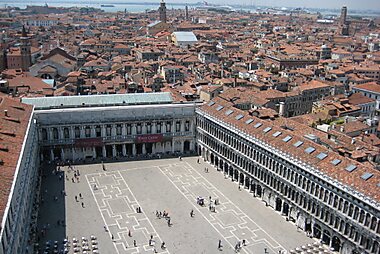
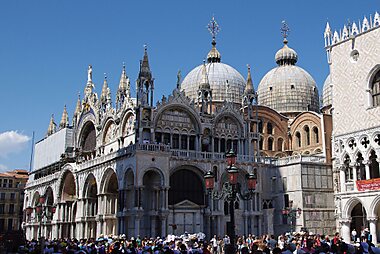
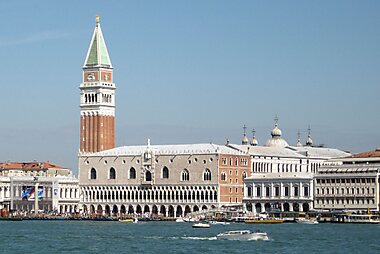
Piazza San Marco is the historic and social heart of the city, ringed by arcades and cafes and framed by the basilica and the bell tower.
St Mark's Basilica is covered inside and out with gold mosaics built up over centuries; go early or book ahead to avoid the longest lines.
Doge's Palace was the residence of the Doge and the seat of government for the Venetian Republic; the tour continues across the covered Bridge of Sighs to the old prison cells.
Climb Saint Mark's Campanile for the best rooftop view over the lagoon and the red roofs of the city.
Rialto Bridge is the oldest of the four bridges across the Grand Canal and still lined with small shops, much as it has been since the 16th century.
Basilica di Santa Maria Gloriosa dei Frari is a vast Gothic church holding major works by Titian and the tombs of several Doges — a quieter, less crowded alternative to the basilica.
Accademia Gallery holds the city's best collection of Venetian painting, from the 14th to the 18th century.
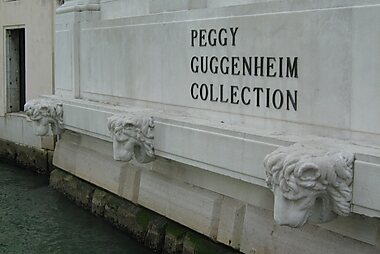
Peggy Guggenheim Collection is a compact modern art museum in an unfinished palace on the Grand Canal, with works by Picasso, Pollock, and Dali.
Polecane zestawienia


Venice's Hidden Gems
Venice’s lesser-known landmarks offer insights into the city’s architectural evolution and local traditions. This collection features Libreria Acqua Alta, where books are stored in waterproof basins and gondolas, and Calle Varisco, one of the world's narrowest streets at 53 centimeters wide. On the islands of the lagoon, explore the 19th-century San Michele cemetery, the Burano Lace Museum, and the 7th-century mosaics of Torcello’s cathedral. The list also highlights two of the city's rare remaining bridges without parapets: Ponte Chiodo and the legendary Ponte del Diavolo.
7 miejsc


Parks & Gardens
Beyond the stone-paved alleys, Venice offers diverse green spaces ranging from Napoleon’s expansive Giardini della Biennale—the city's primary art exhibition site—to the restored neoclassical pavilions of the Royal Gardens near St. Mark's Square. The Cannaregio district hides the palace-adjacent Savorgnan Gardens and the lagoon-side Parco Villa Groggia. For maritime views and history, the island of Sant’Elena features 11th-century cloisters, while the neighboring Remembrance Park serves as a WWII memorial with family playgrounds. The Armenian Mekhitarist Monastery provides a secluded garden retreat on its own historic island.
8 miejsc

Audioprzewodniki – Wenecja
Zwiedzaj pieszo dzięki audioprzewodnikowi, który opowiada o każdym miejscu w momencie dotarcia.


Posłuchaj audioprzewodników po: Wenecja
1 spacer w aplikacji Audioprzewodnik Tripomatic


Czego warto doświadczyć
A handful of activities feel specific to Venice.
- Ride a traghetto — a stripped-down gondola that ferries locals across the Grand Canal for a couple of euros, far cheaper than a tourist gondola ride.
- Take a gondola ride along the Grand Canal as the light fades and the palaces are lit up.
- Watch glassblowers at work in a Murano workshop.
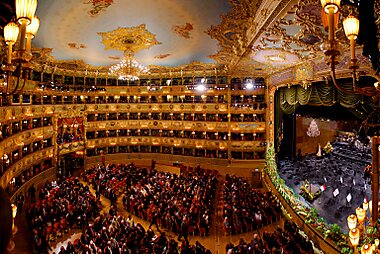
- Attend an opera or concert at Teatro La Fenice, one of Italy's best-known opera houses, rebuilt twice after major fires.
- Join the evening aperitivo ritual — a spritz and small snacks called cicchetti, eaten standing at a bar counter.
Wycieczki i aktywności
Wenecja — Mapa

 Otwórz interaktywną mapę
 Wycieczki jednodniowe
The lagoon and mainland offer plenty for a day away from the crowds.
- Murano — about 20-30 minutes by vaporetto from Fondamente Nove; famous for centuries of glassmaking, with workshops you can watch in action.
- Burano — about 45 minutes by vaporetto; known for brightly painted houses and a centuries-old lace-making tradition.
- Torcello — about 1 hour by vaporetto; a quiet island with one of the lagoon's oldest churches and far fewer visitors.
- Chioggia — about 1 hour by bus or boat; a working fishing town with its own canals and a much calmer pace than Venice.
- Padua — about 25-45 minutes by train; home to Giotto's frescoes in the Scrovegni Chapel and one of Europe's oldest universities.
- Verona — about 1-1.5 hours by train; a Roman arena, Renaissance squares, and the setting used for Romeo and Juliet.
Gdzie warto się udać
The Metropolitan City of Venice stretches well beyond the lagoon into resort towns along the Adriatic coast.
- Jesolo — a beach resort town about an hour from Venice by bus, popular in summer for its long sandy beach.
- Caorle — a smaller, quieter seaside town with a historic fishing-village core, roughly 1.5 hours away.
- Chioggia — a fishing town at the southern end of the lagoon, sometimes called "Little Venice" for its own canals.
Jak dotrzeć
- By air: Venice Marco Polo Airport (VCE) is the main gateway, about 8 km from the city. A direct water bus (Alilaguna) runs to the historic center in 60-90 minutes for around 15-20 EUR, and a land bus reaches Piazzale Roma in about 20 minutes for a few euros. Treviso Airport (TSF), about 30 km away, is used mainly by budget carriers, with a bus connection to Venice taking around 70 minutes.
- By train: Venezia Santa Lucia station sits directly on the Grand Canal in the historic center, with direct high-speed trains from Milan, Florence, Rome, and Verona.
- By bus: Long-distance coaches arrive at Piazzale Roma, the only point where cars and buses can reach the historic center.
Poruszanie się na miejscu
- Public transit: the ACTV vaporetto (water bus) network is the main way to move around. Buy tickets through the ACTV app or at ticket machines before boarding — a single ride is expensive, so a multi-day pass is worth it if you're staying more than a day or two. ACTV
- Taxi: private water taxis exist but cost far more than the vaporetto; there is no water equivalent of ride-hailing apps.
- On foot: the historic center is only reachable on foot or by boat. Expect a lot of walking and many small bridges with steps, which makes wheeled luggage and wheelchairs difficult in places.
Prowadzenie samochodu
- Is a car worth it?: No — cars cannot enter the historic center at all, so a car is only useful for exploring the mainland or lagoon towns beyond Venice.
- Parking: Leave the car in one of the multi-story car parks at Piazzale Roma or on the nearby island of Tronchetto; expect to pay 20-30 EUR per day.
- Restrictions: The historic center has no roads for cars at all — it is built on water and pedestrian streets, not subject to a low-emission-zone rule.
Jedzenie i napoje
Venetian food centers on seafood and small snacks called cicchetti, eaten standing at a bar counter with a glass of wine, similar to Spanish tapas. Look for baccala mantecato (whipped salt cod) and sarde in saor (sweet-and-sour sardines) on the counter.
The best area for this is around the Rialto Market, where small bacari (wine bars) cluster along the surrounding streets. Restaurants directly on Piazza San Marco are priced for the view rather than the food; better meals are usually a few streets away.
Bezpieczeństwo i zdrowie
Venice is a safe city for tourists; violent crime against visitors is rare. The main risks are pickpocketing on crowded vaporetti and around Piazza San Marco, and inflated bills at restaurants without visible prices — always check a menu before sitting down.
Tap water is safe to drink throughout the city, including from the public drinking fountains found on many street corners.
Historia
Venice was founded by refugees fleeing invasions on the Italian mainland in the 5th and 6th centuries, who settled on the marshy islands of the lagoon because they were easy to defend. Over the following centuries it grew into a powerful maritime republic, controlling trade routes across the Mediterranean and into the East.
At the height of its power the Republic was ruled from Doge's Palace, where the Doge and his councils governed for over a thousand years, until Napoleon ended the Republic in 1797. The wealth from that trade built the churches and palaces that still line the canals today, including St Mark's Basilica, whose earliest church dates to the 9th century, though the building seen today was begun in 1063.
Venice's Jewish community was confined to the Venetian Ghetto from 1516, the origin of the word "ghetto" itself, which spread from Venetian into other languages.
Informacje o kraju
Quick practical facts for Italy at a glance:
- Waluta
- euro EUR € · Płatności kartą · Powszechnie akceptowane
- Numery alarmowe
- 112
- Elektryczność
- 230 V · 50 HzTyp C / Typ F / Typ L
- Języki
- włoski
- Woda z kranu
- Zdatna do picia
- Ruch drogowy
- Prawostronny
- Numer kierunkowy
- +39


Wenecja – zaplanuj swoje dni
Zmień miejsca z tego przewodnika w prawdziwy plan podróży z inteligentnym wyznaczaniem tras, szacowanym czasem i wszystkim, czego potrzebujesz na udaną wycieczkę.




