


Toskánsko
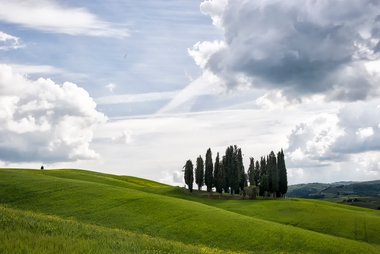
Tuscany is the region of central Italy around Florence. It combines Renaissance art cities, medieval hill towns, vineyards and a long coast with islands. Most visitors picture the classic landscape of cypress-lined roads, stone farmhouses and rolling hills. That image is real, but it is only one part of a large and varied region.
The region is easiest to understand as a set of areas, each with its own character:
- Florence and Chianti: the art capital and the wine hills between Florence and Siena.
- Siena and the Val d'Orcia: Gothic Siena, the bare Crete Senesi hills and the hill towns of the far south.
- Pisa, Lucca and the Versilia: walled cities on the plain, and long sandy beaches below the marble mountains.
- The Maremma and the coast: the wilder south-west, with hot springs, Etruscan towns and ferries to Elba and the islands.
- Arezzo and the Casentino: the quieter east, with Renaissance frescoes, forests and monasteries.
- The Garfagnana: a green mountain valley north of Lucca, for walking and slow food.
Tuscany suits a slow trip. Pick one or two bases, spend a few days in each, and use them to explore the countryside around.

Toskánsko – Plánuješ výlet?
Zostav si itinerár deň po dni v aplikácii Tripomatic.


Kedy navštíviť
Late spring and early autumn are the best times, with warm days and green or golden hills. Summer is hot and crowded inland but is the season for the coast and the islands. Winter is quiet and often wet. The coast stays mild, while the Apennines and the Apuan Alps get snow and the inland hills are cooler.
The biggest event is the Palio di Siena, a horse race around the main square on 2 July and 16 August. Book a room early if you want to see it.
Najlepší čas na návštevu: máj, september
Hlavné pamiatky


This list covers the countryside and smaller towns. The big cities have their own guides: Florence, Siena, Pisa and Lucca.
Siena and the Val d'Orcia
- Val d'Orcia is the classic Tuscan landscape of soft hills, farmhouses and cypress rows, protected as a UNESCO World Heritage site. Two of its most photographed spots are Cypresses of San Quirico d'Orcia beside the Via Cassia and the lonely Cappella della Madonna di Vitaleta.
- Tempio di San Biagio stands alone in a field below Montepulciano. It is a domed Renaissance church built of honey-coloured travertine.
- Square of the Springs in the hamlet of Bagno Vignoni has a large pool of steaming spring water in place of a paved square.
- Abbey of Sant'Antimo is a pale Romanesque abbey in a quiet valley below Montalcino.
- Abbey of Monte Oliveto Maggiore is a brick monastery in the Crete Senesi, with a cloister covered in Renaissance frescoes.
- Abbazia di San Galgano is a roofless Gothic church in open fields. On the hill above, the round chapel of Montesiepi holds the legendary Spada nella Roccia di San Galgano, a medieval sword set in a rock.
- Mura di Monteriggioni form a complete ring of walls and towers around a tiny village on the road between Florence and Siena.
Florence and Chianti
- Brolio Castle is a castle and wine estate in the Chianti hills. The family that owns it shaped the original Chianti wine recipe.
- Collegiata di Santa Maria Assunta in San Gimignano is covered inside with bright medieval frescoes. The town's stone towers are visible from far across the hills.
- Palazzo dei Priori faces the main square of Volterra, a hilltop town known for Etruscan history and alabaster.
The Maremma
- Saturnia Hot Springs are warm, sulphurous pools on a series of white limestone terraces. They are free and open day and night.
- Palazzo Orsini sits in Pitigliano, a town built on the edge of a cliff of soft volcanic stone. The best view of the town is from the main road just below it.
- Giardino dei Tarocchi is a park of giant mosaic sculptures by Niki de Saint Phalle. It opens from spring to autumn, in the afternoon only.
Arezzo, Lucca and the north
- Basilica di San Francesco in Arezzo holds Piero della Francesca's fresco cycle of the Legend of the True Cross, one of the great works of the early Renaissance.
- Ponte della Maddalena is a steep medieval bridge over the Serchio river, on the road from Lucca into the Garfagnana.
Odporúčané zoznamy


Architectural Wonders of Tuscany
Explore the cradle of the Renaissance and the pinnacle of Italian Gothic and Romanesque design through Tuscany's most iconic cathedrals, palaces and medieval squares.
20 miest
Čo zažiť
Many of the best moments in Tuscany are about food, wine, water and local festivals.
- Taste wine at the estate: visit a cellar in Chianti, Montalcino or Montepulciano. Most estates want you to book a tasting in advance. Do not drink and drive. Book a driver or a tour, or take turns as the driver.
- Soak in a hot spring: bathe in the free warm pools of Saturnia Hot Springs or Bagni San Filippo. Go early in the morning or after dark to avoid the crowds.
- Watch a medieval festival: besides the Palio in Siena, Arezzo holds the Giostra del Saracino, a jousting contest in Piazza Grande on the third Saturday of June (evening) and on the first Sunday of September.
- Ride the white roads: rent a bike on the gravel roads of Chianti. In early October, thousands of riders on vintage bikes and in wool jerseys join L'Eroica in Gaiole in Chianti.
- Hunt for truffles: San Miniato, between Pisa and Florence, holds a large white truffle market on the last three weekends of November. Truffle hunters around the town take visitors out with their dogs.
- Walk into a marble mountain: above Carrara, guided tours go inside working marble quarries in the Apuan Alps, where Michelangelo chose his stone.
- Walk the Via Francigena: the old pilgrim route to Rome crosses Tuscany. The stretch from San Gimignano through Mura di Monteriggioni to Siena makes a good two-day walk.
Prehliadky a aktivity
Toskánsko — Mapa

 Otvoriť interaktívnu mapu
Jednodňové výlety
Most of Tuscany is a day trip from somewhere else in Tuscany, so the sights above already cover the region. These trips cross into neighbouring areas or out to sea.
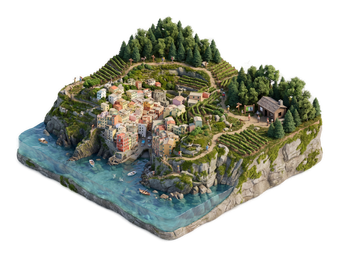
- Cinque Terre: about 1.5 hours by train from Pisa, changing at La Spezia. Five colourful fishing villages on the cliffs of Liguria, linked by train and coastal paths.
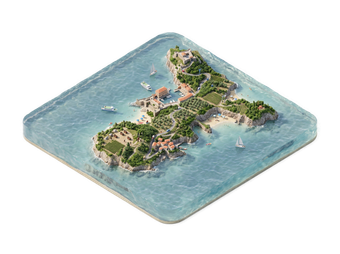
- Elba: about 1 hour by ferry from Piombino. Tuscany's largest island has beaches, clear water and Napoleon's houses. It is better for a few nights than a single day.
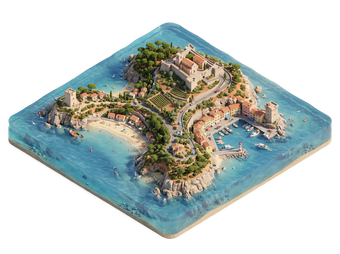
- Isola del Giglio: about 1 hour by ferry from Porto Santo Stefano on the Monte Argentario peninsula. A small, rocky island with a pretty harbour and swimming coves.
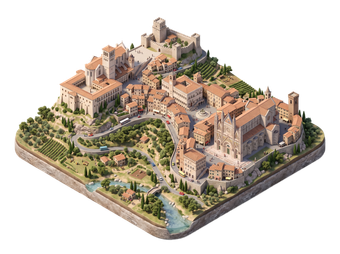
- Umbria: about 1 to 1.5 hours by car from Cortona or Montepulciano. The neighbouring region has Assisi, Perugia, Orvieto and Lake Trasimeno.
Kam sa vybrať
The right base depends on how you want to travel. Choose a city if you want to use trains and buses, and a farm stay or small town if you have a car.
- Florence and Chianti: Florence is the transport hub and works without a car. Fiesole sits in the hills just above it. Greve in Chianti is a good wine-country base. Prato and Pistoia are quieter cities a short train ride away.
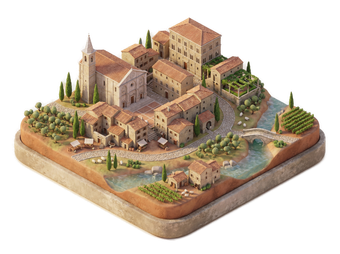
- Siena and the south: Siena is the main base. For the Val d'Orcia, stay in Pienza, Montepulciano or Montalcino. San Gimignano and Volterra sit to the west.
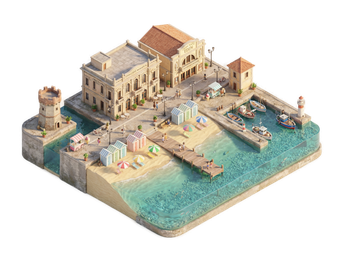
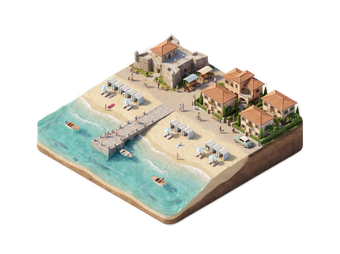
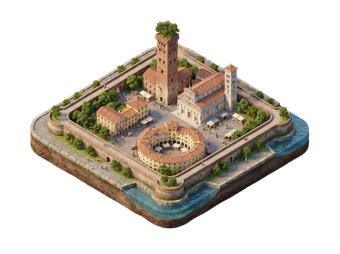
- Pisa, Lucca and the coast: Lucca is the most pleasant base in the north-west, with good trains to Pisa. Viareggio and Forte dei Marmi are the beach towns of the Versilia. Montecarlo is a small wine village near Lucca.
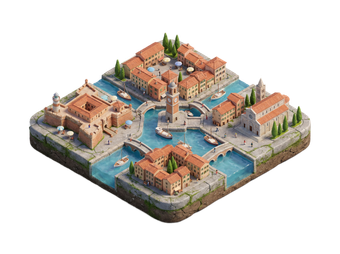
- The Maremma and the islands: Livorno and Cecina sit on the northern coast. Castiglione della Pescaia is a seaside town further south, near Grosseto. Offshore lies the Tuscan Archipelago, with Elba and its port Portoferraio, and Isola del Giglio.
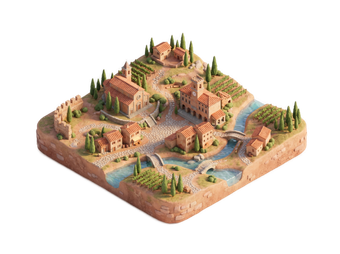
- Arezzo and the east: Cortona is a hill town with wide views over the Val di Chiana and a train station in the valley below.
Tuscany borders Liguria, Emilia-Romagna and Umbria.
Ako sa tam dostať
- By air: Pisa Airport has the most international flights. The PisaMover shuttle reaches Pisa Centrale station in about 5 minutes, and direct buses run to Florence in about 1 hour. Florence Airport is smaller; the T2 tram reaches the city centre in about 20 minutes. Bologna and Rome Fiumicino airports are good alternatives, with high-speed trains from both cities to Florence.
- By train: high-speed trains stop at Firenze Santa Maria Novella on the main line between Milan, Bologna and Rome. Intercity trains run along the coast through Pisa and Livorno between Genoa and Rome. Trenitalia
- By car: the A1 motorway crosses eastern Tuscany between Bologna and Rome, and the A12 follows the northern coast from Genoa.
- By ferry: ferries to Elba leave from Piombino and take about 1 hour. Ferries to Isola del Giglio leave from Porto Santo Stefano.
Doprava na mieste
- Car or not?: the cities and the coast work well by train. The Val d'Orcia, Chianti, the Maremma and most farm stays really need a car.
- Trains: regional trains link Florence, Pisa, Lucca, Viareggio and the coast often. Trains from Florence also reach Arezzo and the station below Cortona. Buy tickets in the Trenitalia app or at machines. Trenitalia
- Buses: Autolinee Toscane runs city and country buses across the region. For Florence to Siena, the fast bus (about 1 hour 15 minutes) is quicker than the train. You can tap a contactless bank card or phone on Autolinee Toscane buses; on suburban and fast lines, tap again when you get off. Country buses are rare on Sundays. Autolinee Toscane
- Ferries: several companies sail from Piombino to Elba, and from Porto Santo Stefano to Giglio. Book ahead for a car in summer.
- On foot and by bike: old town centres are compact and best on foot. Many are on steep hills. The gravel roads of Chianti and the Val d'Orcia are popular for cycling, but the hills are long.
Šoférovanie
- Is a car worth it?: yes, for the countryside. Leave it at your base when you visit Florence, Pisa or Lucca, and use the train.
- ZTL zones: almost every historic centre, even in small hill towns, is a limited traffic zone (ZTL). Cameras record every car that enters, and the fine arrives months later. If your hotel is inside, ask it to register your plate.
- Parking: park in the signed car parks outside the walls. Blue lines are paid, white lines are usually free, and yellow lines are for residents. Pay at a machine or with a parking app.
- Roads: the A1 and A12 motorways have tolls, while the dual carriageways from Florence to Siena (RA3) and to Pisa and Livorno (FI-PI-LI) are free for cars. Country roads are narrow and winding, and many scenic routes are gravel strade bianche. Allow more time than the map suggests.
Jedlo a pitie
Tuscan food is simple and built on good bread, olive oil, beans and meat. Look for bistecca alla fiorentina (a thick T-bone steak served rare), ribollita (bread and vegetable soup), pici (thick hand-rolled pasta) and pecorino cheese from Pienza. On the coast, try cacciucco, the spicy fish stew of Livorno. In the north, look for lardo di Colonnata from the marble hills and dishes made with farro (spelt) from the Garfagnana. Tuscan bread is made without salt, so it goes well with salty cured meats.
Wine is a reason to come in itself. The main names are Chianti Classico, Brunello di Montalcino, Vino Nobile di Montepulciano, white Vernaccia di San Gimignano and the Bolgheri reds of the coast. Taste them at the source in the wine towns, or in an enoteca (wine bar). For the best everyday food, eat in a family trattoria in a small town, or at a farm stay (agriturismo) that serves dinner from its own produce.
Bezpečnosť a zdravie
Tuscany is very safe. The main risk is pickpocketing in crowds, at busy train stations and on buses in Florence and around the Leaning Tower in Pisa.
- Heat: summer heat inland can be intense. Visit hill towns early or late in the day, and carry water.
- Hot springs: the limestone terraces are slippery. Wear water shoes, and keep jewellery off, as sulphur water tarnishes silver.
- Sea: check the flag on beaches and swim inside the marked areas.
- Countryside: wild boar hunting takes place in autumn and winter. Stay on marked paths and wear something bright.
- Mountains: paths in the Apuan Alps and the Apennines can be steep, and weather changes fast. Call 112 in an emergency.
História
The Etruscans ruled this land long before Rome. Their hill towns still stand, and Museo etrusco Guarnacci in Volterra has one of the best collections of their art. In the Maremma, around Pitigliano, deep roads cut into the soft volcanic rock survive from Etruscan times.
In the Middle Ages, rival city-states fought for power. Florence and Siena were bitter enemies, and Siena built Mura di Monteriggioni in the early 13th century as a front-line fortress against Florence. Pilgrims walking to Rome on the Via Francigena brought trade and churches along the way. Siena surrendered to Florence and its Spanish allies in 1555. Its last loyalists held out in Fortezza di Montalcino until 1559.
Under the Medici family, Florence became the centre of the Renaissance, and the whole region became the Grand Duchy of Tuscany. Pope Pius II rebuilt his home village as Pienza, a model town of the new style. Tuscany voted to join a united Italy in 1860, and Florence was briefly the national capital from 1865 to 1871. The Tuscan dialect of Dante became the basis of modern Italian.
Fakty o krajine
Quick practical facts for Italy at a glance:
- Mena
- euro EUR € · Platby kartou · Široko akceptované
- Tiesňové čísla
- 112
- Elektrina
- 230 V · 50 HzTyp C / Typ F / Typ L
- Jazyky
- taliančina
- Voda z vodovodu
- Pitná
- Jazdná strana
- Vpravo
- Predvoľba
- +39
Toskánsko – Naplánuj si výlet
Vyber si miesta, ktoré chceš vidieť, a Tripomatic ich premení na trasu deň po dni – s inteligentným plánovaním trás, časovými odhadmi a všetkým potrebným pre dokonalý výlet.


Súvisiace destinácie

Florencia

Siena
Elba

Lucca

Pisa
Montepulciano

Montalcino

San Gimignano
Volterra
Národný park Cinque Terre
Isola del Giglio
Umbria
Cortona

Fiesole

Greve in Chianti
Prato
Pistoia
Pienza
Viareggio
Forte dei Marmi
Montecarlo
Livorno
Cecina
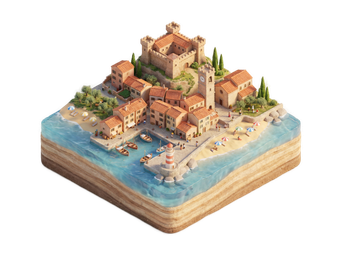
Castiglione della Pescaia
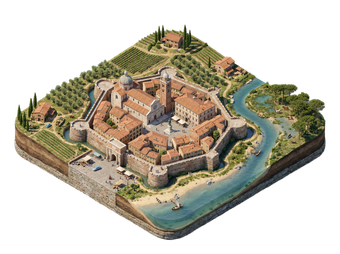
Grosseto

Toskánske ostrovy

Portoferraio
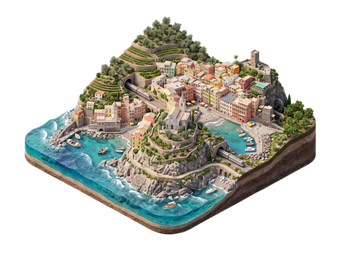
Ligúria
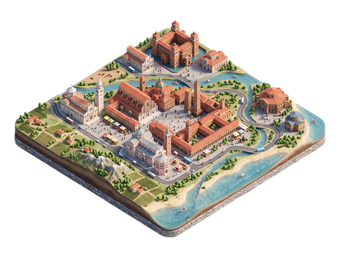
Emilia-Romagna
Data: © OpenStreetMap contributors, Wikidata, Wikipedia, Tripomatic, Official websites, geoBoundaries (CC BY 4.0). Tours by GetYourGuide. We earn commission from bookings. Travel guide generated with AI.