



Aalborg
Aalborg is Denmark's fourth-largest city, built along the narrow Limfjord in North Jutland. For centuries the city lived from herring trading and heavy industry — cement works, shipyards, and tobacco factories lined its waterfront. Over the past two decades the old industrial harbour has been rebuilt into parks, concert halls, and museums, turning Aalborg into a compact, youthful city that feels more like a university town than a former factory port.
It suits travelers who want an easygoing city break without Copenhagen-sized crowds: a walkable historic centre, a lively nightlife street, and a cluster of striking modern architecture along the water. The architect Jørn Utzon, who designed the Sydney Opera House, grew up here, and his influence still shows in the city's newer buildings.

Aalborg – Planning a Trip?
Build your day-by-day itinerary in the Tripomatic app.


When to visit
Spring and autumn are mild, with cool evenings and a fair share of rain. Summer (June to August) is the best time to visit, with the longest days and the driest, warmest weather. Winter is cold, dark, and often wet, though the main square gets a Christmas market for some cheer.
Plan around the Aalborg Carnival (Aalborg Karneval) in late May, the largest carnival in Scandinavia, when tens of thousands of costumed participants parade through the streets over a long weekend.
Even in summer, breezes off the Limfjord keep evenings cool — bring a light layer regardless of season.
Top sights
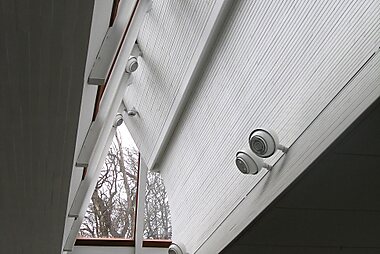

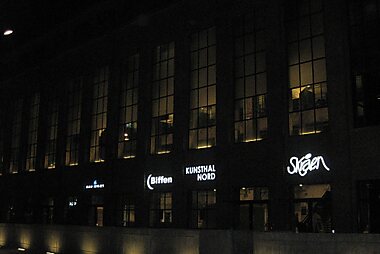
KUNSTEN Museum of Modern Art is Aalborg's leading art museum, a striking modernist building that houses Danish and international 20th-century art.
Designed by Jørn Utzon as a meeting place for young architects rather than a conventional museum, Utzon Center sits on the waterfront and was the last building the Sydney Opera House architect completed before his death.
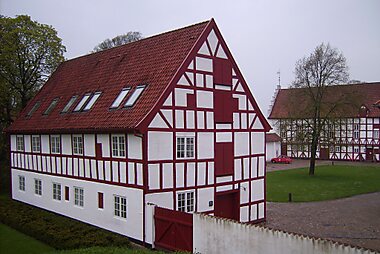
Aalborghus Castle is a well-preserved 16th-century royal fortress in the heart of the city, with its half-timbered wings and grounds still open to visitors.
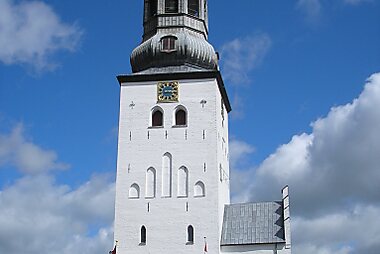
The city's cathedral, Budolfi Cathedral, anchors the old town with its baroque spire, a landmark visible from across the harbour.
Across the Limfjord in Nørresundby, Lindholm Høje is one of Denmark's most important Viking-era burial grounds, with hundreds of stone ship settings dating back over a thousand years.
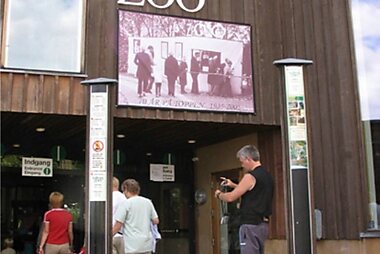
Aalborg Zoo is home to more than 1,500 animals from around 126 species, with enclosures designed to bring visitors close to the wildlife.
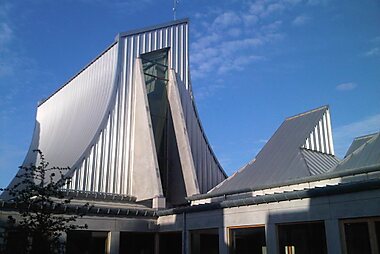
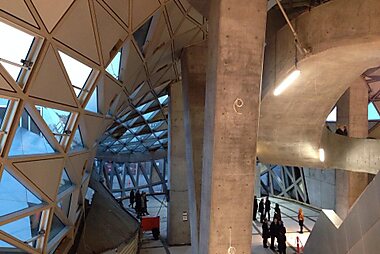
The concert hall Musikkens Hus, built into a sweeping glass and timber structure on the harbourfront, is worth a look even without a ticket for a performance.
Featured Lists


Aalborg Cultural Highlights
Aalborg's cultural landscape is defined by landmark architecture and diverse historical institutions. The city hosts the Utzon Center, the final work of Sydney Opera House architect Jørn Utzon, and the Kunsten Museum of Modern Art, designed by Alvar Aalto. Regional history is preserved at the Aalborg Historical Museum and the Maritime Experience Centre on the wharf. Performing arts venues include the 1878 Aalborg Teater and the contemporary Teater Nordkraft, situated in a repurposed industrial power plant.
6 places
What to experience
Aalborg's most distinctive moments happen outdoors, along the water, and after dark.
- Join the crowds on Jomfru Ane Gade on a weekend night — Denmark's densest strip of bars, where the whole street spills onto outdoor tables in summer.
- Watch the sunset from the deck at Aalborg Tower, a steel lattice tower on a hill above the city with views over the Limfjord.
- Walk or cycle the harbourfront promenade past Nordkraft, a former power station turned cultural centre with a cinema, theatre, and live-music venue.
- Cross Limfjordsbroen on foot or by bike into Nørresundby — it still opens for ship traffic, a reminder the harbour is a working one.
- On a warm day, rent a kayak or paddleboard and get out onto the Limfjord itself, for a different view of the city's waterfront architecture.
Tours & Activities
Aalborg — Map

 Open the interactive map
 Day trips
Aalborg sits at the base of North Jutland, so day trips range from wooded hills to open North Sea coast.
- Nibe — a small, well-preserved fjord trading town with 18th-century merchant houses, ≈30 min by car or bus.
- Rebild Bakker National Park — heather-covered hills that host what is commonly believed to be the largest Fourth of July celebration outside the United States, good for a half-day walk, ≈35 min by car or bus.
- Fyrkat Viking Ring Fortress, near Hobro — a reconstructed 10th-century circular Viking fortress with a rebuilt longhouse, ≈50 min by car or train.
- Blokhus and Løkken — North Sea beach towns with wide sandy beaches you can drive onto, ≈45–60 min by car.
- Skagen — the artists' town at Denmark's northern tip, where the North Sea and Baltic meet at Grenen, ≈1.5–2 hours by car or direct train; a longer trip, but the classic flagship excursion from North Jutland.
Getting there
- By air: Aalborg Airport (AAL) is about 6 km northwest of the centre, with domestic flights from Copenhagen and a small number of international routes, mostly seasonal. A bus runs into the centre in around 15–20 minutes; a taxi costs roughly 150–200 DKK.
- By train: Aalborg station sits on Denmark's main Jutland line, with direct trains to Aarhus (about 1h30) and Copenhagen (about 4h), plus regional trains north to Frederikshavn and Skagen.
- By bus: Long-distance coaches connect Aalborg to Aarhus and Copenhagen, usually cheaper and slower than the train.
Getting around
- Public transit: City buses, run by Nordjyllands Trafikselskab, cover the whole city. Tap a contactless bank card or phone directly on board — no ticket machine needed. Use Rejseplanen to plan routes and check times.
- Taxi / ride-hailing: Regular taxis are easy to find in the centre; Uber does not operate in Aalborg, so use a local taxi app or hail one at a rank.
- On foot / cycling: The old town and harbourfront are compact and easy to walk. Aalborg is flat and well set up for cycling, with dedicated lanes on most main streets and bikes available to rent by the day.
Driving
- Is a car worth it?: Not for the city centre — it's compact and walkable — but useful for reaching Rebild Bakker, the coast, or Skagen in a single day.
- Parking: Paid garages and metered street parking cover the centre; pay by app or at a machine, typically 15–25 DKK per hour.
- Restrictions: No congestion charge or low-emission zone applies in Aalborg.
Food & drink
North Jutland's fishing heritage shows up on menus across the city — look for fried plaice, smoked mackerel, and pickled herring alongside standard Danish smørrebrød. Akvavit named after the city is still a fixture behind local bars, even though the brand's production has since moved abroad.
For a night out, head to Jomfru Ane Gade, Denmark's most concentrated stretch of bars and restaurants, busy most nights of the week. For a calmer meal with harbour views, the restaurants around the Kennedy Arkaden waterfront serve everything from casual bistro food to fresh seafood.
Safety & health
Aalborg is a safe city to visit, with low rates of violent crime. The main risk for travelers is pickpocketing or a snatched phone late at night around Jomfru Ane Gade, especially on Karneval weekend when the street is at its most crowded.
Bike theft is common — always lock a rented bike, even for a short stop, and never leave one unlocked overnight.
History
Aalborg's position at the narrowest crossing point of the Limfjord made it a natural trading post as early as the Viking Age — the Lindholm Høje burial ground across the water in Nørresundby shows the area was already densely settled over a thousand years ago. The city's name comes from Old Norse and most likely means "the fort by the stream," after a waterway that once ran through the settlement.
By the Middle Ages, Aalborg had become one of Denmark's leading herring ports, and its merchant wealth built the city's oldest surviving buildings, including Budolfi Cathedral. King Christian III fortified the city with Aalborghus Castle in the mid-1500s, after a peasant uprising had briefly seized Aalborg during the civil war known as the Count's Feud.
Industry reshaped the city from the 19th century onward, with cement works, shipyards, and a large tobacco and spirits industry along the harbour. Much of that heavy industry closed by the late 20th century, and the old harbourfront has since been rebuilt around a university, museums, and concert halls.
Country facts
Quick practical facts for Denmark at a glance:
- Currency
- Danish Krone DKK kr · Card payments · Widely accepted
- Emergency numbers
- 112
- Electricity
- 230 V · 50 HzType C / Type E / Type F / Type K
- Languages
- Danish
- Tap water
- Safe to drink
- Driving side
- Right
- Calling code
- +45


Aalborg – Plan Your Days
Turn the places from this guide into a real itinerary, with smart routing, time estimates, and everything you need for a perfect trip.




