



Algeria
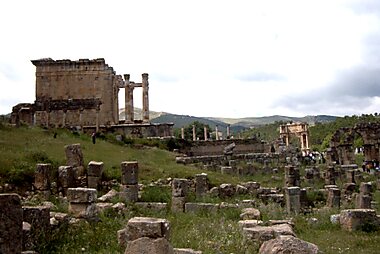
Algeria is the largest country in Africa. A green Mediterranean coast with mountains and Roman ruins gives way to the Sahara, which covers most of the country. Tourism is still small, so the big sights are rarely crowded. The country has seven UNESCO World Heritage Sites, including the Casbah of Algiers, the Roman towns of Tipaza, Djémila and Timgad, the M'zab Valley and the rock art of Tassili n'Ajjer.
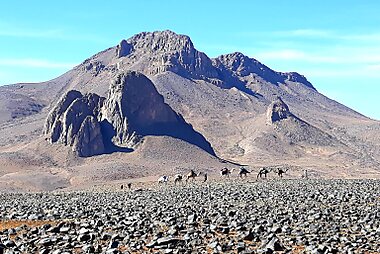
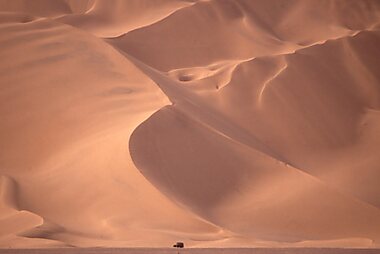
The north suits travellers who like history, old towns and good food. The desert south offers dunes, oases and volcanic mountains, but it is visited mostly on organised tours with an accredited Algerian agency. Parts of the south and the border areas are under official travel warnings — read the safety section before you plan. Algeria suits patient, independent-minded travellers who do not need polished tourist services.


Algeria – Planning a Trip?
Build your day-by-day itinerary in the Tripomatic app.


Money & payments
Algeria is a cash economy. Outside large hotels, some shops and airline offices, you pay in dinars.
- Cards and ATMs: foreign cards work at some bank ATMs in the big cities, but not reliably. Bring enough euros or US dollars in cash as a backup, especially for the south.
- Changing money: change money only at banks, hotels or official exchange offices, and keep every receipt.
- Customs: visitors may not bring dinars into or out of Algeria. Declare foreign cash worth more than €5,000 when you arrive. When you leave, you must show this declaration, stamped by a bank or official exchange office, to take unused foreign currency out.
- Costs: food, fuel and transport are cheap. Hotels and organised desert tours are the main costs.
Featured Lists


Algeria's Historic Treasures
Algeria’s landscape is a living museum of North African history, spanning Neolithic rock art in the Tassili n'Ajjer to the Roman maritime ruins of Tipaza and Caesarea. This collection highlights the diverse architectural heritage of the region, including Ottoman-era palaces in Oran, fortified Saharan ksars, and 16th-century Spanish coastal forts. The list also documents modern history through 20th-century rocket launch pads and desert military outposts, offering a comprehensive view of the civilizations that have shaped the nation.
48 places
Notable Islamic Sites
Algeria’s religious landscape features a diverse array of Islamic architecture, from the Ottoman-influenced Hassan Pasha Mosque in Oran to numerous marabouts and shrines dedicated to local saints. This list includes significant places of worship and mausoleums across the country, highlighting both grand urban mosques and remote Saharan shrines. These sites serve as centers for spiritual life and historical landmarks reflecting centuries of Islamic tradition in North Africa.
20 places
Algeria's Natural Wonders
Algeria's diverse landscape spans from the massive sand dunes of the Grand Erg Oriental to the ancient geological formations of the Sahara. This selection includes the Tin Bider and Ouarkziz impact craters, the latter dating back nearly 70 million years. Visitors can explore the seasonal waterfalls of the Ahaggar Mountains, such as Téḍalik, and discover prehistoric rock engravings. The list also features numerous viewpoints across the Atlas ranges and desert plateaus, offering unique perspectives on the country’s vast and varied topography.
19 placesTours & Activities
Algeria — Map

 Open the interactive map
 Tipping
Tipping is not a fixed rule in Algeria, but small tips are welcome. Round up the bill in cafés and taxis. In restaurants with table service, leave about 5–10 % if you liked the service. On desert tours, guides, drivers and cooks expect a tip at the end of the trip.
round up or 5–10 %
round up
small tip for porters
tip guides and drivers at the end of a tour
Electricity
Algeria uses the standard European round-pin sockets at 230 V / 50 Hz, so most European plugs fit without an adapter.
Language
Arabic and Tamazight (Berber) are the official languages. People speak Algerian Arabic, called Darja, and Kabyle and other Berber languages in some regions. French is still widely used in business, shops and on signs. English is not widely spoken outside large hotels, so a few words of French or Arabic help a lot.
Road signs and many shop signs are in Arabic and French. Some official signs also use the Tifinagh (Berber) script.
Staying connected
- SIM cards: the three mobile networks are Mobilis, Djezzy and Ooredoo. Buy a prepaid SIM at an official shop and bring your passport.
- Coverage: 4G is good in cities and along the coast. Coverage is weak or absent in much of the Sahara, so do not rely on your phone on desert trips.
Safety & emergencies
Official travel warnings
- UK (FCDO): advises against all travel within 30 km of Algeria's entire borders with Libya, Mauritania, Mali and Niger.
- UK (FCDO), Tunisian border: advises against all travel within 30 km of the Tunisian border in Illizi and Ouargla provinces and in the Chaambi mountains area. It advises against all but essential travel within 30 km of the rest of the Tunisian border.
- US (State Department, Level 2): says do not travel to rural areas within 60 km of the borders with Libya, Niger, Mali and Mauritania, and to Bordj Badji Mokhtar, Illizi, In Guezzam, In Salah, Tamanrasset, the mountainous areas of Tébessa province, and Tindouf. It also says do not travel to remote areas of the Sahara without an organised tour group.
The main risks are terrorism and kidnapping, highest in remote desert and border areas. In the south, travel only with an accredited Algerian agency, which arranges the guides, transport and paperwork. Expect a visible police presence, which can include an escort in some areas. Check the current advice before you book, and check that your insurance covers the regions you plan to visit.
Everyday safety
- Cities: most visits to Algiers, Oran and the northern cities are trouble-free. Pickpocketing and bag snatching happen in crowds. Avoid unfamiliar areas after dark.
- The Casbah: its steep, maze-like lanes are easy to get lost in. Visit with a good local guide.
- Checkpoints: police and army checkpoints are common. Approach slowly, follow instructions and keep your passport with you.
- Roads: Algeria has a very high rate of road accidents. Avoid driving at night outside towns.
- Photography: do not photograph police, soldiers or government buildings. Drones, binoculars and some camera equipment need official permission to bring into the country.
Health
- Water: drink bottled water. It is cheap and sold everywhere.
- Medical care: private clinics in the big cities are usually better than public hospitals. Care is very limited in the Sahara, so get insurance that covers medical evacuation.
- Pharmacies: every town has pharmacies, marked with a green cross, and pharmacists often speak French. Bring enough of any prescription medicine, with a copy of the prescription.
- Heat and sun: summer in the Sahara is extremely hot. Drink often and plan desert trips between October and April.
- Vaccinations: no vaccinations are required for most travellers. You need a yellow fever certificate if you arrive from a country with a risk of yellow fever. See a travel health clinic at least 8 weeks before your trip for advice.
Visas & entry
Most visitors, including citizens of the EU, the UK, the US and Canada, need a visa before they travel. Apply at the Algerian embassy or consulate in your country of residence.
- Standard tourist visa: you usually need a hotel reservation with a confirmation letter from a travel agency, or an invitation from a host in Algeria, certified at the local town hall.
- Visa on arrival for the Sahara: tourists visiting the tourist provinces of the Great South can get a visa on arrival. You must book the trip with an accredited Algerian travel agency. The agency sends your details to the authorities in advance and gives you an authorisation with a QR code to show on arrival.
- Passport: it must be valid for at least 6 months after your arrival date.
- Cruise passengers: visitors on an organised shore excursion from a cruise ship do not need a visa.
Visa and entry requirements change frequently. Verify current requirements with the official immigration authority or your country's embassy before travel.
Etiquette
Algeria is a conservative Muslim country. Good manners and modest dress go a long way.
- Dress: cover shoulders and knees in towns, markets and religious sites. Women should carry a scarf for visiting mosques. Beachwear is for the beach only.
- Ramadan: during the fasting month, do not eat, drink or smoke in public during daylight. Many cafés and restaurants close during the day and open after sunset, and working hours are shorter.
- Alcohol: drinking alcohol or being drunk in public is illegal. Alcohol is sold only in some hotels, bars, licensed restaurants and a few shops, mostly in the big cities. In the south and in the M'zab Valley it is hard to find.
- Greetings: shake hands with the right hand. Some religious men and women prefer not to shake hands with the opposite sex; wait for them to offer.
- Photography: ask before you photograph people, especially women. In the old towns of the M'zab Valley, photographing residents is strongly discouraged.
- Bargaining: bargain politely in markets and souks, but not in shops with fixed prices.
Holidays & opening hours
Banks, offices and many shops close on public holidays. Islamic holidays follow the lunar calendar and move about 11 days earlier each year. During Eid, transport is busy and many businesses close for several days.
The weekend is Friday and Saturday. On Friday, most shops close around midday prayers, and many stay closed until late afternoon. Offices and banks usually open Sunday to Thursday. During Ramadan, shops open later and life moves into the evening, after the fast is broken.
Getting around
- By air: distances are huge. Domestic flights with Air Algérie are the practical way to reach the Sahara, for example from Algiers to Ghardaïa, Djanet, Timimoun or Tamanrasset. The US government advises against travel to Tamanrasset, Illizi and areas near the southern and eastern borders, so check the current advice before you book. Carry your passport on every flight. Air Algérie
- By train: the SNTF rail network links the northern cities, including Algiers, Oran, Constantine and Annaba. Trains are cheap and comfortable, but slower than buses on some routes. SNTF – Algerian railways
- By bus and shared taxi: long-distance buses and shared taxis connect almost every town. They are cheap but get very full around holidays.
- In Algiers: the city has a metro, a tram and cable cars up the hills.
- In the Sahara: visitors travel with an accredited agency, which provides a 4×4, a driver and a guide.
Driving
- Road safety: accident rates are very high. Driving can be fast and unpredictable, and many roads have speed bumps, potholes and, in the south, drifting sand. Avoid driving after dark outside towns.
- Checkpoints: police and gendarmerie checkpoints are frequent. Slow down, stop when asked and keep your passport, licence and car papers ready.
- Licence: bring an International Driving Permit together with your national licence.
- Desert driving: do not drive in the Sahara on your own. Remote areas are under official travel warnings, and tourists travel there with accredited agencies.
- Fuel: stations are attended, and fuel is among the cheapest in the world. Pay in cash. In the south, stations are far apart, so fill up whenever you can.
Food & drink
Algerian food mixes Berber, Arab, Ottoman and French influences. Breakfast is light: coffee or milk with bread, pastries or msemen flatbread. Lunch is the main meal, and dinner is often late. Couscous is the national dish and is a family meal on Fridays. Other favourites are chorba soup, chakhchoukha in the east and rechta noodles in Algiers.
For snacks, try karantika, a chickpea flan sold from street stalls, and mhadjeb, a stuffed flatbread. Sweet pastries with dates, almonds and honey go with sweet mint tea or strong coffee. The oases produce excellent dates, and Algeria also makes wine, although alcohol is not easy to find. During Ramadan, families break the fast at sunset with dates, milk and chorba, and the streets come alive at night.
Where to explore
Algiers and the coast
- Algiers is the capital, built on hills above a large bay. Its sights include the old Ottoman Casbah, Dar Hassan Pacha, Palais des Raïs, the hilltop basilica Notre-Dame d'Afrique, the Martyrs Memorial and the huge Great Mosque of Algiers. The French-era centre is Alger Centre.
- Tipaza, west of Algiers, has the seaside Roman Ruins of Tipaza. On the hill above stands the Royal Mausoleum of Mauretania.
- Oran is the lively second city, known for raï music. Fort Santa Cruz looks down on the port.
- Tlemcen, near Morocco, has fine Islamic monuments, such as the Great Mosque of Tlemcen and El Mechouar Palace.
- Béjaïa sits between mountains and sea, next to Gouraya National Park.
The northeast
- Constantine is built on a rock cut by a deep gorge and crossed by dramatic bridges.
- Sétif is the base for Djémila, one of the best-preserved Roman towns in North Africa. The Roman town of Timgad lies further south, near Batna.
- Qal'at Bani Hammad is the ruin of an 11th-century capital in the hills.
- Annaba is a port city close to ancient Hippo, the town of Saint Augustine.
- Tizi Ouzou is the gateway to Kabylia and the mountains of Djurdjura National Park.
The Sahara
- M'zab Valley is a valley of five fortified hilltop towns, founded about a thousand years ago. Ghardaïa is the largest.
- Timimoun is a red-clay oasis town at the edge of the Grand Erg Occidental.
- Biskra and El Oued are oasis towns known for dates and domed houses.
- Tassili n'Ajjer protects sandstone plateaus with thousands of prehistoric rock paintings. Djanet is the base for tours. Parts of the region lie in Illizi province and near the Libyan border, where UK and US advice warns against travel, so check the current advice before you book.
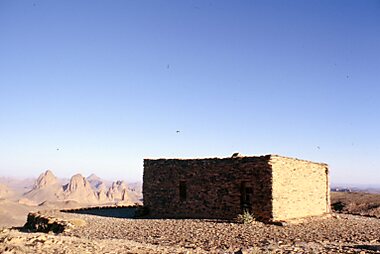
- Hoggar Mountains are volcanic peaks around Tamanrasset, including Mount Tahat, the highest point in Algeria. The US government advises against all travel to Tamanrasset, and tours here must use an accredited agency.
Algeria – Plan Your Trip
Pick the places you want to see and Tripomatic turns them into a day-by-day route, with smart routing, time estimates, and everything you need for a perfect trip.


Related destinations


Data: © OpenStreetMap contributors, Wikidata, Wikipedia, Tripomatic, Official websites, geoBoundaries (CC BY 4.0). Tours by GetYourGuide. We earn commission from bookings. Travel guide generated with AI.