



Andorra
Andorra is a tiny, landlocked principality tucked high in the eastern Pyrenees, between France and Spain. Most visitors come for two things: skiing in winter and duty-free shopping year-round, but the country also has quiet stone villages, Romanesque churches, and one UNESCO-listed valley for hikers.
It suits travelers who want an easy mountain break rather than a city trip. Andorra has no airport and no railway, so almost everyone arrives by road from Barcelona or Toulouse. The country is small enough to cross by car in under an hour, and its seven parishes each have a slightly different character, from busy shopping streets to quiet high-altitude hamlets.


Andorra – Planning a Trip?
Build your day-by-day itinerary in the Tripomatic app.


Money & payments
Andorra uses the euro, even though it is not a member of the European Union.
Cash machines are common in every town, and cards are accepted almost everywhere. Andorra is popular for tax-free shopping, so bring a card with a good foreign-transaction rate for larger purchases like electronics, perfume, or ski gear.
Featured Lists


Lakes and Waterfalls
Andorra's high-altitude landscape is defined by glacial cirques and steep valleys. This collection features the Tristaina lake circuit in Ordino, the trout-filled waters of Estany de les Truites in the Comapedrosa Natural Park, and the UNESCO-listed Madriu-Perafita-Claror valley lakes. Notable waterfalls include the accessible Cascada de les Moles and the Toll Bullidor near Meritxell, which features a dedicated viewing platform overlooking the rocky gorge.
14 places
Iconic Viewpoints & Monuments
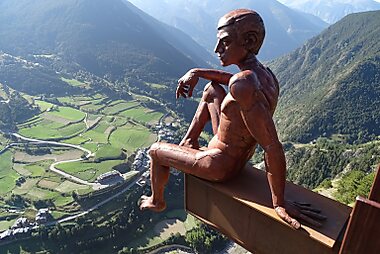
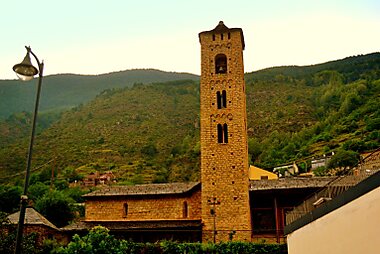
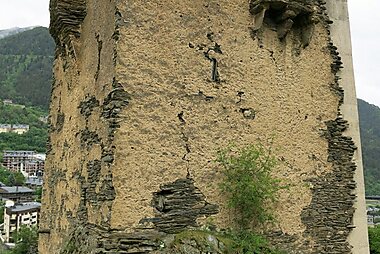
Andorra’s landscape is defined by high-altitude engineering and contemporary art. This selection features the cantilevered Roc de Quer and the circular Solar de Tristaina sundial, both offering expansive Pyrenean views. Cultural landmarks include Salvador Dalí’s melting clock sculpture in the capital and the 12th-century defensive Torre dels Moros in Encamp. These sites showcase the principality's history, from medieval stone fortifications to modern iron installations like Mauro Staccioli’s ring framing the Ordino valley.
12 places
Tours & Activities
Andorra — Map

 Open the interactive map
 Tipping
Tipping in Andorra is optional and never expected, though it is appreciated when service is good.
round up, or 5-10% at dinner
small change
small change for porters
a few euros
In cafés, leaving small change is enough. At restaurants, rounding up the bill or adding 5-10% for good service is common at dinner; lunch and quick meals usually just get rounded up. Tip in cash when you can, since it does not always reach staff when added to a card payment.
Electricity
Andorra uses Type C and Type F plugs at 230 V / 50 Hz, the same standard as the rest of continental Europe.
Language
Catalan is Andorra's only official language, though Spanish and French are spoken just as widely in daily life, and English is common in ski resorts, hotels, and shops. Menus and signs are often in several languages, so getting by without Catalan is easy.
Staying connected
Andorra is not part of the EU, so 'roam like at home' plans from EU or UK carriers usually do not cover it, and using your normal phone plan here can bring high roaming charges. Buying a local prepaid SIM from Andorra Telecom, or an eSIM that explicitly includes Andorra, is the cheapest way to stay connected for more than a day or two. Mobile coverage is reliable across the country, including most ski slopes.
Safety & emergencies
Andorra is one of the safest countries in Europe, with very little violent crime. The main risks for visitors are pickpocketing in busy shopping streets and ski-related injuries, so make sure travel insurance covers winter sports if you plan to hit the slopes.
Health
Tap water is safe to drink throughout the country. Pharmacies (farmàcies) are easy to find in every town and can advise on minor ailments without a doctor's visit. No special vaccinations are required for Andorra. Many towns and ski resorts sit between 1,000 and 2,500 meters, so visitors with heart conditions or limited fitness may notice mild effects from the altitude for the first day or two.
Visas & entry
Andorra is not a member of the EU or the Schengen Area, but it has no border posts with France or Spain, and since June 2026 its territory is treated as part of the Schengen system in practice, with no passport stamps on entry or exit. Citizens of the EU, UK, US, Canada, and most other visa-exempt nationalities can enter for up to 90 days with a valid passport, or a national ID card for EU citizens.
Because Andorra sits outside Schengen on paper, travelers on a single-entry Schengen visa should check that leaving Andorra back into France or Spain will not cause a problem before planning a day trip.
Visa and entry requirements change frequently. Verify current requirements with the official immigration authority or your country's embassy before travel.
Etiquette
Andorrans are relaxed and informal, similar to their Catalan neighbors. A handshake suits a first meeting; two cheek kisses are common once people know each other.
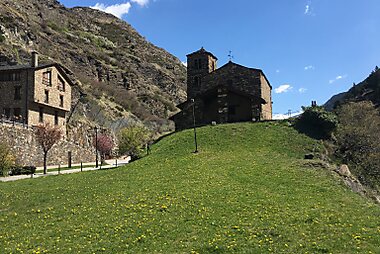
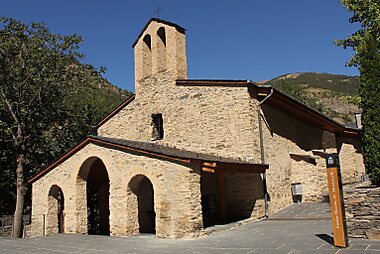
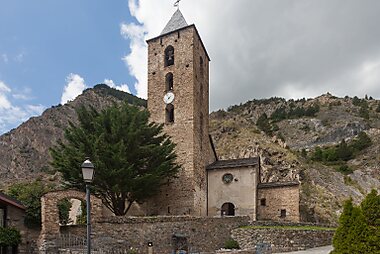
Cover shoulders and knees when visiting churches such as Church of Sant Joan de Caselles or Our Lady of Meritxell. Shopping streets fill up with day-trippers from France and Spain on weekends, so a little patience at the checkout goes a long way.
Holidays & opening hours
Public holidays can close shops and restaurants for the day, especially in smaller villages, though shops in Andorra la Vella and Escaldes-Engordany more often stay open for shoppers.
Most shops open Monday to Saturday, with a midday break of a couple of hours outside the main shopping streets. Sunday opening is common in the tax-free retail districts but rarer in smaller villages.
Getting around
- By air: Andorra has no airport of its own. Most travelers fly into Barcelona-El Prat or Toulouse-Blagnac and continue by direct coach, a journey of about 3 hours. A small regional airport just across the Spanish border, Andorra-La Seu d'Urgell, has limited seasonal flights.
- By bus: direct coaches run from Barcelona, Toulouse, and Girona airports straight to Andorra la Vella; book ahead during ski season.
- Within the country: a national bus network (andbus) links all seven parishes cheaply and runs frequently, and taxis are available in every town.
There is no railway in Andorra.
Driving
- Roads: winding mountain roads with hairpin bends connect the parishes; there are no motorways.
- Speed limits: 30-50 km/h in towns, up to 90 km/h on the open road outside built-up areas.
- Winter driving: snow chains or winter tyres are mandatory on many roads between November and April; check conditions before driving up to the ski resorts.
- Parking: paid parking is standard in Andorra la Vella and Escaldes-Engordany; look for blue-zone meters or covered car parks.
- Fuel: fuel is noticeably cheaper than in France or Spain thanks to lower duties; look for benzina (petrol) and gasoil (diesel) at the pump.
- Electric vehicles: charging points are limited outside the main towns, so plan longer routes in advance if driving an EV.
Food & drink
Andorran food follows the Catalan and Pyrenean mountain traditions of its two neighbors, built around hearty, warming dishes. Breakfast is simple, usually bread and coffee. Lunch, often the largest meal of the day, is eaten around 1-2pm, with dinner starting from 8pm onward.
Trinxat, a fried mix of cabbage, potato, and bacon, and escudella, a slow-cooked meat and vegetable stew, are classic mountain dishes worth trying, alongside cured meats and mountain cheeses from local farms. In ski season, look out for cargols (snails) and meats grilled over an open fire, often served in the small, family-run restaurants known as bordes.
Where to explore
Andorra is made up of seven parishes, each with its own character.
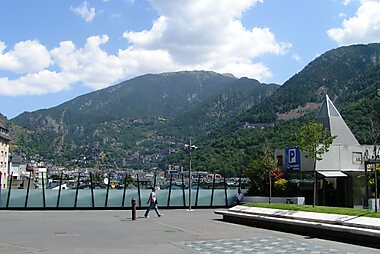
Andorra la Vella is the capital and main shopping hub, built around the historic Casa de la Vall. Next door, Escaldes-Engordany is home to Caldea, one of Europe's largest thermal spas.
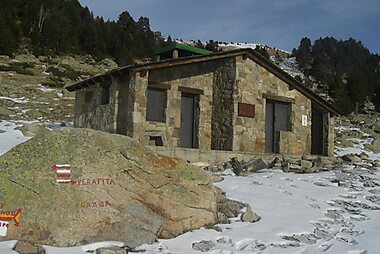
Canillo and Encamp, in the east, sit closest to the Grandvalira ski slopes, the Madriu-Perafita-Claror Valley — Andorra's only UNESCO World Heritage Site — and the cliffside Mirador Roc de Quer viewpoint.
La Massana and Ordino, to the north, are quieter and greener, with access to the Vallnord ski area.
Sant Julià de Lòria, in the south, is the main entry point from Spain and home to Naturlandia, a mountain adventure park.


Andorra – Plan Your Days
Turn the places from this guide into a real itinerary, with smart routing, time estimates, and everything you need for a perfect trip.


Related destinations


Data: © OpenStreetMap contributors, Wikidata, Wikipedia, Tripomatic, Official websites, geoBoundaries (CC BY 4.0). Tours by GetYourGuide. We earn commission from bookings. Travel guide generated with AI.