



Bangladesh
Bangladesh sits on the world's largest river delta, where the Ganges, Brahmaputra, and Meghna rivers meet the Bay of Bengal. Green rice paddies and countless rivers define most of the country. Dhaka, one of the world's most crowded capitals, sets a fast, chaotic pace. Beyond the capital, the Sundarbans mangrove forest shelters wild Bengal tigers, tea gardens roll across the hills around Sylhet, and Cox's Bazar claims the world's longest natural sea beach.
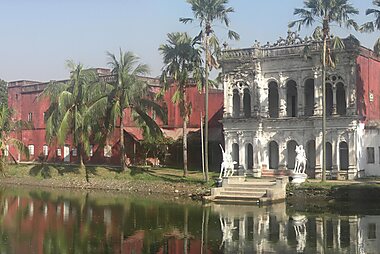
This is a rewarding destination for travelers who enjoy culture, food, and nature over polished tourist infrastructure. Mughal forts, colonial-era buildings, and Buddhist ruins reward history lovers. River trips and wildlife spotting suit nature-focused travelers. Bangladesh sees relatively few foreign visitors, so English is less common outside Dhaka and independent travel takes patience. Locals are welcoming and curious about visitors.


Bangladesh – Planning a Trip?
Build your day-by-day itinerary in the Tripomatic app.
Money & payments
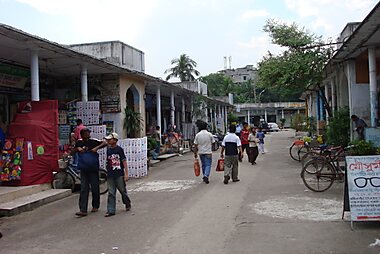
Cash is essential outside major hotels and shopping malls in Dhaka and Chattogram — rickshaws, local restaurants, and markets rarely take cards. ATMs are common in cities but scarce in rural areas and the Chittagong Hill Tracts, so withdraw enough before heading out of town. Budget travelers can get by on modest daily costs. Mid-range hotels, private transport, and restaurant meals push the total up quickly by local standards.


Featured Lists


Tours & Activities
Bangladesh — Map

Tipping
Tipping is not deeply rooted in Bangladeshi culture, but it is increasingly common in tourist-facing businesses. A restaurant bill sometimes already includes a service charge, so check before adding more. Rounding up the fare is appreciated for rickshaws and CNG auto-rickshaws. Tour guides and drivers on multi-day trips are usually tipped at the end.
round up or about 5-10%
small tip for porters or housekeeping
round up the fare
a few hundred taka per day
Electricity
The country uses Type A, C, D, G, and K plugs at 220 V / 50 Hz. Most modern phone and laptop chargers handle this automatically, but older appliances from outside the region may need a voltage converter.
Language
Bengali (Bangla) is the official language and the one spoken almost everywhere. English is common among hotel staff, guides, and educated younger Bangladeshis in Dhaka and Cox's Bazar, but drops off quickly in smaller towns and villages. Bengali uses its own script, so street signs, bus destinations, and menus outside tourist areas are often untranslated — a phrasebook or translation app helps.
Staying connected
Prepaid SIM cards from Grameenphone, Robi, or Banglalink are inexpensive and available at Dhaka's international airport and at shops around the country. Registering one requires your passport and a fingerprint scan, so buy from an official shop or the airport counter rather than an informal vendor. Internet access is normally unrestricted. The government has occasionally imposed temporary mobile-network or social-media restrictions during periods of political unrest, so check current conditions if you need mobile data for anything time-sensitive.
Safety & emergencies
Bangladesh is generally safe for tourists, and violent crime against visitors is rare. The biggest everyday risk is traffic: dense, congested, and short on functioning traffic lights or lane discipline. Cross streets carefully, and choose a licensed driver over self-driving. Petty theft and overcharging can happen in crowded markets and tourist spots; keep an eye on bags and agree on prices upfront. Political demonstrations and general strikes (hartals) occur periodically and can turn disruptive; avoid rallies and follow local news. The coast, including Cox's Bazar, sits in a cyclone-prone zone, mainly April–May and September–November — monitor weather warnings during those months.
Health
Tap water is not safe to drink; stick to bottled or filtered water, including for brushing teeth. Pharmacies are widely available in cities and often stay open late, but selection narrows outside major towns, so bring any prescription medication you need. Dengue fever is a real risk, especially during and after the monsoon (June–September) in urban areas, so use mosquito repellent and cover up in the evenings. Talk to a doctor or travel clinic a few weeks before your trip about recommended vaccinations for the region.
Visas & entry
Most foreign visitors need a visa to enter Bangladesh, though a number of nationalities can apply for an e-visa online before arrival or get a visa on arrival at Dhaka's international airport. Requirements and the list of eligible nationalities change often, so check well before booking flights, especially if arriving by land instead of by air. Business and longer-stay visas usually require an invitation letter and advance processing through a Bangladeshi embassy or consulate.
Visa and entry requirements change frequently. Verify current requirements with the official immigration authority or your country's embassy before travel.
Etiquette
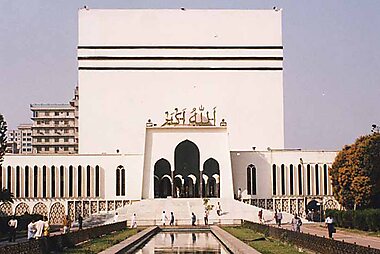
Bangladesh is a majority-Muslim country with conservative social norms outside upscale hotels. Dress modestly, with shoulders and knees covered for both men and women, and women may want to carry a scarf for mosque visits. Remove your shoes before entering a mosque or someone's home. A handshake is common between people of the same gender. Wait for the other person to offer a hand before greeting someone of the opposite gender. Ask before photographing people, and avoid pointing a camera at police, military, or government buildings. Bargaining is expected in markets and with rickshaw drivers, but not in shops with marked prices. Use your right hand for eating and for handing over money or objects. During Ramadan, avoid eating, drinking, or smoking in public during daylight hours out of respect for those fasting.
Holidays & opening hours
Public holidays can close shops, offices, and government services for a day or more, and transport gets busier around major ones. Government offices, banks, and much of the formal private sector close for a two-day weekend, Friday and Saturday. Many smaller shops and markets still open on Friday but pause around midday prayers, then reopen later.
Getting around
- By train: Bangladesh Railway links Dhaka with Chattogram, Sylhet, Rajshahi, and Khulna on affordable intercity trains; AC seats are worth the small extra cost on longer routes. Book ahead through Bangladesh Railway e-ticketing, especially around holidays.
- By air: Biman Bangladesh Airlines and private carriers such as US-Bangla and NovoAir fly from Dhaka to Cox's Bazar, Sylhet, Chattogram, and other regional airports — a fast alternative to a long road or rail trip.
- By bus: Private coach companies cover almost every route, including air-conditioned buses between major cities, and reach many towns that trains don't.
- By river: Passenger launches connect Dhaka with towns across the delta, including an overnight boat to Barishal — a slower but memorable way to see the country's waterways.
Bangladesh drives on the left, and city traffic is dense and often chaotic — most visitors are better off hiring a driver than renting a car themselves.
Driving
- Self-driving is uncommon: traffic in Dhaka and other cities is dense and undisciplined, so most visitors hire a car with a driver rather than drive themselves.
- Tolls: major bridges and the Dhaka Elevated Expressway charge tolls, usually paid in cash at the toll booth.
- Congestion: Dhaka's traffic is among the most congested of any capital. Build in extra time for airport transfers and any city-centre trip.
- Fuel: petrol stations are staffed rather than self-service, and petrol is usually sold under the local name Octane.
Food & drink
Rice and fish are at the heart of Bangladeshi cooking, especially hilsa (ilish), the national fish, often steamed in a mustard-seed sauce. Curries built on lentils, mustard oil, and a mix of spices accompany most meals. Biryani, especially Dhaka's kacchi biryani with slow-cooked mutton, is the classic choice for special occasions. Breakfast is often paratha (fried flatbread) with a simple vegetable curry, or in rural areas, panta bhat: rice soaked overnight in water, eaten with green chili and fried fish.
Street food is a big part of daily eating: try fuchka (crisp shells filled with spiced potato and tangy water), jhalmuri (puffed rice tossed with mustard oil and spices), and singara, a samosa-like fried pastry. For something sweet, look for roshogolla and sandesh, milk-based sweets sold by the piece at dedicated sweet shops, or mishti doi, a set sweet yogurt. Milky, sweet cha (tea) is drunk throughout the day, and the gardens around Sylhet supply much of the country's own crop. Alcohol is restricted and mostly available only in licensed hotel bars. Most everyday eating happens in small family-run eateries or street stalls rather than formal restaurants.
Where to explore
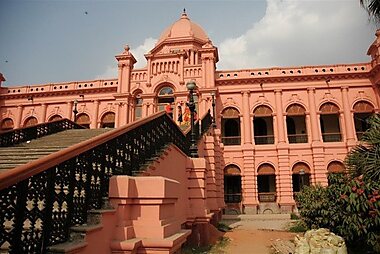
Dhaka is the capital and usual starting point, packed with Mughal forts, colonial buildings, and the country's densest concentration of museums and markets. Chattogram, the main port city, and Sylhet, ringed by tea gardens and wetlands, are the other major regional hubs. Sreemangal, in the hills near Sylhet, is the best base for visiting tea estates.
On the coast, Cox's Bazar is known for what's often called the world's longest unbroken natural sea beach, while the Sundarbans mangrove forest is one of the last major strongholds of the wild Bengal tiger. It is part of a UNESCO World Heritage-listed ecosystem that continues across the border into India, and is best explored on a multi-day boat trip. Khulna is the usual gateway city for Sundarbans trips, and nearby Bagerhat holds the Sixty Dome Mosque, another UNESCO site from the 15th century.
In the southeast, the hills of Bandarban and Rangamati, home to Bangladesh's indigenous hill communities and the vast Kaptai Lake, offer a cooler, greener contrast to the delta lowlands. Rajshahi, in the northwest, is the closest major city to the ancient Buddhist ruins of Paharpur.
Bangladesh – Plan Your Trip
Pick the places you want to see and Tripomatic turns them into a day-by-day route, with smart routing, time estimates, and everything you need for a perfect trip.




