


Bayreuth
Bayreuth is a small city in Upper Franconia, in northern Bavaria. It is known around the world for Richard Wagner and the annual Bayreuth Festival. Opera fans come here for the Wagner house and the festival theatre.
The city also has a baroque court heritage. A UNESCO-listed opera house and the Eremitage park date from the time of the margraves. The old town is compact and calm. Bayreuth suits a short trip for music, history and gardens, and it is a base for the hills of Franconian Switzerland.

Bayreuth – Planning a Trip?
Build your day-by-day itinerary in the Tripomatic app.


When to visit
Late spring to early autumn is the best time to visit. Summers are warm with some rain. Winters are cold, grey and short on sunshine.
The Bayreuth Festival is the event that shapes the year. It runs in July and August and stages only Wagner's operas at the Festspielhaus. Tickets are in very high demand, so plan far ahead.
Best time to visit: June, August, September
Top sights
- Margravial Opera House is a baroque theatre from the 1740s with a richly decorated wooden interior. It is a UNESCO World Heritage Site.
- Festspielhaus is the opera house that Richard Wagner built for his festival. It opened in 1876. The red brick building stands on a hill north of the centre.
- Eremitage is a large park with palaces, gardens and fountains. Margravine Wilhelmine used it as a country retreat.
- Neues Schloss is the margraves' palace in the centre, built in the 1750s after the old palace burned down.
- Wahnfried is Wagner's family villa. It is now part of the Richard Wagner Museum, with his grave in the garden.
- Iwalewahaus is a museum of modern African art.
What to experience
- Take a guided tour. See Bayreuth Tourismus for tours.
- Spend a half day in the Eremitage park with the gardens and fountains, and walk on to the Ruinentheater.
Tours & Activities
Bayreuth — Map

 Open the interactive map
Day trips
These trips are easy from Bayreuth. Most are best by train or car.
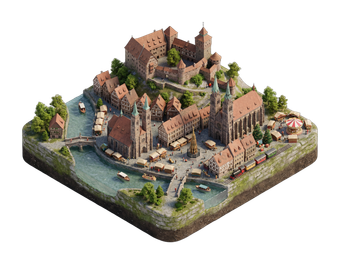
- Nuremberg: about 1 hour by regional train. It has a large old town and an imperial castle.
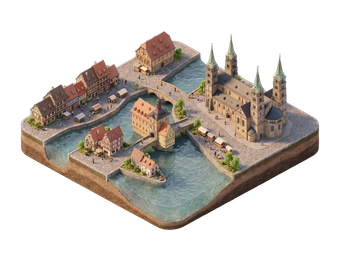
- Bamberg. The old town is a UNESCO World Heritage Site.
- Kulmbach: 30 to 60 minutes by train or car. The Plassenburg is a large hilltop castle above the town.
- Franconian Switzerland: a hilly region south-west of the city with caves, castles and hiking paths. A car makes it much easier to reach.
Where to explore
Further away, by train or car:
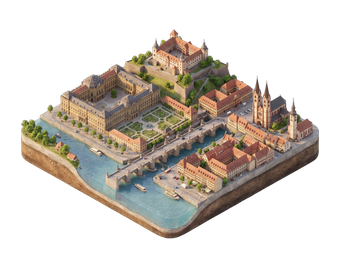
- Würzburg: a river city with a large baroque palace.
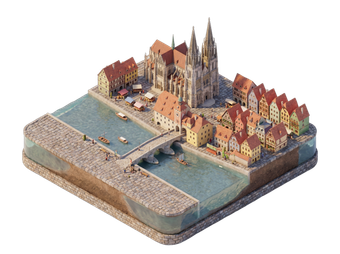
- Regensburg: a medieval old town on the Danube.
- Bad Kissingen: a classic spa town.
Getting there
- By air: Nuremberg Airport is the nearest major airport. Continue by regional train or car. Munich Airport is a second option, but it is farther away.
- By train: Bayreuth has regional trains to Nuremberg. Long-distance trips usually need a change, often in Nuremberg. Book on Deutsche Bahn.
- By car: Bayreuth is on the A9 motorway between Nuremberg and Berlin.
Getting around
- City buses: Stadtwerke Bayreuth runs the buses. See Stadtwerke Bayreuth for fares and sales points. The Deutschlandticket is valid.
- On foot and by bike: The old town and most sights are close together, so walking is easy. The Eremitage and the Festspielhaus are outside the centre. A bike or a bus helps for these.
Driving
- Is a car worth it?: Not for the city. Most sights are close together. A car is useful for Franconian Switzerland and the Fichtelgebirge hills.
- Parking: Use a car park near the centre. The main shopping street is a pedestrian zone.
Food & drink
Franconian cooking is hearty. Look for grilled Bratwurst, roast pork such as Schäufele, and potato dumplings called Klöße.
Beer is a local tradition. Maisel's is a wheat beer brewery in the city, with a brewery museum. For eating out, walk the old town around Maximilianstraße, where cafés, inns and restaurants cluster.
Safety & health
In crowds at festival time, keep bags closed and valuables close.
History
Bayreuth became a princely residence of the Hohenzollern margraves in 1603. The golden age came under Margravine Wilhelmine, the sister of Frederick the Great. Her court built the Margravial Opera House, and the Neues Schloss and the Eremitage date from the same period.
Richard Wagner moved here in 1872. His Festspielhaus opened in 1876 with the first full performance of the Ring cycle. The composer Franz Liszt, Wagner's father-in-law, died in Bayreuth in 1886. The writer Jean Paul also lived in the city.
Country facts
Quick practical facts for Germany at a glance:
- Currency
- Euro EUR € · Card payments · Commonly accepted
- Emergency numbers
- 112 Ambulance · Fire brigade
- Electricity
- 230 V · 50 HzType C / Type F
- Languages
- German
- Tap water
- Safe to drink
- Driving side
- Right
- Calling code
- +49


Bayreuth – Add to Your Trip
Create a detailed travel itinerary with smart routing, time estimates, and everything you need for a perfect trip.


Related destinations
Data: © OpenStreetMap contributors, Wikidata, Wikipedia, Tripomatic, Official websites, geoBoundaries (CC BY 4.0). Tours by GetYourGuide. We earn commission from bookings. Travel guide generated with AI.
Plan your trip with Tripomatic
- AI-Powered PlanningGet a ready-made day in one tap, let AI spread your shortlist across your trip, or plan everything by chatting.
- Travel AlertsOfficial advisories, severe weather, strikes, and natural hazards for the places on each day of your trip.
- Public Holidays & EventsSee holidays, festivals, and closures on the days of your trip, and what they mean for your plans.
- Cost EstimationAI-powered trip cost breakdowns so you know what to budget before you go.
- Tours & TicketsBook tours, skip-the-line tickets, and activities directly in your plan.