



Blansko
Blansko is a small industrial town in the hills of Jihomoravský kraj, about 20 minutes north of Brno by train. Most visitors come for one reason: the town sits at the southern edge of the Moravian Karst, the Czech Republic's largest cave region, with a hidden underground river and one of Central Europe's deepest sinkholes only a few kilometers away.
Blansko itself has its own quiet appeal. A Renaissance chateau looks over the town center, and a 19th-century ironworks still casts iron using traditional methods, a reminder of the trade that built the town. It suits travelers who want a full day of nature and history without staying in a big city. Most people visit on a day trip from Brno, but staying overnight in Blansko puts you closer to the caves for an early start before the tour buses arrive.

Blansko – Planning a Trip?
Build your day-by-day itinerary in the Tripomatic app.


When to visit
Summer (June to September) is warm and the busiest season for the caves, so book Punkva Caves tickets a day ahead if you can, especially on weekends. Spring and autumn are mild and noticeably quieter. Winters are cold with regular snow and frost, and some smaller show caves reduce their opening hours, so check ahead before a winter visit.
Best time to visit: June, August, September
The caves stay a constant, chilly 7–8°C (45–46°F) year-round, so bring a light jacket even on a hot August day.
Top sights
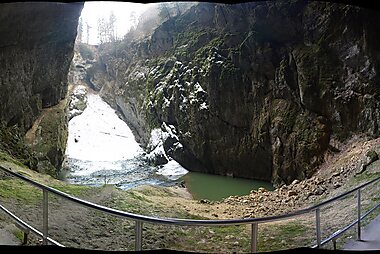


Macocha Abyss is the single most dramatic sight in the region: a sinkhole that drops more than 138 meters straight down, formed when the roof of an underground cave chamber collapsed. Viewing platforms let you look over the edge from above, and a marked trail leads down into the gorge below.
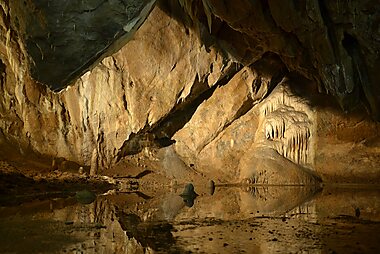
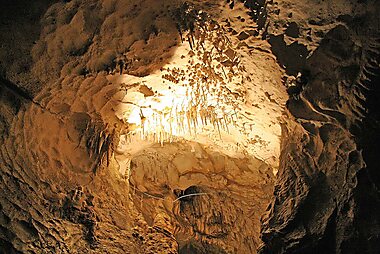
Below ground, Punkva Caves is the show cave most people mean when they talk about the Moravian Karst. A walking route through chambers of stalactites and stalagmites ends with a short boat ride along the underground Punkva river.
For a quieter cave visit, Sloupsko Sosuvske jeskyne is known among visitors as one of the most richly decorated cave systems in the whole karst, with colorful stalactite formations and far smaller crowds than the more famous caves nearby.
In the town center, Blansko Chateau is a Renaissance chateau, built on the site of an older fortress, that now houses a regional museum with rooms on the history of the Moravian Karst and a large collection of decorative cast iron, a nod to the town's ironworking past.
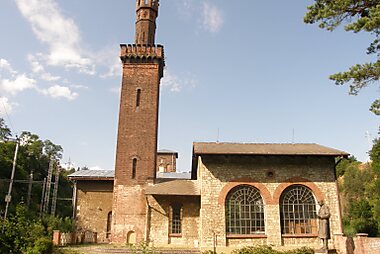
That ironworking tradition is still alive at Klamovka Iron Works, a 19th-century foundry that still makes cast-iron stoves and chimney pipes by hand.
On a wooded hill above the Punkva valley, New Castle is a reconstructed medieval castle ruin with defensive walls and towers dating to the 14th century, reachable on a short hike.
Skalni mlyn marks the start of most karst visits: a former water mill at the mouth of the valley that now serves as the region's main information point, with the cable car station and hiking trails to the caves close by.
Featured Lists

Blansko Unmissables
Blansko serves as the primary entry point to the Moravian Karst, a protected landscape area featuring over 1,100 caves. This selection includes the Kateřinská jeskyně and the extensive Amatérská jeskyně system. Beyond subterranean wonders, the area showcases industrial history at the Klamovka Iron Works and regional heritage within the Renaissance Blansko Chateau. Natural landmarks like the Čertův most rock arch and the Podvrší observation tower provide diverse perspectives on the region's limestone geology and forested terrain.
9 placesWhat to experience
- Take the underground boat ride through Punkva Caves, gliding along the Punkva river through the cave chambers.
- Ride the cable car from Skalni mlyn to the rim of Macocha Abyss, then walk back down into the gorge on the marked trail for a different view of the sinkhole.
- Climb one of the karst's via ferrata routes, fixed-rope paths bolted into the limestone cliffs above the Punkva valley, for views over the gorges without needing technical climbing skills.
- Follow the marked trail through Suchý žleb and Pustý žleb, the dry and wild gorges that link the karst's caves and rock formations, passing natural rock bridges and smaller sinkholes along the way.
Tours & Activities
Blansko — Map

Day trips
Blansko sits right at the edge of the Moravian Karst, so most day trips stay within the karst itself or in the hills close by.
- Adamov — about 8 minutes by train, this small town marks the northern gateway to the karst, with marked hiking trails into the forested valleys around the Býčí skála cave.
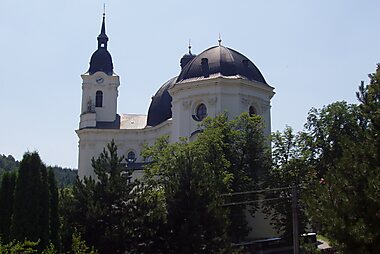
- Křtiny, about 20 minutes by car — a small pilgrimage village built around Church of the Name of the Virgin Mary, a Baroque church designed by the architect Jan Blažej Santini Aichel. Nearby, Arboretum Krtiny is the oldest and largest arboretum in the Czech Republic, with more than 1,000 tree species.
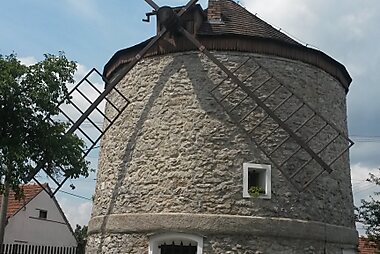
- Rudice Windmill in the village of Rudice, about 30 minutes by car — a working Dutch-style windmill turned museum, with exhibits on the geology and history of the karst.
- Boskovice — about 25 minutes by car or train, with a neoclassical chateau and a well-preserved historic Jewish quarter, including synagogues and a large cemetery.
- Brno — about 20 minutes by train, the Czech Republic's second-largest city, with a lively old town, Špilberk Castle, and the UNESCO-listed Villa Tugendhat.
Where to explore
Moravian Karst surrounds Blansko on three sides and is the reason most travelers come here at all — its show caves and gorges reach well beyond Blansko's own town limits into neighboring villages.
For more hiking and history, Adamov is a few minutes north by train, while Boskovice to the west has its own chateau and historic Jewish quarter. Brno, the region's capital, is a short train ride south.
Getting there
- By train: Blansko sits on the main line between Brno and Prague / Česká Třebová, with frequent regional trains from Brno (around 20 minutes) and several direct trains a day from Prague (roughly 2.5 hours).
- By air: The nearest airport with scheduled passenger flights is Brno-Tuřany (BRQ), about 25 km away, though it has only limited seasonal and charter service. Most international travelers fly into Vienna or Prague and continue by train.
- By bus: Regional buses connect Blansko with Brno and nearby towns throughout the day, and are useful for reaching villages the train doesn't serve, like Křtiny or Rudice.
Getting around
- Public transit: Blansko's town center is compact enough to cover on foot. Regional buses run from the town center to Skalni mlyn and on to other Moravian Karst villages; pay the driver directly or use the regional transport app. South Moravian Integrated Transport (IDS JMK)
- Taxi: Local taxis are available for the short ride out to the caves if you would rather skip the bus.
- On foot / cycling: The town center is flat and walkable, but the surrounding karst is hilly, with marked hiking and cycling trails linking the caves, gorges, and viewpoints.
Driving
- Is a car worth it?: Not for Blansko itself, which is walkable and well connected by train. A car helps for reaching Moravian Karst villages with limited bus service, like Rudice or Křtiny, and for day trips to Boskovice.
- Parking: Paid car parks serve karst visitors at Skalni mlyn, and metered on-street parking operates in Blansko's town center during the day.
- Restrictions: None beyond standard town parking rules; there is no low-emission or congestion zone.
Food & drink
Blansko's food is straightforward Czech pub fare: roast pork with dumplings and cabbage, goulash, and fried cheese, usually with a local Moravian lager. One distinctive option is the restaurant at Skalni mlyn, which raises its own trout in an on-site fish farm and serves it fresh.
For everyday meals, the streets around Blansko's main square (náměstí Svobody) hold the town's main cluster of restaurants and cafés. In the Moravian Karst villages, small guesthouses near the show caves typically serve simple, hearty meals aimed at hikers and cave visitors.
Safety & health
Blansko is a quiet, low-crime town; the usual precautions for any small European town apply. In the caves, paths can be wet, uneven, and dimly lit, so wear sturdy, non-slip shoes and use the handrails on steps and bridges. Cave temperatures stay around 7–8°C (45–46°F) year-round regardless of the weather outside. Viewing platforms at Macocha Abyss sit above a steep drop, so keep a close eye on children.
History
Blansko's history is tied to iron. A Gothic fortress here was rebuilt as a Renaissance residence around 1604 by the Žalkovský family, and in 1766 the Salm family bought the estate and built up the ironworks that made Blansko one of the most important metalworking centers in the Habsburg Empire. Klamovka Iron Works is the last working reminder of that era, and the Salms' rebuilt residence is now Blansko Chateau.
The caves themselves have their own history of discovery. The 19th-century scholar Jindřich Wankel settled in Blansko as a doctor in 1849 and went on to carry out some of the first scientific excavations in the Moravian Karst's caves, including the 1872 discovery of a Bronze Age burial site with dozens of skeletons in the Býčí skála cave. His work helped turn Punkva Caves and the wider cave system from a local curiosity into a site of real scientific importance.
Country facts
Quick practical facts for the Czech Republic at a glance:
- Currency
- Czech Koruna CZK Kč · Card payments · Commonly accepted
- Emergency numbers
- 112
- Electricity
- 230 V · 50 HzType C / Type E
- Languages
- Czech
- Tap water
- Safe to drink
- Driving side
- Right
- Calling code
- +420


Blansko – Plan Your Days
Turn the places from this guide into a real itinerary, with smart routing, time estimates, and everything you need for a perfect trip.




