



South Moravian Region
South Moravia is the Czech Republic's wine country: rolling vineyards, Baroque chateaux, and villages built around wine-cellar lanes, in place of the forests and mountains found elsewhere in the country. The regional capital, Brno, anchors the north; vineyards, limestone caves, and border towns spread out to the south and east.
The region suits travelers who want to combine a short city stay with a few slower days in the countryside — wine tasting around Mikulov and Valtice, walking above a dramatic karst gorge, or visiting Gothic and Baroque castles. Tomáš Garrigue Masaryk, Czechoslovakia's first president, was born in the region, in the town of Hodonín.

South Moravian Region – Planning a Trip?
Build your day-by-day itinerary in the Tripomatic app.


When to visit
Spring and autumn are mild and the best times to visit, with fewer crowds than summer. Summers are warm and pleasant for the countryside and vineyards. Winters are cold, with occasional snow, and the region quiets down outside Brno.
Time a visit for mid-September if you can, when the Znojmo Historical Wine Harvest Festival fills the old town with costumed parades, wine stalls, and live music to mark the end of the grape harvest.
Best time to visit: June, August
September and early October bring warm, mostly dry days — good for cycling the vineyard trails around Mikulov and Valtice.
Top sights
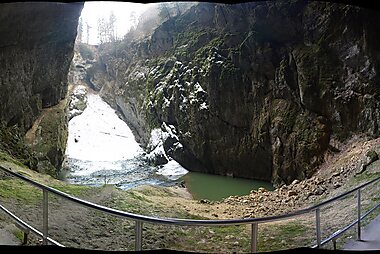
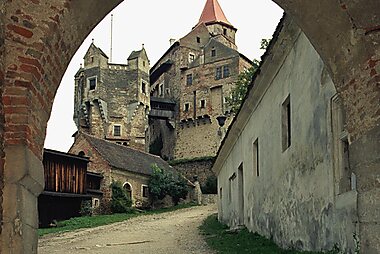
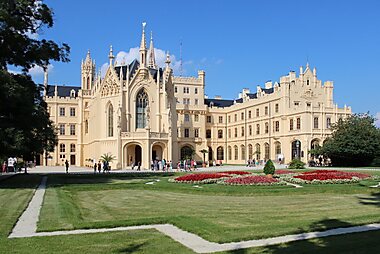
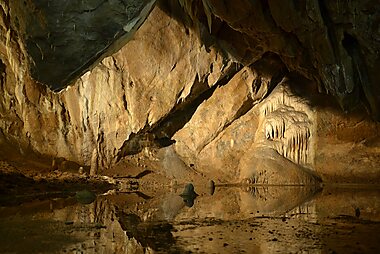

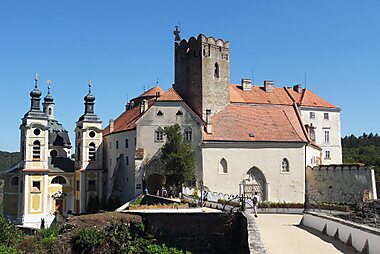
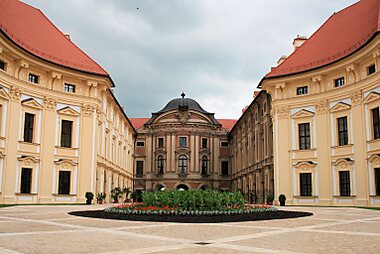
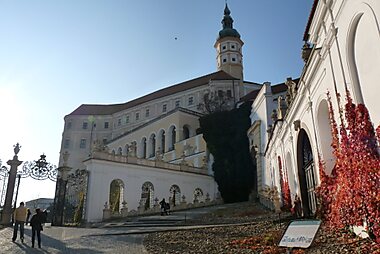

South Moravia's biggest sights sit outside the capital, spread across wine country and karst hills.
Lednice Château is the centerpiece of the Lednice-Valtice UNESCO landscape, a Neo-Gothic chateau surrounded by an English-style park, glasshouses, and a minaret built purely for the view.
Valtice Castle was one of two great estates of the princely House of Liechtenstein for more than five centuries, and its cellars beneath the town hold some of the region's best wine tastings.
Mikulov Castle overlooks the wine town of Mikulov from a hilltop, with a restored library and exhibits on the region's Jewish and wine-making history.
Punkva Caves lets you ride a boat along an underground river deep inside the Moravian Karst, past stalactites and a canyon carved into the limestone.
Macocha Abyss is the collapsed sinkhole above those caves, worth seeing from the rim and, on the longer cave tour, from the bottom.
Pernštejn Castle is one of the country's best-preserved Gothic-Renaissance castles, its white towers rising over a bend in the Svratka river.
Vranov nad Dyjí Chateau perches on a cliff above the Dyje river near the Austrian border, its Baroque ancestors' hall frescoed and lined with portraits of the Althann family who once owned it.
Znojmo Castle rises above the wine town of Znojmo, with a network of medieval cellars and tunnels underneath the old town worth exploring separately.
Featured Lists


What to experience
Autumn is when the region's wine culture is most visible — a good season to plan a trip around.
- Join the grape harvest crowds each September and taste burčák, the year's young, still-fermenting wine, straight from a cellar tap.
- Cycle the flat, marked wine trails linking Mikulov, Valtice, and Lednice, one of the best-signed cycling networks in the country.
- Take a hot-air balloon flight over the Pálava vineyards at sunrise, weather permitting — a popular way to see the wine region's patchwork of hills from above.
- Follow a wine cellar lane in a small village like Pavlov after dark, when the cellars light up and locals gather for informal tastings.
Tours & Activities
South Moravian Region — Map

 Open the interactive map
 Day trips
South Moravia borders both Austria and Slovakia, and two capital cities are within easy reach. Combine them with a stop in the region's own UNESCO towns just across the border in Vysočina.
- Telč — about 50 minutes by car, a small UNESCO town of pastel Renaissance houses around a single long square.
- Třebíč — about an hour by car, known for its well-preserved Jewish Quarter and Basilica of St. Procopius, both UNESCO-listed.
- Vienna, Austria — about 1.5–2 hours by train or car, with direct rail connections from Brno several times a day.
- Bratislava, Slovakia — about 1.5 hours by car or bus, an easy add-on if flying in or out of Vienna.
Where to explore
South Moravia's wine country and historic towns pair naturally with a stay in the regional capital.
Brno is the country's second city and the region's capital, with its own historic center, museums, and nightlife — worth two or three days on its own.
South of Brno, Mikulov, Valtice, and Lednice form the heart of the Lednice-Valtice wine region, connected by flat, well-marked cycling trails.
To the southwest, Znojmo guards the border with its castle and underground tunnels, while Slavkov u Brna — better known abroad by its German name, Austerlitz — is where Napoleon won his most famous battle in 1805.
Getting there
- By air: Brno–Tuřany (BRQ) has only limited seasonal and charter flights, so most travelers fly into Vienna (VIE) or Prague (PRG) and continue overland. From Vienna Airport it takes about 2 to 2.5 hours by train or bus to reach Brno.
- By train: Brno's main station has frequent connections to Prague (about 2.5 hours), Vienna, Bratislava, and Ostrava, plus regional trains reaching Znojmo, Břeclav, and Blansko.
- By bus: Long-distance coaches connect Brno with Prague, Vienna, and Bratislava — a cheaper, slightly slower alternative to the train.
Getting around
- Public transit: Each town runs its own local buses, and a region-wide integrated system, IDS JMK, covers trains and buses across South Moravia, including Brno's trams. Buy tickets through the IDS JMK app or at station machines; contactless bank-card payment is accepted on Brno's trams and buses. IDS JMK Journey Planner
- Taxi / ride-hailing: Bolt and Uber operate in Brno; smaller towns rely on local taxi companies.
- On foot / cycling: Wine-region towns are compact and walkable, but seeing more than one in a day means renting a car or bike. The region has one of the country's best networks of marked cycling trails through the vineyards.
Driving
- Is a car worth it?: Yes — a car is the easiest way to link the wine villages, castles, and caves, since public transport between them is infrequent outside Brno.
- Parking: Historic centers like Mikulov, Znojmo, and Valtice have paid parking just outside the pedestrian core; pay by app or at a machine.
- Restrictions: Brno's historic center has restricted traffic near the main square during the day — park in one of the ring-road garages and walk in.
Food & drink
South Moravian cooking leans toward hearty, wine-friendly food: roast duck with dumplings and cabbage, cured meats, and fresh bread topped with lard and raw onion. The bigger difference from the rest of the Czech Republic is what's in the glass — this is wine country, not beer country, and a meal here usually comes with a local Veltlínské zelené or Ryzlink rýnský.
Skip picking individual restaurants and head for a wine cellar lane instead. The row of cellars in Pavlov, at the foot of the Pálava hills, and the historic cellars beneath Valtice and Znojmo let you taste directly from small producers.
Safety & health
South Moravia is very safe for travelers, including at night around Brno's main squares. The most common issue is pickpocketing in crowds during festivals — keep bags zipped at wine festivals and Christmas markets.
Tap water is safe to drink throughout the region. Wine tastings at small cellars are informal and sometimes free, but pace yourself: burčák, the young partially fermented wine sold every autumn, is deceptively strong and keeps fermenting after you drink it.
History
Vineyards have covered these hills since Roman times, and South Moravia was the heartland of the ninth-century Great Moravian Empire, the first major Slavic state in Central Europe. Archaeologists have uncovered one of its largest fortified settlements at Mikulčice, near the region's southeastern border.
The region's most famous single day came much later. In December 1805, Napoleon defeated the combined armies of Austria and Russia nearby at the Battle of Austerlitz, still studied as one of his greatest tactical victories. The armistice that followed was signed at Slavkov Castle, in the town now again known by its Czech name, Slavkov u Brna.
Long before any of that, people were already living near Dolní Věstonice: the Venus of Dolní Věstonice, one of the oldest known ceramic figurines in the world, was found here and is more than 25,000 years old.
Country facts
Quick practical facts for the Czech Republic at a glance:
- Currency
- Czech Koruna CZK Kč · Card payments · Commonly accepted
- Emergency numbers
- 112
- Electricity
- 230 V · 50 HzType C / Type E
- Languages
- Czech
- Tap water
- Safe to drink
- Driving side
- Right
- Calling code
- +420
South Moravian Region – Plan Your Trip
Pick the places you want to see and Tripomatic turns them into a day-by-day route, with smart routing, time estimates, and everything you need for a perfect trip.




