


Brno
Brno offers a distinct and more relaxed Czech experience than Prague. As a university city, it has a youthful energy, reflected in its lively café and bar culture. The city combines centuries of history with notable modern architecture, including striking Art Nouveau and functionalist buildings.
Travelers seeking an authentic local feel and fewer crowds will find Brno appealing. It is an ideal starting point for exploring the South Moravian region. Brno suits those who enjoy a mix of historical sites, vibrant culture, and a welcoming local atmosphere.

Brno – Planning a Trip?
Build your day-by-day itinerary in the Tripomatic app.
When to visit
Brno is best visited in spring and autumn, when temperatures are mild and pleasant. Summers are generally warm to hot, while winters are cold and often bring snow, creating a festive atmosphere around Christmas. Consider timing your visit for Ignis Brunensis, an international fireworks competition that runs from late May into early July, offering spectacular displays over the city.
Best time to visit: May, June, July, August, September
Top sights
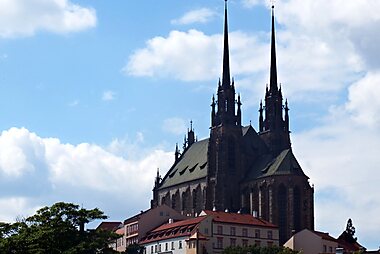
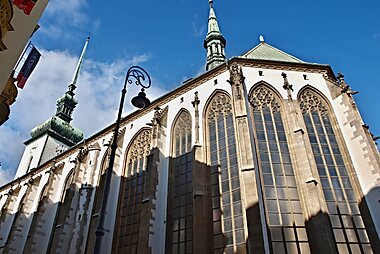


Perched atop Petrov Hill, the impressive Cathedral of St. Peter and Paul is a dominant feature of Brno's skyline, offering panoramic views. Its striking Gothic architecture makes it a key landmark. Katedrála svatého Petra a Pavla
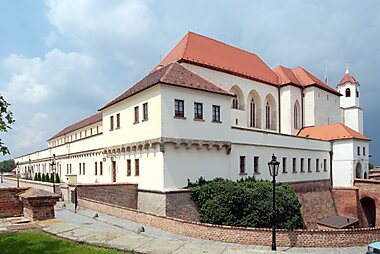
Once a formidable fortress and notorious prison, Spilberk Castle now serves as a museum and cultural center. Explore its historical exhibits and enjoy views over the city. Spilberk Castle
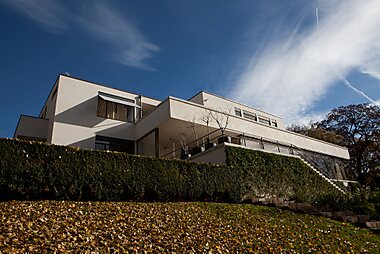
A UNESCO World Heritage site, the Tugendhat Villa is a masterpiece of modernist architecture designed by Ludwig Mies van der Rohe. Advance booking is essential to experience its innovative design. Tugendhat Villa
The oldest civic building in the city, the Old Town Hall, Brno features a striking Gothic portal and houses the legendary Brno dragon and wheel. Climb the tower for excellent city views.
The grand Late Gothic Church of St. James is notable for its soaring interior and the macabre Brno Ossuary located beneath it. This ossuary is the second largest in Europe.
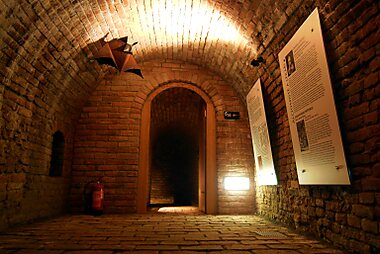
Explore the medieval underground passages and cellars beneath the historic Vegetable Market. The Labyrinth under Vegetable Market offers a fascinating glimpse into Brno's past.
A vibrant hub for locals and visitors alike, Zelný Market is a historic outdoor market selling fresh produce, flowers, and local goods. It is a great spot to soak in the local atmosphere.
A modern and unusual landmark, the Brno Astronomical Clock in Freedom Square is a black stone obelisk that releases a marble ball daily at 11 AM.
Featured Lists


Hidden Gems of Brno
Brno’s lesser-known landmarks highlight its architectural evolution and quirky urban culture. Explore modernist masterpieces like the Art Nouveau Löw-Beer Villa and the folk-inspired Jurkovič Villa, alongside Bohuslav Fuchs’ functionalist Main Post Office featuring a rare pater noster elevator. The city's playful side is visible in the phallic-shaped black stone Astronomical Clock on the main square and the Pelíšek cat adoption café. For panoramic views and science, the Kraví hora park hosts a modern observatory and planetarium overlooking the city.
6 places


Best Restaurants & Cafes
Brno’s culinary scene bridges traditional Moravian flavors and modern urban concepts. This selection features regional staples like Lokál U Caipla, serving traditional Czech cuisine and tank beer, alongside specialized spots like the all-vegan Pizzapunk and Pelíšek cat adoption café. Notable architectural settings include Pavillon Steak House, located in a functionalist building, and Alvin, situated within a renovated chateau. For coffee enthusiasts, the list highlights specialty hubs like the minimalist SKØG Urban Hub and the intimate Cafe Mitte, which seats only ten people.
13 placesAudio Guides – Brno
Explore on foot with a self-guided audio tour that narrates each stop as you reach it.

Brno's Villa Quarter
153 min7.5 km15 stops
On the wooded slopes west of the centre — Pisárky and the Masaryk Quarter — Brno's interwar elite built the densest concentration of modernist villas in the country. This walk threads fifteen of them: the two you can go inside (Dušan Jurkovič's Art-Nouveau house and Ernst Wiesner's purist Vila Stiassni, both now museums), the 1928 Nový dům colony that was Brno's answer to Stuttgart's Weissenhof, the only Czech house in MoMA's 1932 "International Style" show, and a string of homes by Wiesner, Bohuslav Fuchs, Jiří Kroha and Jindřich Kumpošt for the textile magnates who once lived here. Roughly three hours on foot through one leafy hillside quarter.

Brno Central Cemetery: Legends in Stone
62 min2.3 km9 stops
Walk through Ústřední hřbitov, Brno's vast Central Cemetery, to meet the people who built the city's identity: Gregor Mendel, composer Leoš Janáček, architect Bohuslav Fuchs, Brno's first Czech mayor, the founder of its public library, a Moravian Karst explorer, one of Czechoslovakia's great postwar poets, the founder of Czech Slavic studies, and the man who opened Brno's first Czech bookshop, alongside memorials to civic and wartime sacrifice and Ernst Wiesner's Functionalist crematorium.

The Story of Brno
58 min2.5 km7 stops
A walk through eight centuries of Brno's history, from its medieval founding to the fortress that became one of the Habsburg Empire's most feared prisons. This walk visits the city's Gothic cathedral and Old Town Hall, the last surviving fragment of the medieval city walls, the civic square where a column still marks a devastating 17th-century plague and where both world wars left their mark, a statue of the medieval margrave who once ruled the city, a Gothic church built over a vast underground ossuary, and Špilberk Castle, whose walls hold the story of a legendary siege and two centuries as a political prison. Seven stops through Brno's historic core, roughly eighty minutes on foot.

Hear Brno's audio tours
5 walks in Audio Guides by Tripomatic


What to experience
Brno offers several distinctive local experiences, from quirky urban rituals to major international events.
- Attend the Ignis Brunensis international fireworks competition, held annually from late May into early July.
- Watch the Brno Astronomical Clock release its marble at 11 AM daily.
- Find a unique perspective under the Statue of Margrave Jošt statue by looking up into the horse's mouth.
- Ride the historic pater noster elevator inside the functionalist Main Post Office.
Tours & Activities
Brno — Map

 Open the interactive map
 Day trips
Brno is an excellent base for exploring the South Moravian region and beyond. Consider these popular day trips:
- Moravian Karst and Macocha Abyss: Journey north (approx. 45-60 minutes by train or bus to Blansko) to explore a vast cave system, including the Punkevní Caves with an underground boat ride, and the dramatic Macocha Abyss.
- Lednice-Valtice Cultural Landscape: Head south (approx. 1 hour by car or bus) to this UNESCO World Heritage site, featuring two grand chateaux, extensive gardens, and vineyards.
- Olomouc: Take a train north (approx. 1.5 hours) to this historic city, home to another UNESCO site, the Holy Trinity Column, and beautiful Baroque architecture.
- Mikulov: Travel south (approx. 45-60 minutes by bus or car) to this picturesque wine town, dominated by a castle and surrounded by the Pálava Hills.
- Slavkov u Brna (Austerlitz): A short train or bus ride (approx. 30-40 minutes) brings you to the site of the famous 1805 Battle of Austerlitz, with a memorial and museum.
Where to explore
Brno sits at the heart of South Moravia's wine country, close to several worthwhile small towns.
Southeast of the city, Mikulov is a picturesque wine town below a hilltop castle. Slavkov u Brna marks the site of Napoleon's decisive 1805 battle, Austerlitz. To the north, Blansko is the gateway to the Moravian Karst cave system.
Getting there
- By air: Brno–Tuřany (BRQ) has limited seasonal and charter flights. Most international travelers arrive via Vienna International Airport (VIE) or Prague's Václav Havel Airport (PRG). Travel from Vienna Airport to Brno takes approximately 2 to 2.5 hours by direct train or bus.
- By train: Brno is a key rail hub with direct connections from cities like Prague, Vienna, and Bratislava.
- By bus: Long-distance coaches offer frequent service with connections to Prague, Vienna, Bratislava, and Budapest.
Getting around
- Public transit: Brno has an extensive network of trams and buses. You can purchase tickets directly on board using a contactless bank card or phone. Tickets are also available from machines at stops or via the official DPMB mobile app. Learn more at Brno Public Transport (DPMB).
- Taxi / ride-hailing: Ride-hailing services like Uber and Bolt operate in Brno. Taxis are also widely available.
- On foot / cycling: The city center is compact and very walkable. Cycling is a practical way to explore, with a growing number of designated paths.
Food & drink
Brno's food scene offers a blend of traditional Moravian and Czech cuisine alongside modern international influences. Expect hearty dishes like goulash, schnitzel, and various types of dumplings (knedlíky). The region is also known for its local wines, often found in smaller cellars or restaurants.
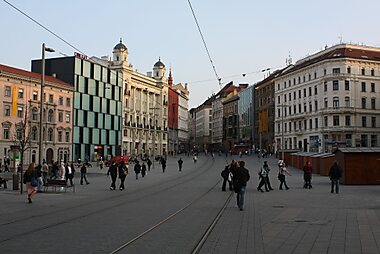
For authentic Czech cooking, visit Lokál U Caipla Lokál U Caipla. For a modern, niche option, Pizzapunk Pizzapunk offers excellent vegan pizzas. Beyond specific restaurants, you'll find a wide array of dining options clustered around Freedom Square Freedom Square and Zelný Market Zelný Market, which also hosts a daily outdoor market with fresh produce and local treats. Many cafes and bars offer lighter fare and local pastries.
Safety & health
Brno is generally a safe city for tourists. As in any urban area, be aware of your surroundings, especially in crowded tourist spots, on public transport, or at main stations, where petty theft like pickpocketing can occur. Keep valuables secure and out of sight.
Tap water in Brno is safe to drink.
History
Brno's history stretches back to the 11th century, with the earliest settlements forming beneath Petrov Hill, where the impressive Katedrála svatého Petra a Pavla now stands. Its strategic location made it a significant center for trade and defense. The city's medieval character is still visible today, particularly around the Zelný Market and the Labyrinth under Vegetable Market, a network of tunnels and cellars beneath the historic market square.
Over centuries, Spilberk Castle evolved from a royal castle into a formidable fortress and later a notorious prison. The city's civic life centered on the Old Town Hall, Brno, the oldest building in Brno. In more recent times, Brno became a hub for industry and modern architecture, exemplified by landmarks such as the Villa of Dušan Jurkovič, an Art Nouveau villa completed in 1906 by architect Dušan Jurkovič, and the functionalist Tugendhat Villa from the late 1920s, a UNESCO World Heritage site. The Brno Ossuary beneath the Church of St. James serves as a stark reminder of the city's past.
Country facts
Quick practical facts for the Czech Republic at a glance:
- Currency
- Czech Koruna CZK Kč · Card payments · Commonly accepted
- Emergency numbers
- 112
- Electricity
- 230 V · 50 HzType C / Type E
- Languages
- Czech
- Tap water
- Safe to drink
- Driving side
- Right
- Calling code
- +420


Brno – Plan Your Days
Turn the places from this guide into a real itinerary, with smart routing, time estimates, and everything you need for a perfect trip.




