


Bodø
Bodø sits on Norway's Arctic coast in Nordland county, just north of the Arctic Circle. It is the region's main travel hub and the usual gateway to the Lofoten Islands, reached from here by ferry, express boat, or short flight. German bombing destroyed most of the town in 1940, so today's compact center is largely mid-20th-century rebuilding rather than historic streets. Bodø held the title of European Capital of Culture in 2024, leaving behind new cultural venues and a livelier arts scene.
Bodø suits travelers chasing Arctic extremes: the midnight sun through much of summer, and the northern lights and polar night in winter. It works well as a base for a few nights before heading into Lofoten, or as a stop on Norway's coastal ferry route.

Bodø – Planning a Trip?
Build your day-by-day itinerary in the Tripomatic app.


When to visit
Summers are mild, bright, and the most popular time to visit; winters are cold, dark, and can be stormy. Spring and autumn are quieter but changeable.
Plan around the midnight sun if you can: for several weeks around midsummer, the sun does not set at all, which is a genuinely rare experience. In winter, the polar night removes direct daylight for weeks, but clear nights bring good odds of seeing the northern lights.
Pack layers even in summer — wind off the sea keeps evenings cool, and rain is common throughout the year.
Top sights




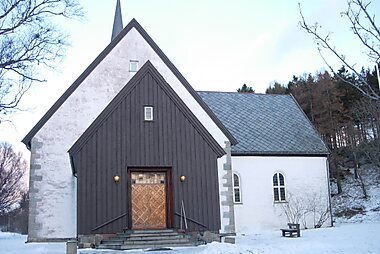


Rebuilt in 1956 after the town's wartime destruction, Bodø Cathedral is a striking concrete cathedral with a free-standing bell tower and a large stained-glass window inside.
Norwegian Aviation Museum traces Norwegian aviation history from early biplanes to Cold War-era jets, many of them tied to Bodø's own decades as a military air base.
South of the center, Bodin Church traces its origins to around 1240, though most of today's stone building dates from an 1894 rebuild in the same style — still one of the oldest church sites in the region.
Nordland Museum covers thousands of years of regional history, from Sami culture to a major Viking-age silver hoard found nearby.
For the view, hike up to Keiservarden, a cairn-topped lookout with a mountain shelter and panoramas over the sea, the city, and the Lofoten peaks on the horizon.
Bodø's own piece of Artscape Nordland adds outdoor sculpture to the waterfront walk, part of an open-air trail spread across dozens of towns in the region.
Stormen Library is a striking modern library and cultural venue, home to a dedicated Sami culture center.
Featured Lists

What to experience
- Take a RIB boat safari to Saltstraumen, timed to the tide, and watch for the white-tailed eagles that patrol this stretch of coast.
- Chase the midnight sun: join a late-night fishing trip or hike in summer, when the sun never sets.
- On clear winter nights, head just outside town to watch for the northern lights away from streetlights.
- Catch a concert during Bodø Jazz Open or the Nordland Musikkfestuke, the city's two main summer music festivals.
Tours & Activities
Bodø — Map

 Open the interactive map
 Day trips
Bodø's biggest draws outside downtown are within reach of a single day.
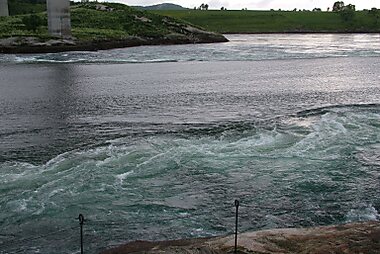
- Saltstraumen — about 30 minutes by car or bus. One of the strongest tidal currents in the world; check tide tables to catch it near peak flow.
- Kjerringøy Trading Post — about 45 minutes by car, on a scenic coastal road. A well-preserved 19th-century trading post with restored buildings and original interiors.
- Svolvær or Reine, in the Lofoten Islands — 3-4 hours by express boat or car ferry, or under an hour by air. Dramatic peaks rising straight from the sea; better as an overnight, but possible as a very long day trip.
Getting there
- By air: Bodø Airport (BOO) is about 2 km from downtown, a 5-10 minute taxi or bus ride. SAS and Norwegian fly to Oslo several times a day, Widerøe connects onward to smaller airports across Lofoten and Vesterålen, and seasonal routes link Bodø directly to a handful of European cities, including Copenhagen, Stockholm, Helsinki, Munich, and Frankfurt.
- By train: Bodø is the northern terminus of Norway's rail network. The Nordlandsbanen line runs from Trondheim, a scenic journey of roughly ten hours.
- By bus: Long-distance coaches link Bodø with Fauske and towns further along the E6 highway.
- By boat: The Hurtigruten coastal ferry calls at Bodø on its route between Bergen and Kirkenes, and express passenger boats run north to the Lofoten Islands.
Getting around
- Public transit: Local buses cover downtown and the surrounding suburbs. Buying through the Reis Nordland app is cheapest; tapping a bank card or phone directly on board also works, but adds a small surcharge per ticket. Timetables and tickets: Reis Nordland.
- Taxi: Taxis are available at ranks downtown and at the airport, and can also be booked through Uber's app, which operates as a taxi-booking service here rather than a full ride-hailing network.
- On foot / cycling: The center is small and flat enough to walk end to end in about 20 minutes. Cycling works well in summer, less so in winter ice and snow.
Driving
- Is a car worth it?: Not needed for downtown Bodø, which is small and walkable, but useful for reaching Kjerringøy Trading Post and Saltstraumen at your own pace, or for the long drive into Lofoten.
- Parking: Pay parking covers most of the center; use a parking app or the machine at pay-and-display bays. Free street parking is easy to find away from downtown.
- Restrictions: An automatic toll ring funds local road upgrades on routes into and around the center; overhead cameras charge passing vehicles, with no barriers or cash involved. Rental cars are billed automatically (see the driving facts below).
Food & drink
Fresh seafood is the main draw here: cod, halibut, king crab, and skrei — migrating Arctic cod, best from January to April — show up on most menus, alongside reindeer and other game from the surrounding mountains.
For a good meal, head to the harbor area near the town center, where several restaurants serve the day's catch with sea views.
Safety & health
Bodø is very safe for travelers; violent crime is rare and the biggest practical risk is the weather, not other people. Watch for strong wind and slippery ice on stairs and sidewalks in winter.
Pharmacies (apotek) are well stocked, but few stay open late — plan ahead if you need medication outside normal hours.
History
Bodø's history splits into before and after 27 May 1940, when German bombing destroyed most of the town, including its original church. The rebuilt center that stands today, including Bodø Cathedral, is largely a product of post-war reconstruction in a clean, modernist style.
Older layers survive on the edges: Bodin Church traces its origins to around 1240, though most of the current stone building dates from an 1894 rebuild in the same style — still one of the oldest church sites in the region. Bodø's more recent history is tied to aviation and the Cold War: its air base flew secret U-2 spy plane missions in the late 1950s, and was the intended landing point for the flight shot down over the Soviet Union in 1960, a story now told at Norwegian Aviation Museum.
Country facts
Quick practical facts for Norway at a glance:
- Currency
- Norwegian Krone NOK kr · Card payments · Widely accepted
- Electricity
- 230 V · 50 HzType C / Type F
- Languages
- Norwegian Bokmål, Norwegian Nynorsk
- Tap water
- Safe to drink
- Driving side
- Right
- Calling code
- +47

Bodø – Plan Your Days
Turn the places from this guide into a real itinerary, with smart routing, time estimates, and everything you need for a perfect trip.