


Colmar
Colmar is a small town in Alsace, on the Alsace Wine Route and near the Vosges mountains. The old centre has half-timbered houses, canals and painted facades. French and German styles mix here, as in the rest of Alsace. The sculptor Frédéric Auguste Bartholdi, who made the Statue of Liberty, was born here.
The old centre is small and easy to walk, so Colmar suits one or two nights. It is also a good base for wine villages and castles in the hills. It is especially popular in December for its Christmas markets.

Colmar – Planning a Trip?
Build your day-by-day itinerary in the Tripomatic app.


When to visit
Late spring to early autumn is warm and good for walking and for visits to the wine villages. September is a pleasant month, when the grape harvest begins. Winter is cold, with frost and some snow, but the town is very festive then.
The biggest event is the Christmas markets. They run from late November to late December in several squares of the old centre. Weekends are very crowded, so a weekday is easier. The centre is closed to cars during market hours.
Good Friday and 26 December are public holidays in Alsace, unlike most of France.
Best time to visit: June, September
Top sights
The old centre is small. Most sights are within a 15-minute walk of each other.
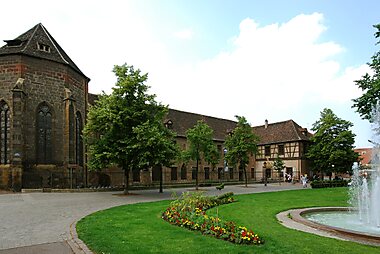
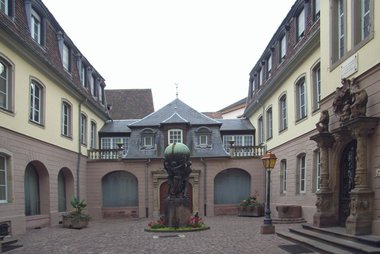
- Unterlinden Museum is the main reason many people visit Colmar. It is in a 13th-century Dominican convent. Its best-known work is the Isenheim Altarpiece by Matthias Grünewald. The museum is closed on Tuesdays.
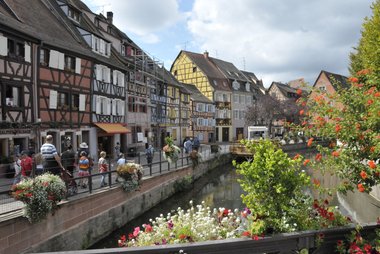
- La Petite Venise is the old quarter of butchers, tanners and fishmongers, along the river Lauch. Colourful houses stand right on the water. Small boats run trips on the canal in the warmer months.
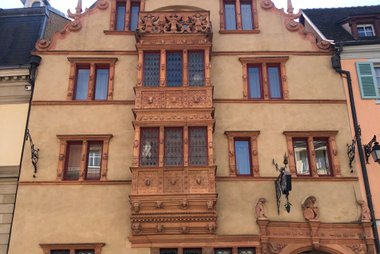
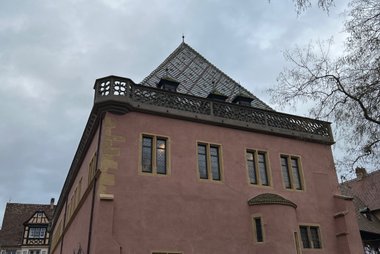
- Maison des Têtes is a Renaissance house from 1609. Its facade is covered with carved heads and masks.
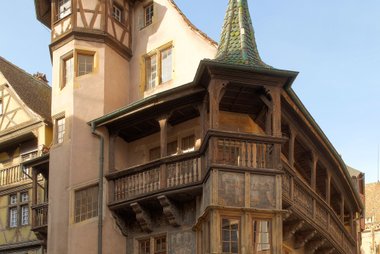
- Maison Pfister was built in 1537 for a hat maker. It has a painted facade and a wooden balcony.
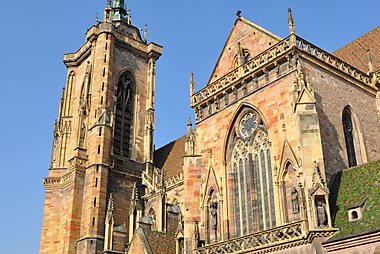
- Collégiale Saint-Martin is the largest church in town. It is a Gothic church built mostly in the 13th and 14th centuries.
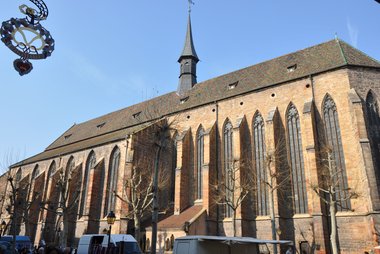
- Église des Dominicains is a Gothic church with colourful stained glass. It holds the Martin Schongauer painting Madonna of the Rose Bower.
- Ancienne douane (Koïffhus) is the old customs house from 1480. It stands in the middle of the old centre.
- Musée Bartholdi is in the house where Bartholdi was born in 1834. It shows how the Statue of Liberty was designed.
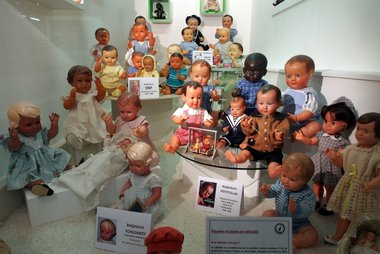
- Museum of toys is a toy museum. It suits families with children.
Featured Lists


What to experience
- Take a boat trip on the canal. Small flat-bottomed boats leave from Petite Venise in the warmer months. The trip is short and passes the colourful houses from the water.
- Visit the Christmas markets. From late November, wooden chalets fill several squares. The centre is closed to cars during market hours.
- Cycle to the vineyards. Ride a bike along the quiet paths between the vines. A short, flat ride leads to Eguisheim.
- Go to the Alsace wine fair. Colmar has held this fair every August since 1947. It has tastings, music and food stands.
Tours & Activities
Colmar — Map

 Open the interactive map
Day trips
Alsace has many small towns and wine villages close to Colmar. Times are one way and approximate. A car makes the villages easier, but buses serve some of them.
- Turckheim (about 10 min by car): a small walled wine village with old town gates.
- Eguisheim (about 15 min by car): a round village, with lanes in rings around a small castle.
- Kaysersberg (about 20 min by car): a wine village in a valley, and the birthplace of Albert Schweitzer.
- Riquewihr (about 20 min by car): a walled village with very well-kept old houses. It is very busy in summer and in December.
- Ribeauvillé (about 25 min by car): a wine town with ruined castles on the hill above.
- Neuf-Brisach (about 25 min by car): a star-shaped fortress town designed by Vauban. It is on the UNESCO World Heritage list.
- Haut-Kœnigsbourg (about 30 min by car): a large hilltop castle, rebuilt in the early 1900s.
- Strasbourg (about 30 min by train): the main city of Alsace, with a famous cathedral and canals.
- Mulhouse (about 25 min by train): known for its car, train and technology museums.
- Basel (about 1 h by train): a Swiss city on the Rhine, with many museums.
- Freiburg im Breisgau (about 1 h by car): a university city in Germany, at the edge of the Black Forest. There is no direct train.
Where to explore
These destinations are near Colmar.
- Wine villages: Eguisheim is the closest.
- Alsace: Strasbourg and Mulhouse. Strasbourg is the better choice for a day out.
- Across the border: Basel in Switzerland and Freiburg im Breisgau in Germany.
Getting there
- By air: EuroAirport Basel Mulhouse Freiburg is about 52 km from Colmar. Strasbourg Airport is about 68 km away. From either airport, take a bus or train to Mulhouse or Strasbourg, then a regional train to Colmar. Paris Charles de Gaulle is another option, with a high-speed train to Strasbourg.
- By train: A few direct TGV trains run daily from Paris Gare de l'Est. The journey takes about 2 h 30. Regional trains run often from Strasbourg (about 30 min) and Mulhouse. Trains also run to Basel. The station is about 1 km from the old centre, a walk of about 15 minutes. Book on SNCF Connect.
Getting around
- On foot: The old centre is small and flat, and many streets are pedestrian-only. You can walk to almost everything.
- Bus: The Trace network serves the town and its suburbs. You can pay and validate a single ticket on board by tapping a contactless bank card or phone. See the Trace website.
- Cycling: The terrain is flat. Bike paths lead out into the vineyards.
Driving
- Is a car worth it? Not for the town. The old centre is small and mostly pedestrian. A car is useful for the wine villages and the castles.
- Parking: Use a car park at the edge of the old centre, such as Rapp near the station. Street parking in the centre is limited.
- Restrictions: Parts of the old centre are pedestrian zones. During the Christmas markets, the centre is closed to cars at market hours. Park-and-ride buses run on market weekends.
Food & drink
Alsatian food mixes French and German traditions. Look for tarte flambée (a thin tart with cream, bacon and onions), choucroute (sauerkraut with pork and sausages) and baeckeoffe (a slow-baked meat and potato casserole). Sweet choices include kougelhopf. Local white wines include Riesling, Gewürztraminer and Pinot Gris. Sparkling Crémant d'Alsace is also popular.
For a traditional meal, look for a winstub, a cosy tavern with regional dishes. They are common in the old centre, around Petite Venise and near the Koïffhus. The covered market near Petite Venise sells cheese, bread and cold cuts. Book ahead on weekends and in December.
Safety & health
Colmar is a safe town for visitors. The main risk is pickpocketing in crowded places, such as the Christmas markets. Keep your bag closed there.
In winter, wet cobblestones can be slippery. Wear shoes with good grip.
History
Colmar became a free imperial city in 1226 and joined a league of ten Alsatian towns in 1354. Merchants paid duties at Ancienne douane (Koïffhus), built in 1480. Wine trade made the town rich. The wealth shows in houses such as Maison des Têtes and Maison Pfister. Medieval religious life is visible in Collégiale Saint-Martin and Église des Dominicains.
France took the town in 1673 under Louis XIV. Alsace then changed hands several times. Colmar was German from 1871 to 1918. Frédéric Auguste Bartholdi was born here in 1834, in the house now used by Musée Bartholdi.
In the Second World War, Germany held the town again from 1940. The Colmar Pocket battle of January and February 1945 ended with the liberation of the town on 2 February 1945.
Country facts
Quick practical facts for France at a glance:
- Currency
- Euro EUR € · Card payments · Widely accepted
- Emergency numbers
- 112
- Electricity
- 230 V · 50 HzType C / Type E
- Languages
- French
- Tap water
- Safe to drink
- Driving side
- Right
- Calling code
- +33


Colmar – Plan Your Days
Turn the places from this guide into a real itinerary, with smart routing, time estimates, and everything you need for a perfect trip.


Related destinations


Data: © OpenStreetMap contributors, Wikidata, Wikipedia, Tripomatic, Official websites. Tours by GetYourGuide. We earn commission from bookings. Travel guide generated with AI.
Plan your trip with Tripomatic
- AI-Powered PlanningGet a ready-made day in one tap, let AI spread your shortlist across your trip, or plan everything by chatting.
- Travel AlertsOfficial advisories, severe weather, strikes, and natural hazards for the places on each day of your trip.
- Public Holidays & EventsSee holidays, festivals, and closures on the days of your trip, and what they mean for your plans.
- Cost EstimationAI-powered trip cost breakdowns so you know what to budget before you go.
- Tours & TicketsBook tours, skip-the-line tickets, and activities directly in your plan.