



Helsingør
Helsingør sits at the narrowest point of the Øresund, the strait separating Denmark from Sweden — only about 4 kilometres of water separate it from Helsingborg. The town's fame rests on one building: Kronborg Castle, whose Renaissance battlements gave William Shakespeare the setting for Hamlet and earned the castle a place on UNESCO's World Heritage List. Beyond the castle, Helsingør is a compact harbour town of about 47,000 people, with a walkable historic core of timbered houses, a working ferry terminal to Sweden, and a modern cultural harbour built around a former shipyard.
It suits travelers who want one easy day trip or a single overnight stop from Copenhagen: a dominant landmark, a handful of good museums, and a walkable old town, without the crowds of the capital.

Helsingør – Planning a Trip?
Build your day-by-day itinerary in the Tripomatic app.


When to visit
Spring and autumn are mild and pleasant for walking around town. Summer, from June to August, is warm with long daylight hours, and winter is cold and often wet, though Christmas markets brighten the darkest months.
Plan around summer, when Kronborg Castle's courtyard hosts open-air performances of Hamlet during the HamletScenen festival, staged from late June to the end of August where Shakespeare's play is set.
June and August are the most reliable months for warm, dry days along the harbour and castle grounds; outside summer, pack for wind off the sound.
Top sights

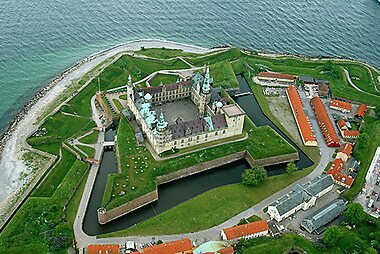
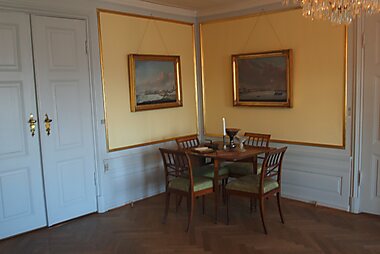

Kronborg Castle is Helsingør's defining landmark: a Renaissance castle at the narrowest point of the Øresund, built for King Frederik II in the 1570s on the site of an older fortress. Shakespeare used it, without ever visiting, as the setting for Hamlet, and UNESCO listed it as a World Heritage Site in 2000.
Next to the castle, M/S Maritime Museum of Denmark is built into a former dry dock, its galleries wrapped around the empty basin below ground level. It traces Danish shipping history from the age of sail to today's container ships.
The old shipyard is now the town's cultural harbour, anchored by Kulturværftet — a converted shipyard hall that houses a theatre, library, and event spaces inside the original steel structure.
In the old town, St. Olaf's Cathedral has stood on the same site since around 1200; the current building dates to 1559 and became a cathedral in 1961.
A short walk away, Carmelite Priory is the best-preserved monastery complex in Scandinavia, founded by Carmelite friars in 1430 and still holding its original cloister and church.
Near the harbour, Skibsklarerergaarden is a 16th-century merchant's house with Denmark's oldest surviving shop interior, from the era when every ship passing through the sound paid a toll here.
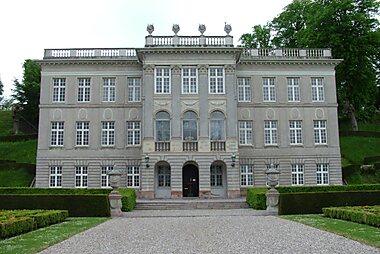
East of the centre, Marienlyst Castle is a palace set in its own park, built as a royal pavilion and later remodeled in a neoclassical style.
Featured Lists


Museums & Culture in Helsingør
Helsingør’s cultural landscape is anchored by the UNESCO-listed Kronborg Castle, the 16th-century stronghold famously serving as the setting for Shakespeare’s Hamlet. Nearby, the Danish Maritime Museum offers subterranean exhibits built into a former dry dock. Local history is showcased at Skibsklarerergaarden, a preserved 1780s ship handler's house, and the Shipyard Museum, which details the city’s industrial era. The collection also includes the Øresund Aquarium’s local marine life and the royal interiors of the 18th-century Marienlyst Castle.
6 places
What to experience
A few things define a visit to Helsingør beyond its museums.
- Cross the sound for lunch: take the passenger ferry to Helsingborg and back, a 20-minute crossing that doubles as a harbour cruise and a habit for locals chasing cheaper shopping in Sweden.
- Catch open-air Hamlet: each summer, watch a Shakespeare performance staged in Kronborg Castle's own courtyard during the HamletScenen festival.
- Browse the Christmas market: in December, wooden stalls fill the harbour around Kulturværftet with mulled wine and local crafts.
- Cycle the coast path: ride north along the Øresund toward Hornbæk's sandy beaches, a popular summer route for locals.
Tours & Activities
Helsingør — Map

Day trips
Helsingør makes a good base for exploring North Zealand and southern Sweden — most of these are close enough for a half day.
- Helsingborg, Sweden — about 20 minutes by ferry across the Øresund; a compact Swedish city with its own castle keep and a lively harbourfront.
- Humlebæk — about 15–20 minutes by train; home to the Louisiana Museum of Modern Art, one of Denmark's most visited art museums, set in a landscaped park on the sound.
- Hornbæk and Gilleleje — about 20–30 minutes by train or car; sandy beaches and small fishing harbours on the North Zealand coast, popular with locals in summer.
- Hillerød — about 30 minutes by regional train; Frederiksborg Castle, the largest Renaissance palace in Scandinavia, sits on three islets surrounded by a formal baroque garden.
- Copenhagen — about 40 minutes by direct train, with departures roughly four times an hour; worth the trip with an extra day, though it is really a destination in its own right rather than a quick add-on.
Getting there
- By air: Copenhagen Airport (CPH), about 60 km south, is the main international gateway. Direct regional trains reach Helsingør in about an hour, with no change needed.
- By train: Helsingør sits at the northern end of the Kystbanen (Coastal Line) from Copenhagen, with direct trains about four times an hour taking around 40 minutes. Book tickets with DSB.
- By ferry: Frequent passenger ferries, about every 20 minutes and taking 20 minutes to cross, connect Helsingør directly with Helsingborg in Sweden.
- By bus: Regional Movia buses reach nearby towns across North Zealand for short local hops; for longer trips such as Hillerød, the direct regional train is faster.
Getting around
- On foot: The old town and harbour sights sit within a 15–20 minute walk of each other, and the historic core is flat and easy to explore.
- Public transit: Local buses run by Movia connect the outskirts; buy tickets through the DOT Mobilbilletter app or tap a Rejsekort travel card at the yellow readers when boarding. Rejseplanen covers routes and times across the region.
- Cycling: Denmark's flat terrain and dedicated bike lanes make cycling a practical way to reach Marienlyst and the coast; bikes can be rented in town.
Driving
- Is a car worth it? Not for the town itself — the old town and harbour sights are walkable, and trains cover Copenhagen and the coast well. A car helps mainly for reaching North Zealand's castles and beaches at your own pace.
- Parking: Paid parking zones cover the centre and harbour; pay by app or at machines, with cheaper all-day options at the car park near the station.
- Restrictions: None beyond standard Danish rules — Helsingør has no congestion charge or low-emission zone.
Food & drink
Helsingør's restaurant scene centres on the restored harbour around Kulturværftet, where cafés and restaurants line the old shipyard buildings with views over the sound. For a classic Danish lunch, look for smørrebrød on the pedestrian street Stengade in the old town, where bakeries and lunch spots cluster.
Tipping follows the national norm here too: rounding up is appreciated but never expected, since service is already built into the price.
Safety & health
Helsingør is a very safe town for travelers, and violent crime is rare. The main risk is pickpocketing during summer crowds around Kronborg Castle and on the ferry to Sweden, so keep bags zipped in busy spots. Tap water is safe to drink straight from the tap.
History
Helsingør grew rich on the Sound Dues, a toll that Danish kings charged every ship passing through the Øresund between 1429 and 1857. The fortress that became Kronborg Castle started as Krogen, a stronghold built in the 1420s to enforce the toll; King Frederik II rebuilt it as a Renaissance palace in the 1570s and 80s, and it was restored again after a fire under King Christian IV in the early 1600s. Merchants and ship's agents, like the one who lived at Skibsklarerergaarden, handled the paperwork for passing captains, and their houses still line the streets near the harbour.
The Carmelite friars who founded Carmelite Priory in 1430 built one of the most complete monastery complexes to survive the Reformation in Scandinavia. St. Olaf's Cathedral, meanwhile, has served the town's parish since around 1200, though the building standing today dates to the 1550s.
Country facts
Quick practical facts for Denmark at a glance:
- Currency
- Danish Krone DKK kr · Card payments · Widely accepted
- Emergency numbers
- 112
- Electricity
- 230 V · 50 HzType C / Type E / Type F / Type K
- Languages
- Danish
- Tap water
- Safe to drink
- Driving side
- Right
- Calling code
- +45


Helsingør – Plan Your Days
Turn the places from this guide into a real itinerary, with smart routing, time estimates, and everything you need for a perfect trip.




