



Ústí nad Labem Region
Ústecký kraj sits in the far northwest corner of Czechia, where the Elbe river cuts through sandstone cliffs and volcanic hills on its way into Germany. The region holds some of the country's most dramatic scenery: the sandstone towers and gorges of Bohemian Switzerland, the flat-topped volcanic hills of the České středohoří, and the forested ridge of the Krušné hory (Ore Mountains) along the border. It also carries the visible weight of 20th-century history, from a wartime ghetto to coalfields that reshaped entire towns.
This is a region for travelers who want real landscapes and layered history over crowds. A few days here can combine hiking through sandstone canyons, a historic spa town, a wine-country old town, and a sobering visit to a WWII memorial, all within an hour or two of each other.

Ústí nad Labem Region – Planning a Trip?
Build your day-by-day itinerary in the Tripomatic app.


When to visit
Spring and autumn are mild and best for hiking the sandstone trails and hills. Summers are warm with occasional afternoon storms, and winters are cold, with reliable snow in the Krušné hory along the German border.
Plan around Zahrada Čech, a garden and harvest fair held in Litoměřice each September, when the region's wine country celebrates the season with tastings, food stalls, and exhibitions.
Best time to visit: August
Top sights
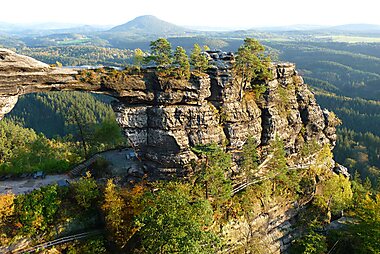
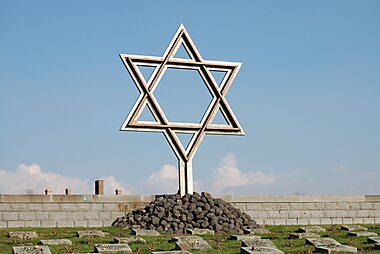
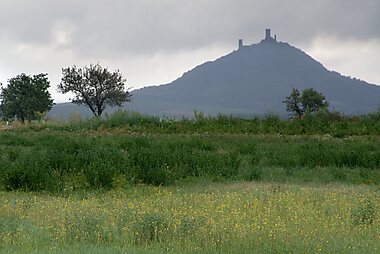
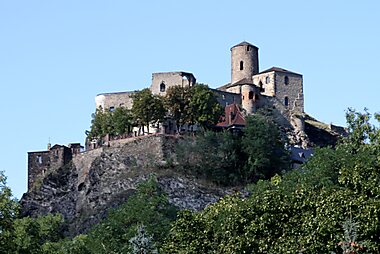

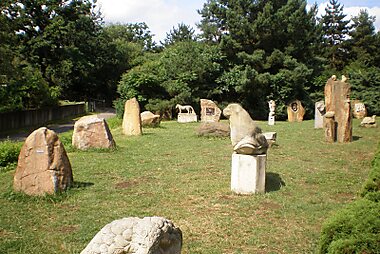


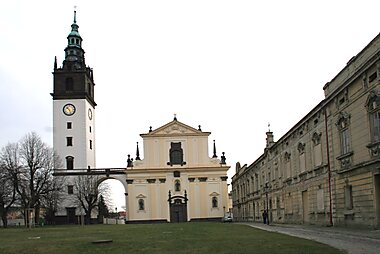
Bohemian Switzerland National Park is the region's single biggest draw, but each of its towns has its own landmark, from a moved Gothic church to a clifftop castle.
Pravčická brána is the largest sandstone arch in Europe, a short hike from the village of Hřensko inside Bohemian Switzerland National Park.
Terezín Memorial preserves the fortress town of Terezín, used by the Nazis as a Jewish ghetto and transit camp during WWII; the museum and former barracks make a sobering, essential stop.
Hazmburk is a solitary volcanic hill topped by a ruined castle, one of the most recognizable silhouettes of the České středohoří landscape.
Střekov Castle perches on a basalt cliff above the Elbe in Ústí nad Labem, one of the best-preserved medieval castle ruins in the country.
St. Stephen's Cathedral, Litoměřice anchors the historic center of Litoměřice, one of Bohemia's oldest towns, first recorded in the 11th century.
Church of the Assumption of the Virgin Mary in Most was moved 841 meters intact on rails in 1975, saved when the medieval town center below it was demolished for coal mining.
Děčín Chateau looks out over the Elbe from a bluff, rebuilt over the centuries into today's Baroque-Renaissance chateau after long use as a military garrison.
Teplice Chateau sits in the middle of Teplice, one of Bohemia's oldest spa towns, still fed by the same thermal springs used since the Middle Ages.
What to experience
- Ride the century-old Větruše Funicular funicular up to the Větruše hill above Ústí nad Labem for views over the Elbe.
- Cool off at Lake Most, a former coal pit flooded and turned into a lake with beaches and watersports.
- Take a boat through the narrow Edmund Gorge below Pravčická brána, punted by a boatman along the Kamenice river in Bohemian Switzerland.
- Soak in Teplice's spa culture, a tradition of visitors to its thermal springs that goes back centuries.
- Join the grape harvest in the wine villages around Litoměřice each autumn, when cellars open for tastings.
- Ski or snowshoe the Krušné hory (Ore Mountains) along the German border in winter.
Tours & Activities
Ústí nad Labem Region — Map

Day trips
Ústecký kraj sits close to Prague and the German border, so a day trip outside the region is easy by train or car.
- Prague: about 1-1.5 hours by train from Ústí nad Labem or Litoměřice. The Czech capital's castle, Old Town, and bridges are an easy add-on to a stay in the region.
- Dresden, Germany: about 45 minutes to 1 hour by train or car from Děčín, following the Elbe gorge across the border. Its rebuilt baroque old town and art museums make a rewarding cross-border trip.
- Karlovy Vary: about 1.5-2 hours by car over the Krušné hory. Czechia's best-known spa town, worth comparing to Teplice's own, quieter spa quarter.
Where to explore
Ústecký kraj's main towns each have a different character, from spa heritage to reinvented industrial cities.
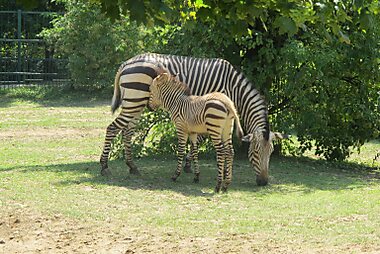
- Ústí nad Labem, the regional capital, sits where the Bílina river meets the Elbe below Střekov Castle, and is home to Ústí nad Labem Zoo.
- Teplice has been a spa town since the Middle Ages, with elegant 19th-century spa architecture around its thermal springs.
- Most was largely rebuilt after coal mining reached its old town, and today has a large reclaimed lake for swimming and watersports.
- Litoměřice is the gateway to Bohemia's wine country, with a well-preserved historic square and cathedral.
- Děčín sits at the southern edge of Bohemian Switzerland, with its own riverside chateau.
- Chomutov is the western gateway to the Krušné hory, home to Chomutov Zoo and Kamencové jezero, a lake formed in a former alum quarry.
Getting there
- By air: The nearest major airport is Prague's Václav Havel Airport (PRG), around 90 km and 75-90 minutes by car or bus from Ústí nad Labem. For the region's northern towns, Dresden Airport (DRS) in Germany can be closer, especially from Děčín.
- By train: Regional and express trains link Prague to Ústí nad Labem, Děčín, Litoměřice, and Most, most journeys under 1.5 hours. The Prague-Dresden-Berlin international line follows the Elbe through Děčín and Ústí nad Labem.
- By bus: Long-distance coaches connect Ústí nad Labem, Teplice, and Most to Prague and to cities in Germany.
Getting around
- Public transit: Each town runs its own bus network, and Ústí nad Labem, Teplice, and Most also have trams or trolleybuses. Regional trains and buses link the towns under the DÚK (Doprava Ústeckého kraje) integrated system; buy tickets through its app or at station kiosks. DÚK regional transport
- Taxi / ride-hailing: Bolt operates in the larger towns.
- On foot / cycling: Town centers are compact and walkable, and a signed cycle route follows the Elbe (Labská stezka) through the region, but covering the wider area is easiest by car or train.
Driving
- Is a car worth it? Yes, if you want to see more than one town. The region spans sandstone canyons, wine hills, and mountains, and a car makes it easy to combine them in a day; each town center is small enough to explore on foot.
- Parking: Historic centers like Litoměřice and Teplice have metered or app-based paid parking zones; larger cities such as Ústí nad Labem and Most have multi-story car parks near downtown.
- Restrictions: No congestion or low-emission zones apply; some historic squares are pedestrian-only.
Food & drink
Ústecký kraj serves the usual Czech pub classics, but its own specialty is wine, not beer. The hills around Litoměřice form part of Bohemia's main wine-growing region, producing crisp whites and light reds worth seeking out in the wine villages' cellars and tasting rooms.
Teplice's spa tradition also shaped local dining, with lighter dishes historically served to spa guests alongside standard Czech fare. For a casual meal, head to the main squares in Litoměřice or Ústí nad Labem, where cafes and restaurants cluster around the historic centers.
Safety & health
Ústecký kraj is a safe region for travelers. Watch for petty theft in crowded spots, such as Ústí nad Labem's train station and the busy trails around Pravčická brána in high season, but violent crime against tourists is rare.
Decades of heavy industry have left some towns, particularly around Most and Chomutov, looking more worn than picture-postcard Bohemia. This doesn't affect visitor safety, and air quality has improved significantly since the 1990s, after the region's power plants and factories were modernized.
History
Litoměřice is one of Bohemia's oldest towns, first recorded in the 11th century, and the surrounding hills have grown grapes for wine since the Middle Ages.
The region's more recent history is harder, and it still shapes the landscape. Until 1945, most of this area belonged to the German-speaking Sudetenland; after WWII, nearly the entire population was expelled and replaced by new settlers, which is part of why some villages in the Krušné hory still feel sparsely populated today. Terezín Memorial sits at the darkest point of that period: the Habsburg fortress town was turned into a Jewish ghetto and transit camp by the Nazis.
Coal shaped the 20th century here just as strongly. Vast brown-coal deposits under Most drove decades of mining, and in the 1960s and 70s the old town of Most was demolished to reach the coal beneath it; only Church of the Assumption of the Virgin Mary was saved, moved intact on rails to a new site. The mining tradition across the Krušné hory, extracting silver, tin, and uranium over eight centuries, is now recognized as a UNESCO World Heritage mining landscape shared with Saxony across the border.
Country facts
Quick practical facts for the Czech Republic at a glance:
- Currency
- Czech Koruna CZK Kč · Card payments · Commonly accepted
- Emergency numbers
- 112
- Electricity
- 230 V · 50 HzType C / Type E
- Languages
- Czech
- Tap water
- Safe to drink
- Driving side
- Right
- Calling code
- +420
Ústí nad Labem Region – Plan Your Trip
Pick the places you want to see and Tripomatic turns them into a day-by-day route, with smart routing, time estimates, and everything you need for a perfect trip.




