



Dubai
Dubai grew from a small fishing and pearling port into one of the world's tallest skylines within two generations. It pairs the tallest building on Earth with air-conditioned malls and desert dunes just outside town. A historic creek still runs through the middle, crossed by wooden boats. For travelers, it works well as a long weekend or a stopover between continents. It also works as a base for exploring the wider United Arab Emirates.
The city suits travelers who want comfort and spectacle. Large hotels, record-breaking attractions, and big shopping malls sit alongside a genuinely international population, most of whom were born outside the UAE. It offers less deep historical immersion than modern luxury and family entertainment. Still, the old trading district around Dubai Creek shows the city's roots.

Dubai – Planning a Trip?
Build your day-by-day itinerary in the Tripomatic app.


When to visit
Winter (November to March) is warm and pleasant, ideal for outdoor dining and sightseeing. Summer (May to September) is extremely hot and humid, often above 40°C. Outdoor attractions are best avoided in the middle of the day during those months.
Time a trip around the Dubai Shopping Festival, roughly mid-December to late January. It fills the city with sales, fireworks, and free entertainment, and it lines up with the cooler months.
Best time to visit: January, February, March, November, December
Between May and September, plan around air-conditioned spaces. Save outdoor sightseeing for early morning or evening.
Top sights



Burj Khalifa is the tallest building in the world at 828 meters. It has observation decks on the 124th, 125th, and 148th floors. Book tickets in advance, especially for a sunset slot.
Right at its base, The Dubai Mall is one of the largest shopping malls in the world. It holds an aquarium, an ice rink, and hundreds of stores under one roof.
Burj Al Arab is the sail-shaped hotel that became Dubai's second icon. Non-guests can visit for afternoon tea or a meal to see the interior.
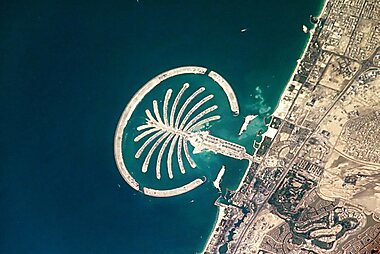
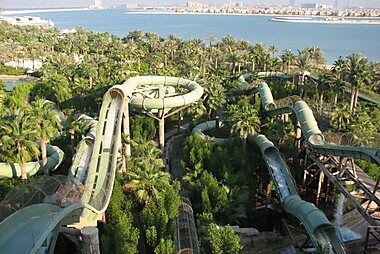
Palm Jumeirah is an artificial island shaped like a palm tree. It holds beach resorts, restaurants, and a boardwalk with skyline views back toward the mainland.
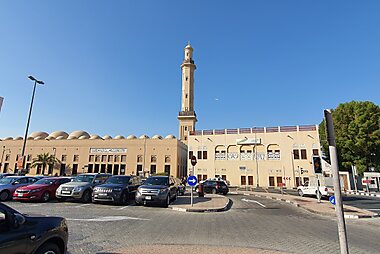
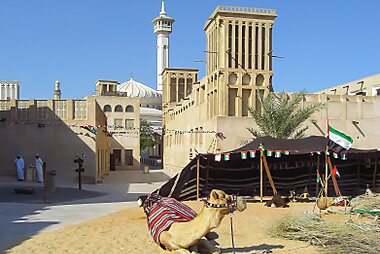
Al Fahidi Historical Neighbourhood preserves the wind-tower architecture of the old trading city. Its narrow lanes hold art galleries and small museums, and give a sense of Dubai before the skyscrapers.
Dubai Frame is a giant picture-frame-shaped building with a glass floor 150 meters up. It offers views over both old and new Dubai from a single spot.
Museum of the Future is a striking torus-shaped building exploring future technology and design, and one of the most-visited landmarks built in the city since 2020.
Featured Lists


Best Museums in Dubai
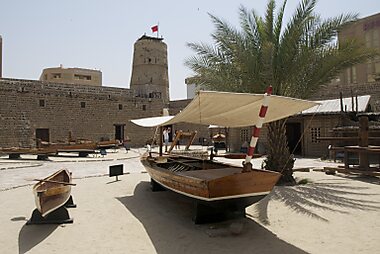
Dubai's museum landscape spans from the 18th-century Al Fahidi Fort to the torus-shaped Museum of the Future. This collection highlights the city's transformation, featuring the Etihad Museum, which marks the signing of the UAE constitution, and the Saeed Al Maktoum House, a former royal residence. Visitors can explore traditional Emirati architecture in the Al Fahidi Historical Neighbourhood, learn about maritime heritage at the Heritage Village, or experience contemporary global art at Carbon 12.
12 places

Best Dubai Beaches
Dubai’s coastline features a diverse range of waterfront destinations, from the luxury resorts and residences of the man-made Palm Jumeirah to the active environment of Kite Beach, a hub for water sports. Sunset Beach offers direct views of the Burj Al Arab, while Al Mamzar Park provides over 100 hectares of landscaped gardens alongside five separate beaches. For a more relaxed setting, Jebel Ali Beach and Jumeirah Beach offer expansive stretches of white sand and clear waters of the Arabian Gulf.
8 places

What to experience
Dubai's best experiences happen outside the malls: in the desert, on the creek, or on real snow.
- Head into the dunes on a Desert Safari. It typically combines dune-bashing in a 4x4, a camel ride, and a barbecue dinner at a desert camp as the sun sets.
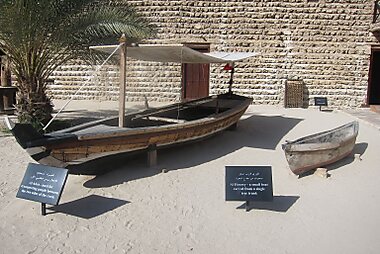
- Cross Dubai Creek the traditional way on an Abra Dock. This small wooden boat has ferried passengers between Deira and Bur Dubai for generations.
- Ski or snowboard on real snow at Ski Dubai, an indoor slope inside a shopping mall, unusual next to the desert outside.
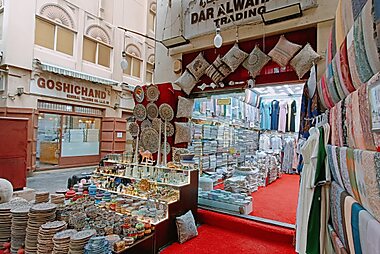
- Haggle for gold, spices, or souvenirs at the Deira Gold Souk, where bargaining over the price is expected, not rude.
- Watch the choreographed jets of the Dubai Fountain perform to music after dark. Timed shows run every 30 minutes most evenings.
Tours & Activities
Dubai — Map

 Open the interactive map
 Day trips
Dubai makes a good base for exploring the wider United Arab Emirates, from mountain wadis to a neighboring capital.
- Sharjah — 20 to 40 minutes by car or bus. The UAE's cultural capital has a dense cluster of museums and a restored heritage souk. Its alcohol-free old town is worth a half-day.
- Hatta — about 1.5 hours by car. This mountain village has a turquoise reservoir, hiking trails, and a restored heritage village. The drive passes through the Hajar Mountains.
- Abu Dhabi — about 1.5 hours by car, or around 2 hours by intercity bus. The UAE capital is home to the Sheikh Zayed Grand Mosque and Louvre Abu Dhabi. Both are easily worth a full day.
- Al Ain — about 1.5 hours by car. This UNESCO-listed oasis city has mudbrick forts and date palm groves, and a noticeably cooler climate thanks to its inland, higher-elevation setting.
Where to explore
Beyond the skyline, Dubai emirate holds a historic trading district, a protected wetland, and open desert.
- Deira is the old trading heart of the city, across the creek from Bur Dubai. It's known for its gold, spice, and textile souks.
- Ras Al Khor Wildlife Sanctuary is a protected wetland inside the city limits where flamingos and migratory birds gather, visible from free public hides.
- Al Marmoom Desert Conservation Reserve protects open desert south of the city, popular for camel riding, cycling trails, and overnight desert camps.
Getting there
- By air: Dubai International Airport is the main gateway, used by most long-haul and regional flights. It sits about 15 km from Downtown Dubai. The Dubai Metro Red Line reaches the city center in about 30 minutes. Taxis take roughly 15-20 minutes depending on traffic.
- By air (budget/charter): A smaller number of low-cost and charter carriers use Al Maktoum International Airport (DWC). It's about 45 km south of the city center, notably farther than Dubai International Airport. Budget extra time and cost for the taxi transfer downtown.
- By bus: Long-distance coaches connect Dubai to other emirates, arriving at Al Ghubaiba or Gold Souk bus stations.
Getting around
- Metro and tram: The driverless Dubai Metro runs two lines connecting the airport, Downtown, Marina, and most major sights. A separate tram loop serves Dubai Marina and the Jumeirah Beach Residence (JBR) waterfront. Pay by tapping a Nol card at the gates. Buy or top up one at any station or through the RTA app.
- Taxi and ride-hailing: RTA taxis are metered and widely available. Careem and Uber both operate and are commonly used alongside street-hailed cabs.
- Water transport: Traditional abras cross Dubai Creek between Deira and Bur Dubai for a small flat fare. It's one of the cheapest ways to see the old city from the water.
- On foot: Walking is impractical for much of the year because of the heat and wide, car-oriented roads. Districts like Downtown, Marina, and the malls are walkable in short stretches, especially November to March.
Official journey planning and tickets: Roads and Transport Authority
Driving
- Is a car worth it?: Not for the main sights. The metro, trams, and taxis cover Downtown, Marina, and the malls well. A car becomes useful for reaching Hatta, the desert, or other emirates independently rather than on a tour.
- Parking: Most malls and hotels offer free or valet parking. On-street parking in business and tourist areas is paid through RTA's parking app or SMS, charged by the hour during the day.
- Toll gates: Salik toll gates on major roads charge automatically as you pass. There are no barriers and no cash needed, and no need to stop.
Food & drink
Dubai's dining scene reflects its population: Iranian, Indian, Pakistani, Filipino, and Levantine food alongside Emirati specialties and international fine dining.
The restaurants around Al Fahidi Historical Neighbourhood serve Emirati dishes inside restored heritage houses, a good option for trying the country's own cuisine. For everyday eating, the cheap and reliable Pakistani and Indian canteens around Deira and Karama are where residents actually eat. The food stalls inside the souks near the Creek are another easy option.
Safety & health
Dubai is very safe for tourists, with low rates of street crime and highly visible policing. The main risks are petty ones: overpriced tourist-trap restaurants, unofficial guides near the souks, and unlicensed taxis touting for business outside busy attractions. Stick to metered RTA taxis or ride-hailing apps instead.
The UAE has strict laws that surprise many visitors:
- Bringing in certain prescription and over-the-counter medications without a doctor's letter can lead to arrest.
- Public intoxication and drunk driving are prosecuted harshly.
- Public displays of affection can draw a fine.
Dress modestly at religious sites and in older neighborhoods like Deira and Bur Dubai.
History
Dubai began as a small fishing, pearling, and trading settlement on the banks of Dubai Creek. It was formally established in the early 19th century under the Al Maktoum family, who still rule the emirate today. The discovery of oil in the 1960s funded the first wave of modern development. But Dubai's leadership diversified early into trade, aviation, and tourism, since its own oil reserves were modest next to Abu Dhabi's.
That strategy is visible around Al Fahidi Historical Neighbourhood, where wind-tower merchant houses from the pearling era still stand. Along the creek, wooden dhows still load cargo bound for Iran and East Africa, much as they did a century ago. The building boom that produced Burj Khalifa and Palm Jumeirah took off from the 1990s onward. It turned a regional trading port into a global city within a single generation.
Country facts
Quick practical facts for the United Arab Emirates at a glance:
- Currency
- United Arab Emirates Dirham AED AED · Card payments · Widely accepted
- Emergency numbers
- 112
- Electricity
- 220 V · 50 HzType C / Type G
- Languages
- Arabic
- Tap water
- Safe to drink
- Driving side
- Right
- Calling code
- +971
Dubai – Plan Your Trip
Pick the places you want to see and Tripomatic turns them into a day-by-day route, with smart routing, time estimates, and everything you need for a perfect trip.




