


Görlitz
Görlitz is a town in Saxony on the river Neisse, on the border with Poland. The old town was not destroyed in the Second World War. It has Gothic, Renaissance, Baroque and Art Nouveau houses in a very small area.
The town suits a stay of one or two nights. You can walk everywhere. The Polish town of Zgorzelec lies across the river, so you can visit two countries in one day. Görlitz is also a popular film location. Wes Anderson shot The Grand Budapest Hotel here.

Görlitz – Planning a Trip?
Build your day-by-day itinerary in the Tripomatic app.


When to visit
Late spring, summer and early autumn are the best months. Days are warm and the old town is pleasant to walk. Summer brings some rain. Winters are cold and grey, with short days.
The Silesian Christmas market, the Schlesischer Christkindelmarkt, fills the Untermarkt in Advent. It is the best reason to come in winter.
Best time to visit: June, August, September
Top sights

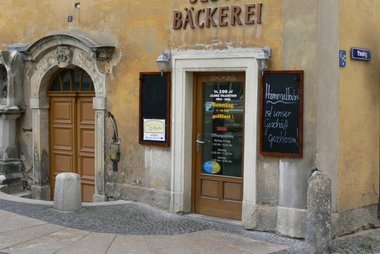
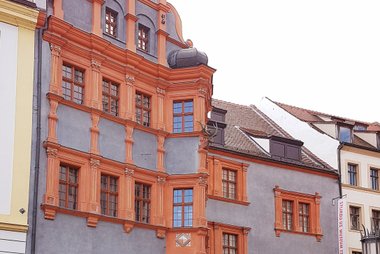
- Untermarkt is the main square of the old town. Merchants' houses with arcades stand around it.
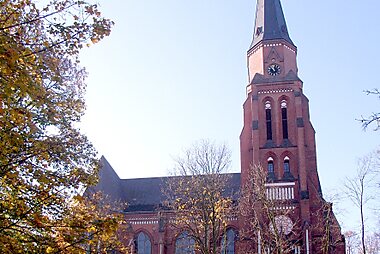
- Stadtkirche St. Peter und Paul is a large Gothic church above the Neisse. It has a famous organ called the Sonnenorgel, or sun organ.
- The Holy Sepulchre is a copy of the Holy Sepulchre in Jerusalem. Work began in 1465. It stands north of the Untermarkt.
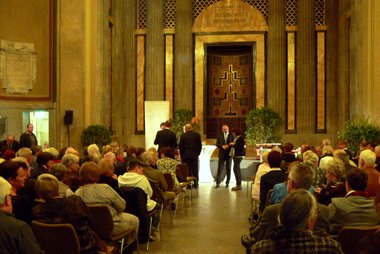
- Cultural Centre Synagogue of Goerlitz is a restored synagogue. It is now a cultural centre.
- St. Jakobus is the Catholic cathedral of the town. It stands near the main station.
- The Görlitz department store, the Kaufhaus, is an Art Nouveau building.
- The Altstadtbrücke is a pedestrian bridge over the Neisse. It leads to Zgorzelec in Poland.
Featured Lists

Görlitz Unmissables
Görlitz features over 4,000 listed monuments spanning Gothic, Renaissance, and Art Nouveau styles. This selection highlights the city's architectural preservation, including the 14th-century Town Hall, the late-Gothic St. Peter and Paul Church, and the Art Nouveau Görlitz Department Store. Often used as a film set for international productions, the historic core also features the Holy Sepulchre—a medieval replica of Jerusalem's sacred sites—and the Kaisertrutz, a massive 15th-century defensive bastion now serving as a cultural history museum.
12 places

What to experience
- Cross the Neisse on foot between Germany and Poland, and have a coffee on the Polish side.
- Walk or cycle along the Neisse river path in good weather.
- Climb the Landeskrone, the hill near the town, for a view over the Neisse valley.
Tours & Activities
Görlitz — Map

 Open the interactive map
Day trips
Görlitz is a good base for the Upper Lusatia region. Zittau and Löbau lie on regional rail lines.
- Zgorzelec, Poland: across the Altstadtbrücke on foot. Poland uses the złoty, not the euro.
- Löbau: 30 to 60 minutes by train. It has a cast-iron tower and Haus Schminke, a modern house by Hans Scharoun.
- Zittau: 30 to 60 minutes by train. It is an old town at the foot of the Zittau Mountains, near the Czech and Polish borders.
- Bad Muskau: about 1 hour by car. The Fürst-Pückler-Park is a UNESCO World Heritage garden on the German and Polish sides of the Neisse.
- Bautzen: about 1 hour by train. It is the centre of Sorbian culture, with towers above the Spree.
- Dresden: about 2 hours by train. It works as a long day trip.
Where to explore
Getting there
- By air: The nearest large airport is Dresden (DRS). From there, take the S-Bahn to Dresden main station, then a regional train to Görlitz. Berlin Brandenburg (BER) is another option.
- By train: Regional trains run from Dresden to Bahnhof Görlitz. The old town is within walking distance of the station. Book on Deutsche Bahn.
Getting around
- On foot: The old town and the Polish side are compact. You can walk between most sights. Streets are cobbled and some slope down to the Neisse.
- Trams and buses: Görlitz has trams and buses. Tickets and timetables are on the ZVON regional transport site.
- Cycling: Bike paths follow the Neisse. Routes are flat along the river and hilly away from it.
Driving
- Is a car worth it?: Not for the town. A car helps for Bad Muskau and for villages in Upper Lusatia.
- Parking: Park at the edge of the old town and walk. Many centre streets are narrow and cobbled.
Food & drink
Görlitz cooking is Silesian and Upper Lusatian. Look for Schlesisches Himmelreich, a dish of smoked pork with dumplings. Quark with potatoes and linseed oil is a regional classic.
Eating clusters around the Untermarkt and the Obermarkt, and along Peterstraße.
Safety & health
Watch your bags in crowded places such as the Christmas market.
History
Görlitz was first mentioned in 1071 and grew into a trade town in the Middle Ages. It lies on an old road across Upper Lusatia, and merchants built the houses around the Untermarkt.
Rich citizens built The Holy Sepulchre in the 15th century. The mystic Jakob Böhme lived and worked in the town in the early 1600s.
Upper Lusatia passed to Saxony in 1635. After 1815 Görlitz belonged to Prussia. In 1945 the border on the Neisse split the town. The eastern bank became Zgorzelec in Poland. The old town survived the war nearly intact. Many buildings were restored after 1990.
Country facts
Quick practical facts for Germany at a glance:
- Currency
- Euro EUR € · Card payments · Commonly accepted
- Emergency numbers
- 112 Ambulance · Fire brigade
- Electricity
- 230 V · 50 HzType C / Type F
- Languages
- German
- Tap water
- Safe to drink
- Driving side
- Right
- Calling code
- +49


Görlitz – Plan Your Days
Turn the places from this guide into a real itinerary, with smart routing, time estimates, and everything you need for a perfect trip.


Related destinations


Data: © OpenStreetMap contributors, Wikidata, Wikipedia, Tripomatic, Official websites. Tours by GetYourGuide. We earn commission from bookings. Travel guide generated with AI.
Plan your trip with Tripomatic
- AI-Powered PlanningGet a ready-made day in one tap, let AI spread your shortlist across your trip, or plan everything by chatting.
- Travel AlertsOfficial advisories, severe weather, strikes, and natural hazards for the places on each day of your trip.
- Public Holidays & EventsSee holidays, festivals, and closures on the days of your trip, and what they mean for your plans.
- Cost EstimationAI-powered trip cost breakdowns so you know what to budget before you go.
- Tours & TicketsBook tours, skip-the-line tickets, and activities directly in your plan.