



Gothenburg
Gothenburg is Sweden's second-largest city, built where the Göta River meets the sea. Compared with Stockholm's polish, it has a relaxed, unpretentious character, with a compact center of canals, tram lines, and 19th-century grid streets that are easy to explore on foot. It suits travelers who want a mix of city sights, seaside air, and a strong coffee and food culture without the crowds of the capital.
The city is also linked to the beloved troubadour Evert Taube, born on the nearby island of Vinga, and to Volvo, founded here in 1927. It works well as a weekend break or as a stop between Stockholm and Copenhagen, and is reachable by ferry from Denmark and Germany as well as by air and rail.

Gothenburg – Planning a Trip?
Build your day-by-day itinerary in the Tripomatic app.


When to visit
Summer (June to August) is mild with long daylight hours and is the best time to visit; spring and autumn are cool and changeable; winters are dark and cold, with occasional snow. Kulturkalaset, a free citywide culture festival with concerts and street performances, fills the center every August — worth timing a trip around.
Rain is possible in any month, so pack a waterproof layer even in summer.
Top sights
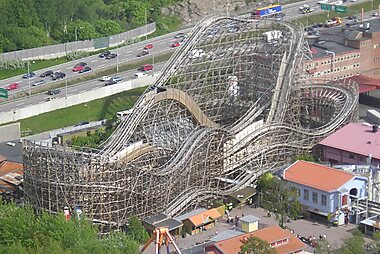

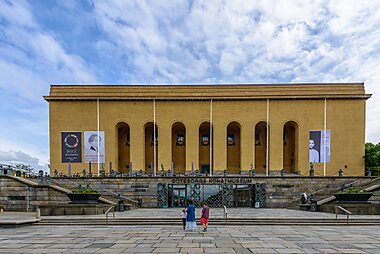
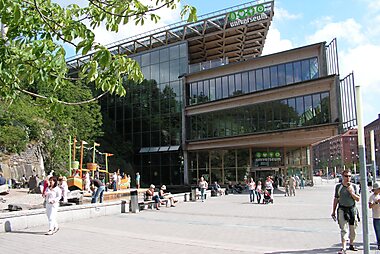
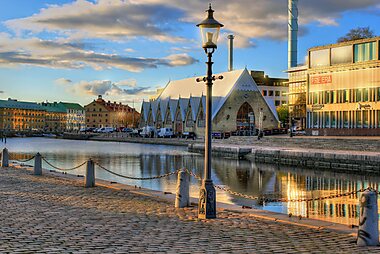
Liseberg is Scandinavia's largest amusement park, with wooden and steel roller coasters, gardens, and a Christmas market from late November.
Slottsskogen is a huge free park on former royal hunting grounds, with a free zoo of Nordic animals, playgrounds, and shaded paths — a popular escape from the city center.
Universeum combines a science centre, aquarium, and zoo under one roof, with a rainforest hall and a shark tank that make it a rewarding stop for families.
World of Volvo is Volvo's brand experience centre, tracing the company's history and future concepts through interactive exhibits and a collection of landmark cars.
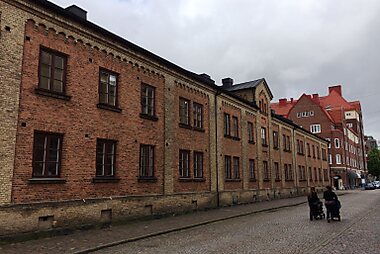
Haga Old Town is Gothenburg's oldest surviving neighborhood, a cluster of wooden houses from the 1800s now filled with cafés and small shops.
Feskekörka is an indoor fish market built in 1874 in the shape of a Neo-Gothic church, where stalls sell fresh West Coast seafood alongside a seafood restaurant.
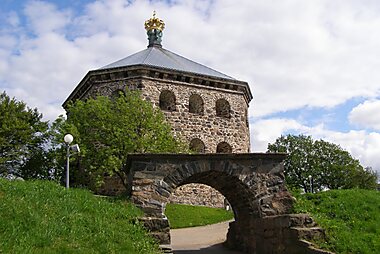
Skansen Kronan is a 17th-century hilltop fortress above Haga, built to defend the young city, and a short, steep walk that rewards with wide views over the rooftops.
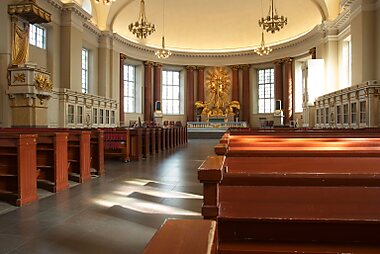
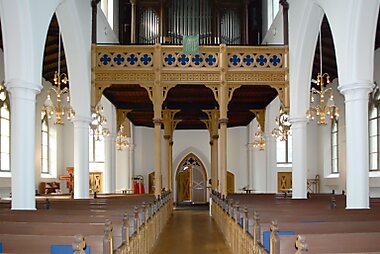
Gothenburg Cathedral is the seat of Gothenburg's bishop, a plain brick building rebuilt after fire, standing on the city's main square.
Featured Lists


Gothenburg Landmarks
Gothenburg's urban landscape is defined by its collection of public art and historic squares. This list features the city's most significant landmarks, from the iconic Poseidon statue by Carl Milles at Götaplatsen to memorials honoring figures like Raoul Wallenberg and Karin Boye. Explore architectural sites such as Drottningtorget and Stigbergstorget alongside modern sculptures like Incantatio and Masterna. These sites reflect Gothenburg's maritime heritage, industrial history, and artistic evolution, providing a comprehensive overview of the city's cultural identity and public spaces.
14 places

Theatres & Performance Venues
Gothenburg’s performing arts scene centers around the cultural hub of Götaplatsen, home to the 1934 City Theatre and the contemporary art space Göteborgs Konsthall. The city’s theatrical history is further represented by the 1916 Lorensbergsteatern and the socially engaged Folkteatern at Järntorget. For experimental work, Atalante occupies a former 1930s cinema near Skanstorget, hosting avant-garde dance and music. These venues collectively showcase a range of architecture from early 20th-century classical styles to mid-century modernism.
5 places
Gothenburg Parks & Gardens
Gothenburg’s green spaces range from the historic estate grounds of Överåsparken and Landeriträdgården to community-driven initiatives like the Färjenäs forest garden and Odla Guldheden. This selection highlights the city's botanical variety, including Flunsåsparken’s free summer performance stage, the multicultural plantings of Värdens Park, and the expansive recreational meadows of Apslätten. These locations offer a mix of traditional English landscape design, urban permaculture, and waterfront views along the Göta älv.
10 placesWhat to experience
A handful of things feel distinctly Gothenburg.
- Take a Paddan canal boat tour through the old moat and harbor, ducking under bridges built too low for standing passengers — a Gothenburg tradition since the 1930s.
- Catch the ferry from Saltholmen out to the car-free southern archipelago for a swim and a seafood lunch on the rocks.
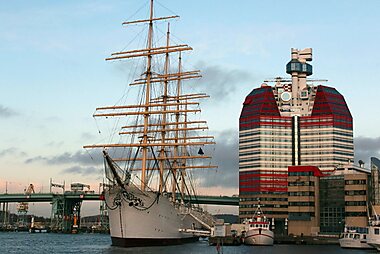
- Watch the sunset over the harbor from the top of Göteborgsutkiken, nicknamed "the Lipstick" for its shape.
- Join the crowds at Way Out West, the August music festival held in Slottsskogen each summer.
- Browse the craft workshops inside Kronhuset, one of the city's oldest buildings, still home to working artisans.
Tours & Activities
Gothenburg — Map

 Open the interactive map
 Day trips
Gothenburg's coast and countryside make easy day trips, from car-free islands to historic fortress towns.
- The southern archipelago (Styrsö, Vrångö, Brännö): about 30–45 minutes by ferry from the Saltholmen tram terminus; car-free islands with swimming spots, fishing villages, and seafood cafés — the easiest and most popular day out.
- Kungälv and its Bohus Fortress: about 30 minutes by bus; a medieval ruin above the Nordre River, good for a half day combined with the town.
- Alingsås: about 40 minutes by train; a lakeside town regarded as the birthplace of the Swedish fika break, with well-preserved wooden townhouses.
- Marstrand: about 1 hour by bus or car; a small fortress island on the Bohuslän coast, known for sailing regattas and its 17th-century Carlsten Fortress.
- Varberg: about 1 hour by train; a coastal town with a moated fortress, sandy beaches, and one of Sweden's oldest bathhouses.
Getting there
- By air: Landvetter Airport (GOT), about 25 km east of the center, is the main gateway with direct flights across Europe. The Flygbussarna airport coach runs to the center in about 20 minutes; a taxi takes about 25–30 minutes. Landvetter Airport
- By train: Göteborg Centralstation has frequent high-speed trains to Stockholm (about 3 hours), plus connections south to Malmö and Copenhagen (about 3.5–4 hours) and north to Oslo. SJ national rail
- By bus: Long-distance coaches use Nils Ericson Terminalen, next to Central Station, with services to Stockholm, Malmö, Oslo, and Copenhagen.
- By ferry: Stena Line runs ferries to Frederikshavn in Denmark and Kiel in Germany, docking close to the city center — a scenic option from mainland Europe.
Getting around
- Public transit: Västtrafik runs an extensive tram (spårvagn) and bus network covering the whole city. Tap a contactless bank card or phone directly on the reader when boarding — the ticket covers 90 minutes with free transfers — or buy in advance through the Västtrafik To Go app. Västtrafik journey planner
- Taxi / ride-hailing: Regular taxis and ride-hailing apps operate throughout the city; fares vary between companies, so confirm the price before you go.
- On foot / cycling: The center is compact and flat enough to walk between most sights. Styr & Ställ bike-share stations are common, and dedicated cycle lanes make cycling a genuinely practical way to get around.
Driving
- Is a car worth it?: Skip it in the city — trams and walking cover the center easily. A car helps only for reaching the wider Bohuslän coast or inland lakes at your own pace.
- Parking: Paid parking operates in most central areas by day; look for parking garages near Nordstan or Avenyn, paid via the EasyPark app or a meter.
- Restrictions: A congestion tax applies on entry to the city center on weekdays; cameras automatically log rental and foreign-registered vehicles, which are billed by post afterward, so budget for it if you drive in.
Food & drink
Gothenburg's food culture centers on West Coast seafood — shrimp, oysters, and mussels appear on menus everywhere, especially the classic open shrimp sandwich (räksmörgås). Feskekörka is the place to try it fresh, or pick up a picnic lunch at Saluhallen, a 19th-century market hall with butchers, bakeries, and small kitchens under one glass roof.
Fika, the Swedish coffee-and-pastry break, is taken seriously here — a cinnamon bun and coffee mid-morning or mid-afternoon is a normal part of the day, not a tourist ritual.
Safety & health
Gothenburg is a safe city for travelers, with violent crime rare in the areas visitors frequent. The main risks are petty theft and pickpocketing around Nordstan shopping center, Central Station, and on crowded trams — keep bags zipped and phones out of back pockets. Nightlife around Avenyn can get lively on weekend nights, though it is generally not dangerous.
History
King Gustav II Adolf founded Gothenburg in 1621 as a fortified trading port, laying it out on a Dutch canal grid to secure Sweden's only outlet to the North Sea. Dutch, German, and Scottish merchants settled here, and their influence still shows in the street plan and in Kronhuset, built in the 1640s as an arsenal and grain store for a city that expected to be besieged.
New Älvsborg, on an island at the river mouth, was built soon after to guard the harbor from Danish attack; boat tours run out to it in summer.
In the 18th century the Swedish East India Company brought tea, porcelain, and silk from Asia through the port, a trade now documented at City Museum of Gothenburg, housed in the company's former headquarters. Shipbuilding and industry dominated the 19th and 20th centuries, and Gothenburg has since turned its old shipyards and warehouses into cultural and residential districts.
Country facts
Quick practical facts for Sweden at a glance:
- Currency
- Swedish Krona SEK kr · Card payments · Widely accepted
- Emergency numbers
- 112
- Electricity
- 230 V · 50 HzType C / Type F
- Languages
- Swedish
- Tap water
- Safe to drink
- Driving side
- Right
- Calling code
- +46


Gothenburg – Plan Your Days
Turn the places from this guide into a real itinerary, with smart routing, time estimates, and everything you need for a perfect trip.




