


Helsingborg
Helsingborg sits on the narrowest point of the Öresund strait, in southern Sweden's Skåne region. Denmark is visible across the water, only a few kilometers away. For centuries this made the city a prized military stronghold and toll post. Today it is a relaxed harbor city with a walkable old town, sea views, and a fast ferry connection to Denmark.
The city suits a traveler who wants an easy, compact base for exploring both southern Sweden and Denmark without renting a car. A weekend covers the main sights comfortably, with day trips to Copenhagen or the Danish town of Helsingør just a short ferry ride away.

Helsingborg – Planning a Trip?
Build your day-by-day itinerary in the Tripomatic app.


When to visit
Summer, from June to August, is the best time to visit, with the longest days and the driest, warmest weather of the year. Spring and early autumn are mild; winter is cold, dark, and often wet.
Plan around Bayside Festival in early July, a two-day music festival held at the harbor near Hamntorget — the city's biggest annual event and a good reason to time a summer visit.
June and August bring the most reliably good weather; July is warmer but rainier.
Top sights
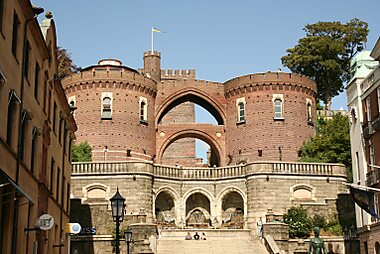




Kärnan is Helsingborg's defining landmark, a medieval keep standing on the hill above downtown. It is the only surviving part of a Danish border fortress that once guarded the strait alongside Kronborg Castle in Helsingør. Climb the tower for views across the Öresund to Denmark.
Rådhuset, with its tall clock tower and red-brick facades, anchors the main square, Stortorget. It was completed in 1897, designed by Alfred Hellerström, and still houses the city government.
Sankta Maria kyrka is the oldest building in the city, a red-brick church dating back to the 1100s. Inside are a 14th-century baptismal font and a 15th-century altarpiece.
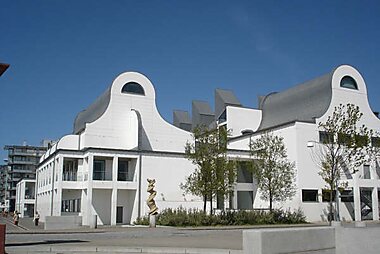
Dunkers kulturhus is a striking harborside culture center with contemporary art, a city history museum, and a lively café — a symbol of Helsingborg's modern waterfront.
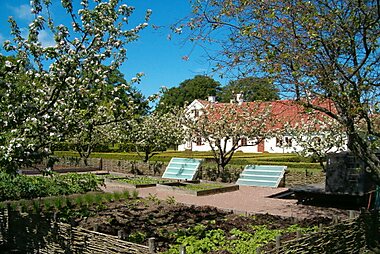
Fredriksdal museer och trädgårdar is an open-air museum that recreates historic Skåne farms and gardens, spread across parkland just north of downtown.
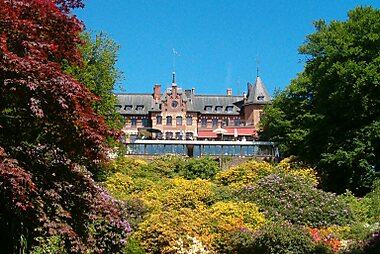
Sofiero Palace, a former royal summer residence 5 kilometers north of the centre, is known for its gardens and a rhododendron collection of almost 500 varieties, best seen in late spring.
Tropikariet is a small zoo where visitors walk among free-roaming animals from Africa and Madagascar — a good stop with children.
Featured Lists

What to experience
- Cross to Denmark and back on the passenger ferry, one of the busiest international ferry routes in the world, with departures roughly every 20 minutes and a crossing of about 20 minutes each way.
- Walk or cycle Sundspromenaden at sunset, when Kronborg Castle's silhouette is visible across the strait.
Tours & Activities
Helsingborg — Map

 Open the interactive map
 Day trips
Helsingborg's location makes it an easy base for day trips — Denmark is a short ferry ride away, and several of southern Sweden's best cities are under an hour by train.
- Helsingør, Denmark — about 20 minutes by ferry. Home to Kronborg Castle, a UNESCO World Heritage Site and the real-life setting for Shakespeare's Hamlet.
- Kullaberg Nature Reserve — about 45 minutes by car or bus. A rocky peninsula of cliffs, forest, and coastal trails, with a lighthouse at its tip.
- Lund — about 35 minutes by train. A compact university city built around a Romanesque cathedral and cobbled medieval streets.
- Malmö — about 50 minutes by train. Sweden's third-largest city, with the Turning Torso skyscraper and views of the Öresund Bridge.
- Copenhagen, Denmark — about 1 to 1.5 hours by ferry and train, or by direct train via Malmö. Denmark's capital is a flagship day trip with enough sights to fill a full day.
Getting there
- By air: Copenhagen Airport (CPH) is the main international gateway, about an hour away by ferry and train via Helsingør, or around 1.5 hours by direct train via Malmö and the Öresund Bridge. Ängelholm–Helsingborg Airport, a small regional airport about 30 km north, has a handful of domestic flights to Stockholm.
- By train: Helsingborg C, the central station, has direct regional trains south to Lund, Malmö, and Copenhagen, and long-distance trains north to Gothenburg and Stockholm.
- By ferry: Car and passenger ferries cross to Helsingør, Denmark, roughly every 20 minutes around the clock — one of the busiest international ferry routes in the world, with a crossing time of about 20 minutes.
- By bus: Long-distance coaches connect Helsingborg to other Swedish and Danish cities from Knutpunkten, the combined transit terminal next to the train station and ferry piers.
Getting around
- Public transit: Skånetrafiken buses and regional trains cover Helsingborg and the wider Skåne region. Many buses accept contactless card or phone payment directly on board; the Skånetrafiken app also sells tickets. Skånetrafiken
- Taxi: Local taxi firms and ride-hailing apps operate normally.
- On foot / cycling: The old town, harbor, and Stortorget are walkable in well under an hour end to end. Sundspromenaden, a flat coastal path, runs along the water for several kilometers and is shared by walkers and cyclists.
Driving
- Is a car worth it?: Not for the city itself — Helsingborg's old town and harbor are easily walkable. A car helps for reaching Sofiero Palace, Kullaberg, or the wider Skåne coast at your own pace.
- Parking: Paid parking garages and street zones cover the centre. Pay by app or ticket machine; expect to pay through most of the day, including some evenings.
- Taking a car to Denmark: If driving onto the Helsingør ferry, book ahead in summer and around holidays — car space fills up on short notice.
Food & drink
Helsingborg's dining scene leans on fresh seafood from the Sound — herring, plaice, and langoustine appear on menus across the city, alongside Skåne specialties like spettekaka, a tall cone-shaped cake baked on a spit, traditionally served at celebrations.
For a casual meal, head to the streets around Norra Storgatan and Södra Storgatan in the old town, where cafés and restaurants fill restored 18th- and 19th-century buildings. The harbor promenade near Dunkers kulturhus has a newer cluster of restaurants and bars with waterfront seating in summer.
Safety & health
Helsingborg is a safe city by international standards, with low rates of violent crime. The main things to watch are pickpockets in crowds around Knutpunkten and the ferry terminal, and rowdier nightlife around the harbor on weekend evenings.
Tap water is safe to drink everywhere, the same as the rest of Sweden.
History
Helsingborg's history is tied entirely to its position on the Öresund strait, the narrowest crossing between Sweden and Denmark. A fortress stood here from the Middle Ages, controlling ships passing through the strait and, together with its twin across the water at Helsingør, collecting a toll on them for centuries. Kärnan is the only part of that fortress still standing.
Sweden took control of Skåne from Denmark in 1658 under the Treaty of Roskilde. Denmark tried to win it back in the Scanian War, but lost again; after the 1679 Treaty of Lund confirmed Swedish rule, King Charles XI had most of the old fortress torn down, fearing it could be turned against Sweden in a future attack.
Sankta Maria kyrka, built in the 1100s, survived that turbulent history and remains the city's oldest building. The following centuries brought industry and a working harbor. Rådhuset was built in 1897 as a symbol of the city's new civic confidence. In recent decades, the old industrial harbor has been rebuilt into housing and public space, with Dunkers kulturhus standing as the clearest symbol of that transformation.
Country facts
Quick practical facts for Sweden at a glance:
- Currency
- Swedish Krona SEK kr · Card payments · Widely accepted
- Emergency numbers
- 112
- Electricity
- 230 V · 50 HzType C / Type F
- Languages
- Swedish
- Tap water
- Safe to drink
- Driving side
- Right
- Calling code
- +46


Helsingborg – Plan Your Days
Turn the places from this guide into a real itinerary, with smart routing, time estimates, and everything you need for a perfect trip.