


Innsbruck
Innsbruck is the capital of Tyrol and sits in the Inn valley, ringed by high peaks. Few cities put the mountains so close to the centre: a cable car reaches alpine terrain in about 20 minutes.
The pastel old town has Habsburg palaces, arcaded streets and the Golden Roof. The city hosted the Winter Olympics in 1964 and 1976. It works for a city break and as a ski and hiking base.
Download this guide as a PDFPrintable tourist mapPublic holidays in Austria

Innsbruck – Planning a Trip?
Build your day-by-day itinerary in the Tripomatic app.


When to visit
December to March is ski season, and the Christmas markets run in Advent. June to September is best for hiking and cable car trips. Spring and autumn are quieter but can be wet. Winter days are short and cold. Summer days are warm, with afternoon storms in the mountains.
Top sights


- Altstadt is the compact medieval centre with colourful houses and arcades.
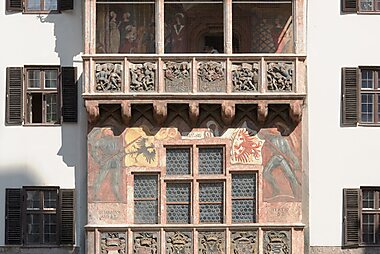
- Golden Roof Museum covers the Golden Roof, the gilded balcony that is the symbol of the city.
- Herzog-Friedrich-Straße is the main old-town street, lined with cafes and shops.
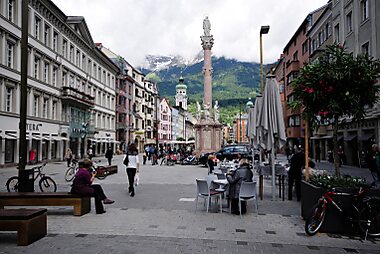
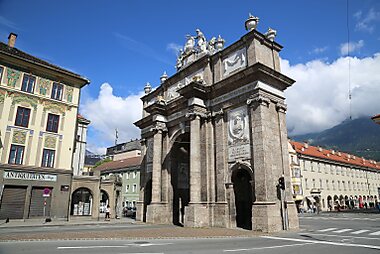
- Maria-Theresien-Straße is the wide shopping street that leads south to the Triumphpforte, with mountain views at the end.
- Triumphpforte is a triumphal arch built in 1765.
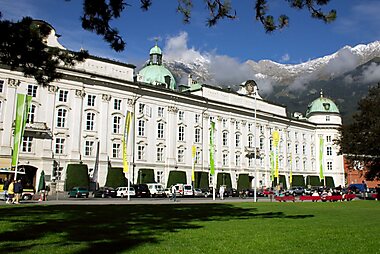
- Kaiserliche Hofburg is the former imperial palace, with state rooms and portraits of Maria Theresa.
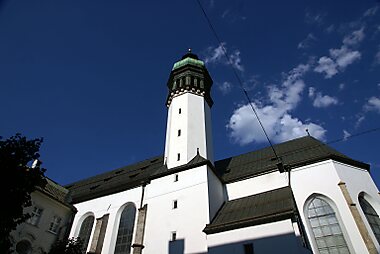
- Hofkirche holds the tomb of Emperor Maximilian I, guarded by large bronze statues.
- Stadtturm is the old city tower. Climb it for views over the roofs.
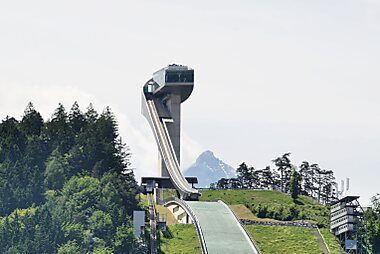
- Bergisel is the ski jump hill above the city, with a tower viewpoint.
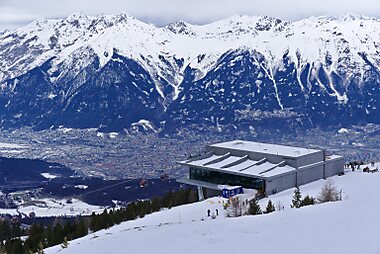
- Nordkette is the mountain range right above town, reached by funicular and cable car from the centre.
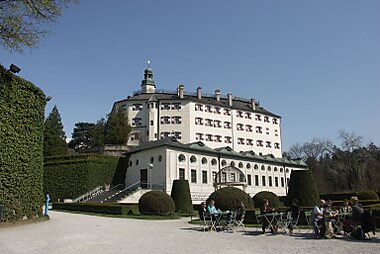
- Schloss Ambras is a Renaissance castle on the eastern edge with a famous art and armour collection.
- Alpenzoo shows alpine animals on the slope above the city.
Featured Lists


What to experience
- Ride the Nordkettenbahn from the centre up to the Hafelekar for alpine views.
- Ski one of the nearby areas on a day pass, with a shuttle from town.
- Hike a mountain trail from a cable car station.
- Visit the Christmas markets in December.
- Walk along the Inn at sunset for views of the coloured houses.
Tours & Activities
Innsbruck — Map

 Open the interactive map
Day trips
- Seefeld is a cross-country skiing and hiking plateau, about 30 minutes by train.
- Mayrhofen is a Zillertal resort with ski and hiking areas, about 1 hour 15 minutes by train.
- Kitzbühel is a famous ski town, about 1 hour 15 minutes by train.
- St. Anton is a big-name ski village, about 1 hour 15 minutes by train.
- Sölden is a glacier ski area in the Ötztal, about 1 hour 15 minutes by car.
- Swarovski Crystal Worlds in Wattens is about 20 minutes away by bus.
Where to explore
Getting there
- By air: Innsbruck Airport is about 4 km from the centre. Bus F and a local bus run to the main station in about 20 minutes. Munich and Salzburg are the larger alternatives.
- By train: Innsbruck is on the main line between Munich and Verona. Munich takes about 1 hour 45 minutes, Salzburg about 2 hours, Vienna about 4 hours. Check times on ÖBB.
- By car: The A12 Inntal motorway and the A13 Brenner motorway meet here.
Getting around
The old town is small and best on foot. Trams and buses cover the rest of the city. The main station is about 10 minutes' walk from the old town. The Nordkette cable car starts near the centre. A Welcome Card for visitors covers local transport. In winter, ski buses run to nearby ski areas.
Driving
You do not need a car in the city. A car helps for the side valleys and ski areas. Winter tyres or chains are required in snow. Motorways in Austria need a vignette. The Brenner motorway to Italy has additional tolls. Parking in the old town is limited.
Food & drink
Tyrolean food is hearty. Try Tiroler Gröstl, fried potatoes and meat with egg, and Kasspatzln, cheese noodles. Kaiserschmarrn is a popular dessert. Many inns serve local beer and schnapps. Mountain huts serve simple dishes in summer, and cafes in the old town sell strudel and cakes.
Safety & health
Innsbruck is very safe. Mountain weather changes fast, so check forecasts and carry layers when going up. In winter, follow marked ski runs and avalanche warnings. Tap water is clean and safe to drink. The emergency number is 112. The mountain rescue number is 140.
History
Innsbruck means 'bridge over the Inn'. It became an important trade stop on the Brenner route in the Middle Ages. Emperor Maximilian I made it his court seat around 1500, and the Habsburgs left many monuments. It later hosted the Winter Olympics in 1964 and 1976.
Country facts
Quick practical facts for Austria at a glance:
- Currency
- Euro EUR € · Card payments · Commonly accepted
- Emergency numbers
- 112
- Electricity
- 230 V · 50 HzType C / Type F
- Languages
- German
- Tap water
- Safe to drink
- Driving side
- Right
- Calling code
- +43


Innsbruck – Plan Your Days
Turn the places from this guide into a real itinerary, with smart routing, time estimates, and everything you need for a perfect trip.


Related destinations
Data: © OpenStreetMap contributors, Wikidata, Wikipedia, Tripomatic, Official websites, geoBoundaries (CC BY 4.0). Tours by GetYourGuide. We earn commission from bookings. Travel guide generated with AI.
Plan your trip with Tripomatic
- AI-Powered PlanningGet a ready-made day in one tap, let AI spread your shortlist across your trip, or plan everything by chatting.
- Travel AlertsOfficial advisories, severe weather, strikes, and natural hazards for the places on each day of your trip.
- Public Holidays & EventsSee holidays, festivals, and closures on the days of your trip, and what they mean for your plans.
- Cost EstimationAI-powered trip cost breakdowns so you know what to budget before you go.
- Tours & TicketsBook tours, skip-the-line tickets, and activities directly in your plan.