Tripomatic

Ireland

Country ·🇮🇪 Ireland

Ireland is a small island nation known for green countryside, a dramatic Atlantic coastline, and a strong literary and musical tradition. Its cities are compact and easy to explore on foot, led by the capital, Dublin, while the west coast's cliffs, islands, and small fishing villages reward travelers willing to rent a car and drive.

Ireland suits hikers, road-trippers, and travelers interested in history, literature, and live music in pubs. English is the main language of daily life. The weather is mild but rainy and changeable year-round, so pack for all four seasons regardless of the month.

Ireland

Planning a Trip to Ireland?

Build your day-by-day itinerary in the Tripomatic app.

Money & payments

Ireland uses the euro, as a member of the eurozone.

EUR · €
Widely accepted
1 EUR ≈ 1.157 USD 1 USD ≈ 0.8645 EUR

Contactless card and mobile payment are the norm almost everywhere, including taxis and small cafés. A little cash is still useful for rural pubs, market stalls, and parking meters in small towns. Dublin and other tourist areas are among the more expensive parts of Western Europe for food and lodging.

Hotel (double room, per night)mid-range hotel, room for two per night
90 – 180 €$104.11 – $208.22
Dinner (mid-range restaurant)mid-range restaurant, one person, no drinks
22 – 38 €$25.45 – $43.96
Inexpensive mealpub lunch or casual café, one person
10 – 16 €$11.57 – $18.51
Local beerpint at a pub
5.5 – 7 €$6.36 – $8.10
Coffeeespresso or cappuccino in a café
3.5 – 4.5 €$4.05 – $5.21
Water0.5L, shop
1.5 – 2.5 €$1.74 – $2.89
Transit ticketsingle, Dublin
2.5 – 3 €$2.89 – $3.47
Taxi (per km)per km
1.5 – 2 €$1.74 – $2.31

Explore Ireland

Ireland's Essential Wonders

Ireland's Essential Wonders

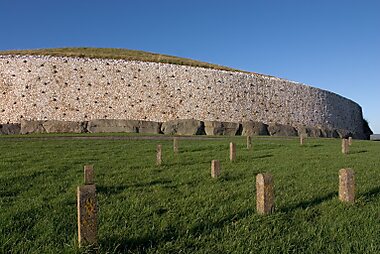
This collection spans Ireland's architectural and natural history, from the Neolithic passage tomb at Newgrange to the medieval strongholds of Cahir and Donegal Castles. It features iconic Dublin landmarks like the 12th-century St. Patrick’s Cathedral and the 1816 Ha’penny Bridge. Natural highlights include the limestone karst of Burren National Park and dramatic coastal points such as Malin Head and Mizen Head. The list also preserves early Christian heritage through sites like the Gallarus Oratory and the monastic Kylemore Abbey.

18 places
Editor's Choice: Ireland's Treasures

Editor's Choice: Ireland's Treasures

This selection spans millennia of Irish history, from the Neolithic passage tomb at Newgrange and the Bronze Age Drombeg Stone Circle to the 17th-century Huntington Castle. It features significant ecclesiastical sites like the Benedictine Kylemore Abbey and the sprawling ruins of Kells Augustinian Priory. Visitors can explore Dublin’s Viking roots at Dublinia, view mummified remains in St Michan’s Church, or browse the 18th-century collections at Marsh's Library. Natural and architectural landmarks include the limestone formations of Dunmore Caves and the historic Fanad Head Lighthouse on the Donegal coast.

12 places
Ireland's Hidden Gems

Ireland's Hidden Gems

This collection spans Ireland’s diverse landscape, featuring prehistoric megalithic tombs like Fourknocks and the Proleek Dolmen alongside early Christian architecture such as the dry-stone Gallarus Oratory. Coastal highlights include the Dun Briste sea stack at Downpatrick Head and Malin Head’s rugged northern tip. Inland, the list explores Gothic ruins, the Kilbeggan whiskey distillery, and unique cultural spots like the Hurdy Gurdy Museum of Vintage Radio and Dublin’s retro-gaming arcade, Token.

22 places
Castles and Fortifications of Ireland

Castles and Fortifications of Ireland

Ireland’s landscape is defined by its defensive architecture, ranging from Iron Age stone ringforts like Staigue and Grianan of Aileach to massive Anglo-Norman strongholds such as Trim Castle. This collection highlights diverse structures including the ecclesiastical ruins of the Rock of Cashel, the river-bound Cahir Castle, and the Gothic-style Charleville. These sites showcase 12th-century keeps, 16th-century tower houses, and ornate Victorian lodges like Ballysaggartmore Towers. Together, they offer a chronological journey through Ireland’s complex history of kingship, conquest, and architectural evolution.

20 places
Ireland's Sacred Sites

Ireland's Sacred Sites

This collection spans centuries of Irish religious history, featuring early Christian monastic settlements like Clonmacnoise and the expansive medieval ruins of Kells Priory. It highlights major Anglican landmarks, including Dublin’s St. Patrick’s and Christ Church Cathedrals, known for their medieval architecture and extensive crypts. The list also includes later architectural achievements, such as the 19th-century Benedictine monastery at Kylemore Abbey and the Romanesque-influenced Clonfert Cathedral, famous for its intricate 12th-century carved doorway.

20 places
Beaches and Coastal Gems

Beaches and Coastal Gems

Ireland's coastline features a diverse range of maritime landmarks, from the white shell sands of Dogs Bay in Connemara to the 19th-century Fanad Head Lighthouse in Donegal. This collection highlights Blue Flag beaches like Keem and Keel on Achill Island, alongside historic structures such as the Hook Lighthouse, one of the world's oldest operational beacons. Many sites offer specific activities including surfing at Inch Beach or exploring the 16th-century fort foundations at Cromwell Point on Valentia Island.

19 places
Ireland's Historical & Archaeological Treasures

Ireland's Historical & Archaeological Treasures

This collection spans over 5,000 years of Irish history, featuring Neolithic passage tombs like Newgrange and Knowth within the Brú na Bóinne UNESCO World Heritage site. It includes significant medieval structures such as the Rock of Cashel, once the seat of Munster's kings, and Trim Castle, the largest Anglo-Norman fortification in Ireland. The list also highlights ancient stone circles at Drombeg, Iron Age hillforts like the Grianan of Aileach, and 19th-century landmarks including Dublin’s cast-iron Ha'penny Bridge.

20 places
Ireland's Natural Wonders

Ireland's Natural Wonders

Ireland's landscape features diverse geological formations, from the quartzite peak of Errigal in Donegal to the unique marine ecosystem of Lough Hyne in West Cork. This collection includes the high-altitude Conor Pass, the ancient ceremonial Hill of Tara in Meath, and coastal landmarks like the Slea Head promontory. The list also highlights glacial valleys in the Dublin Mountains, Celtic-themed gardens, and significant waterfalls such as Glencar and Glenevin.

15 places
Ireland's Top Leisure & Recreation

Ireland's Top Leisure & Recreation

This collection highlights Ireland's diverse recreational landscape, featuring world-class links golf courses like Ballybunion and Ballyliffin alongside major sporting venues such as Cork's Páirc Uí Chaoimh. Families can visit Emerald Park's zoo and attractions or Funtasia’s Egyptian-themed water park. The list also includes Dublin’s historic St Patrick's Park and regional hubs for Gaelic games and association football, reflecting the country's strong traditions in both professional sports and local community leisure.

14 places

Tours & Activities

Map of Ireland

Tipping

Tipping is genuinely expected in Ireland, unlike in some other European countries. Around 10-15% is standard in restaurants for good service, rising toward 15-20% in upscale dining. Many bills already include a service charge for larger groups, so check before adding more. Tipping is less common in pubs for a round of drinks at the bar, but rounding up is appreciated; taxi drivers are usually tipped by rounding up the fare.

RestaurantExpected

10-15%

BarNot customary

not expected, though rounding up is fine

TaxiOptional

round up the fare

HotelOptional

€1-2 per bag for porters

Electricity

Ireland uses Type G plugs (the same three-pin type as the UK) at 230 V / 50 Hz.

Type G
230 V · 50 Hz

Language

English is the main everyday language. Irish (Gaelic) is the first official language and is taught in schools, but it is the daily language of only a small share of the population, mostly in western coastal areas known as the Gaeltacht. Road signs are bilingual throughout the country.

HelloDia dhuit
Thank youGo raibh maith agat
PleaseLe do thoil
Excuse meGabh mo leithscéal
Yes
NoNíl
How much?Cé mhéad atá air seo?
CheersSláinte!
HelpCabhair!
GoodbyeSlán
SorryTá brón orm
Where is…?Cá bhfuil...?
The bill, pleaseAn bille, le do thoil

Staying connected

Prepaid SIM and eSIM plans from Three, Vodafone, or eir are easy to buy at the airport or phone shops. Mobile coverage is reliable in cities and large towns, but can be patchy along the west coast and in mountainous areas — download offline maps before a rural road trip.

Safety & emergencies

Ireland is a generally safe country for tourists. The main risks are pickpocketing and phone theft in busy tourist areas of Dublin, especially around Temple Bar at night, and road accidents on narrow, unfamiliar rural roads. Take extra care driving on single-track roads in the west, where a wrong turn can put you head-to-head with oncoming traffic.

General emergency112
Police999
Ambulance999
Fire brigade999

Health

Tap water is safe to drink throughout Ireland. Pharmacies are common in towns and cities, and larger ones keep extended hours; a rotating late-night pharmacy covers most areas outside normal hours. No special vaccinations are required for entry.

Visas & entry

Ireland is a member of the European Union but is not part of the Schengen Area — it keeps its own border and visa rules, shared with the UK under the Common Travel Area. Citizens of the EU/EEA, the United States, Canada, Australia, and many other countries can enter for tourism without a visa for up to 90 days. Travelers from countries without a visa-waiver agreement need an Irish visa, applied for in advance — a separate application from any Schengen visa, even if the trip also includes other EU countries.

Visa and entry requirements change frequently. Verify current requirements with the official immigration authority or your country's embassy before travel.

Etiquette

Irish social culture is informal and conversational — small talk with shopkeepers, taxi drivers, and people in a queue is normal and expected. In pubs, it is customary to buy "rounds": if you are in a group, each person takes a turn buying drinks for everyone. Punctuality is more relaxed than in much of Northern Europe; arriving a few minutes late to an informal meetup is not considered rude.

Holidays & opening hours

Public holidays affect transport schedules and rural opening hours more than city ones. Saint Patrick's Day, on March 17, is a major national holiday with parades in most towns. Many rural shops and pubs still close early on Sundays.

Jan 1New Year's Day
Mar 17Saint Patrick's Day
Dec 25Christmas Day
Dec 26St. Stephen's Day
movable — AugAugust Holiday
movable — Mar/AprEaster Monday
movable — JunJune Holiday
movable — MayMay Day
movable — OctOctober Holiday
movable — FebSaint Brigid's Day

Getting around

  • By train: Iarnród Éireann (Irish Rail) connects Dublin with the main cities, but coverage thins out toward the west and southwest coasts. Check timetables and book at Irish Rail.
  • By bus: Bus Éireann and private coach operators cover many towns the rail network misses, including much of the Wild Atlantic Way route.
  • By car: A car is the most practical way to reach rural sights, small villages, and the west coast at your own pace; rural roads are often narrow and winding.
  • By air: Domestic flights exist between Dublin and a few regional airports, but are rarely necessary given the country's size.

Driving

  • Driving side: Ireland drives on the left, like the UK — a real adjustment for visitors from continental Europe or North America.
  • Speed limits: Signposted in km/h; typically 50 km/h in towns, 80-100 km/h on rural national roads, and 120 km/h on motorways.
  • Rural roads: Many country roads are single-track with passing places; drive slowly and be ready to reverse to let oncoming traffic pass.
  • Tolls: Several motorways (M1, M4, M6, M7, M8, M11) charge a toll at a barrier, payable by cash or card on the spot. The M50 around Dublin is barrier-free — there is no booth to pay at, so pay online, by phone, or at a Payzone shop by 8pm the day after you drive it.
  • Parking: Paid parking is common in town centers, usually by ticket machine or an app; disc parking applies in some smaller towns.
  • Fuel: Stations are self-service, with card payment standard at the pump.
  • Electric vehicles: The ESB network covers motorways and most towns; rural coverage is thinner, so plan charging stops in advance on longer routes.
Drive on the left
Urban50 km/h
Rural100 km/h
Motorway120 km/h
No motorway vignette needed
Several motorways (M1, M4, M6, M7, M8, M11) charge a toll at a barrier, payable by cash or card on the spot. The M50 around Dublin is barrier-free tolling with no booth: pay online at eflow.ie, by phone, or at a Payzone shop by 8pm the day after driving it, or face a penalty.
Petrol: Unleaded 95, Super UnleadedDiesel: Diesel

Food & drink

A full Irish breakfast — eggs, sausage, bacon, black and white pudding, and toast — is a weekend staple and common on hotel breakfast menus. Irish stew (lamb or beef with potatoes and root vegetables) and soda bread are classic comfort dishes, alongside boxty (a potato pancake) and colcannon (mashed potato with cabbage or kale).

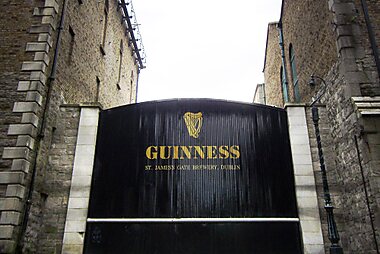
Seafood chowder is common along the coast, reflecting Ireland's fishing traditions. Guinness and other stouts are closely tied to pub culture, alongside a growing craft beer and whiskey-distilling scene. Pubs are as much a social gathering place as somewhere to eat or drink, often hosting live traditional music sessions in the evening.

Breakfast
Full Irish Breakfast  Full IrishA cooked breakfast of eggs, rashers, sausages, black and white pudding, beans, and toast.
Lunch
Seafood ChowderA creamy soup of local fish and shellfish, a pub-menu staple especially along the coast.
Dinner
Irish StewLamb or mutton slow-cooked with potatoes, carrots, and onions, Ireland's classic comfort dish.
ColcannonMashed potatoes mixed with cabbage or kale and butter, traditionally eaten around Halloween.
Snacks & street food
Soda BreadA dense, quick bread leavened with baking soda instead of yeast, a staple at nearly every meal.
BoxtyA traditional potato pancake, especially associated with the northwest of Ireland.
Drinks
GuinnessIreland's iconic dry stout, best known poured slowly at a proper pub.
Irish WhiskeyTypically triple-distilled and smoother than Scotch, produced by distilleries across the country.

Where to explore

Dublin is the capital and largest city, with a compact center that includes Trinity College, the Guinness Storehouse, and a lively pub scene. Cork, the second city, is a good base for exploring the south coast, including Cork Harbour and the towns around it.

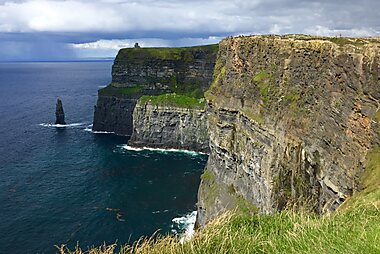
Galway, on the west coast, is known for its arts and music scene and is the main gateway to Connemara and the Aran Islands. Limerick sits on the River Shannon and is a common base for visiting the Cliffs of Moher and the Wild Atlantic Way.

Kilkenny is a small medieval city known for its castle and narrow historic streets, and Waterford, Ireland's oldest city, is known for its Viking-era history and crystal-making tradition.

Dublin
Drive
Cork
Drive
Galway

Plan Your Trip to Ireland

Pick the places you want to see and Tripomatic turns them into a day-by-day route, with smart routing, time estimates, and everything you need for a perfect trip.


3M+ downloads · 4.6 stars · 15 years of trip planning
QR code
Scan to download the app

Related destinations