


Dublin
Dublin is Ireland's capital and its cultural and historical heart, set where the River Liffey meets the Irish Sea. The city mixes Georgian squares, Viking and medieval sites, and a lively pub culture within a compact, walkable centre. It suits travelers who want a short city break with strong history and literature woven into everyday streets, plus easy access to the coast and countryside.
Writers James Joyce and Oscar Wilde are closely tied to the city, and Dublin's literary and musical traditions still shape its pubs and festivals today. A few days here cover the major sights comfortably, with day trips to the coast or countryside adding variety.

Dublin – Planning a Trip?
Build your day-by-day itinerary in the Tripomatic app.
When to visit
Spring and autumn are mild with fewer crowds. Summer is the warmest and busiest season, and winter is cold and rainy but has Christmas markets and cosy pubs. Rain is possible year-round, so pack a waterproof jacket regardless of season.
Plan around Saint Patrick's Day (17 March) if you want the city at its most festive: a multi-day parade and citywide celebrations mark Ireland's national holiday, though hotels fill up and prices rise.
Top sights

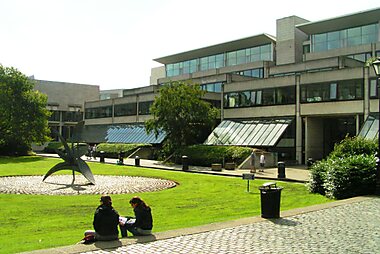
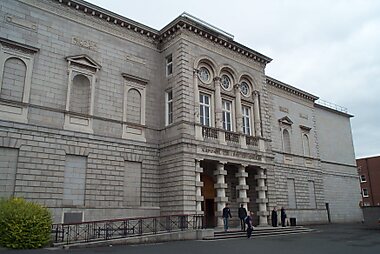
Trinity College Dublin is Dublin's oldest university, founded in 1592, and its Old Library holds the Book of Kells, a lavishly illustrated medieval manuscript over a thousand years old.
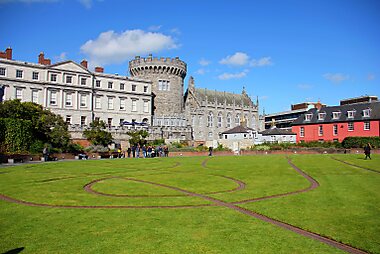
Dublin Castle served as the seat of English and later British rule in Ireland for centuries, and its state apartments and undercroft reveal the city's Viking and Norman foundations.
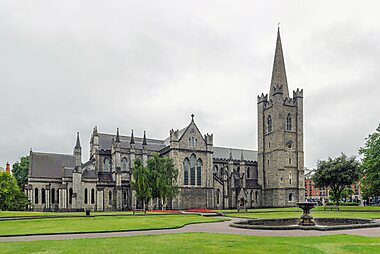
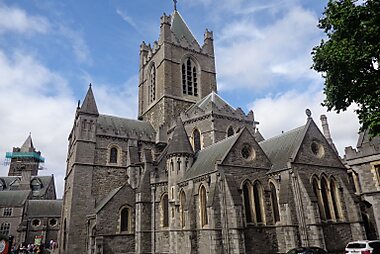
Christ Church Cathedral dates to the 1030s and holds the tomb of the Norman knight Strongbow, while St Patrick's Cathedral nearby was Ireland's largest church and once had Jonathan Swift as its dean.
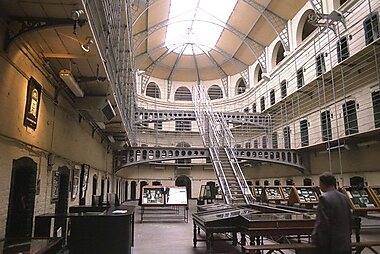
Kilmainham Gaol held many of the leaders of the 1916 Easter Rising before their execution, and its preserved cells and stone-breaking yard make it one of Ireland's most moving historic sites.
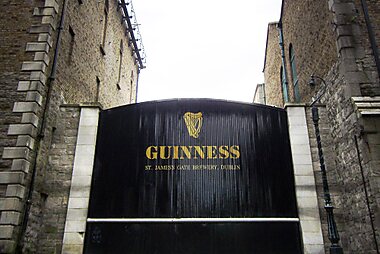
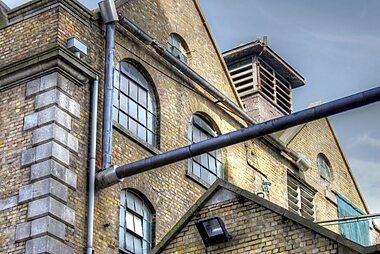
Guinness Brewery has brewed stout since 1759, and the Guinness Storehouse tour ends with a pint in a rooftop bar overlooking the city.
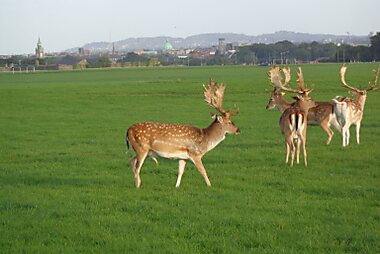
Phoenix Park is one of Europe's largest enclosed city parks, home to a resident deer herd and the president's official residence.
St Stephen's Green is a Victorian park in the city centre, a good spot to rest between sights, and the Georgian doors and townhouses lining its edges are worth a slow walk.
Featured Lists


Audio Guides – Dublin
Explore on foot with a self-guided audio tour that narrates each stop as you reach it.


Hear Dublin's audio tours
1 walk in Audio Guides by Tripomatic


What to experience
Beyond the major sights, a few local rituals are worth building into a Dublin visit.
- Join a traditional music session in a Temple Bar pub on a weekend evening, when musicians gather informally to play.
- Watch a Gaelic football or hurling match at Croke Park during the summer championship season, a distinctly Irish sporting experience found nowhere else.
- Follow the Bloomsday trail on 16 June, when fans of James Joyce's novel Ulysses retrace the book's route through the city in period dress.
- Browse the stalls of a Christmas market in St Stephen's Green or around the city centre in December.
Tours & Activities
Dublin — Map

 Open the interactive map
 Day trips
Dublin sits close to the coast and within reach of Ireland's best-known ancient sites, so a free day is easy to fill.
- Howth — a fishing village on a headland, roughly 30 minutes by DART train. Walk the cliff path around the peninsula and eat fresh seafood at the harbour.
- Dún Laoghaire — a seaside town with two long piers for walking, roughly 25 minutes by DART train.
- Malahide — a coastal town north of the city with a medieval castle set in a large park, roughly 35 minutes by train.
- Glendalough — an early monastic settlement in the Wicklow Mountains, with a round tower and two lakes, roughly 1 to 1.5 hours by car, tour bus, or seasonal shuttle from the city.
- Brú na Bóinne — a UNESCO World Heritage site with Neolithic passage tombs, including Newgrange, older than the Egyptian pyramids, roughly 50 minutes by car or an organized tour bus.
- Cliffs of Moher — dramatic sea cliffs rising over 200 metres above the Atlantic, roughly 3.5 to 4 hours each way by car. It is a long day from Dublin, but organized coach tours run the round trip in a single day and are the standard way to visit without staying overnight in County Clare.
Getting there
- By air: Dublin Airport (DUB) is the main gateway, about 10 km north of the centre. Airlink and Aircoach buses run to the city centre in 25 to 45 minutes depending on traffic, for around 7 to 8 €; a taxi takes about the same time and costs roughly 25 to 35 €. There is no rail link to the airport.
- By train: Heuston Station serves the west and south of Ireland; Connolly Station serves the north, the coast, and cross-border trains to Belfast. Both are run by Iarnród Éireann.
- By bus: Busáras, the central bus station near Connolly Station, handles long-distance coaches across Ireland.
- By ferry: car ferries from Holyhead in Wales dock at Dublin Port, a short taxi or bus ride from the centre.
Getting around
- Public transit: Dublin Bus, the Luas tram (two lines), and the DART coastal rail cover the city. Buy a Leap Card (or use the TFI Leap app on your phone) and tap it on board or at station readers — contactless bank card payment is not yet accepted on Dublin's core bus, Luas, or DART network. Use the Transport for Ireland journey planner for routes and times.
- Taxi / ride-hailing: metered taxis are widely available at ranks and by app; Uber operates as a booking service for licensed taxis rather than private drivers.
- On foot / cycling: the centre is compact and easy to explore on foot. Dublinbikes, the city's bike-share scheme, is a practical way to cover longer distances, though central traffic can be heavy.
Driving
- Is a car worth it?: not for the city itself — the centre is compact and walkable, and traffic and parking are difficult. A car is useful only for reaching the wider countryside, such as Wicklow or the coast.
- Parking: use a signposted car park or the city's on-street pay-by-app parking zones; street parking in the centre is limited and metered.
- Restrictions: the city centre has bus and cycle lanes with restricted general traffic access on some streets — follow posted signs closely.
Food & drink
Look for a traditional Irish breakfast and fresh seafood chowder on pub menus across the city — both are widely available and reliably good. A pint of Guinness poured slowly at a proper pub is considered part of the experience, not just a drink.
For a concentrated area of pubs and restaurants, head to the streets around George's Street and Camden Street, both popular with locals rather than only tourists. Temple Bar is livelier and more tourist-oriented, with cobbled lanes full of pubs and live music, though prices there run higher than elsewhere in the city.
Safety & health
Dublin is generally safe for tourists, with violent crime rare in the areas visitors frequent. The main risks are pickpocketing and bag-snatching in crowded areas like Temple Bar, on public transit, and around the main shopping streets — keep bags zipped and in sight. Late at night, some streets around O'Connell Street can feel unwelcoming due to public drinking; stick to well-lit, busy routes. Tap water is safe to drink throughout the city.
History
Dublin began as a Viking settlement around a dark tidal pool on the River Liffey, giving the city its name — Dubh Linn, or "black pool" in Irish. Norman forces took the city in 1170, and Dublin Castle became the administrative centre of English, then British, rule in Ireland for over 700 years.
The 18th century brought Georgian prosperity, filling the city with the elegant squares and townhouses still visible around St Stephen's Green today. That history turned violent in 1916, when Irish republicans seized the General Post Office and declared independence in the Easter Rising; the rebellion's leaders were later held and executed at Kilmainham Gaol. Ireland became independent in 1922, and Dublin has been the capital of the Irish state ever since.
Country facts
Quick practical facts for Ireland at a glance:
- Currency
- Euro EUR € · Card payments · Widely accepted
- Emergency numbers
- 112
- Electricity
- 230 V · 50 HzType G
- Languages
- English, Irish
- Tap water
- Safe to drink
- Driving side
- Left
- Calling code
- +353


Dublin – Plan Your Days
Turn the places from this guide into a real itinerary, with smart routing, time estimates, and everything you need for a perfect trip.

