


Leipzig
Leipzig is a university and trade-fair city in eastern Germany. Music, books and recent history shape a visit here. Johann Sebastian Bach worked here for 27 years. Richard Wagner and Gottfried Wilhelm Leibniz were born here. In 1989 the Monday prayers and marches here helped end East German rule.
The old town is compact and easy to walk. Arcades, courtyards and cafés fill the centre. Outside it, the former factory district of Plagwitz has galleries and canals, and former coal mines to the south are now lakes. Leipzig suits a two- to three-night city break with music, museums and good-value nightlife.
Download this guide as a PDFPrintable tourist mapPublic holidays in Germany

Leipzig – Planning a Trip?
Build your day-by-day itinerary in the Tripomatic app.


When to visit
Late spring to early autumn is the best time. Days are warm, long and good for the lakes and parks. Spring and autumn are mild but can be wet. Winters are cold and grey, but the Christmas market runs from late November until just before Christmas.
The biggest event is the Wave-Gotik-Treffen at Pentecost. It is a large gothic music and culture festival that fills the city with visitors. Book rooms early for that weekend.
Best time to visit: May, June, July, August, September
Top sights
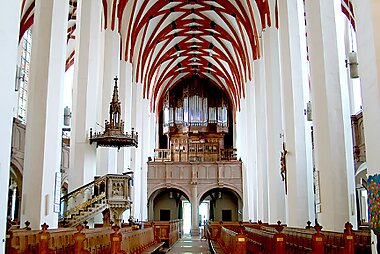
- St. Thomas Church is the church of the Thomanerchor boys' choir. Bach was cantor here from 1723 to 1750 and is buried inside.
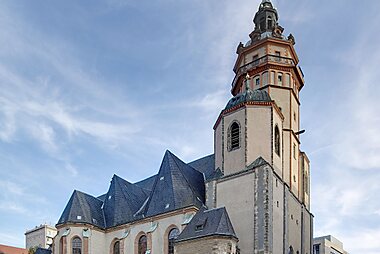
- St. Nicholas Church was the starting point of the Monday peace prayers in 1989. The bright interior has palm-like columns.
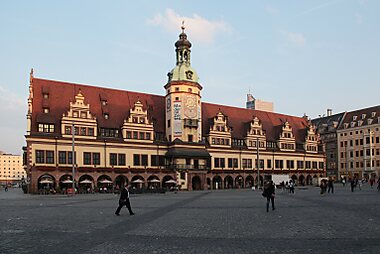
- Old Town Hall is a Renaissance building on the market square. It houses the city history museum.
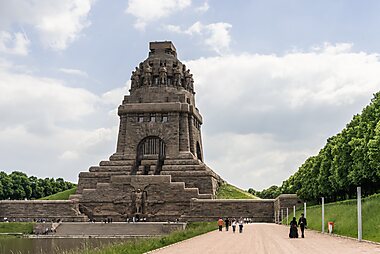
- Völkerschlachtdenkmal is a huge monument to the 1813 Battle of the Nations. It opened in 1913. Climb to the platform for views over the city.
- Museum in der "Runden Ecke" is the former Stasi district office. The museum shows how the East German secret police watched citizens.
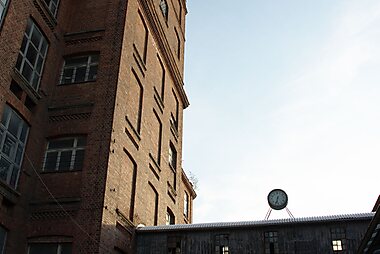
- Leipziger Baumwollspinnerei is a former cotton mill. Today it holds art galleries and studios.
- Panometer shows large 360-degree panoramas inside a former gasometer.
- Leipzig Zoological Garden is one of Germany's best-known zoos. It is a good choice for families.
Featured Lists


Leipzig Churches
Leipzig’s ecclesiastical landscape spans nearly a millennium, featuring architectural styles from Romanesque to 19th-century historicism. This collection highlights the city's religious diversity, including the Andreaskapelle with its 11th-century foundations and the Russian Memorial Church, built to honor soldiers of the 1813 Battle of the Nations. The list features traditional Lutheran parish churches, Catholic sites, and village churches that reflect the spiritual history of Leipzig and its surrounding districts.
13 places

Architectural Highlights
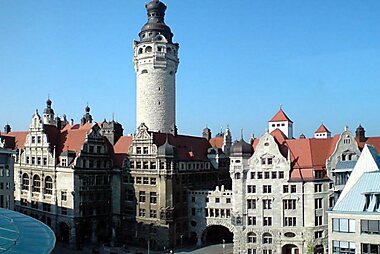
Leipzig’s skyline reflects centuries of architectural evolution, from the Renaissance Old Town Hall to the pioneering modernism of the Krochhochhaus. This collection highlights the city's structural diversity, including the monumental Art Nouveau Völkerschlachtdenkmal and the Baroque elegance of the Old Stock Exchange. Significant religious sites like the Gothic St. Thomas Church and the Neoclassical interior of St. Nicholas Church stand alongside 20th-century landmarks like the Wintergartenhochhaus and the historicist New Town Hall, showcasing Leipzig's transition from a medieval trading hub to a modern metropolis.
10 places

What to experience
Leipzig is best known for music and for water.
- Hear the Thomanerchor sing a motet at St. Thomas Church. Check the motet schedule.
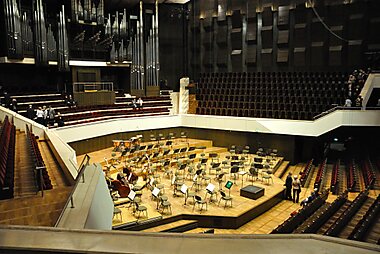
- Attend a concert by the Gewandhaus orchestra at Gewandhaus. The orchestra was founded in 1743.
- Follow the Bach trail from Bach-Museum Leipzig to his grave.
- Go by boat on the Karl-Heine-Kanal and the rivers. Boats and tours run in the warm months.
- Swim or walk around Cospudener See, a former mine lake with beaches. Trams and buses run nearby.
- Visit the Christmas market on the market square in December.
- Join a gallery open day at Leipziger Baumwollspinnerei, held several times a year.
Tours & Activities
Leipzig — Map

 Open the interactive map
Day trips
Several good towns are close by train.
- Dresden is about 1 hour away by direct ICE. It has a rebuilt baroque old town, major art museums and the Elbe river.
- Halle (Saale) is about 30 minutes away by train. It has a large market square, the Handel house and a lively student scene.
- Lutherstadt Wittenberg is about 1 hour away by train. It is the town of the Reformation, with Martin Luther's house and the Castle Church.
- Naumburg is about 1 hour away by train. Its cathedral is a UNESCO World Heritage site, and the town sits in a wine region.
- Meissen is about 2 hours or more away by train, usually via Dresden. It is known for porcelain and a castle above the Elbe.
Where to explore
Other places in Saxony are worth adding to a longer trip.
- Dresden is the state capital, with the Zwinger and the Frauenkirche.
- Meissen is a small town on the Elbe with a famous porcelain tradition.
- Zwickau is a car-making town with a historic centre, south-west of Leipzig.
- Ore Mountains has forests, small villages and winter sports, south of Leipzig towards the Czech border.
- Vogtland is a quiet region of hills and spa towns in south-west Saxony.
Getting there
- By air: Leipzig/Halle Airport (LEJ) has flights to European leisure destinations. The train station is under the terminal. S-Bahn trains reach Leipzig Hbf in about 15 to 20 minutes. Many visitors also fly to Berlin or Frankfurt and continue by train.
- By train: Leipzig Hbf is a big station in the city centre. ICE trains run to Berlin (about 1 hour 15 minutes), Dresden, Frankfurt, Munich and Erfurt. Book at Deutsche Bahn.
- By bus: Long-distance coaches stop at the bus station next to the main station. They link Leipzig with Berlin, Prague and other cities.
Getting around
- Trams and buses: Trams run across the city and reach the lakes and Plagwitz. Buy tickets in the LeipzigMOVE app or at machines.
- S-Bahn: The City-Tunnel links the main station, the market and the south. Regional trains use the same fare network.
- Leipzig Card: This card covers local transport in the city zone and gives sight discounts. See Leipzig Tourism.
- On foot and by bike: The old town is small and mostly car-free. The terrain is flat. Cycling is common, but lock your bike well.
Driving
- Is a car worth it?: No, not for a city stay. The centre is small and trams are quick. A car helps only for trips to small towns and lakes.
- Parking: Use the car parks on the inner ring road. Park-and-ride lots at tram stops outside the centre are cheaper.
- Restrictions: Much of the old town inside the ring is closed to normal traffic.
Food & drink
Try Leipziger Allerlei, a dish of spring vegetables with crayfish. Leipziger Lerche is a pastry with almonds and jam. Leipzig also has its own sour beer, called Gose. The city has a long coffeehouse tradition.
For old-style dining, Mädler Passage is a historic arcade. It holds Auerbachs Keller, the cellar restaurant from Goethe's Faust. For variety, go to the Barfußgäßchen lane near the market square. Karl-Liebknecht-Straße and the Plagwitz canal area have many cafés, bars and beer gardens.
Safety & health
Leipzig is generally safe for visitors. Watch for pickpockets in crowds, at the main station and at the Christmas market.
- Bike theft is common. Lock bikes to a fixed object.
- Use main streets after dark, including around Eisenbahnstraße.
History
Leipzig is first mentioned in 1015. It received market rights around 1165 and grew as a trade city. Its university opened in 1409.
- In 1519 Martin Luther debated Johann Eck at the Pleissenburg castle. Neues Rathaus now stands on that site.
- Bach led the music at St. Thomas Church from 1723 to 1750.
- In 1813 the Battle of the Nations ended Napoleon's hold on Germany. Völkerschlachtdenkmal marks it.
- In October 1989 tens of thousands marched around the city ring after Monday prayers at St. Nicholas Church. Museum in der "Runden Ecke" shows the secret police that they faced.
Country facts
Quick practical facts for Germany at a glance:
- Currency
- Euro EUR € · Card payments · Commonly accepted
- Emergency numbers
- 112 Ambulance · Fire brigade
- Electricity
- 230 V · 50 HzType C / Type F
- Languages
- German
- Tap water
- Safe to drink
- Driving side
- Right
- Calling code
- +49


Leipzig – Plan Your Days
Turn the places from this guide into a real itinerary, with smart routing, time estimates, and everything you need for a perfect trip.


Related destinations


Data: © OpenStreetMap contributors, Wikidata, Wikipedia, Tripomatic, Official websites, geoBoundaries (CC BY 4.0). Tours by GetYourGuide. We earn commission from bookings. Travel guide generated with AI.
Plan your trip with Tripomatic
- AI-Powered PlanningGet a ready-made day in one tap, let AI spread your shortlist across your trip, or plan everything by chatting.
- Travel AlertsOfficial advisories, severe weather, strikes, and natural hazards for the places on each day of your trip.
- Public Holidays & EventsSee holidays, festivals, and closures on the days of your trip, and what they mean for your plans.
- Cost EstimationAI-powered trip cost breakdowns so you know what to budget before you go.
- Tours & TicketsBook tours, skip-the-line tickets, and activities directly in your plan.