


Lombok
Lombok is an island in West Nusa Tenggara, just east of Bali across the Lombok Strait. It has a similar mix of beaches, surf and volcano scenery, but it is quieter and less developed. Most people are Muslim Sasak, so village life is different from Hindu Bali.
The island suits active travellers and beach lovers. Trekkers come for the Rinjani volcano. Surfers and swimmers head to the south coast. Divers and snorkellers go to the small Gili islands off the northwest coast. Plan on a rural, spread-out trip: sights are far apart and most of the island is farmland and hills.

Lombok – Planning a Trip?
Build your day-by-day itinerary in the Tripomatic app.


When to visit
The dry season runs from about May to September and is the best time for beaches, boats and trekking. July and August are the driest and busiest months. The wet season, from December to March, brings heavy rain and rough seas. Rinjani climbing routes are usually closed for part of the wet season, so check the park status before you book a trek.
The biggest event is the MotoGP Indonesian Grand Prix at the Mandalika circuit near Kuta. The race is usually held in the second half of the year. Dates change each year, and hotels in the south fill up and cost more that week.
Best time to visit: July, August
Top sights

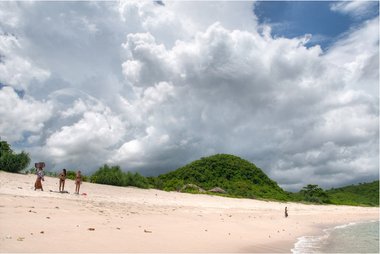
- Rinjani is the main reason many people come to Lombok. The active volcano is 3,726 m high and has a crater lake. Treks take two to four days, and you need a licensed guide and a park permit.
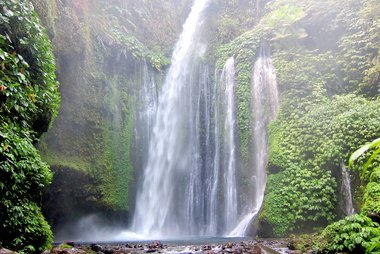
- Senaru Waterfalls are an easy half-day trip on the north side of Rinjani. The trail has several falls, including Sendang Gile.
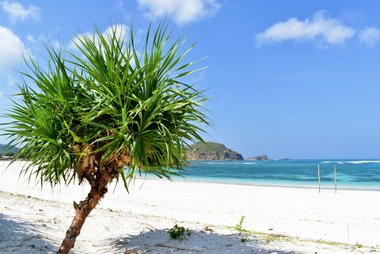
- Tanjung Aan beach is a wide white-sand bay east of Kuta. The water is calm and the beach is quiet outside the main season.
- Merese Hill is a grassy hill beside the bay. The walk is short and the view of the coast is best at sunset.
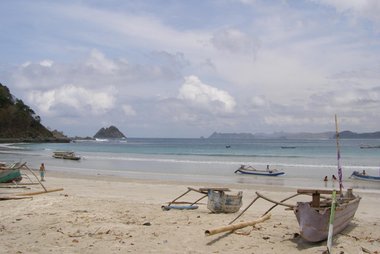
- Selong Belanak Beach has gentle waves and is a good beach for beginner surfers and families.
- Mawun Beach is a curved bay with clear water and a surf break at one end. It is less crowded than Kuta.
- Kuta Beach is the base for the south coast. It has the most guesthouses, surf schools and restaurants.
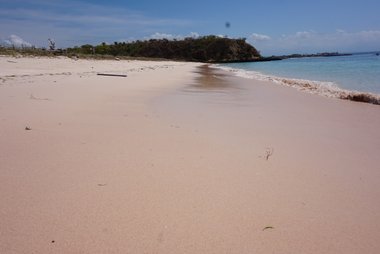
- Pink Beach is on the southeast coast. The sand is pink because of crushed red coral. Reach it by boat or by a rough road.
- Sade Sasak Village is a village of traditional Sasak houses with thatched roofs. Local guides explain the customs, and the village sells hand-woven cloth.
- Mayura Water Palace is a former royal garden and water park in Mataram, built by Balinese rulers. It is a short stop on a city walk.
- Pura Lingsar is a temple complex near Mataram. Both Hindus and Sasak Muslims use it, which shows how the two cultures mix on the island.
The three Gili islands, Gili Trawangan, Gili Meno and Gili Air, are the island's main snorkelling and diving area.
Featured Lists


Nature and Peaks
Lombok’s terrain is defined by the massive Rinjani massif and a coastline of dramatic headlands. This collection features the island's volcanic core, including the active Mount Barujari inside the Segara Anak caldera and the historical site of the 1257 Samalas eruption. Northern trails lead to multi-tiered waterfalls like Tiu Kelep, while the Sembalun highlands provide elevated views of patterned farmland. Along the southern coast, limestone hills like Merese and Tanjung Aan’s horseshoe bays showcase the island’s distinct geological formations.
12 placesWhat to experience
- Surf lessons and surf trips: the south coast around Kuta Beach and Selong Belanak Beach has breaks for beginners and for experienced surfers. Boats take surfers to reef breaks along the coast.
- Snorkelling and diving at the Gilis: sea turtles are common around the Gili islands. Day boats visit several reefs. Dive schools offer courses and trips.
- Rinjani trek: a multi-day climb with camping on the crater rim and a swim in the hot springs near the crater lake. Book a licensed operator.
- Bau Nyale: each year in February or March, people gather at the beaches near Kuta before dawn to collect sea worms. The date follows the lunar calendar, and there are music and dance events.
- Perang Topat: a yearly ritual at Pura Lingsar, where Hindus and Muslims throw rice cakes at each other. It takes place at the full moon in the Sasak calendar's seventh month.
- Weaving villages: Sukarara and Sade show hand-weaving and traditional Sasak houses, and sell cloth directly.
- Sunset at Senggigi: the west-facing coast gives clear sunset views over the Lombok Strait.
Tours & Activities
Lombok — Map

 Open the interactive map
Day trips
These are short boat and road trips inside the island. Times are one way.
- Gili islands: Gili Trawangan, Gili Meno and Gili Air are reached by public boat from Bangsal harbour in the northwest, about 15 to 30 minutes. Bangsal is about 1.5 hours by road from Mataram. Snorkelling trips between the three islands run daily.
- Senaru and Rinjani foothills: about 2.5 to 3 hours by car from Mataram or Senggigi. Visit the waterfalls and the traditional village, then stay overnight or return.
- Tetebatu: a cooler farming area on the southern slopes of Rinjani, about 2 hours by car from Mataram. Walk through rice fields and small waterfalls.
- Southwest islands: Gili Nanggu and nearby small islands are reached by boat from the Sekotong coast, about 15 to 20 minutes. They have white sand and clear water for snorkelling.
- Bali: the fast boats take at least 1.5 hours, so Bali is not practical as a day trip from Lombok.
Where to explore
- Cities and coast: Mataram is the capital and main city, with the markets, the water palace and most services. Senggigi is the long-standing beach resort strip north of the city.
- Gili islands: Gili Trawangan is the busiest, with bars and dive shops. Gili Air is calmer and has more local life. Gili Meno is the quietest.
- Mountain and north: Mount Rinjani National Park covers the volcano and its trekking routes. North Lombok includes Senaru, Bangsal and the Gili ferry harbour.
- West: Lombok Barat is the district around Mataram, with temples and the Sekotong coast.
- Neighbouring island: Sumbawa lies to the east, across a short ferry crossing.
Getting there
- By air: Lombok International Airport (LOP) is near Praya in the south of the island. It has domestic flights, including from Jakarta, Surabaya and Bali, and a few regional international routes. The airport is about 30 to 40 minutes from Kuta, about 1 hour from Mataram, and about 1.5 hours from Senggigi. Use a pre-booked transfer or a taxi. Damri buses run to Mataram.
- By ferry from Bali: a conventional ferry (ASDP) runs from Padangbai in Bali to Lembar port in southwest Lombok. It is the only option that carries cars and motorbikes. Lembar is about 45 minutes from Mataram.
- By fast boat from Bali: boats leave Padangbai and other Bali harbours for Bangsal, the Gili islands and Senggigi. They carry foot passengers only, and trips take about 1.5 to 4.5 hours depending on the operator and island stops.
- From Sumbawa: a ferry runs from Poto Tano on Sumbawa to Kayangan on the east coast of Lombok.
Getting around
- Public transport: there is no useful public transport for visitors. Local minibuses (bemo) are slow and have no fixed timetables.
- Car with driver: this is the usual way to see the island. Most hotels and guesthouses can arrange a day or multi-day hire.
- Scooter: rentals are cheap and common in Kuta and Senggigi. See the driving section for the rules and risks.
- Taxi and ride-hailing: coverage is good in Mataram and around the airport, and limited elsewhere. Outside these areas, arrange a driver through your hotel.
- Gili islands: no motor vehicles are allowed. Walk, cycle, or take a horse cart (cidomo). Public boats run between the three islands.
Driving
- Is a car worth it?: yes, if you want to visit more than one area. Distances are long and public transport is weak. A car with a driver costs little more than a self-drive rental and avoids the hard parts. Driving is on the left.
- Scooter: the most common cause of injuries to visitors. Roads are narrow, with potholes, animals and unlit traffic at night. Wear a helmet. You need an international driving permit that includes motorbikes, and police do check.
- Parking: free or very cheap almost everywhere. Beaches and sights have small attendants who ask for a few thousand rupiah.
Food & drink
Sasak food is spicier than food in the rest of Indonesia. Look for ayam taliwang (grilled chicken with chili), plecing kangkung (water spinach with chili and tomato sambal), sate rembiga (spicy beef skewers from Mataram) and nasi balap puyung (rice with chicken and chili). Many warungs close or serve limited food during daytime in Ramadan.
For a good local meal, go to the warungs along Jalan Taliwang in Mataram, which are known for chicken. In Senggigi, restaurants line the beachfront road. On Gili Trawangan, the night market near the harbour has cheap grilled fish and noodles. Alcohol is easy to find in the Gilis, Senggigi and Kuta, but is rare in villages.
Safety & health
Lombok is generally safe for visitors. Petty theft happens at crowded beaches and on the Gilis, so lock your room and do not leave bags unattended.
- Roads: traffic accidents on scooters are the main risk. See the driving section.
- Sea: rip currents are common on the south coast, and some beaches have no lifeguards. Ask locally before you swim, and follow flags where they exist.
- Alcohol: drink in established bars. Avoid cocktails made with local arak from unlicensed sellers, as there have been cases of methanol poisoning.
- Earthquakes: the island is in an active seismic zone, and strong quakes struck in 2018. Know the exit routes at your hotel. If you feel a strong quake near the coast, move to high ground.
- Rinjani: hike only with a licensed guide, and do not trek in heavy rain. Trails can close at short notice for weather, fire or safety.
- Dress: outside the beach areas, cover shoulders and knees, especially in villages and mosques.
History
Lombok's shape was formed by volcanoes. A huge eruption in the 13th century, from the Samalas volcano, left the caldera that now holds the lake on Rinjani. It is thought to have been one of the largest eruptions of the past thousand years.
Sasak people have lived on the island for centuries. From the 18th century, Balinese kings of Karangasem ruled the west of the island, and Sasak and Balinese cultures mixed. Mayura Water Palace was built by a Balinese ruler and is a place to see Balinese garden design in Lombok. Pura Lingsar is still shared by Hindus and Sasak Muslims who follow Wetu Telu traditions.
The Dutch took control of Lombok in 1894 after a military campaign against the Balinese court in Mataram. Indonesia became independent in 1945. Today the island is mostly Muslim. Sade Sasak Village shows how Sasak village life looks. Tourism grew in the late 20th century, and the Mandalika zone on the south coast is the newest large development, with the racing circuit.
Country facts
Quick practical facts for Indonesia at a glance:
- Currency
- Indonesian Rupiah IDR Rp · Card payments · Commonly accepted
- Emergency numbers
- 112
- Electricity
- 230 V · 50 HzType C / Type F
- Languages
- Indonesian
- Tap water
- Not safe to drink
- Driving side
- Left
- Calling code
- +62
Lombok – Plan Your Trip
Pick the places you want to see and Tripomatic turns them into a day-by-day route, with smart routing, time estimates, and everything you need for a perfect trip.


Related destinations


Data: © OpenStreetMap contributors, Wikidata, Wikipedia, Tripomatic, Official websites. Tours by GetYourGuide. We earn commission from bookings. Travel guide generated with AI.
Plan your trip with Tripomatic
- AI-Powered PlanningGet a ready-made day in one tap, let AI spread your shortlist across your trip, or plan everything by chatting.
- Travel AlertsOfficial advisories, severe weather, strikes, and natural hazards for the places on each day of your trip.
- Public Holidays & EventsSee holidays, festivals, and closures on the days of your trip, and what they mean for your plans.
- Cost EstimationAI-powered trip cost breakdowns so you know what to budget before you go.
- Tours & TicketsBook tours, skip-the-line tickets, and activities directly in your plan.