



Madagascar
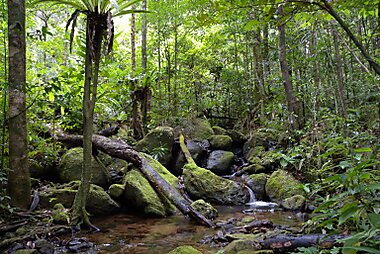
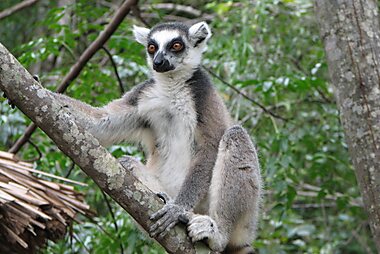
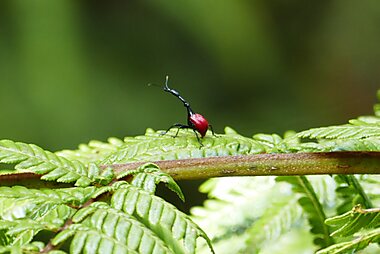
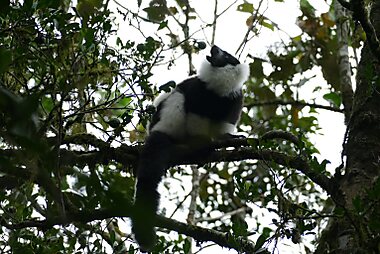
Madagascar is the world's fourth-largest island, about 400 km off the coast of southeast Africa. It split from other land masses millions of years ago. Because of this, most of its plants and animals live nowhere else on Earth. The best known are the lemurs, but you will also see chameleons, baobab trees and spiny forests. The landscapes change fast: rainforest in the east, dry forest and limestone tsingy in the west, red highlands in the middle and desert-like country in the south.
The island suits travelers who come for nature and wildlife, and who accept slow travel. Distances are long, roads are often poor, and the local saying mora mora ("slowly, slowly") describes the pace well. The dry season, from about April to November, is the easiest time to travel. Most first-time visitors pick one or two regions rather than trying to see everything. The classic route follows the highlands south from the capital to Isalo and the southwest coast. The beaches of Nosy Be in the north are an easy add-on.



Madagascar – Planning a Trip?
Build your day-by-day itinerary in the Tripomatic app.


Money & payments
Madagascar is mainly a cash economy. Outside top hotels, tour agencies and some restaurants in the capital and on Nosy Be, you will pay in cash. Visa cards work at more ATMs than Mastercard. ATMs exist in the capital and larger towns, but not in villages or national parks. Withdraw enough before you leave a city.
- Bring euros or US dollars in clean, recent notes. You can exchange them at the airport, at banks and at official exchange offices.
- The highest note is small in value, so you will carry thick bundles of cash. Keep it split between bags.
- Card payments, where accepted, often carry a surcharge of a few percent.
- Budget for park entry fees, guides and a driver. These are usually the largest costs of a trip, larger than food or hotels.
Featured Lists


Landmarks of Madagascar
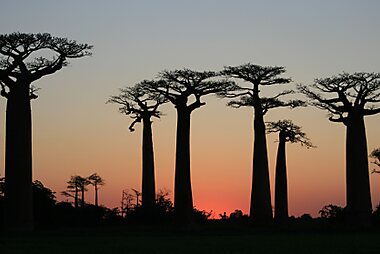
Madagascar’s landmarks span from the sacred Royal Hill of Ambohimanga, a 500-year-old citadel and UNESCO World Heritage site, to the distinct geological formations of the Tsingy Rouges and Petits Tsingy. The island's biodiversity is showcased at the Arboretum d'Antsokay and the Village des Tortues conservation center. Historical sites include the 1947 uprising monument and the traditional Antaimoro Paper Manufactory, while the Avenue of the Baobabs features ancient Adansonia grandidieri trees reaching up to 30 meters in height.
14 places
Tours & Activities
Madagascar — Map

 Open the interactive map
 Tipping
Tipping is not part of traditional Malagasy culture, but it is now expected in tourism. Guides and drivers earn low salaries, and tips make up an important part of their income.
- Park and local guides: a tip at the end of the walk is expected.
- Drivers: on a multi-day tour, tip at the end of the trip, not per day.
- Restaurants: leave around 5–10 % in tourist restaurants. In small local eateries (hotely), rounding up is enough.
- Porters and hotel staff: a small amount per service is welcome.
Tip in ariary rather than foreign coins, which cannot be exchanged.
at the end of each walk or tour
5–10 % in tourist restaurants
agree the fare first
small amount for porters
Electricity
Most sockets take European round-pin plugs, so most European chargers work without an adapter. Power cuts are common, even in the capital, and many lodges in parks run on generators or solar power only in the evening.
Language
Malagasy and French are the official languages. French is widely used in hotels, restaurants, banks and on signs. English is spoken in top hotels and by many trained park guides, but rarely elsewhere. A few words of French will help a lot. A few words of Malagasy, such as salama (hello) and misaotra (thank you), are always welcome.
Malagasy place names are long, but the rules are simple: the final vowel is often almost silent. Antananarivo is usually shortened to Tana.
Staying connected
- SIM cards: Yas (formerly Telma), Orange and Airtel sell prepaid SIM cards at the airport and in town shops. You need your original passport to register a SIM.
- Coverage: mobile data works in cities and along main roads. In national parks, on remote coasts and on long drives in the west and south, expect no signal for hours.
- Mobile money: locals pay with mobile money services such as MVola and Orange Money. Visitors rarely need them.
Safety & emergencies
Most visits to Madagascar pass without problems, but the country needs more care than many destinations.
- Petty theft: pickpocketing and bag snatching are common in Antananarivo, especially in markets, crowds and around Analakely. Carry little, and keep your phone out of sight on the street.
- After dark: do not walk in cities at night. Use a taxi arranged by your hotel.
- Roads at night: avoid travel between towns after dark. Roads are unlit, and armed robberies on some highways happen at night.
- Remote areas: parts of the south and west see cattle-raider (dahalo) violence. Travel there with a reputable local operator.
- Politics: the military took power in October 2025, and a transition period is ongoing. Avoid demonstrations and large gatherings, and follow local news.
- Cyclones: the cyclone season runs from November to April, with most storms between January and March. Storms can close roads and cancel flights.
Check your government's current travel advice before you go.
Health
Health preparation matters more here than in most destinations. See a travel clinic at least eight weeks before you leave.
- Tap water: do not drink it. Use bottled or filtered water, also for brushing teeth.
- Malaria: there is a risk across most of the island, highest on the coasts. Ask your doctor about antimalarial tablets, and use insect repellent and a mosquito net.
- Vaccinations: hepatitis A and typhoid are usually recommended. You need a yellow fever certificate only if you arrive from a country with yellow fever risk.
- Plague: small outbreaks happen most years, mainly in rural highland areas. The risk to tourists is very low.
- Medical care: the best clinics are in Antananarivo, and care elsewhere is basic. Serious cases often need evacuation to Réunion, Mauritius or South Africa, so take travel insurance that covers medical evacuation.
- Pharmacies: towns have pharmacies, often with French medicine brands. Bring your own supply of any prescription medicine.
Visas & entry
Almost all visitors need a visa or an entry permit, but it is simple to get. Travelers of almost every nationality can apply for an e-visa online before the trip, or buy a visa on arrival at Antananarivo airport and other international airports. Tourist visas are issued for 15, 30, 60 or 90 days. The fee depends on the length of stay.
- Your passport should be valid for at least six months after arrival and have blank pages.
- Carry proof of onward or return travel.
- If you buy the visa on arrival, bring the fee in cash, in euros, US dollars or ariary.
Visa and entry requirements change frequently. Verify current requirements with the official immigration authority or your country's embassy before travel.
Etiquette
- Fady (taboos): each region and village has its own taboos, called fady. Some forbid certain foods, others forbid touching sacred sites. Ask your guide what applies before you enter a village or a sacred place.
- Pointing: do not point at graves or tombs with a straight finger. Locals point with a bent finger.
- Tombs and ancestors: ancestors are very important in Malagasy culture. Treat tombs with respect and do not photograph them without permission. In the highlands, families hold famadihana ceremonies, where they rewrap the remains of ancestors. You may only attend by invitation.
- Photos: ask before you photograph people, especially in rural areas.
- Greetings: a handshake and salama or bonjour is normal. Take time to greet people before you ask a question.
- Bargaining: bargaining is normal at markets and with handicraft sellers. Stay friendly and keep it light.
- Gifts: do not hand out sweets or money to children. If you want to help, give school supplies to a teacher or a local organisation.
Holidays & opening hours
On public holidays, government offices and banks close, and many shops close too. Around Independence Day, towns hold parades and fireworks, and transport gets busy.
Shops and offices usually open from around 8:00 to 17:00. Many close for a long lunch break, often from 12:00 to 14:00. On Sundays most shops close, while markets are busiest on weekday mornings.
Getting around
Distances are long and roads are slow, so plan fewer stops than a map suggests. Most visitors travel with a private car and driver, booked through a local agency or their hotel.
- By air: domestic flights link Antananarivo with Nosy Be, Toamasina, Mahajanga, Morondava, Toliara, Diego Suarez, Fort-Dauphin and Île Sainte-Marie. Flights save days of driving, but schedules change often and delays are common. Reconfirm your flight a day before. The national carrier, Madagascar Airlines, runs most domestic routes.
- In national parks: you must visit with a licensed local guide, whom you hire at the park entrance.
- By car with driver: the most practical way to follow the RN7 south through the highlands, or to reach the west coast. Rental cars without a driver are rare.
- By minibus: shared minibuses called taxi-brousse connect almost every town. They are very cheap but slow, crowded and leave when full. Premium minibus companies run more comfortable services on the main routes, with fixed departure times.
- By train: the only passenger line most visitors use runs between Fianarantsoa and Manakara. It is a slow, scenic trip, but services are irregular and often cancelled.
- By boat: ferries and speedboats connect the mainland with Nosy Be (from Ankify) and Île Sainte-Marie (from Soanierana-Ivongo). Check the sea conditions before you go.
- In towns: taxis have no meters, so agree on the fare before you get in. In smaller towns, tuk-tuks and rickshaws (pousse-pousse or cyclo-pousse) are common.
Driving
Few visitors drive themselves in Madagascar, and hiring a car with a driver is usually the better choice.
- Roads: only some national roads are paved, and even these have deep potholes. Many roads in the west become impassable in the rainy season (roughly December to March). A 4×4 is essential for routes such as the road to Tsingy de Bemaraha National Park.
- Hazards: expect zebu cattle, carts, cyclists and people walking on the road, and plan to arrive before dark.
- Checkpoints: police and gendarmerie checkpoints are frequent. Keep your passport, driving licence and car papers ready.
- Licence: bring an International Driving Permit together with your national licence.
- Fuel: stations are attended, and you pay in cash. Petrol is sold as essence or sans plomb and diesel as gasoil. Fill up in towns, because stations are far apart in rural areas.
- Electric vehicles: there is practically no public charging network.
Food & drink
Rice (vary) is the center of every Malagasy meal, often eaten three times a day. It comes with a side dish called laoka: meat, fish or beans, usually with greens. The national dish is romazava, a light beef stew with leafy greens. Other favorites are ravitoto (pounded cassava leaves with pork) and henakisoa sy voanjobory (pork with Bambara groundnuts). Zebu beef appears on almost every menu, and the coasts serve excellent seafood.
For breakfast, locals eat vary sosoa (soft rice) or mofo gasy, small rice cakes sold at street stalls. Street snacks include sambos (samosas), koba (a sweet cake of rice flour, banana and peanuts) and fresh tropical fruit. Most locals eat at a hotely, a small, cheap eatery with a short menu. Hotels and tourist restaurants also cook French dishes.
The local beer is THB (Three Horses Beer). Rhum arrangé, rum soaked with fruit, vanilla or spices, is served almost everywhere. After a meal you may be offered ranovola, water boiled in the pot with toasted rice. Madagascar is also famous for its vanilla, used in both sweet and savory dishes.
Where to explore
Highlands and the capital
Antananarivo, the capital, sits on hills in the center of the island. Most trips start here. The hilltop Queen's Palace looks over the city, and the royal hill of Rova d'Ambohimanga is an easy half-day trip. East of the capital, Parc National d'Andasibe-Mantadia is the easiest place to hear the loud call of the indri, the largest lemur. South along the RN7, Antsirabe is a calm town with colonial buildings and rickshaws. Ambositra is known for Zafimaniry wood carving. Ranomafana National Park protects mountain rainforest with golden bamboo lemurs.
West coast
Morondava is the base for the Avenue of the Baobabs and for trips north to Tsingy de Bemaraha National Park, famous for its limestone pinnacles. South of Morondava, Kirindy Mitea National Park protects dry forest and baobabs. Further north, Mahajanga is a lively port town with a seafront promenade.
South
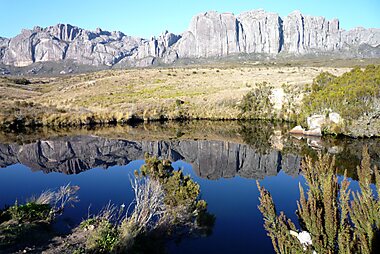
Near the RN7, Andringitra National Park offers hikes below granite peaks, and Parc National de L'Isalo has sandstone canyons and natural pools. The road ends in Toliara, the gateway to the southwest coast. Popular beach villages include Ifaty to the north of the city and Anakao to the south. Between Isalo and Toliara, Zombitse-Vohibasia National Park is a short stop for birds and lemurs.
East and north
Toamasina is the country's main port and the start of the Pangalanes Canal. Further south, Manakara is the end of the railway from Fianarantsoa. In the far north, Diego Suarez is the base for the rainforest of Parc National de la Montagne d’Ambre and the red Tsingy Rouges. Off the northwest coast, Nosy Be is Madagascar's main beach resort, with boat trips to smaller islands.
Madagascar – Plan Your Trip
Pick the places you want to see and Tripomatic turns them into a day-by-day route, with smart routing, time estimates, and everything you need for a perfect trip.


Related destinations


Data: © OpenStreetMap contributors, Wikidata, Wikipedia, Tripomatic, Official websites, geoBoundaries (CC BY 4.0). Tours by GetYourGuide. We earn commission from bookings. Travel guide generated with AI.