


Marseille
Marseille is France's oldest city and its second-largest, founded by Greek sailors from Phocaea around 600 BC as the port of Massalia. It feels different from the rest of France: multicultural, sun-bleached, and built around a working harbor rather than grand boulevards. The pace is relaxed and a little rough at the edges, and that is part of the appeal.
The city suits travelers who want real Mediterranean life alongside the sights — fresh fish at the harbor, a hike-and-swim day in the Calanques, and neighborhoods that still feel local rather than polished for tourists. Footballer Zinedine Zidane and filmmaker Marcel Pagnol, whose stories captured Provençal life, both grew up here.

Marseille – Planning a Trip?
Build your day-by-day itinerary in the Tripomatic app.
When to visit
Spring and autumn are mild and the easiest seasons for walking around. Summer (June to August) is hot, dry, and sunny, with the sea warm enough to swim from June. Winter is mild by French standards but can bring the mistral, a strong cold wind blowing down the Rhône valley that makes the air feel colder than the temperature suggests.
Time a visit to late November or December for the Foire aux Santons, a Christmas market on La Canebière selling hand-painted Provençal nativity figures that has run since 1803.
Best time to visit: May, June, July, August, September, October
Even in summer, evenings by the water can feel cool once the mistral picks up, so pack a light jacket.
Top sights
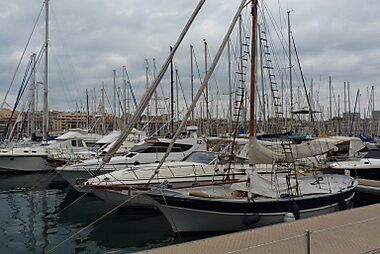


Old Port of Marseille is the heart of the city: a working harbor lined with cafés, a daily fish market, and boats leaving for the Calanques and the islands.
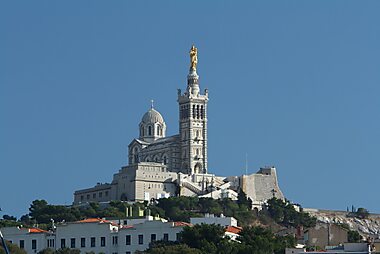
A steep climb or a short bus ride leads to Notre-Dame de la Garde, a neo-Byzantine basilica crowning the highest point in the city. The terrace around it gives a panoramic view over Marseille, the sea, and the islands.
On the harbor's edge, Fort Saint-Jean is a 17th-century fortress built under Louis XIV, now free to enter and connected by footbridge to the striking modern galleries of Museum of Civilizations of Europe and the Mediterranean, a museum covering Mediterranean history and culture.
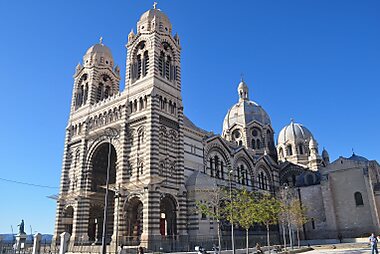
Just north of the port, the striped stone facade of Marseille Cathedral stands out against the water; it was built in the 19th century right next to the much older church it replaced.
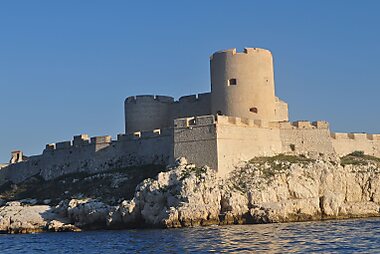
A short boat ride from the harbor reaches Château d'If, a 16th-century island fortress once used as a prison and made famous by Alexandre Dumas's novel The Count of Monte Cristo.
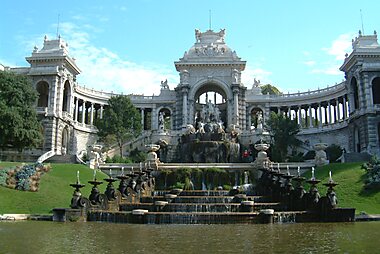
Inland, Palais Longchamp is an elaborate 19th-century palace with fountains and colonnades, built to celebrate the arrival of fresh water in the city; it now houses the fine arts and natural history museums.
Featured Lists

Marseille Must-Sees
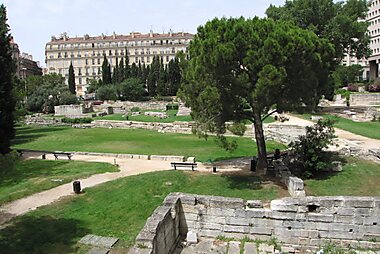
Marseille’s history unfolds from the Old Port, where a daily fish market operates alongside a modern marina. The nearby Le Panier district, the city's oldest settlement, houses the 17th-century Vieille Charité and Roman archaeological remains at the Jardin des Vestiges. Significant landmarks include the triumphal Porte d'Aix and the neo-Gothic Saint Vincent de Paul Church. Cultural sites like the Marseille History Museum and the Mémorial de La Marseillaise document the city's heritage, while the Cantini Museum offers modern art within an elegant 17th-century manor house.
14 places


Audio Guides – Marseille
Explore on foot with a self-guided audio tour that narrates each stop as you reach it.


Hear Marseille's audio tours
1 walk in Audio Guides by Tripomatic


What to experience
- Cross the harbor on the small passenger ferry that shuttles between the two sides of Old Port of Marseille for a token fare — a quick, quirky Marseille ritual rather than a sightseeing boat.
- Hike down to Calanque de Sormiou, one of the calanques (steep limestone inlets) inside Calanques National Park, and swim in its clear water.
- Catch a match at Orange Vélodrome and experience the noise of the Marseille ultras — few French clubs draw a crowd this passionate.
- Watch the sunset over the water from Corniche Kennedy, the coastal road south of the old town.
- Browse the weekly flower, book, or antiques market on Cours Julien Market, a square known for street art and its mix of independent bars.
Tours & Activities
Marseille — Map

 Open the interactive map
 Day trips
Marseille sits close to some of Provence's best-known towns and landscapes, so a rental car or a regional train ticket opens up plenty of options for a day out.
- Cassis — around 25 minutes by train, then a short walk or bus to the harbor. A small fishing port surrounded by vineyards, and the easiest base for boat trips into the calanques (steep limestone inlets) east of Marseille.
- Aix-en-Provence — around 35 minutes by train or bus. An elegant university town of fountains and plane-tree boulevards, once home to painter Paul Cézanne.
- La Ciotat — around 30 minutes by train. A shipbuilding town with a pretty old harbor, known as the birthplace of cinema: the Lumière brothers shot some of the first films here.
- Arles — around 50 minutes by train. A Roman city with a well-preserved amphitheater still used for events, and the town where Vincent van Gogh painted some of his best-known works.
- Avignon — around 35 minutes by fast train. Home to the Palais des Papes, the fortified palace of the medieval popes, and the half-ruined Pont d'Avignon bridge on the Rhône.
Getting there
- By air: Marseille Provence Airport (MRS) is around 25 km northwest of the city. The airport shuttle bus runs to Gare Saint-Charles in about 25–30 minutes for around €10; taxis take about the same time and cost significantly more.
- By train: Gare Saint-Charles is a major TGV hub, with fast trains to Paris (around 3h10), Lyon (around 1h40), and Nice (around 2h30), plus regional trains throughout Provence.
- By bus: Long-distance coaches (FlixBus and others) arrive at the bus terminal next to Gare Saint-Charles, with connections across southern France and into Italy and Spain.
Getting around
- Public transit: RTM runs two metro lines, trams, and buses across the city. Buy a ticket through the RTM app, at metro station machines, or as a single paper ticket validated on board; metro stations also have contactless bank-card readers at the gates, so tapping a card or phone works for single journeys. A ticket covers transfers between metro, tram, and bus for a set time window.
- Taxi / ride-hailing: Uber and local taxi apps operate throughout the city.
- On foot / cycling: The harbor and old-town areas are flat and walkable, but the hill up to Notre-Dame de la Garde and several outer districts are steep. A bike-share scheme exists, but Marseille's hills and traffic make cycling less practical here than in flatter French cities.
Driving
- Is a car worth it?: Not for the city center — the old town's narrow one-way streets and limited parking make walking and transit easier. A car becomes useful for reaching the Calanques coves outside the national park's restricted zones, or for day trips at your own pace.
- Parking: Paid street parking and several underground garages serve the center, including one at Old Port of Marseille; pay by app (Flowbird) or at the meter. Park-and-ride lots near metro stations are cheaper for a full day.
- Restrictions: Marseille has a low-emission zone (ZFE) covering much of the city center, which restricts entry for older vehicles based on their Crit'Air sticker; check the requirement before driving in if renting a car.
Food & drink
Marseille invented bouillabaisse, a fish stew simmered with saffron and served with rouille sauce and toasted bread; restaurants around Old Port of Marseille serve it, but a genuine version takes hours to prepare and is priced accordingly, so ask before ordering to avoid a rushed tourist version.
For something quicker, look for panisse (fried chickpea-flour rounds) or a navette, a hard orange-blossom biscuit sold at historic bakeries near Abbey of St. Victor. The Noailles market, a few streets inland from the port, is the best place to browse spices, olives, and North African pastries that reflect the city's diverse population.
Safety & health
Marseille is generally safe for tourists in the central and harbor areas that visitors spend most of their time in. The main risk is pickpocketing, particularly around Old Port of Marseille, La Canebière, and on crowded metro trains — keep bags zipped and valuables out of back pockets. Some outer northern neighborhoods see more serious crime unrelated to the tourist areas; there is no reason for a visitor on a typical itinerary to go there, and sticking to the center, the harbor, and well-traveled districts at night is enough precaution.
History
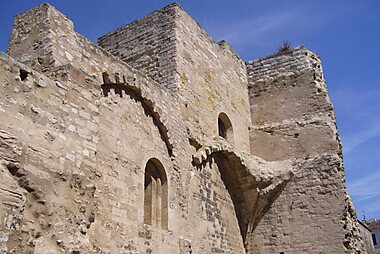
Greek sailors from Phocaea founded Massalia around 600 BC around what is now Old Port of Marseille, making Marseille the oldest city in France; excavated remains of the ancient port and city walls are on display at Jardin des Vestiges.
In 1660, Louis XIV built Fort Saint-Jean to guard the harbor — with its cannons famously facing inward toward the city rather than out to sea, a reminder to a Marseille that had resisted royal authority.
The old quarter around Le Panier Quarter survived centuries as the city's oldest neighborhood before German occupying forces destroyed much of it in 1943; postwar excavation there turned up Roman-era remains beneath the rubble.
Marseille's rebuilding after the war produced one of European architecture's landmark buildings: Le Corbusier's Unité d'Habitation, a pioneering block of modernist apartments completed in 1952 and now a UNESCO World Heritage Site.
In 2013, Marseille was European Capital of Culture, an investment that gave the city Museum of Civilizations of Europe and the Mediterranean and reshaped much of the waterfront around it.
Country facts
Quick practical facts for France at a glance:
- Currency
- Euro EUR € · Card payments · Widely accepted
- Emergency numbers
- 112
- Electricity
- 230 V · 50 HzType C / Type E
- Languages
- French
- Tap water
- Safe to drink
- Driving side
- Right
- Calling code
- +33


Marseille – Plan Your Days
Turn the places from this guide into a real itinerary, with smart routing, time estimates, and everything you need for a perfect trip.




