


Avignon
Avignon is a walled city on the Rhône river in Provence. In the 14th century it was the seat of the popes, and the huge papal palace still dominates the old town. The historic centre is a UNESCO World Heritage Site.
The old town is compact and easy to explore on foot. It suits a short stay of two to three nights, and it works well as a base for Roman sites, villages and vineyards nearby. In July the city fills with theatre during the Festival d'Avignon.
Download this guide as a PDFPrintable tourist mapPublic holidays in France

Avignon – Planning a Trip?
Build your day-by-day itinerary in the Tripomatic app.


When to visit
Spring and early autumn are the best times: warm, sunny and less crowded. Summer is very hot and dry, and the old town is busy. Winter is mild but can be grey, and the mistral wind can blow cold and strong in any season.
The biggest event is the Festival d'Avignon, a large theatre and performing-arts festival held every July. Book hotels well ahead if you visit then. A second, open "Off" festival fills the streets with small shows at the same time.
Best time to visit: April, May, September, October
Top sights
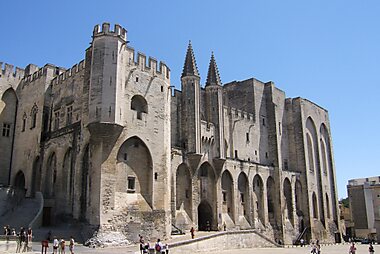
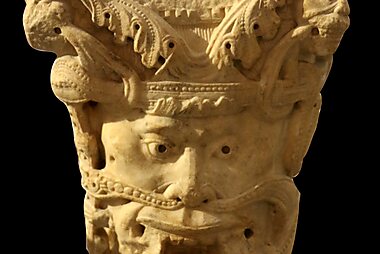
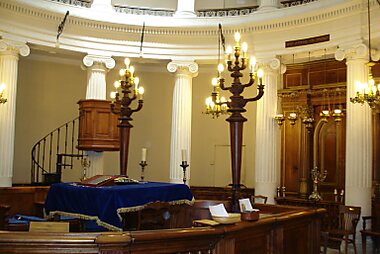
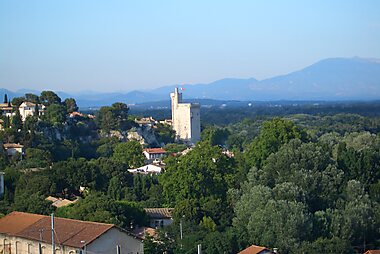
- Popes' Palace was built in the 14th century and is the largest Gothic palace in Europe. Seven popes lived here, and the bare stone halls give a clear sense of papal power.
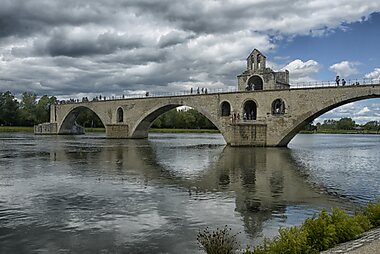
- Pont Saint-Bénezet is the famous broken bridge over the Rhône. It was built in the 12th century, and only four arches survive after floods. A walk to the end gives good views of the palace and ramparts.
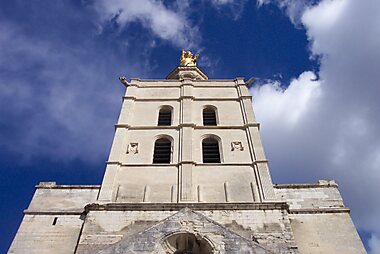
- Cathédrale Notre-Dame-des-Doms is a Romanesque cathedral beside the palace. It is free to enter and has a gilded statue of the Virgin on its tower.
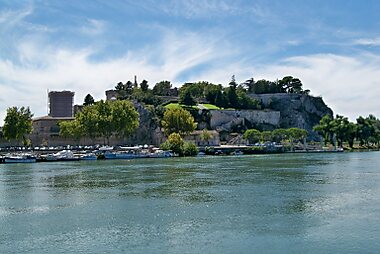
- Rocher des Doms is a hilltop garden above the Rhône. It is a calm place with wide views over the river, the bridge and the hills beyond.
- Musée du Petit Palais is a museum of Italian paintings from the late Middle Ages and early Renaissance. It sits in a former bishops' palace next to the cathedral.
- Jacquemart d'Avignon is the clock tower above Place de l'Horloge. Small figures strike the hours, and the square below is the main meeting point of the old town.
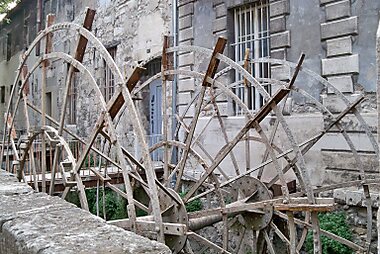
- Rue des Teinturiers is a pretty street along a canal. Old water wheels recall the dyers who once worked here, and today it is lined with cafés.
- Halles d'Avignon is the covered market, known for its green plant wall. It is the best place to see local produce.
Featured Lists


What to experience
- Festival d'Avignon: Each July, theatre, dance and music fill the courtyards of the old town. The palace courtyard is the main stage. Book tickets early.
- Festival Off: At the same time, hundreds of small shows play in cafés, chapels and side streets. Performers hand out flyers all day.
- Sunset on the Rhône: Watch the sun go down over the river from Rocher des Doms. The light on the bridge and the hills is at its best in the evening.
- River cruise: Short boat trips on the Rhône leave from near the bridge. They show the ramparts from the water.
- Cycling the Rhône: A flat cycle route follows the river. It is a pleasant half-day ride.
Tours & Activities
Avignon — Map

 Open the interactive map
Day trips
Avignon is a good base for day trips. Most places below are reachable by train, bus or car.
- Villeneuve-lès-Avignon: just across the Rhône, about 10 minutes by bus. It has a large fort, a former charterhouse and quiet streets.
- Orange: about 20 minutes by train. It has a very well-preserved Roman theatre and a Roman triumphal arch.
- Châteauneuf-du-Pape: about 20 minutes by car. It is a wine village with cellars to visit and a view over the vineyards.
- Arles: about 20 to 30 minutes by train. It has a Roman arena and links to the painter Vincent van Gogh.
- Nimes: about 30 minutes by train. It has a Roman temple and arena in a lively city centre.
- Pont du Gard: about 40 minutes by car. This tall Roman aqueduct bridge is a UNESCO site with walking paths along the river.
- Gordes: about 1 hour by car. It is a hill village in the Luberon. Public transport is limited, so a car or tour is easiest.
Where to explore
Other destinations in the region:
- For Roman history, visit Arles or Nimes.
- For Luberon hill villages, visit Gordes.
- For a bigger city with fountains and markets, visit Aix-en-Provence.
Getting there
- By air: The main gateway is Marseille Provence Airport, about 90 km south. Coaches and trains reach Avignon in roughly 1 to 1.5 hours. Nîmes airport is smaller and closer, with limited flights.
- By train: High-speed TGV trains from Paris take about 2 hours 45 minutes. They also link Lyon, Marseille and Montpellier. TGVs stop at Avignon TGV station, about 5 km south of the centre. A short shuttle train runs from there to Avignon Centre station, just outside the walls. Local TER trains serve Arles, Nîmes and Orange. Book at SNCF Connect.
- By bus: Long-distance coaches stop near Avignon Centre station and connect to Marseille, Nîmes and other regional towns.
Getting around
- On foot: The old town inside the ramparts is small and mostly flat. Walking is the best way to see it.
- Public transport: City buses serve the suburbs and Villeneuve-lès-Avignon. The tourist office has route and ticket information: Avignon Tourisme.
- Cycling: Cycling is practical on flat ground and along the Rhône. Bikes can be rented in the centre.
- Taxi: Taxis wait at the train stations. They are useful for late evenings after festival shows.
Driving
- Is a car worth it?: Not for the old town. It is small, walkable and has narrow streets. A car is useful for the Luberon villages and the wine area.
- Parking: Use car parks just outside the ramparts and walk in. Parking inside the walls is limited and expensive.
- Restrictions: Many streets in the centre are pedestrian-only or have restricted access. Follow signs.
Food & drink
Local food is Provençal: olive oil, herbs, vegetables, lamb and fish. Look for daube (slow-cooked beef stew), tapenade and local goat cheese. Papalines are a local sweet made with chocolate and herb liqueur. Wines from the Côtes du Rhône and Châteauneuf-du-Pape are easy to find by the glass.
The best place for a food visit is Halles d'Avignon. It is closed on Mondays. For a meal, try the cafés on Place de l'Horloge and Rue des Teinturiers. Restaurant terraces are busy at lunch and in the evening. Choose a set menu at lunch for better value.
Safety & health
Avignon is generally safe for visitors. Pickpocketing is the main risk, especially in the crowds of July and around the main squares and the station. Keep bags closed and phones out of back pockets.
Summer heat is strong. Drink water, use sun protection and plan visits to the palace for the morning. The mistral wind can be strong, so take care on the bridge and on exposed viewpoints.
History
Avignon became the centre of the Catholic Church in 1309. Seven popes lived here until 1377. The popes built Popes' Palace and the long city walls that still surround the old town.
In 1348 Pope Clement VI bought the city from Joanna I of Naples. Avignon stayed under papal rule until the French Revolution. The city drew artists, scholars and merchants, and built many fine town houses. The Romanesque Cathédrale Notre-Dame-des-Doms stands beside the palace.
The bridge Pont Saint-Bénezet is the symbol of the city, remembered in a famous French song. It once crossed the whole Rhône, but floods broke it over the centuries.
Country facts
Quick practical facts for France at a glance:
- Currency
- Euro EUR € · Card payments · Widely accepted
- Emergency numbers
- 112
- Electricity
- 230 V · 50 HzType C / Type E
- Languages
- French
- Tap water
- Safe to drink
- Driving side
- Right
- Calling code
- +33


Avignon – Plan Your Days
Turn the places from this guide into a real itinerary, with smart routing, time estimates, and everything you need for a perfect trip.


Related destinations

Data: © OpenStreetMap contributors, Wikidata, Wikipedia, Tripomatic, Official websites. Tours by GetYourGuide. We earn commission from bookings. Travel guide generated with AI.
Plan your trip with Tripomatic
- AI-Powered PlanningGet a ready-made day in one tap, let AI spread your shortlist across your trip, or plan everything by chatting.
- Travel AlertsOfficial advisories, severe weather, strikes, and natural hazards for the places on each day of your trip.
- Public Holidays & EventsSee holidays, festivals, and closures on the days of your trip, and what they mean for your plans.
- Cost EstimationAI-powered trip cost breakdowns so you know what to budget before you go.
- Tours & TicketsBook tours, skip-the-line tickets, and activities directly in your plan.