



Mexico
Mexico stretches from the deserts of the north to the tropical jungle of the south, with a history spanning great pre-Hispanic civilizations, three centuries of Spanish colonial rule, and a distinct modern identity that blends both. Ancient pyramids sit within day-trip distance of a sprawling, cosmopolitan capital, colonial silver towns dot the central highlands, and the Caribbean coast and Pacific beaches draw a different kind of traveler entirely. Regional cuisines, dialects, and traditions vary enormously from state to state.
Mexico works well both for a single-region trip and for a longer, multi-stop itinerary. Many first visits center on Mexico City, with day trips to nearby pyramids, then continue to a colonial town or two and a stretch of coast. Independent travel is straightforward in most tourist regions, with strong bus networks and, in some areas, safety considerations worth planning around in advance.


Mexico – Planning a Trip?
Build your day-by-day itinerary in the Tripomatic app.


Money & payments
The Mexican peso (MXN) is the currency nationwide; US dollars are sometimes accepted in tourist areas near the border and in resort towns, but at a poor exchange rate.
Cards are widely accepted in cities and tourist areas, but cash is still essential for markets, small shops, local buses, and tips. ATMs are common, though machines at bank branches are generally safer and have lower fees than standalone ones in convenience stores.
Featured Lists

Mexico Essentials
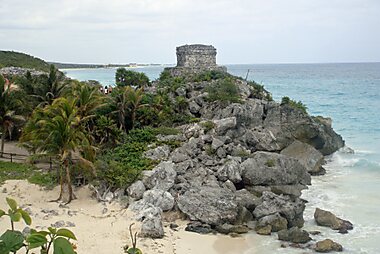
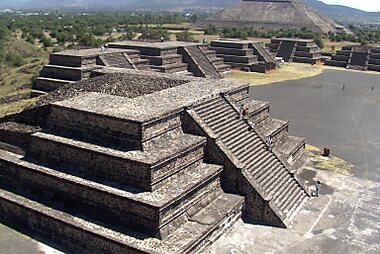
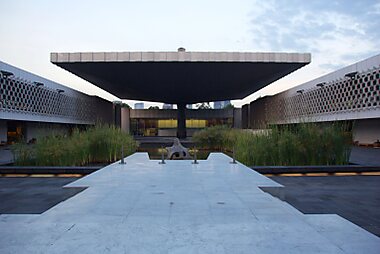
Mexico’s architectural and natural history spans millennia, from the monumental Mayan pyramids of Chichén Itzá and the massive Teotihuacán complex to the Aztec ruins of Templo Mayor in Mexico City. This selection highlights world-renowned institutions like the National Museum of Anthropology and the Museo Soumaya, alongside colonial landmarks such as the neo-Gothic Parroquia in San Miguel de Allende. Diverse landscapes are represented by the seaside ruins of Tulum, the travertine rock formations of Hierve el Agua, and the traditional Aztec-era canals of Xochimilco.
15 places

Mexico's Hidden Gems
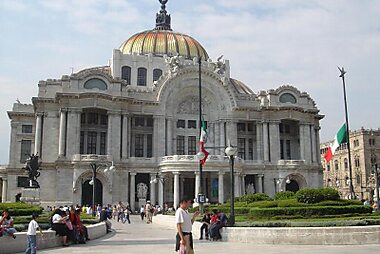
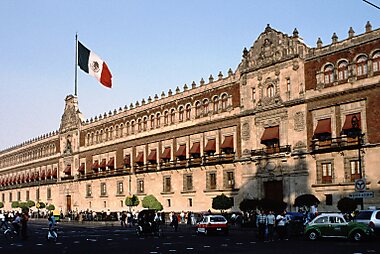
Mexico's diverse geography and history are represented through sites like the surrealist concrete sculptures of Las Pozas and the 333-meter deep Sótano de las Golondrinas pit cave. Archaeological landmarks include the circular pyramids of Guachimontones and the UNESCO-listed Paquimé ruins. Natural sites feature the travertine rock formations of Hierve el Agua, the underground river system of Rio Secreto, and the overwintering grounds of the Monarch Butterfly Biosphere Reserve. Cultural highlights include the syncretic San Juan Chamula Church and the historic Postal Palace.
20 places


Mexico's Best Beaches & Resorts
Mexico's diverse coastline spans the turquoise Caribbean Sea and the rolling Pacific surf. This selection features Cancun’s vibrant Hotel Zone beaches like Playa Chac Mool and Playa Delfines, alongside the reef-protected waters of Cozumel’s Palancar Reef. Further south, the list includes the expansive seven-kilometer stretch of Tulum and the secluded turtle nesting grounds of Xcacel. On the Pacific side, find the steep-walled cove of Playa Carrizalillo in Oaxaca and the lively atmosphere of Rosarito Beach in Baja California.
12 places
Tours & Activities
Mexico — Map

 Open the interactive map
 Tipping
Tipping is customary and expected in Mexico, for services well beyond restaurants.
10-15%
10-15% or a few pesos per drink
round up the fare
a few pesos per bag for porters, a similar amount per day for housekeeping
10-15% on paid tours
Round up taxi fares, and tip a few pesos per bag for hotel porters and a few pesos per car for gas station attendants and grocery baggers, both common local jobs. Tipping is not expected at street food stalls or self-service counters.
Electricity
Mexico uses Type A and B plugs at 127 V / 60 Hz, the same standard as the United States and Canada, so travelers from those countries need no adapter. Everyone else will need one, and appliances built for 220-240 V systems may need a voltage converter too.
Language
Spanish is the official language nationwide, spoken with regional accents and vocabulary that shift noticeably between regions. Dozens of indigenous languages, including Nahuatl, Maya, and Zapotec, are still spoken daily in parts of the south and center, though Spanish works everywhere. English is common in major resorts, tourist zones, and business hotels, but far less so in smaller towns and rural areas.
Staying connected
Prepaid SIMs and eSIMs from Telcel, AT&T Mexico, or Movistar are cheap and widely available at airports and convenience stores (OXXO); Telcel has by far the best rural and remote coverage. A passport is generally required to register a Mexican SIM. Coverage is strong in cities and resort areas, and can be patchy in mountainous or very remote regions.
Safety & emergencies
Mexico's safety picture varies sharply by region and is worth checking specifically for wherever you're headed, rather than treating the country as a single risk level. Major tourist areas, including Mexico City's main visitor districts, the Yucatán Peninsula, and central colonial towns, see millions of visitors a year with incident levels comparable to other major travel destinations; some northern border states and specific rural areas have a considerably higher risk of organized crime-related violence, and travel there deserves specific, current research beforehand. Petty crime like pickpocketing and bag-snatching happens in crowded tourist spots and on public transport in big cities. Stick to registered taxis or ride-hailing apps rather than hailing cabs on the street, especially at night, and avoid withdrawing cash from street ATMs after dark.
Health
Tap water is not safe to drink; stick to bottled or purified water, including for brushing teeth, and be cautious with ice at informal food stalls. Street food is a highlight of Mexican travel and generally safe at busy, high-turnover stalls, but travelers' diarrhea is common enough that it's worth packing basic remedies. Pharmacies (farmacias) are everywhere and can sell some medications over the counter that require a prescription elsewhere. No special vaccinations are required for entry, though a travel health consultation before a longer or rural trip is worthwhile.
Visas & entry
Citizens of the US, Canada, the EU, the UK, and many other countries can enter Mexico visa-free for tourism, receiving a Multiple Immigration Form (FMM) on arrival, valid for up to 180 days. Keep the FMM slip (or its digital record) until departure, since it's checked when leaving the country. Travelers who need a visa should apply at a Mexican embassy or consulate before traveling.
Visa and entry requirements change frequently. Verify current requirements with the official immigration authority or your country's embassy before travel.
Etiquette
Mexicans are generally warm and hospitable, and greetings matter: a handshake is standard, with a light cheek kiss common between women or between a man and a woman who've already met. Meals are social and can run long; it's normal to ask for the bill ("la cuenta, por favor"), since it isn't brought automatically.
Punctuality is relaxed for social occasions but expected for business meetings and organized tours. Address people with courtesy titles (señor, señora, don, doña) until invited to be more casual, and expect genuine interest in family and small talk before getting down to business.
Holidays & opening hours
Day of the Dead (Día de los Muertos, 1-2 November) is Mexico's most distinctive holiday, marked by home altars, cemetery visits, and public parades in many cities, especially strong in Oaxaca and central Mexico; hotels in popular areas book up well in advance. Christmas is preceded by posadas, nightly neighborhood processions and parties in the two weeks before the holiday.
Many businesses, especially in smaller towns, close for a long lunch in the early afternoon and reopen in the evening; shopping malls and larger stores in cities tend to stay open through the day.
Getting around
- By bus: Long-distance buses are the backbone of Mexican travel, extensive, frequent, and comfortable on first-class lines like ADO (southeast) and ETN (center/north); book ahead for popular routes and holiday periods.
- By air: Domestic flights are worth it for long distances, such as from Mexico City to the Yucatán Peninsula or Baja California, given the size of the country.
- By metro/local transit: Mexico City has an extensive, very cheap metro system; smaller cities generally rely on buses and colectivos (shared vans) for local transport.
- By train: passenger rail is limited but growing — buses and flights still cover most long-distance travel, but the new Tren Maya loops around the Yucatán Peninsula linking Cancún, Mérida, and several archaeological sites, and the older El Chepe scenic line crosses the Copper Canyon in the north.
Driving
- Speed limits: 30-50 km/h in cities and towns, 90-100 km/h on rural highways, and up to 110 km/h on toll expressways.
- Toll roads ("cuota") vs free roads ("libre"): Mexico has a parallel network of paid toll expressways and free (often slower, sometimes rougher) alternative roads; the toll roads are generally faster, better maintained, and considered safer for long-distance driving. Tolls are paid in cash or with an IAVE electronic tag at staffed booths.
- Night driving: avoid driving on rural or intercity roads after dark where possible, due to poor lighting, livestock on roads, and, in some regions, safety concerns.
- Green Angels: a free government roadside-assistance service ("Ángeles Verdes") patrols major highways and toll roads, offering help with breakdowns, fuel, and minor repairs.
- Fuel: nearly all stations are staffed, not self-service; fuel is sold as "Magna" (regular unleaded), "Premium" (higher octane), and "Diésel".
Food & drink
Mexican food varies enormously by region: tacos, salsas, and street food define much of the everyday eating, while Oaxaca is known for its moles and mezcal, the Yucatán for citrus-marinated cochinita pibil, and Puebla for chiles en nogada and its own mole poblano. A proper sit-down meal (comida) is typically the largest of the day, eaten in the early-to-mid afternoon, while dinner is often lighter and later.
Corn is central to the cuisine, appearing as tortillas, tamales, and countless other dishes, and fresh salsas and chiles range from mild to very hot. Mezcal and tequila, both made from agave, are the country's signature spirits, alongside a strong beer culture and, in central and southern regions, hot chocolate with roots in pre-Hispanic tradition.
Where to explore
Mexico's most-visited destinations span the capital, colonial highlands, southern states, and both coasts.
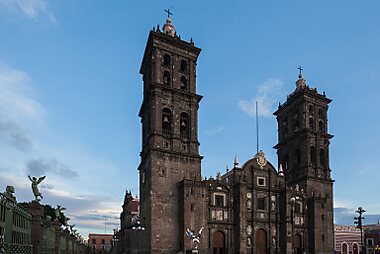
Mexico City and the center: Mexico City, the capital, anchors most itineraries, with the pyramids of Teotihuacán a short trip away. Puebla, a colonial city known for its tiled architecture and mole poblano, sits within easy reach.
Colonial highlands: Guanajuato, a former silver-mining town of steep alleys and colorful houses, and San Miguel de Allende, known for its well-preserved colonial center and expat community, are among Mexico's best-loved historic towns.
The south: Oaxaca is a center of indigenous culture, mezcal, and some of the country's best regional cooking, while San Cristóbal de las Casas, high in the Chiapas mountains, is a base for exploring Maya communities and cloud forest.
The coasts: Mérida is the gateway to the Yucatán's Maya ruins and cenotes, and Cancún and Playa del Carmen anchor the Caribbean coast's resorts and beaches, with Tulum known for its clifftop ruins overlooking the sea. On the Pacific side, Cabo San Lucas anchors the beach resorts of Baja California Sur.
Mexico – Plan Your Trip
Pick the places you want to see and Tripomatic turns them into a day-by-day route, with smart routing, time estimates, and everything you need for a perfect trip.




