



Mongolia
Mongolia is a landlocked country wedged between Russia and China, covered mostly by open steppe, the Gobi Desert in the south, and mountains in the north and west. A large share of Mongolians still live as herders, moving their animals between seasonal pastures. Ulaanbaatar, the capital, holds close to half the national population and mixes Soviet-era apartment blocks with modern towers and Buddhist monasteries.
This suits travelers who want open space, horseback riding, and long drives away from crowds, not polished infrastructure or fast connections between sights. Chinggis Khaan, born here in the 12th century, united the Mongol tribes and built history's largest contiguous land empire. His legacy still shapes the country today, from the currency to the Chinggis Khaan Statue Complex east of the capital.





Mongolia – Planning a Trip?
Build your day-by-day itinerary in the Tripomatic app.


Money & payments
Mongolian tögrög notes come in large denominations, so even everyday purchases involve six-figure sums. Card payments work in most Ulaanbaatar shops, hotels, and restaurants, but cash is essential once you leave the capital — ger camps, countryside shops, and small-town markets rarely take cards. ATMs are common in Ulaanbaatar and aimag (provincial) centers but disappear in remote areas, so withdraw enough cash before a multi-day countryside trip.
Budget travelers can get by on a modest daily amount by staying in guesthouses and eating at local canteens. Mid-range travelers pay more for organized tours, private drivers, and ger camp stays, which make up most of the cost of a Mongolia trip.
Featured Lists

Mongolia Essentials
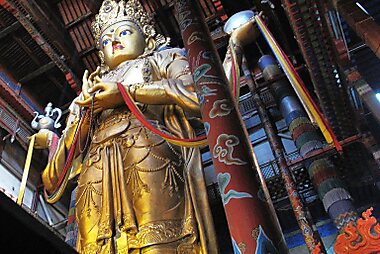
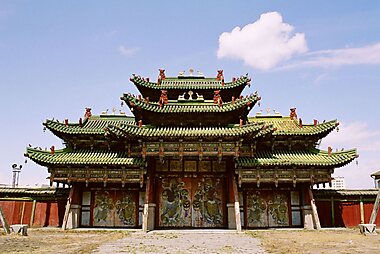
Mongolia’s heritage spans from the 13th-century imperial legacy of Ulaanbaatar to the ancient Turkic Tonyukuk inscriptions. This selection includes the Gandantegchinlen Monastery, a center for Mongolian Buddhism, and the Bogd Khan Palace Museum. Natural landmarks feature the fossil-rich Flaming Cliffs and the Khongoryn Els dunes in the Gobi Desert. Spiritual sites like the sacred Burkhan Khaldun mountain and the ruins of Ongiin monastery offer insight into the country’s religious history and nomadic roots.
12 places

Tours & Activities
Mongolia — Map

 Open the interactive map
 Tipping
Tipping is not a deep-rooted tradition in Mongolia, but it is becoming more common where international visitors travel. Restaurants in Ulaanbaatar increasingly welcome a small tip, though it is rarely expected outside the capital. Tour guides and drivers on multi-day trips are the exception — a daily tip is customary and often makes up a meaningful part of their income.
round up or 5-10% in tourist-facing restaurants
10,000-15,000 MNT per day is common for a private guide or driver
small tip for porters at international hotels
Electricity
Mongolia uses Type C and E plugs at 220 V and 50 Hz, the same as most of continental Europe, so most travelers only need a plug adapter, not a voltage converter.
Language
Mongolian is the official language, written in the Cyrillic alphabet rather than Latin script, so road signs, menus, and shop names will look unfamiliar even to travelers used to other Cyrillic-using countries. English is spoken at hotels, tour agencies, and some restaurants in Ulaanbaatar, but drops off quickly outside the capital, where a guide or driver who speaks English becomes essential for independent travel.
Staying connected
Prepaid SIM cards are cheap and widely available at Chinggis Khaan International Airport and phone shops in Ulaanbaatar. Coverage is strong in cities and along main roads but fades in the Gobi Desert and other remote areas, so do not count on mobile data during multi-day countryside trips.
Safety & emergencies
Mongolia is generally safe for travelers, and violent crime against tourists is rare. The main risks are petty theft, pickpocketing, and occasional muggings at night in crowded parts of Ulaanbaatar, plus the practical hazards of remote travel — extreme weather, long distances from help, and rough roads. Organized scams targeting tourists are uncommon compared with more heavily touristed countries.
Health
Tap water is not safe to drink anywhere in the country; stick to bottled or boiled water, including for brushing teeth in rural areas. Pharmacies are well stocked in Ulaanbaatar but scarce elsewhere, so bring a basic first-aid kit and enough prescription medication for the whole trip. No vaccinations are mandatory for entry, but a travel clinic can advise on routine and hepatitis A/B coverage before a countryside trip.
Visas & entry
Citizens of many countries, including most of the EU, the United States, and several other nations, can enter Mongolia visa-free for a set period. Travelers who need a visa can usually apply online through Mongolia's e-visa system or at a Mongolian embassy before departure.
Visa and entry requirements change frequently. Verify current requirements with the official immigration authority or your country's embassy before travel.
Etiquette
Visiting a traditional ger (nomadic tent) follows some specific customs: never step on the wooden threshold when entering, move around the interior clockwise, and accept food or drink with your right hand or both hands. At Buddhist monasteries, walk clockwise around temples and stupas, dress modestly, and ask before photographing monks or ceremonies. Mongolians value hospitality and directness, and pointing with a single finger is considered rude — gesture with an open hand instead.
Holidays & opening hours
Naadam, Mongolia's national festival of wrestling, archery, and horse racing, falls in mid-July and effectively pauses normal business for several days nationwide — book transport and accommodation well ahead if traveling then. Shops and markets in Ulaanbaatar keep long daily hours, while stores in smaller towns often close for a midday break and on Sundays.
Getting around
- By air: domestic flights connect Ulaanbaatar to aimag (provincial) centers such as Dalanzadgad and Mörön, saving a day or more of driving over the region's rough roads.
- By train: the Trans-Mongolian Railway runs north-south through Ulaanbaatar, useful mainly for reaching the Russian and Chinese borders rather than for domestic sightseeing.
- By bus or shared van: intercity buses and shared minivans link Ulaanbaatar to provincial towns cheaply, though journeys are long and schedules loose.
- By private driver or tour: most countryside travel — the Gobi Desert, Khustain Nuruu National Park, Gorkhi-Terelj National Park — happens by hired 4WD vehicle with a driver-guide, since public transport does not reach most sights directly.
Driving
- Road conditions: most roads outside Ulaanbaatar and the paved highways linking a handful of aimag centers are unpaved tracks across open steppe. Self-driving is unusual; most visitors hire a 4WD vehicle with an experienced local driver instead.
- Fuel: stations are attended and often cash-only outside cities. Petrol is labeled AI-92 and AI-95 at the pump, diesel is labeled Disel. Fill up whenever you pass a station — they can be hundreds of kilometers apart in the countryside.
- Parking: informal and free almost everywhere outside central Ulaanbaatar, which has paid curbside parking and small lots.
Food & drink
Mongolian meals center on meat and dairy, reflecting a herding lifestyle in a harsh climate with little farmland. Meals often come with suutei tsai, a salty milk tea, alongside dairy snacks like aaruul, dried milk curd eaten throughout the day.
Buuz, steamed mutton dumplings, and khuushuur, fried meat pastries, are everyday staples found in nearly every canteen and market stall. For special occasions, khorkhog — meat and vegetables cooked together in a sealed pot with hot stones — is a classic countryside dish shared at gatherings. Airag, fermented mare's milk with a mild alcoholic kick, is a distinctly Mongolian drink worth trying at least once, especially in summer when herders produce it fresh.
Where to explore
Ulaanbaatar, the capital, is most travelers' entry point, with the country's main museums and monasteries plus the giant Chinggis Khaan Statue Complex nearby at Tsonjin Boldog. Just outside the city, Gorkhi-Terelj National Park draws weekend visitors for hiking and horseback riding.
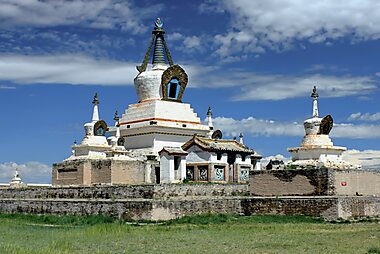
The historical heartland lies further west around Kharkhorin, site of the ruined 13th-century Mongol capital and the working Erdene Zuu monastery.
Khustain Nuruu National Park protects Mongolia's reintroduced wild horses within a few hours of the capital.
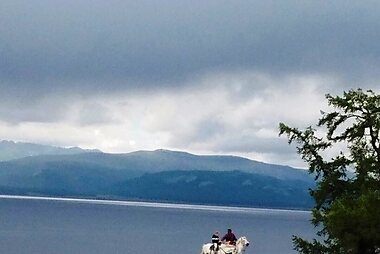
In the north, Darkhan is one of Mongolia's largest cities, and Mörön is the usual gateway to Lake Khövsgöl near the Russian border. In the south, Dalanzadgad is the main gateway to the Gobi Desert's dunes, canyons, and dinosaur fossil sites.
Mongolia – Plan Your Trip
Pick the places you want to see and Tripomatic turns them into a day-by-day route, with smart routing, time estimates, and everything you need for a perfect trip.


Related destinations


Data: © OpenStreetMap contributors, Wikidata, Wikipedia, Tripomatic, Official websites, geoBoundaries (CC BY 4.0). Tours by GetYourGuide. We earn commission from bookings. Travel guide generated with AI.