



New York City
New York City is the United States' largest city and a global center for finance, culture, and media. Five boroughs — Manhattan, Brooklyn, Queens, the Bronx, and Staten Island — meet across rivers and bays, connected by bridges and a 24-hour subway system. The city works well for a first-time visitor: its most famous sights sit close together in Manhattan, and even a few days give a strong sense of the place.
Expect constant contrast: quiet museum galleries a few blocks from Times Square's crowds, historic rowhouses beside soaring skyscrapers, and food from nearly every country on earth. The poet Walt Whitman spent much of his life here and wrote often about the city's energy — a description that still fits.

New York City – Planning a Trip?
Build your day-by-day itinerary in the Tripomatic app.


When to visit
Spring (April–June) and fall (September–October) bring mild, comfortable weather and are the best time to visit. Summer (July–August) turns hot and humid. Winter (December–March) is cold, sometimes snowy, though the city is festively decorated.
Plan around the Macy's Thanksgiving Day Parade, held on the fourth Thursday of November. Giant balloons and marching bands pass Central Park on their way to Herald Square — one of the most famous annual events in the country.
Best time to visit: May, June, September, October
Top sights
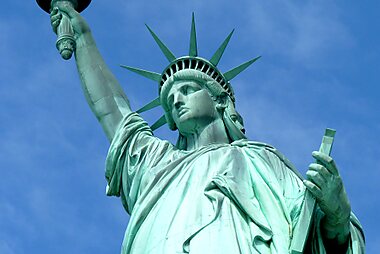

Statue of Liberty has welcomed visitors to New York Harbor since 1886, a gift from France marking American independence. A ferry also stops at Ellis Island Immigration Museum, where millions of immigrants were processed on arrival.
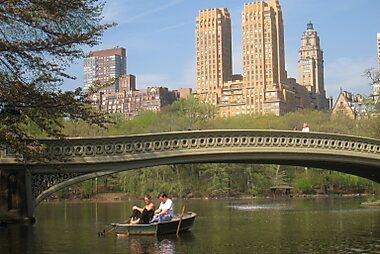
Central Park is an 843-acre green space in the middle of Manhattan, with lakes, woodland paths, and open lawns for a break from the streets.
Empire State Building was the world's tallest building when it opened in 1931, and its observation decks still give sweeping views over Manhattan.
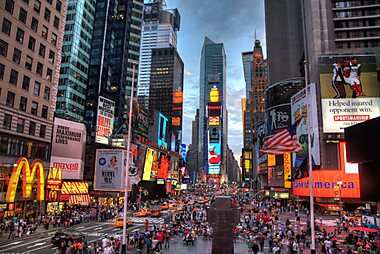
Times Square is the city's neon-lit crossroads, ringed by Broadway theatres and huge digital billboards.
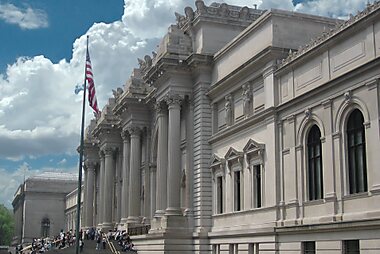
The Metropolitan Museum of Art holds one of the world's largest art collections, spanning 5,000 years and every continent.
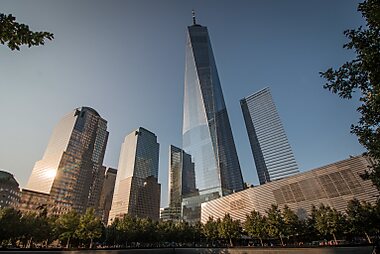
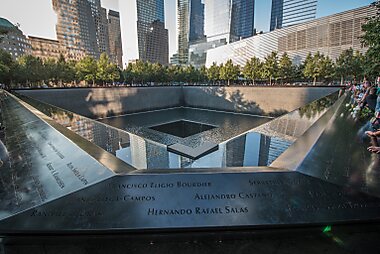
National September 11 Memorial & Museum marks the site of the 2001 attacks with two reflecting pools, next to One World Trade Center, whose observation deck is the tallest in the Western Hemisphere.
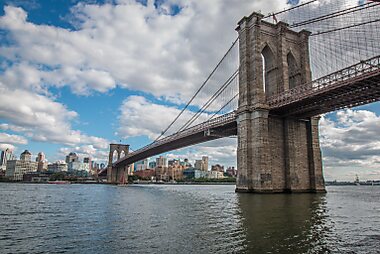
Brooklyn Bridge has linked Manhattan and Brooklyn since 1883; walking its wooden promenade gives some of the best skyline views in the city.
Grand Central Terminal is a working train station and a landmark in its own right, with a vaulted ceiling painted like a star-studded sky.
Featured Lists


Editor's Choice
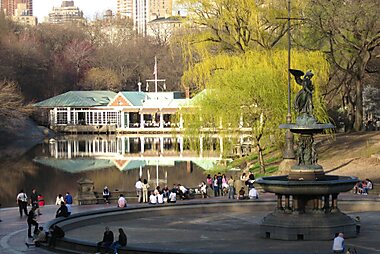
This curated selection highlights New York’s architectural diversity and specialized cultural institutions. It features historic sites like the Victorian Gothic Jefferson Market Library and the Renwick Smallpox Hospital ruins. Visitors can explore immigration history at the Tenement Museum or browse the quirky Brooklyn Superhero Supply Co. The collection spans from the Art Deco Daily News Building to the modern steel lattices of the Vessel. Recreational highlights include Central Park’s lakeside Loeb Boathouse, the bioluminescent-inspired Sea Glass Carousel, and the historic Greenmarket at Union Square Park.
10 places


New York Theatre & Cinema
New York City's performing arts landscape includes historic Broadway houses like the 1,933-seat Gershwin Theatre and Art Deco landmarks like Radio City Music Hall. This collection features the Metropolitan Opera House and David H. Koch Theater at Lincoln Center, the open-air Delacorte Theater in Central Park, and the Comedy Cellar in Greenwich Village. It also highlights specialized venues such as the MoMA cinema for film screenings and the Ed Sullivan Theater, a historic site for major television broadcasts and live late-night recordings.
20 places

What to experience
A few things capture how New Yorkers actually use their city.
- Ice skate outdoors at Rockefeller Center in winter, beneath the tree and gilded statue.
- Ride the free Staten Island Ferry past Statue of Liberty and the Lower Manhattan skyline — best at sunset.
- Walk the elevated The High Line, a former freight rail line turned park with art installations along the way.
- Rent a rowboat on the lake at Loeb Boathouse in Central Park.
- Spend a day on the boardwalk and rides at Coney Island, Brooklyn's old-school seaside amusement district.
- Catch a Broadway show in the Theater District, a New York tradition since the early 1900s.
Tours & Activities
New York City — Map

 Open the interactive map
 Day trips
New York makes a good base for day trips into the wider region, from historic river towns to beaches and another major city.
- Sleepy Hollow and Tarrytown — ≈45 min by Metro-North train. Washington Irving's ghost-story village and the Rockefeller family estate at Kykuit sit on the Hudson River.
- Jones Beach State Park — ≈1 hr 45 min by train and bus. A long Atlantic beach and boardwalk, popular for a summer day out.
- Philadelphia — ≈1.5 hr by train. Independence Hall and the Liberty Bell, the birthplace of the United States.
- The Hamptons — ≈2–2.5 hr by train. Long Island's beach towns, popular with New Yorkers all summer.
Getting there
- By air: Three airports serve the city. John F. Kennedy International Airport (JFK) is the main international gateway, about 25 km from Manhattan; the AirTrain connects to the subway and Long Island Rail Road, roughly 45–60 minutes to Manhattan. LaGuardia Airport (LGA) is closer, about 13 km out and mainly domestic, with bus connections to the subway. Newark Liberty International Airport (EWR), in New Jersey, is about 26 km away, reached by AirTrain plus NJ Transit train, roughly 30–45 minutes to Penn Station.
- By train: Penn Station is the hub for Amtrak's Northeast Corridor, with frequent service to Philadelphia, Washington, D.C., and Boston. Grand Central Terminal serves Metro-North commuter trains to the northern suburbs and Connecticut.
- By bus: The Port Authority Bus Terminal in Midtown handles long-distance coach services from across the Northeast and beyond.
Getting around
- Public transit: The subway runs 24 hours across Manhattan, Brooklyn, Queens, and the Bronx. Staten Island connects to Manhattan by the free Staten Island Ferry and its own separate Staten Island Railway. Pay with a contactless bank card or phone directly at the turnstile via OMNY, the city's tap-to-pay system — no need to buy a paper ticket. MTA
- Taxi: Yellow cabs have been part of the city since the early 1900s and can be hailed on the street throughout Manhattan.
- On foot / cycling: Manhattan's grid makes walking easy, and Citi Bike docking stations are common for short rides.
Driving
- Is a car worth it?: No — a car is a liability in Manhattan; the subway and walking cover the main sights far more easily than driving.
- Parking: Garages in Manhattan often charge $40–60 a day; metered street parking is scarce and tightly enforced.
- Restrictions: A congestion charge applies to most vehicles entering Manhattan below 60th Street.
Food & drink
New York's food scene reflects generations of immigrants, and dishes from nearly every country are easy to find. Bagels with lox, New York-style pizza slices, and pastrami sandwiches are the local classics worth seeking out.
For a famous sandwich, Katz's Delicatessen has been slicing pastrami since 1888. Otherwise, follow the neighborhoods: Chinatown for dumplings and noodle shops, or the food halls scattered through Chelsea and the Lower East Side for a sampler of everything at once.
Safety & health
New York is generally safe for tourists, and violent crime is rare in the areas visitors spend time in. The most common issues are pickpocketing in crowded spots like Times Square and the subway, and unlicensed street vendors or costumed characters pushing for tips in exchange for photos — politely decline and keep walking.
History
New York began as a Dutch trading post called New Amsterdam in 1624, renamed New York when England took control in 1664. Its deep, ice-free harbor made it a natural hub for trade and, later, immigration.
Between 1892 and 1954, Ellis Island Immigration Museum processed more than 12 million immigrants, many of whom stayed in the city and shaped its neighborhoods. Nearby, Wall Street grew from a colonial-era boundary wall into the country's financial center; Federal Hall National Memorial marks the spot where George Washington took the first presidential oath in 1789.
The 2001 attacks on the World Trade Center are remembered at National September 11 Memorial & Museum, and the rebuilt One World Trade Center now stands on the site.
Country facts
Quick practical facts for the United States at a glance:
- Currency
- US Dollar USD $ · Card payments · Widely accepted
- Emergency numbers
- 911 Police · Ambulance · Fire brigade
- Electricity
- 120 V · 60 HzType A / Type B
- Languages
- English
- Tap water
- Safe to drink
- Driving side
- Right
- Calling code
- +1


New York City – Plan Your Days
Turn the places from this guide into a real itinerary, with smart routing, time estimates, and everything you need for a perfect trip.




