


Paris
Paris is France's capital and one of the most visited cities in the world. It rewards visitors with grand boulevards and celebrated art museums. The center is compact and easy to explore on foot or by metro.
The city suits almost any kind of trip. A first visit can cover the highlights, while a slower trip can focus on museums, food, or walking along the Seine. Painters like Claude Monet and writers like Ernest Hemingway found inspiration here, and that creative pull still shapes the city's cafes, galleries, and bookshops today.

Paris – Planning a Trip?
Build your day-by-day itinerary in the Tripomatic app.
When to visit
Spring and autumn are mild, summer is warm with occasional storms, and winter is cold but rarely freezing.
Plan around Bastille Day on July 14 if you can. The national holiday brings a military parade down Champs Élysées and a fireworks show at Eiffel Tower that evening.
Best time to visit: May, June, July, August, September
July and August are the warmest months and also the busiest. Late spring and September offer similar sunshine with smaller crowds.
Top sights


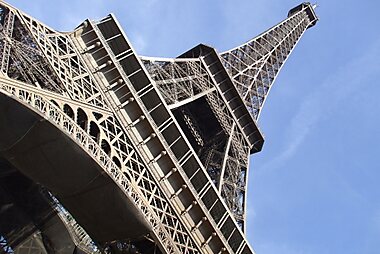
Eiffel Tower is the city's defining landmark, built for the 1889 World's Fair. Climb to the top for rooftop views, or see it sparkle after dark on the hour.
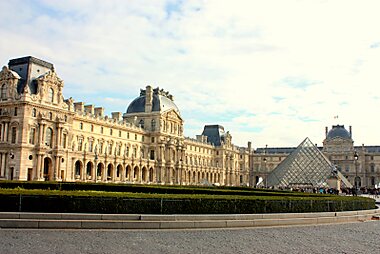
Louvre Museum holds thousands of years of art and artifacts, including the Mona Lisa. Book a timed entry online to skip the longest queues.
Notre-Dame Cathedral anchors the Île de la Cité and reopened in 2024 after a five-year restoration following the 2019 fire. Its Gothic towers and rose windows are worth the visit alone.
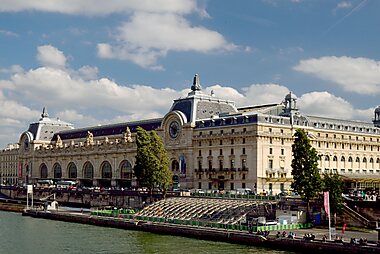
Orsay Museum fills a former railway station with Impressionist and Post-Impressionist masterpieces by Monet, Degas, and Van Gogh.
Arc de Triomphe honors France's war dead and offers one of the best panoramas in the city from its rooftop terrace, at the top of Champs Élysées.
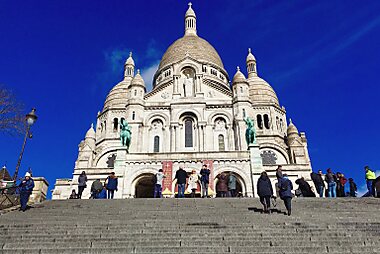
Sacré-Cœur Basilica sits atop Montmartre hill, the city's old artists' quarter. The white domes and the steep streets around them make for one of the best sunset views in Paris.
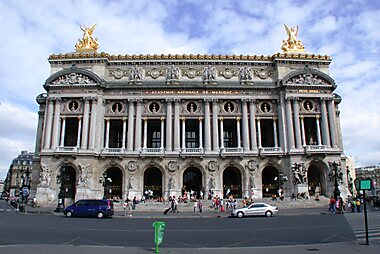
Opéra Garnier is Paris's opulent 19th-century opera house, with a marble grand staircase and a ceiling painted by Marc Chagall. Tours run most days when there's no performance.
Sainte-Chapelle is a small Gothic chapel with some of the most complete stained glass to survive from the Middle Ages.
Featured Lists


Historic Landmarks
Paris’s skyline is defined by centuries of architectural evolution, from the medieval Gothic spires of Notre-Dame and Sainte-Chapelle to the 19th-century wrought iron of the Eiffel Tower. This collection features monumental arches like the Arc de Triomphe, historic Seine crossings such as the Renaissance-era Pont Neuf and the ornate Beaux-Arts Alexandre III Bridge, and royal sites like the Conciergerie. It also highlights the city's vertical landmarks, including the 210-meter Montparnasse Tower and the lone Gothic remnant of Saint-Jacques Tower.
15 places


Historic Restaurants & Cafes
Paris’s dining scene is defined by its historic establishments, from the Belle Époque opulence of Le Train Bleu and Bouillon Chartier to the literary heritage of Les Deux Magots. This collection features iconic spots like the Moulin de la Galette, a former windmill immortalized by Renoir, and the Café des Deux Moulins, famous for its role in the film Amélie. Whether you are seeking the legendary hot chocolate at Angelina, world-renowned macarons at Ladurée Royale, or traditional soufflés, these venues offer a taste of the city’s rich cultural and culinary history.
10 places


Theatres and Cinema
Paris offers a diverse range of performance spaces, spanning from the 1st-century Roman ruins of the Arènes de Lutèce to the contemporary architecture of the Philharmonie de Paris. This collection features historic landmarks like the 19th-century Opéra Garnier, known for its Beaux-Arts design, and the Baron Haussmann-designed Théâtre de la Ville. Film enthusiasts can explore the Cinémathèque Française's cinema history museum or view screenings at the mirror-finished La Géode dome. The list also includes the multi-purpose Zénith arena and the Cité de la Musique, which houses an extensive collection of musical instruments.
11 places
Audio Guides – Paris
Explore on foot with a self-guided audio tour that narrates each stop as you reach it.


Hear Paris's audio tours
1 walk in Audio Guides by Tripomatic


What to experience
Paris offers plenty of things to do beyond its landmarks.
- Take a sunset boat trip on the Seine, when the bridges and riverside buildings light up.
- Browse the secondhand book stalls (bouquinistes) that line the riverbanks near Notre-Dame Cathedral and the Latin Quarter.
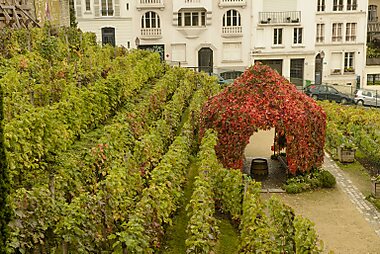
- Join the grape harvest festival at the Montmartre Vineyards each October, one of the last working vineyards inside a major city.
- Catch a free concert on June 21 during the Fête de la Musique, when bands and DJs perform across the city.
Tours & Activities
Paris — Map

 Open the interactive map
 Day trips
Paris sits within easy reach of royal palaces, wine country, and historic towns. Here are the best options for a day out and back.
- Versailles — ≈40 min by RER C. The former royal palace and its gardens are the single most popular day trip from Paris; arrive early or book a timed entry to beat the queues.
- Fontainebleau — ≈40 min by train. A former royal château set beside a large forest good for walking or climbing on sandstone boulders.
- Reims and Épernay (Champagne) — ≈45 min to 1.5 h by train. Tour a Champagne house and its cellars in the region that gives the drink its name.
- Giverny — ≈1 h by train plus a short bus or taxi ride. Claude Monet's house and water-lily garden inspired many of his best-known paintings.
- Chartres — ≈1 h 15 min by train. A medieval cathedral town famous for its stained glass, one more Gothic landmark within easy reach of Paris.
Getting there
- By air: Most international flights use Charles de Gaulle Airport (CDG), 25 km northeast of the center; the RER B train reaches the city in about 50 minutes for around 14 €. Orly Airport (ORY), 13 km south, handles mostly domestic and European flights, reached via the Orlyval shuttle plus RER B in about 30 minutes total. Some budget airlines fly into Beauvais Airport, over an hour away by coach.
- By train: High-speed TGV trains connect Paris to most major French cities, and Eurostar trains link it to London, Brussels, and Amsterdam. Book tickets via SNCF Connect. Paris has several main stations on different sides of the city, including Gare du Nord, Gare de Lyon, and Gare Montparnasse — check which one your ticket uses before you travel.
- By bus: Long-distance coaches, including international routes, arrive at the Bercy Seine coach station in the south east of the city.
Getting around
- Public transit: The Métro, RER, bus, and tram network covers the whole city and suburbs. Buy a reusable Navigo Easy card or single tickets through the app; contactless bank-card payment is being rolled out on buses but doesn't yet work at metro turnstiles. Île-de-France Mobilités covers journey planning and fares.
- Taxi / ride-hailing: Uber and G7 taxis both operate widely and are easy to book through their apps.
- On foot / cycling: The center is compact and flat, so walking between sights is easy. The Vélib' bike-share system and a growing network of bike lanes make cycling practical, though traffic on major boulevards can feel intense.
Driving
- Is a car worth it?: No. Traffic, one-way streets, and scarce parking make driving in central Paris more trouble than it's worth, and the metro and RER cover the city and its day trips well. A car only helps for exploring the wider countryside at your own pace.
- Parking: Street parking is metered and paid through apps like PayByPhone or Flowbird, or at the machines nearby; a car park close to your hotel is usually the easier choice.
- Restrictions: Paris has a low-emission zone (ZFE) that requires a Crit'Air sticker on any vehicle, including rentals, driven within the ring road (boulevard périphérique).
Food & drink
Paris food ranges from a quick bakery lunch to a multi-hour tasting menu, and both are worth trying.
Look for a fresh baguette and pastries from any neighborhood boulangerie, and try a proper French bistro for classics like steak-frites or duck confit. For something special, head to Le Marais, where Jewish delis, falafel counters, and trendy bistros sit side by side, or graze the stalls of Rue Mouffetard Market, one of the city's oldest market streets.
Safety & health
Paris is generally safe for tourists, and violent crime against visitors is rare. The main risks are petty theft and scams.
Watch for pickpockets on the metro, at major sights, and around Eiffel Tower and Sacré-Cœur Basilica, especially in dense crowds. Politely decline "petitions," friendship bracelets, or "found ring" approaches near tourist landmarks — they are set-ups for a scam or a demand for money. Keep bags zipped and in front of you on crowded trains.
History
Paris grew from a small settlement on the Île de la Cité, the island where Notre-Dame Cathedral now stands, over two thousand years ago. It became the seat of French kings by the Middle Ages.
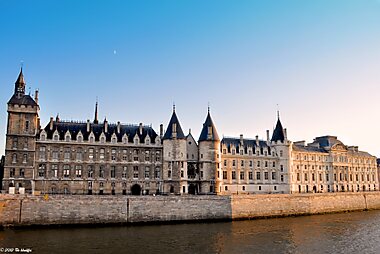
The French Revolution began here in 1789. Conciergerie held Queen Marie Antoinette and other prisoners before their executions nearby. In the 1850s and 1860s, Baron Haussmann demolished much of the medieval city to build the wide boulevards and uniform stone buildings that still define Paris today. Pantheon, built as a church, now serves as a mausoleum for the nation's most honored figures, including Marie Curie and Victor Hugo.
Country facts
Quick practical facts for France at a glance:
- Currency
- Euro EUR € · Card payments · Widely accepted
- Emergency numbers
- 112
- Electricity
- 230 V · 50 HzType C / Type E
- Languages
- French
- Tap water
- Safe to drink
- Driving side
- Right
- Calling code
- +33


Paris – Plan Your Days
Turn the places from this guide into a real itinerary, with smart routing, time estimates, and everything you need for a perfect trip.