


Reims
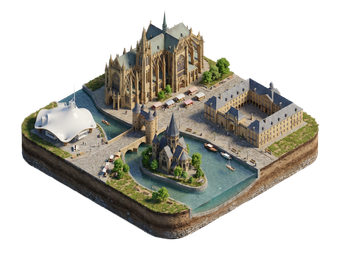
Reims is the largest city in the Champagne region, about 45 minutes from Paris by fast train. For centuries it was the city where French kings were crowned. UNESCO lists its cathedral, the former abbey of Saint-Remi and the Palais du Tau.
Today the city is also the home of many large champagne houses. Their cellars run through chalk under the streets. The city was badly damaged in the First World War and rebuilt in the 1920s, so the centre has many Art Deco buildings. Reims suits a short trip of one to three nights built around history, champagne and easy day trips.
Download this guide as a PDFPrintable tourist mapPublic holidays in France

Reims – Planning a Trip?
Build your day-by-day itinerary in the Tripomatic app.


When to visit
Late spring and early autumn are the best times. The days are mild and the sights are not crowded. Summer is warm and good for evening events. The cellars are cool all year, so champagne visits work in any season. Winter is cold and grey, but the Christmas market gives the city a festive mood.
The main event is the Fêtes Johanniques in June. The city celebrates Joan of Arc, who brought Charles VII here for his coronation in 1429. Check dates on the Reims Tourisme site.
Best time to visit: June, July, August, September
Top sights
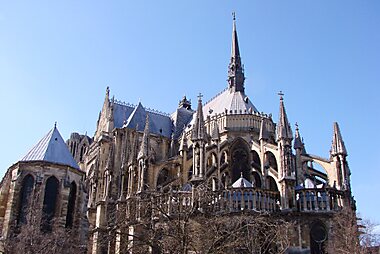
- Cathédrale Notre-Dame is the reason most people come. Work began in 1211 and the Gothic building became the church of royal coronations. Look for the Smiling Angel statue on the north portal and the windows by Marc Chagall at the east end. Entry to the church is free.
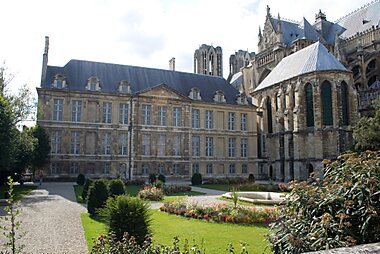
- Palais du Tau is the former archbishop's palace next to the cathedral. It is closed for renovation and is expected to reopen in 2027.
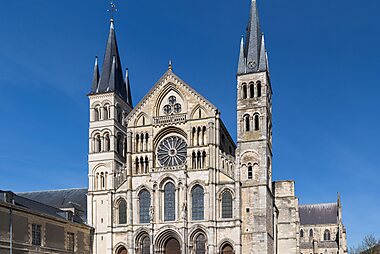
- Basilique Saint-Remi is a large Romanesque church from the 11th century. It stands over the tomb of Saint Remi, the bishop who baptised Clovis. It is calm and much quieter than the cathedral.
- Musée Saint-Remi is the museum in the old abbey buildings beside the basilica. It shows archaeology and local history.
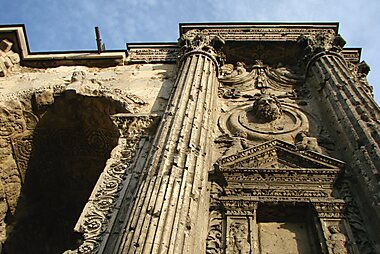
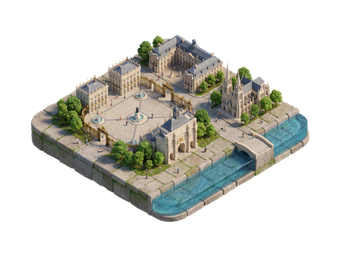
- Porte de Mars is a Roman triumphal arch from the early 3rd century. It is about 32 m wide and was one of four gates of the Roman town.
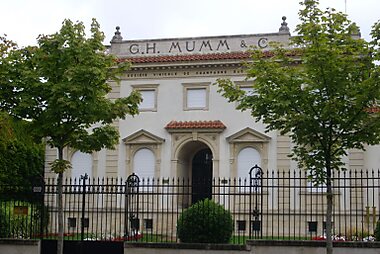
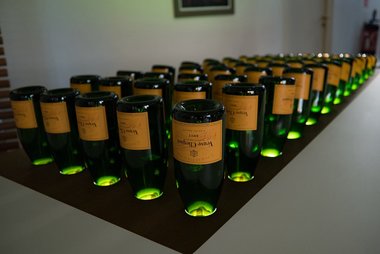
- Champagnes G.H. Mumm & Cie and Veuve Clicquot are two of the big champagne houses in the city. Visits include the cellars and a tasting. Book ahead, as tours often sell out.
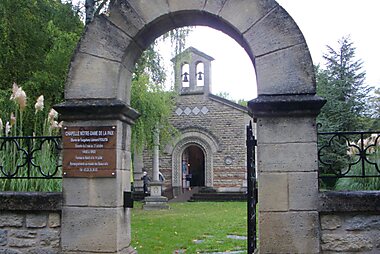
- Chapelle Notre-Dame-de-la-Paix is a small chapel from 1966. The Japanese-French painter Tsuguharu Foujita painted its walls and designed its windows.
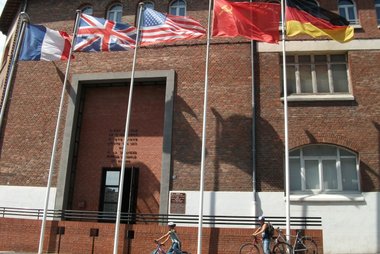
- Musée de la Reddition is in the school building where Germany signed its surrender on 7 May 1945. The map room is kept as it was.
- Halles du Boulingrin is a market hall from 1929 with a thin concrete vault. It is a good example of the city's Art Deco rebuilding.
- Bibliothèque Carnegie is a library from the 1920s. It is a public library with Art Deco decoration.
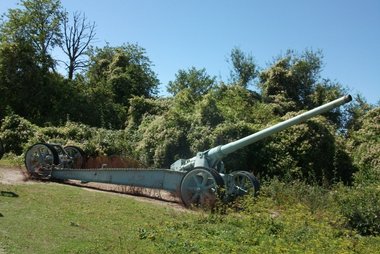
- Musée du Fort de la Pompelle is a First World War museum in a fort south-east of the city. It is best reached by car or taxi.
Featured Lists

Reims Must-Sees
Reims showcases a rich architectural timeline, from the 3rd-century Roman Porte de Mars and Cryptoportique to the 13th-century Gothic Maison des comtes de Champagne. The city’s identity is deeply tied to Champagne production, represented by the vast cellars of Maison Mumm and the historic Ancien Cellier d'expédition. Other notable landmarks include the Art Deco-style Halles du Boulingrin market, the Neoclassical Place Royale, and the 20th-century Foujita Chapel, which features frescoes by artist Tsuguharu Foujita.
15 places

Reims Religious Heritage
This collection highlights the diverse architectural and spiritual heritage of Reims beyond its central cathedral. It includes the mid-20th-century Foujita Chapel, renowned for its frescoes by Japanese-French artist Tsuguharu Foujita, and the neo-Gothic Église Saint-Thomas, which houses the tomb of Cardinal Gousset. The list also features the Protestant Church of Reims, rebuilt in the 1920s following wartime destruction, and the historic Chapelle Sainte-Croix, illustrating the city's religious evolution from the 17th century to the modern era.
5 placesWhat to experience
- Fêtes Johanniques: This June festival honours Joan of Arc and the 1429 coronation of Charles VII.
- Summer light event: In summer the city hosts an evening light event called Luminiscence.
- Summer music: The Flâneries Musicales d'Été festival is a summer series of concerts.
- Art Deco walk: Guided walks show how the city was rebuilt in the 1920s after the war.
- Harvest day: At harvest time some champagne producers offer a day as a grape picker.
- Christmas market: The market is held in the weeks before Christmas.
Tours & Activities
Reims — Map

 Open the interactive map
Day trips
Reims is a good base for day trips in Champagne and beyond. Trains are the easiest option for the first two.
- Épernay is the second champagne capital, about 35 minutes by train. Its main street is lined with large champagne houses. From there, Hautvillers is a short drive or taxi ride. It is the village where the monk Dom Pérignon worked.
- Châlons-en-Champagne is a calm town of canals and timber houses, about 30 to 40 minutes by train.
- Laon is a medieval hilltop town with a Gothic cathedral, about 45 minutes by car.
- Verdun is the site of the great First World War battle. It is about 1.5 hours by car and best for a full day.
- Paris is about 45 minutes by fast train. It works for a long day, but a night there is better.
Where to explore
More places in and near Champagne:
- Épernay and Châlons-en-Champagne are the nearest towns.
- Troyes is a historic town to the south.
- Verdun is to the east.
- Metz, Nancy and Strasbourg are larger cities further east.
- Paris is the capital, west of Reims.
Getting there
- By air: The practical gateway is Paris Charles de Gaulle (CDG), about 30 minutes from Reims by fast train. The fast trains leave from Champagne-Ardenne TGV station.
- By train: Fast trains from Paris take about 45 minutes. They also link Reims with Strasbourg, Metz and Nancy. There are two stations. Reims-Centre is in the town centre. Champagne-Ardenne TGV is in Bezannes, about 5 km out, with a tram into town. Book on SNCF Connect.
- By regional train: TER trains run to Épernay and other towns in the region.
- By car: The A4 and A26 motorways serve the city.
Getting around
- On foot: The cathedral, the old centre and the main shopping streets are close together. The basilica is about 20 minutes away on foot.
- Tram and bus: A tram line links the centre with Champagne-Ardenne TGV station. Buses cover the rest. Tickets are sold at tram stop machines and on buses. Timetables and fares are on the Grand Reims Mobilités site. The Reims Epernay Pass includes public transport.
- Bikes: Self-service Zebullo bikes can be taken at the park-and-ride sites. Many TER trains accept bikes.
Driving
- Is a car worth it?: Not for the city. Everything central is walkable or on the tram. A car helps for the vineyards and villages around Épernay and the Montagne de Reims.
- Parking: Six central car parks hold about 2,800 spaces. Three park-and-ride sites at the city edge link to the tram and buses.
- Restrictions: Reims has a low-emission zone. Check the Crit'Air sticker rules before you drive in.
Food & drink
Champagne is the obvious choice here. Most big houses offer cellar tours and tastings. Book ahead and bring a light jacket, as the cellars are cool. If you drive to vineyards, plan a driver.
Local foods to try include the pink biscuits of Reims, Reims ham in pastry and Reims mustard. Good areas for restaurants are Place Drouet d'Erlon and Place du Forum. For local produce, visit the market at the Halles du Boulingrin, which runs on several days each week.
Safety & health
Reims is generally safe for visitors. Pickpockets work in crowded places such as the cathedral square, the station and the busy shopping streets. Keep bags closed and do not leave items in parked cars. After dark, stay on main streets near the station.
History
Reims began as a Gallo-Roman town and became the capital of the Remi tribe. The Porte de Mars is a remaining Roman gate.
Around 496 the bishop Remi baptised Clovis, king of the Franks. This event made Reims the city of French coronations. Kings were crowned in Cathédrale Notre-Dame from the 11th century to 1825. Basilique Saint-Remi grew up around Remi's tomb. In 1429 Joan of Arc led Charles VII here for his coronation.
In September 1914 German shells set the cathedral roof on fire. The city was badly damaged and was rebuilt in the 1920s, often in Art Deco style. The cathedral reopened in 1938. On 7 May 1945 Germany signed its surrender in the city, now remembered at the Musée de la Reddition.
Country facts
Quick practical facts for France at a glance:
- Currency
- Euro EUR € · Card payments · Widely accepted
- Emergency numbers
- 112
- Electricity
- 230 V · 50 HzType C / Type E
- Languages
- French
- Tap water
- Safe to drink
- Driving side
- Right
- Calling code
- +33


Reims – Plan Your Days
Turn the places from this guide into a real itinerary, with smart routing, time estimates, and everything you need for a perfect trip.


Related destinations




Data: © OpenStreetMap contributors, Wikidata, Wikipedia, Tripomatic, Official websites. Tours by GetYourGuide. We earn commission from bookings. Travel guide generated with AI.
Plan your trip with Tripomatic
- AI-Powered PlanningGet a ready-made day in one tap, let AI spread your shortlist across your trip, or plan everything by chatting.
- Travel AlertsOfficial advisories, severe weather, strikes, and natural hazards for the places on each day of your trip.
- Public Holidays & EventsSee holidays, festivals, and closures on the days of your trip, and what they mean for your plans.
- Cost EstimationAI-powered trip cost breakdowns so you know what to budget before you go.
- Tours & TicketsBook tours, skip-the-line tickets, and activities directly in your plan.