



Philippines
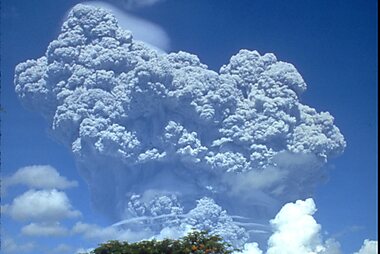
The Philippines is a nation of more than 7,000 islands in Southeast Asia, grouped into three main regions: Luzon in the north, the Visayas in the middle, and Mindanao in the south. Centuries of Spanish and American rule left cathedrals, city walls, and widespread English fluency behind, layered onto older Malay, Chinese, and indigenous cultures. The result is a country that feels familiar to Western visitors in some ways and unmistakably its own in others, with white-sand beaches, active volcanoes, coral reefs, and terraced mountains all within a single trip.
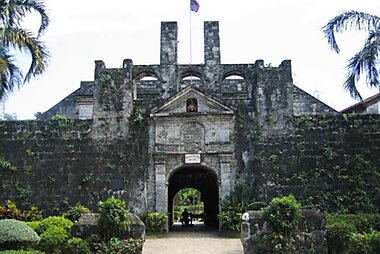
Divers and beach travelers gravitate to Palawan, Boracay, and Siargao. History and city travelers focus on Manila and Cebu, where colonial-era churches and forts stand next to modern skylines. Hikers head for the mountain province around Banaue and Sagada. The country is an archipelago, so moving between regions usually means a domestic flight or a ferry. A trip works best focused on one or two areas rather than the whole country at once. In 1521, the chieftain Lapu-Lapu defeated the Portuguese explorer Ferdinand Magellan at the Battle of Mactan, an early resistance to European colonization still celebrated today.






Philippines – Planning a Trip?
Build your day-by-day itinerary in the Tripomatic app.


Money & payments
Cards and contactless payment work in malls, hotel chains, and city restaurants, but many everyday places — tricycles, jeepneys, wet markets, and small eateries — are cash only, especially on smaller islands. ATMs are common in cities and larger towns but can be scarce or unreliable on remote islands, so withdraw enough cash before heading to Siargao, El Nido, Coron, or similar spots. A budget traveler can get by on local eateries and public transport; a mid-range traveler pays more for air-conditioned transport, dive trips, and beach resorts.
Featured Lists


Tours & Activities
Philippines — Map

Tipping
10% if not already added as a service charge
PHP 20–50 per bag/stay for porters and housekeeping
round up the fare
PHP 200–500 per day
Restaurants in cities often add a 10% service charge to the bill; if it's already included, a further tip is a bonus rather than an expectation. Where no service charge appears, rounding up or leaving 10% is appreciated. Hotel porters and housekeeping welcome a small tip per bag or per stay. Tour guides and boat crews on island-hopping trips are usually tipped directly, since it forms a real part of their income.
Electricity
The Philippines mostly uses American-style flat two- and three-pin sockets (Type A and B) alongside European Type C. Power runs at 220 V, not the 120 V used in North America. Check that your charger is rated for 100–240 V — a plug-shape adapter alone won't help a 120 V-only appliance.
Language
English is an official language and is widely spoken and understood almost everywhere, from Manila to remote islands — road signs, menus, and official documents are usually in English. Filipino, based on Tagalog, is the national language, and many Filipinos also speak a regional language such as Cebuano, Ilocano, or Hiligaynon at home. Learning a few Filipino phrases is appreciated but rarely necessary to get by.
Staying connected
Prepaid SIM cards from Globe or Smart are cheap and sold at airports, malls, and convenience stores. Registering a SIM card requires a valid ID, so bring your passport when buying one. Both networks work well in cities and larger towns, but coverage can drop on small islands and in mountain areas — do not count on a signal everywhere on a Palawan or Mindanao trip.
Safety & emergencies
The Philippines is generally safe for tourists in the main destinations — Manila, Cebu, Boracay, Palawan, and similar areas — though petty theft and pickpocketing happen in crowded markets, bus terminals, and tourist zones. Use metered taxis or ride-hailing apps rather than unmetered ones, and agree on a fare with tricycle or pedicab drivers before getting in. Some remote parts of Mindanao carry heightened travel advisories because of local conflict; check your government's current travel advice before planning a trip there. The country sits on the Pacific Ring of Fire and in the typhoon belt, so earthquakes and tropical storms are a real, if infrequent, risk. Follow local authorities' guidance if one is forecast during your stay.
Health
Tap water is not safe to drink in most of the country; stick to bottled or filtered water, which is sold everywhere. Pharmacies such as Mercury Drug and Watsons are common in cities and larger towns and can handle most routine needs without a prescription. Dengue fever is present year-round and worse in the rainy season, so use mosquito repellent and cover up in the evenings. Talk to a travel clinic before your trip about routine vaccinations and whether hepatitis A or typhoid protection makes sense for your itinerary.
Visas & entry
Citizens of many countries — including the United States, Canada, the EU, the UK, and Australia — can enter visa-free for up to 30 days with a passport valid for at least six months and proof of onward travel. Longer stays are possible with a visa extension arranged locally through the Bureau of Immigration. Travelers who need a visa in advance can usually apply at a Philippine embassy or consulate before departure.
Visa and entry requirements change frequently. Verify current requirements with the official immigration authority or your country's embassy before travel.
Etiquette
Filipinos are famously warm and hospitable, and visitors are often welcomed into conversations and even homes. Dress modestly when visiting churches — cover shoulders and knees. Remove your shoes before entering someone's home if asked. Losing your temper or raising your voice in public embarrasses everyone involved, even during a genuine disagreement, so staying calm gets better results. Bargaining is expected in markets and with tricycle or boat fares, but not in malls or restaurants with posted prices. Ask before photographing people, especially in indigenous communities such as the Ifugao rice-terrace villages, where a small fee for photos is common and appreciated.
Holidays & opening hours
Public holidays are frequent, and several fall around Catholic feast days. Holy Week (Maundy Thursday and Good Friday) brings widespread closures of banks, offices, and many shops. It is also the country's biggest domestic travel week, so transport and accommodation get booked out well in advance. Malls are the default gathering spot and stay open seven days a week, typically from mid-morning to late evening; smaller shops and markets may close on Sundays instead.
Getting around
- By air: Domestic flights are the practical way to cover long distances between islands. Budget carriers connect Manila with Cebu City, Davao City, Puerto Princesa, and most other regional hubs, and are often cheaper and much faster than a ferry.
- By ferry and boat: Inter-island ferries connect nearby island groups, and small outrigger boats (bangkas) handle short island-hopping trips around places like El Nido and Coron Island.
- By bus: Long-distance buses connect cities on the same island, with ordinary, air-conditioned, and overnight sleeper options — useful for trips such as Manila to Baguio City or Vigan.
- Within cities: Jeepneys and tricycles are the cheapest way to get around and cover routes buses don't reach. Ride-hailing apps work well in Manila, Cebu, and other major cities, but coverage thins out fast in smaller towns.
Driving
- Getting around by car: Self-driving makes most sense on a single island with a planned itinerary — many travelers instead hire a car with a driver, which is affordable and avoids Metro Manila's notoriously heavy traffic.
- Key rules: A valid home license is enough for a short visit, but an International Driving Permit is a good idea if your license isn't in English, and some rental companies ask for one regardless. Metro Manila and some other cities restrict certain vehicles from driving on specific days based on the last digit of the license plate — check before renting if you'll be based there for several days.
- Tolls: RFID toll tags are required on the main expressways around Manila and Luzon; rental companies usually fit one, or you can buy one at a toll plaza.
- Parking: Malls and hotels have paid parking; street parking is common but limited in city centers.
- Fuel: Stations are staffed, not self-service — an attendant fills the tank for you, and both cash and card are accepted.
Food & drink
Rice is the base of nearly every Filipino meal, and breakfast is often as savory as lunch — a typical silog plate pairs fried rice and egg with a cured meat such as tapa, tocino, or garlic longganisa. Adobo, meat braised in vinegar, soy sauce, and garlic, is the closest thing to a national dish, alongside sinigang, a sour tamarind-based soup, and lechon, a whole roasted pig traditionally served at celebrations. Every region has its own specialties, from the spicy, coconut-milk-based Bicol Express in the south of Luzon to the empanadas of Ilocos.
Street food is everywhere: grilled skewers, fish balls, and kwek-kwek (battered, deep-fried quail eggs) are common snacks, and balut, a fertilized duck egg boiled and eaten from the shell, is a well-known local delicacy worth trying if you're adventurous. For dessert, halo-halo layers shaved ice, evaporated milk, and sweet ingredients like ube and leche flan; turon, a fried banana spring roll, is a simpler everyday treat.
San Miguel is the everyday beer, and fresh coconut water and calamansi juice are common non-alcoholic options. Cheap, filling meals are found at a karinderya or turo-turo eatery, where you point to your choice from trays of pre-cooked dishes; malls also have large food courts with specialties from across the country.
Where to explore
Manila, the capital, blends colonial-era Intramuros with modern skyscrapers and is most travelers' entry point to the country. Cebu City in the Visayas is the country's second major hub, close to island-hopping and whale-shark watching in the south. Davao City anchors Mindanao and is the gateway to Mount Apo, the country's highest peak, while Zamboanga City and Iloilo City are quieter regional cities worth a stop for their own colonial architecture and food.
For beaches and diving, Boracay remains the best known, with El Nido and Coron Island in Palawan offering dramatic limestone cliffs and lagoons, Puerto Princesa the gateway to Palawan's underground river, and Siargao drawing surfers to the country's east coast. Bohol, reached through Tagbilaran, is famous for the Chocolate Hills.
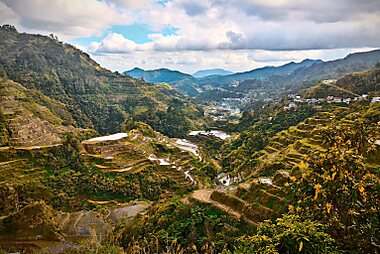
History and mountain travelers head north: Vigan preserves an entire Spanish colonial townscape, Banaue is the base for the centuries-old rice terraces of the Cordillera mountains, and Baguio City offers a cool mountain-city break from the tropical heat. Legazpi City in the Bicol region sits in view of the near-perfect cone of Mayon Volcano.
Philippines – Plan Your Trip
Pick the places you want to see and Tripomatic turns them into a day-by-day route, with smart routing, time estimates, and everything you need for a perfect trip.




