

Plzeň
Plzeň is the fourth-largest city in the Czech Republic and the main city of western Bohemia. Most people know it for beer. This is where pale lager, known as pilsner, was first brewed in 1842, and the original brewery still sits at the edge of the old center as the city's biggest draw.
There is more here than beer. Plzeň has a large central square, a tall Gothic cathedral, and one of the largest synagogues in Europe. The city was European Capital of Culture in 2015 and keeps a good range of museums and events. It suits a relaxed one- or two-night stay, and works well as a base for the castles, forests, and spa towns of western Bohemia.

Plzeň – Planning a Trip?
Build your day-by-day itinerary in the Tripomatic app.
When to visit
Late spring to early autumn is the best time to visit, with warm days and long light evenings. Summer is the warmest but rarely uncomfortable, while winter is cold and grey, though the Christmas market on the main square is a draw in December. The city's signature event is the Liberation Festival (Slavnosti svobody) in early May, which marks the freeing of Plzeň by the US Army in 1945 with a parade of historic military vehicles and visiting veterans. Beer lovers may instead time a trip for Pilsner Fest, held at the brewery in early autumn.
Best time to visit: August, September
Top sights
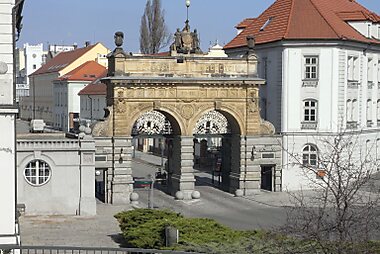
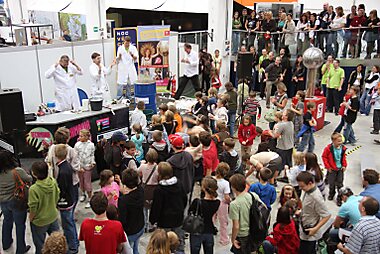


Pilsen Brewery is the reason many people come to Plzeň. It is the home of Pilsner Urquell, the first pale lager, and the guided tour ends with a taste of unfiltered beer drawn straight from the cellars.
Next door, the Brewery Museum traces the city's brewing history inside a late-Gothic malt house and makes an easy add-on to a brewery visit.
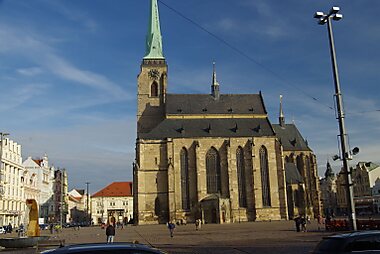
On the main square stands the Cathedral of St. Bartholomew in Pilsen, a Gothic church whose tower is the tallest in the country. You can climb it for a wide view over the rooftops.
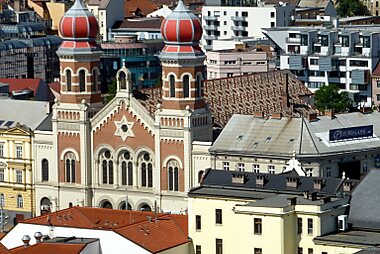
A few streets away, the Great Synagogue (Plzeň) is one of the largest synagogues in Europe, with a striking mix of Moorish and neo-Renaissance design. It hosts concerts and exhibitions.
Families should make time for Techmania Science Center, a hands-on science museum with a planetarium set in a former Škoda factory hall.
Plzeň is also a center of Czech puppetry, and the Muzeum loutek tells that story through the well-known characters Spejbl and Hurvínek.
Featured Lists


Hidden Cultural Gems
Explore a diverse collection of sites around Plzeň including memorials commemorating significant historical figures and events, medieval castle ruins offering a glimpse into regional fortifications, serene shrines, and vibrant art galleries showcasing local creativity. Observation towers and viewpoints provide panoramic views of the surrounding landscape, enriching your understanding of the area's cultural and natural heritage.
14 places
Audio Guides – Plzeň
Explore on foot with a self-guided audio tour that narrates each stop as you reach it.


Hear Plzeň's audio tours
1 walk in Audio Guides by Tripomatic


What to experience
Beyond the main sights, a few things are worth doing in Plzeň:
- Go underground. A guided walk through the Plzeň Historical Underground leads through medieval cellars and tunnels dug beneath the old town, once used to store beer and food.
- See a puppet show. Puppetry is a local tradition, and an evening marionette performance is a fun, very Czech night out.
- Soak in a beer spa. Several spas in the city let you bathe in warm water with hops and malt, usually with a glass of beer to hand.
- Time your visit for the Liberation Festival in early May or the Christmas market in December, when the main square fills with stalls and events.
Tours & Activities
Plzeň — Map

 Open the interactive map
 Day trips
Plzeň sits within easy reach of castles, spa towns, and the Šumava forest. Good options for a day out:
- Starý Plzenec — about 15 minutes south, with the Romanesque Rotunda of St. Peter and the Radyně castle ruin on a hill above.
- Kozel Chateau — a neoclassical hunting lodge roughly 20 minutes south by car, with elegant interiors and parkland; ideal for a half day.
- Klatovy — about 45 minutes by train, known for its baroque tower, catacombs, and a historic pharmacy.
- Mariánské Lázně — roughly an hour by train, one of Bohemia's grand spa towns, with colonnades and a singing fountain.
- Karlovy Vary — about 1.5 hours by bus or car, the best-known Czech spa town, famous for its hot springs.
Prague is only about an hour and a half away by train and works as a day trip, though it deserves longer.
Getting there
- By air: Plzeň has no passenger airport. The nearest is Prague's Václav Havel Airport, about 90 km away. From there you can reach Plzeň by direct coach, or transfer into Prague and continue by train (about 1.5 hours in total).
- By train: Frequent direct trains link Plzeň with Prague in about 1.5 hours. The city is also on the international line between Prague and Munich and has connections to České Budějovice and Cheb. Book through Czech Railways.
- By bus: Coaches from Prague take just over an hour and run frequently, with direct links to Munich and other regional cities.
Getting around
- Public transit: Plzeň has a wide network of trams, trolleybuses, and buses run by PMDP. The easiest way to pay is to tap a contactless bank card or phone on the reader when you board. See Plzeň public transport (PMDP).
- On foot: The historic center is small and flat, and you can walk between the main sights in a few minutes.
- Cycling: There are cycle paths along the rivers, but the city is not especially geared toward casual cycling.
Driving
- Is a car worth it? Not for the city itself, which is walkable and well served by public transport. A car helps only if you plan to explore the wider region, such as the castles and the Šumava forest.
- Parking: The center has paid zones and several car parks, and park-and-ride sites on the edge of town let you leave the car and take a tram in.
- Restrictions: The area around the main square is a pedestrian zone and closed to normal traffic.
Food & drink
Plzeň is the birthplace of pilsner, so beer is part of almost every meal here. The one place to try is Na Spilce, the brewery's own pub inside the Pilsen Brewery grounds, which pours unpasteurized tank beer and serves Czech classics in a large hall.
For more choice, head to the streets around the main square, náměstí Republiky, where restaurants, cafés, and beer halls cluster within a short walk. Expect hearty Czech cooking: roast pork with dumplings, goulash, and svíčková.
Safety & health
Plzeň is a safe city, and serious crime against visitors is rare. Normal caution is enough — watch your belongings in crowds, at the main train station, and around busy festivals. There are no areas a tourist needs to avoid.
History
Plzeň was founded in 1295 by King Wenceslas II as a royal town, laid out around the large rectangular square you still see today. Its position on trade routes made it wealthy, and the brewing rights held by its citizens set the stage for what came later.
The turning point was 1842. Unhappy with poor-quality beer, local brewers built a new brewery and hired a Bavarian brewer, Josef Groll, who produced the first clear, golden lager. That beer, Pilsner Urquell, gave its name to the pilsner style now brewed worldwide, and you can trace the story at the Pilsen Brewery and the Brewery Museum.
In the 19th century Plzeň also became an industrial center, home to the Škoda engineering works. In May 1945, at the end of the Second World War, the city was liberated by the US Army under General George Patton — one of the few parts of the country freed from the west. The Liberation Festival still marks it each spring.
Country facts
Here are the practical basics for traveling in the Czech Republic:
- Currency
- Czech Koruna CZK Kč · Card payments · Commonly accepted
- Emergency numbers
- 112
- Electricity
- 230 V · 50 HzType C / Type E
- Languages
- Czech
- Tap water
- Safe to drink
- Driving side
- Right
- Calling code
- +420


Plzeň – Plan Your Days
Turn the places from this guide into a real itinerary, with smart routing, time estimates, and everything you need for a perfect trip.