


Santiago de Compostela
Santiago de Compostela is the end point of the Camino de Santiago, the pilgrim routes to the tomb attributed to Saint James. Pilgrims have walked here for about 1,000 years. Nearly 500,000 arrived in 2024. The old town is a UNESCO World Heritage Site and is built around the cathedral.
The city suits a short, slow trip on foot. The poet Rosalía de Castro, a key figure of Galician literature, was born here. Outside summer, expect rain and bring a jacket.

Santiago de Compostela – Planning a Trip?
Build your day-by-day itinerary in the Tripomatic app.


When to visit
June to September is the driest and warmest period and the best time for walking. Autumn and winter are wet and grey, and the days are short. Spring is mild but often rainy.
A major event is the festival of the Apostle in the second half of July. The fireworks on the night of 24 July are the highlight. 25 July is Galicia Day. The next Holy Year is 2027. The city gets many more pilgrims then.
Best time to visit: June, July, August, September
Top sights
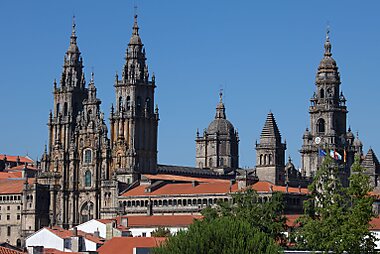
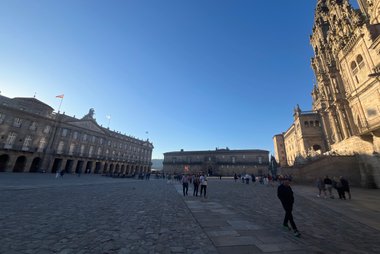
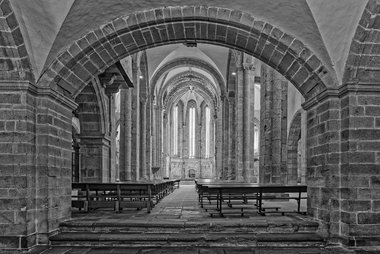



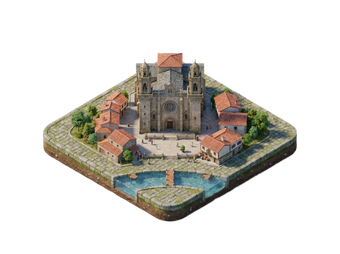
- Cathedral of Santiago de Compostela is the reason for the city. Building began in 1075 and the church was consecrated in 1211. The Baroque Obradoiro facade, finished in 1740, and the carved Portico of Glory by Master Mateo, finished in 1188, are the main things to see.
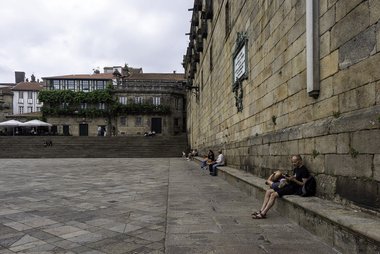
- Praza do Obradoiro is the square in front of the cathedral. Pilgrims gather here at the end of their walk.
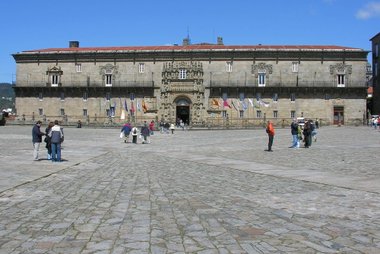
- Parador Hostal dos Reis Católicos was built as a hospital for pilgrims after the Catholic Monarchs visited in 1486. Construction began in 1501. It has been a hotel since 1954.
- Pazo de Raxoi is the town hall of Santiago, beside the Obradoiro square.
- Mosteiro e Igrexa de San Martiño Piñario e Seminario Maior is a monastery and church close to the cathedral.
- Museum of Pilgrimage and Santiago is a museum about the pilgrimage and the city.
- Igrexa de San Domingos de Bonaval belongs to the former convent of San Domingos de Bonaval. The convent holds the Pantheon of Illustrious Galicians, where Rosalía de Castro is buried.
- City of Culture Galicia sits on Monte Gaiás outside the centre. The architect was Peter Eisenman, chosen in a competition in 1999. It holds the library and archive and a museum with temporary exhibitions.
Featured Lists


Scenic Views and Parks
This collection features the most prominent natural and urban vantage points in Santiago de Compostela. Highlights include Monte do Pedroso, the city's highest peak, and the historic Parque de San Domingos de Bonaval, designed by architect Álvaro Siza on the grounds of a former convent. Several viewpoints, such as those at Monte de Deus and Fontiñas, provide varied perspectives of the Cathedral's Baroque towers, while the Miradoiro á Catedral marks a traditional milestone for pilgrims approaching on the Camino de Santiago.
10 placesWhat to experience
- Watch pilgrims arrive: Walkers finish on Praza do Obradoiro. Many stop, sit on the stones and look up at the cathedral. You do not have to walk the Camino to share the moment.
- See the Botafumeiro: The giant incense burner weighs 80 kg and swings through the cathedral at certain religious holidays and at every Pilgrims' Mass in Holy Years. It is not used at every Mass, so check the cathedral schedule.
- Walk the last 100 km: The pilgrim certificate, the Compostela, requires 100 km on foot or on horseback, or 200 km by bicycle. Carry a stamped pilgrim passport to collect it.
- Fireworks night on 24 July: A fireworks show on Obradoiro Square is the central event of the Apostle festival. Arrive early for a good spot.
Tours & Activities
Santiago de Compostela — Map

 Open the interactive map
Day trips
Galicia is small and trains are quick, so several towns work as a half-day or full-day trip. Journey times vary with the service.
- Padrón (a short trip by train or bus): Padrón is a famous stop on the Portuguese Way. A stone in the parish church is said to be where the boat of Saint James was moored. The town is known for its small fried green peppers and has a museum about Rosalía de Castro.
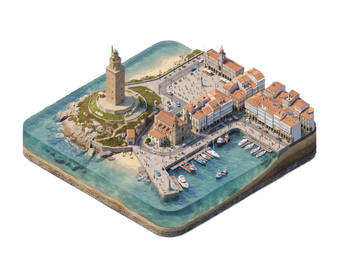
- A Coruña (by train): A larger city on the Atlantic coast and the capital of its province.
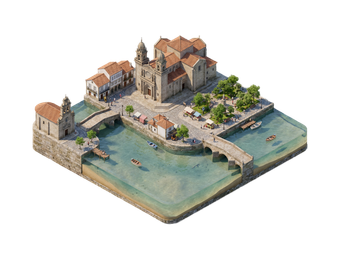
- Pontevedra (by train): The old town is mostly closed to cars. The Baroque church of the Pilgrim Virgin has a scallop-shaped floor plan.
- Vigo (by train): A larger city on the coast to the south.
- Cape Finisterre and the Costa da Morte: Pilgrims often continue to Fisterra, 98 km away. The lighthouse stands at the tip of the cape. Muxía has a sanctuary by the sea, the Virxe da Barca. Public transport is slow and infrequent, so a car or a tour is easier.
Where to explore
Getting there
- By air: Santiago-Rosalía de Castro airport (SCQ) is about 12 km east of the centre. It has domestic and international flights. Bus line 6A runs between the airport and the centre. You pay the driver. A taxi is the quicker option.
- By train: Santiago de Compostela-Daniel Castelao station is run by Renfe. Madrid takes about 3 hours. Regional trains also run to A Coruña, Pontevedra and Vigo. Porto takes under 5 hours with a change in Vigo. Book on Renfe.
Getting around
- On foot: The old town and most sights are within a short walk of the cathedral.
- By bike: Cycling is not practical in the old town.
- City bus: Pay the driver on board. Airport line 6A is run by Tussa.
Food & drink
The local sweet is the Tarta de Santiago, an almond cake dusted with sugar in the shape of the cross of Saint James. It has EU protected status and is baked in Galicia.
Safety & health
Petty theft is the main risk for visitors. Thieves use distraction and often work in teams, especially in crowded places. Keep valuables in more than one pocket. The emergency number is 112.
History
Between 818 and 842, Bishop Theodemar of Iria said he had found the remains of Saint James. A shrine grew, and then a town and a pilgrim route. In 997 the ruler Almanzor attacked and partly destroyed Compostela.
Work on today's cathedral began in 1075. In the 12th century the city became an archbishopric under Diego Gelmírez. The Obradoiro facade of Cathedral of Santiago de Compostela is a Baroque addition from 1740.
The Catholic Monarchs founded the pilgrim hospital that is now Parador Hostal dos Reis Católicos. The old town was inscribed on the UNESCO list in 1985.
Country facts
Quick practical facts for Spain at a glance:
- Currency
- Euro EUR € · Card payments · Widely accepted
- Emergency numbers
- 112
- Electricity
- 230 V · 50 HzType C / Type F
- Languages
- Spanish
- Tap water
- Safe to drink
- Driving side
- Right
- Calling code
- +34


Santiago de Compostela – Plan Your Days
Turn the places from this guide into a real itinerary, with smart routing, time estimates, and everything you need for a perfect trip.


Related destinations

Data: © OpenStreetMap contributors, Wikidata, Wikipedia, Tripomatic, Official websites, geoBoundaries (CC BY 4.0). Tours by GetYourGuide. We earn commission from bookings. Travel guide generated with AI.