



Sarajevo
Sarajevo sits in a narrow valley where the Miljacka river cuts between forested hills, and centuries of layered history are visible on almost every street. Ottoman mosques, an Austro-Hungarian cathedral, and a synagogue stand within a few minutes' walk of each other, a legacy of centuries under Ottoman and then Austro-Hungarian rule. The spot where the assassination of Archduke Franz Ferdinand in 1914 set off the First World War is still marked on Latin Bridge.
The city hosted the 1984 Winter Olympics, and less than a decade later endured the longest siege of a capital city in modern history. Sarajevo today is rebuilt and welcoming, proud of its long past rather than defined only by its hardest years.
This is a city best suited to a few unhurried days on foot. The pedestrian old town, Baščaršija, holds most of the historic sights within easy walking distance, and the surrounding hills offer quick escapes for hiking or, in winter, skiing at former Olympic venues. Sarajevo works well both as a standalone city break and as a base for day trips into the rest of Bosnia and Herzegovina.

Sarajevo – Planning a Trip?
Build your day-by-day itinerary in the Tripomatic app.


When to visit
Spring and autumn are mild and the easiest seasons for walking around the city. Summer in the valley gets hot, with afternoon storms common in July. Winter is cold and snowy, which is when Sarajevo's nearby ski slopes come alive.
The Sarajevo Film Festival, held every August, is the city's biggest annual event and one of the largest film festivals in southeastern Europe. It fills Baščaršija's cafés with visitors from across the region, so book accommodation early if traveling then.
Best time to visit: May, June, September
Top sights


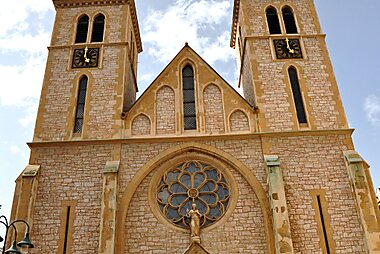
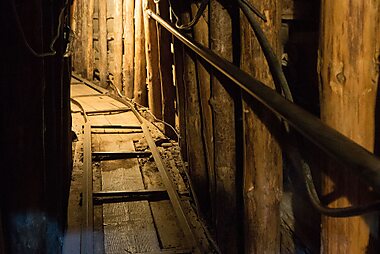
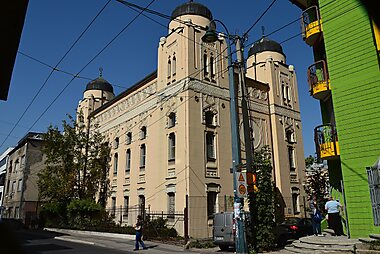
Most of Sarajevo's best-known sights cluster in and around Baščaršija, the old Ottoman-era bazaar quarter, all within a short walk of each other.
Sebilj Fountain is the wooden fountain at the heart of Baščaršija's main square, said to bring good luck, and a return trip, to anyone who drinks from it.
Gazi Husrev-beg Mosque, built in the 16th century, is the largest historic mosque in the country and still the main mosque for the city's Muslim community.
A short walk away, Sacred Heart Cathedral is the largest Catholic cathedral in Bosnia and Herzegovina, standing only minutes from the mosque and from Ashkenazi Synagogue, the city's last working synagogue and a reminder of how many faiths have shared this small stretch of streets.
Vijećnica (City Hall), the ornate former city hall on the river bank, was built under Austro-Hungarian rule, gutted by shelling in 1992, and reopened in 2014 as a library and exhibition space.
On the river's edge, Latin Bridge is where the assassination of Archduke Franz Ferdinand in 1914 set off the chain of events leading to the First World War.
War Childhood Museum tells the story of the 1990s siege through the belongings and testimonies of children who lived through it; it won the Council of Europe Museum Prize in 2018.
Tunnel of Salvation preserves a section of the hand-dug tunnel that was Sarajevo's only lifeline for supplies and people during the siege; it sits a short drive from the center, near the airport.
Featured Lists

Sarajevo Essentials
Sarajevo's landscape reflects centuries of shifting empires, where 16th-century Ottoman bazaars and mosques neighbor Austro-Hungarian neo-Renaissance architecture. This selection covers the city's historical layers, from the Latin Bridge where Archduke Franz Ferdinand was assassinated to the Tunnel of Salvation used during the 1992–1995 siege. Religious diversity is highlighted by the proximity of the Sacred Heart Cathedral, Gazi Husrev-beg Mosque, and the Ashkenazi Synagogue, while the abandoned Olympic bobsleigh track on Mount Trebević offers a glimpse into the 1984 Winter Games.
14 places

Scenic Views & Parks
Sarajevo’s geography, nestled in a narrow valley, is best appreciated from its surrounding heights. This selection includes the historic Vratnik fortifications, such as the White and Yellow Fortresses, which once formed the city's defensive walls. Higher up on Mount Trebević, Sunnyland and Vidikovac offer expansive views reached via the cable car. In the city center, sites like Veliki Park and At Mejdan provide green space housing archaeological ruins and memorials to the city's complex history.
11 places
Museums & Theatres
Sarajevo's cultural landscape spans from Ottoman-era architecture to poignant memorials of the 1990s conflict. Highlights include the National Museum, home to the 14th-century Sarajevo Haggadah, and the Museum of Sarajevo 1878–1918, located at the site of the assassination that sparked WWI. Performing arts are centered at the historic National Theatre and Kamerni Teatar 55. Specialized exhibits like the War Childhood Museum and Gallery 11/07/95 offer deep insights into the city's resilient history and the Srebrenica genocide.
15 places

Nature & Viewpoints
Sarajevo’s landscape is defined by its surrounding mountains and historic defensive structures. This collection includes the 18th-century Yellow and White Bastions of the Vratnik walled city, providing strategic viewpoints over the valley. The list also features Mount Trebević’s recreation spots, such as the Sunnyland alpine coaster and the Vidikovac cable car station. In the city center, Veliki Park offers green space with Ottoman-era monuments, while the Dariva promenade along the Miljacka River serves as a hub for walkers and rock climbers.
7 placesWhat to experience
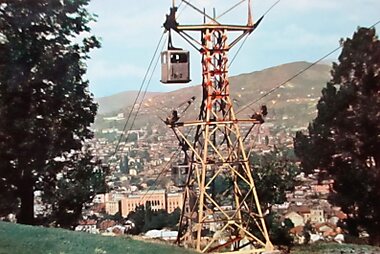
- Ride the Sarajevo Cable Car up Trebević mountain for a view over the whole valley — it was rebuilt in 2018 after the original 1984 Olympic line was destroyed in the war.
- Sit down for a slow, traditional Bosnian coffee in a Baščaršija kafana: unfiltered coffee brewed in a copper džezva, served with a sugar cube and a piece of Turkish delight.
- In winter, ski or snowboard at Jahorina or Bjelašnica, the mountains that hosted the 1984 Winter Olympics downhill and slalom events.
Tours & Activities
Sarajevo — Map

 Open the interactive map
 Day trips
Sarajevo makes a good base for day trips, from quick escapes in the surrounding hills to flagship destinations across the country.
- Ilidža and Vrelo Bosne — about 20-30 minutes by tram or bus. A leafy former Austro-Hungarian spa town at the spring of the Bosna river, popular for horse-drawn carriage rides and walking paths along the water.
- Jahorina and Bjelašnica — about 40-60 minutes by car (Bjelašnica is the closer of the two). Former 1984 Winter Olympics venues, now Sarajevo's main ski resorts in winter and good for hiking in summer.
- Visoko — about 25-35 minutes by car, longer by bus. Home to the debated "Bosnian pyramids" hillside site and tunnels, plus one of the country's oldest medieval towns.
- Konjic — about 1 hour by car or train. A riverside town with an Ottoman stone bridge and Tito's Cold War-era underground nuclear bunker, open for tours.
- Mostar — about 2-2.5 hours by car, bus, or train. Built around the rebuilt 16th-century Stari Most bridge over the Neretva river and a UNESCO World Heritage Site; a long day trip but worth it.
Getting there
- By air: Sarajevo International Airport (SJJ) is the city's own airport, about 10 km southwest of the center in Butmir, with direct flights to major hubs across Europe and Turkey. A taxi to the center takes about 20 minutes; public bus and airport shuttle services also run into town.
- By train: Sarajevo's main train station has limited domestic connections, and the historic international line to Zagreb has been suspended for years, so buses are the more reliable choice for most rail-style trips.
- By bus: The main bus station serves long-distance coaches to Mostar, Zagreb, Belgrade, and other regional cities; a separate East Sarajevo bus station handles some routes toward Serbia and Republika Srpska.
Getting around
- Public transit: Trams, trolleybuses, and buses cover the city, run by GRAS. Buy a ticket from a kiosk or from the driver before boarding, then validate it on board — contactless card payment is not yet standard on most vehicles, so keep cash or a prepaid card handy. GRAS Sarajevo
- Taxi / ride-hailing: Local taxi apps operate alongside metered street taxis; agree on the fare or confirm the meter is running before you set off.
- On foot: Baščaršija and the historic center are compact and easy to explore on foot; the city's narrow valley means trams are the practical way to cover its full length.
Driving
- Is a car worth it?: Not for the city itself — Baščaršija and the center are best explored on foot or by tram, and parking is tight. A car becomes useful if you plan day trips beyond Ilidža, such as Jahorina, Visoko, or Mostar.
- Parking: Metered street parking operates in color-coded zones in the center, paid by SMS or at a nearby machine; several paid garages and lots serve the downtown area.
- Restrictions: None of note beyond normal city traffic; there is no congestion charge or low-emission zone.
Food & drink
Sarajevo's signature dish is ćevapi — small grilled minced-meat sausages served in fresh flatbread with onion and kajmak cream — and Baščaršija is full of grill houses competing over whose recipe is best. Burek, a coiled filo pastry filled with minced meat, is the other everyday staple, usually eaten with a cup of yogurt.
For the fullest experience, seek out a proper Bosnian coffeehouse rather than a regular café: it is a slower ritual, brewed in a copper pot and meant to be lingered over, not rushed. The streets and courtyards around Baščaršija's Kazandžiluk are the easiest place to find good, casual eating without hunting down a specific address.
Safety & health
Sarajevo is a safe city for tourists by European standards, with low rates of violent crime. The most common issues are petty theft and overcharging by unlicensed taxis, so stick to metered cabs or a ride-hailing app and keep an eye on belongings in crowded parts of Baščaršija.
Tap water in Sarajevo is generally safe to drink, though bottled water is widely available if you prefer it. Hillsides and rural areas outside the city can still carry landmine risk left over from the 1990s war; stick to marked paths and paved roads and avoid wandering into overgrown or abandoned areas.
History
Sarajevo was founded by the Ottomans in the 15th century around a river crossing, and quickly grew into a major trading hub between the Balkans and the Ottoman heartland — the mosques, bazaars, and covered markets of Baščaršija date from this era.
Austria-Hungary annexed Bosnia in 1908, and Sarajevo became the site of one of history's most consequential events: on 28 June 1914, Gavrilo Princip shot Archduke Franz Ferdinand and his wife near Latin Bridge, triggering the chain of alliances that led to the First World War.
The city hosted the 1984 Winter Olympics, a high point still visible in the abandoned bobsled track on Trebević. Only eight years later, Sarajevo endured the longest siege of a capital city in modern warfare, lasting from April 1992 to February 1996. Tunnel of Salvation was dug by hand under the airport runway to keep the city supplied, and Vijećnica (City Hall), burned during the shelling, was rebuilt and reopened only in 2014, a symbol of the city's recovery.
Country facts
Quick practical facts for Bosnia and Herzegovina at a glance:
- Currency
- Bosnia-Herzegovina Convertible Mark BAM KM · Card payments · Commonly accepted
- Emergency numbers
- 112
- Electricity
- 230 V · 50 HzType C / Type F
- Languages
- Bosnian, Croatian, Serbian
- Tap water
- Drink with caution
- Driving side
- Right
- Calling code
- +387


Sarajevo – Plan Your Days
Turn the places from this guide into a real itinerary, with smart routing, time estimates, and everything you need for a perfect trip.




