


Semarang
Semarang is the capital of Central Java and a port city on the north coast of Java. The city mixes Dutch colonial buildings, Chinese temples and Javanese and Muslim traditions. It is hot, busy and less polished than Yogyakarta, and that is part of the appeal.
Most visitors stay one or two nights. The city suits travelers who like architecture, history and street food. It is also a practical base for the Hindu temples on Mount Ungaran, the Dieng Plateau, Borobudur and the Karimunjawa islands.

Semarang – Planning a Trip?
Build your day-by-day itinerary in the Tripomatic app.


When to visit
The dry season, from about June to September, is the best time to visit. Skies are clear and rain is light. Days are hot all year, so sightseeing is easiest in the morning and late afternoon.
The rainy season runs from about November to March. Rain can be heavy and some low areas near the coast flood. Roads to the mountain temples can be wet and cloudy.
The biggest event is Dugderan, a carnival in the days before Ramadan. The date moves each year with the Islamic calendar, so check it before you book.
Top sights
- Lawang Sewu was built from 1904 as the head office of the first railway company in the Dutch East Indies. Its name means "a thousand doors". It has stained glass, a grand staircase and a small museum of railway history.
- Tugu Muda stands across the road from Lawang Sewu. It is a monument to the fighting in the city in October 1945.
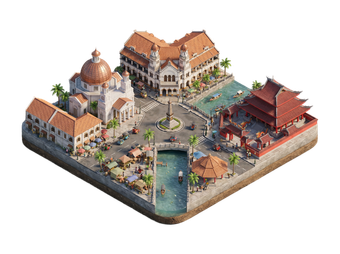
- Gereja Blenduk is a domed Protestant church from 1753 in the old Dutch quarter, the Kota Lama. It is the oldest church in Central Java. The streets around it have restored colonial offices, cafes and small galleries.
- Tay Kak Sie Temple is a large Chinese temple in the Chinatown area. It is colorful and active, and it is the starting point of the yearly procession to Sam Poo Kong.
- Sam Poo Kong Temple is the oldest Chinese temple in Semarang. The complex has five temples in a mix of Chinese and Javanese styles. It is linked to the Chinese Muslim admiral Zheng He, who landed here in the early 15th century.
- Great Mosque of Central Java is a very large mosque on the east side of the city. It has a 99 m observation tower and giant umbrellas in the courtyard. Visitors should dress modestly.
Featured Lists

What to experience
- Dugderan: A carnival held in the days before Ramadan. A drum and a cannon mark the start of the fasting month, and a parade crosses the center. The festival features Warak Ngendog, an imaginary animal with a dragon head and goat legs.
- Zheng He procession: Each year, on the 30th day of the sixth lunar month, Chinese Indonesians carry statues from Tay Kak Sie Temple to Sam Poo Kong Temple to mark the arrival of Zheng He in Semarang.
- Kota Lama in the cool hours: The restored Dutch quarter is best in the early morning or after 4 PM, when it is cooler.
Tours & Activities
Semarang — Map

 Open the interactive map
Day trips
Semarang is a good base for hill temples, highland scenery and islands. Mountain roads and Karimunjawa are slow, so start early.
- Gedong Songo Temples: Hindu temples from the 8th or 9th century on a hill near Bandungan, on the slopes of Mount Ungaran. The site is in Semarang Regency, south of the city. Five groups of temples sit at about 1,270 m, so the air is cooler.
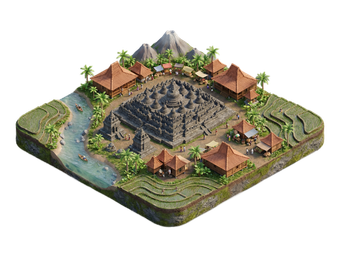
- Borobudur: the great Buddhist temple lies in Magelang Regency. It is a full-day trip by road. Start very early to avoid the heat and the crowds.
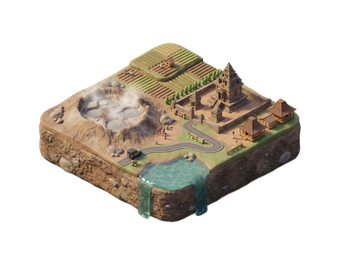
- Dieng Plateau: a high volcanic plateau with ancient temples, crater lakes and cold nights. It lies in the Wonosobo area; see Wonosobo. It works best as an overnight trip.
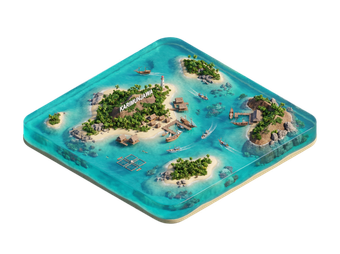
- Karimunjawa Islands: a group of islands in the Java Sea with beaches and snorkeling. Most visitors take a ferry from Jepara, and there are limited flights from Semarang. Plan at least two nights and check current ferry and flight schedules.
Where to explore
- Around the city: Semarang Regency lies south of the city and holds Bandungan and Mount Ungaran.
- Inland: Magelang Regency for Borobudur, and Wonosobo for the Dieng Plateau.
- Offshore: Karimunjawa Islands for island and beach stays.
Getting there
- By air: Ahmad Yani Airport (SRG) is about 6 km from the center. It has many domestic flights, including Jakarta, Surabaya and Denpasar, and a route to Kuala Lumpur. A Trans Semarang bus route and taxis serve the terminal.
- By train: Long-distance trains from Jakarta and other cities on Java stop at Semarang Tawang station, next to the Kota Lama. Book through KAI, Indonesian Railways.
- By bus: Intercity buses stop at terminals on the edge of the city, such as Mangkang. Travel to the center by taxi or ride-hailing car.
- By sea: Karimunjawa is reached by ferry from Jepara, and the schedule changes. Check current departures before you plan.
Getting around
- Trans Semarang: A bus network with several main lines, a route to the airport and feeder lines. Fares are low. Ask about the payment method at the shelter, because it can change.
- Taxi and ride-hailing: Grab and Gojek cars and motorbikes are the easiest way to cross the city.
- On foot: The Kota Lama and Lawang Sewu area can be walked in the cooler hours. Sidewalks are patchy elsewhere, and distances between sights are long.
Driving
- Traffic keeps to the left. City roads are crowded with motorbikes, and local driving habits take time to learn.
- A car with a driver is the usual choice for Gedong Songo, Borobudur and Dieng. It avoids the stress of mountain roads.
- For the city itself, ride-hailing is easier than driving.
- Toll roads connect Semarang with other cities on Java. Payment is electronic, so ask your driver or rental company.
Food & drink
Semarang has its own dishes. Look for lumpia, a fried or fresh spring roll filled with bamboo shoot, and tahu gimbal, fried tofu with shrimp fritters and peanut sauce. Wingko babat, a baked coconut cake, and bandeng presto, a soft-boned milkfish, are popular gifts.
For eating, go to areas rather than single restaurants. The Chinatown streets around Gang Lombok and the Kota Lama have many small eateries and evening food stalls. Food courts in the malls near Simpang Lima square are an easy air-conditioned option.
Safety & health
Semarang is generally safe for visitors. Petty theft happens in crowded markets and on buses, so keep phones and bags close. Traffic is the main danger, especially when crossing roads.
Drink bottled or filtered water. Mosquitoes carry dengue in the rainy season, so use repellent. Parts of the northern coast flood at high tide and after heavy rain, so avoid those areas in the wet season.
History
Semarang grew as a port and a trading center. Local tradition ties the city to the Chinese Muslim admiral Zheng He, who is remembered at Sam Poo Kong Temple. Chinese merchants settled in the Chinatown area, around Tay Kak Sie Temple.
The Dutch made Semarang a colonial center. Gereja Blenduk dates from 1753, and Lawang Sewu was built in the early 1900s for the railway company. During the Japanese occupation, the basement of Lawang Sewu was a site of torture and executions. In October 1945, fighting at the building killed many Indonesian fighters. Tugu Muda remembers the battle of that month.
Country facts
Quick practical facts for Indonesia at a glance:
- Currency
- Indonesian Rupiah IDR Rp · Card payments · Commonly accepted
- Emergency numbers
- 112
- Electricity
- 230 V · 50 HzType C / Type F
- Languages
- Indonesian
- Tap water
- Not safe to drink
- Driving side
- Left
- Calling code
- +62

Semarang – Plan Your Days
Turn the places from this guide into a real itinerary, with smart routing, time estimates, and everything you need for a perfect trip.


Related destinations
Data: © OpenStreetMap contributors, Wikidata, Wikipedia, Tripomatic, Official websites, geoBoundaries (CC BY 4.0). Tours by GetYourGuide. We earn commission from bookings. Travel guide generated with AI.
Plan your trip with Tripomatic
- AI-Powered PlanningGet a ready-made day in one tap, let AI spread your shortlist across your trip, or plan everything by chatting.
- Travel AlertsOfficial advisories, severe weather, strikes, and natural hazards for the places on each day of your trip.
- Public Holidays & EventsSee holidays, festivals, and closures on the days of your trip, and what they mean for your plans.
- Cost EstimationAI-powered trip cost breakdowns so you know what to budget before you go.
- Tours & TicketsBook tours, skip-the-line tickets, and activities directly in your plan.