


St. John's
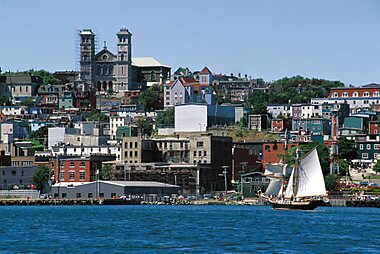
St. John's is the capital of Newfoundland and Labrador and the easternmost city in North America. It sits on a steep, rocky harbour on the Atlantic coast, with brightly painted houses stacked up the hillsides. It is one of the oldest European-settled places on the continent.
It suits a stay of two to four days. Visitors come for Signal Hill, Cape Spear, the harbour, the pubs of George Street and the coastal trails. Icebergs, whales and puffins can be seen nearby in season. The weather is changeable, with fog and wind common.

St. John's – Planning a Trip?
Build your day-by-day itinerary in the Tripomatic app.


When to visit
July and August are the warmest months, with the best chance of clear days. June and September are cooler but quieter. Fog, wind and rain can arrive in any month.
Icebergs drift past the coast from spring into early summer, and the timing varies each year. Whales and puffins are usually seen from boat tours from about June to August. Winters are long, damp and snowy, and many seasonal tours and trails are closed.
Best time to visit: July, August
Top sights
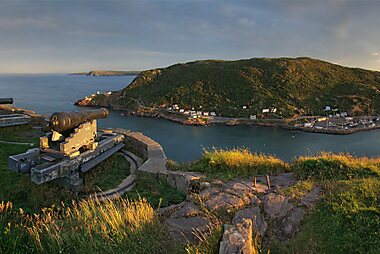
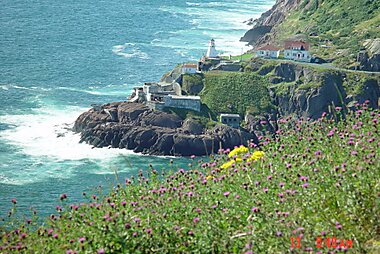
- Signal Hill overlooks the harbour and the open Atlantic. Walk the paths for views of the harbour, the city and the sea. A visitor centre and summer programmes are run by Parks Canada.
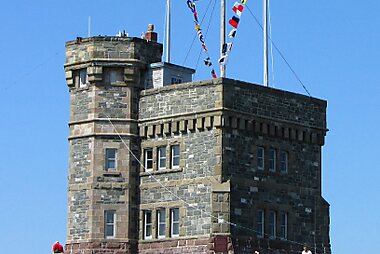
- Cabot Tower stands on the top of Signal Hill. It marks the site where Marconi received the first transatlantic wireless signal in 1901.
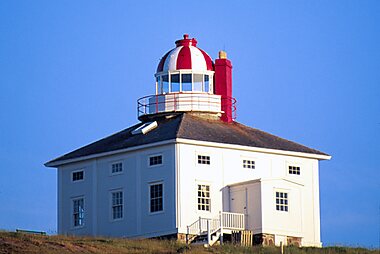
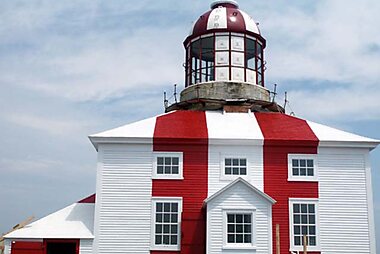
- Cape Spear is the easternmost point of North America. A historic lighthouse stands on the cliffs, and the coastal walks are open to all.
- Historic Downtown has the rows of colourful houses known as Jellybean Row, plus shops, cafés and the working harbour.
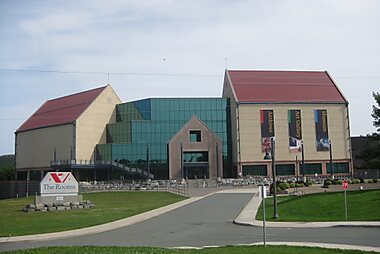
- The Rooms is the provincial museum, art gallery and archives. It is a good place for the history and culture of the province.
- Johnson Geo Centre sits at the base of Signal Hill. It covers geology and the Titanic story, with a view over the city.
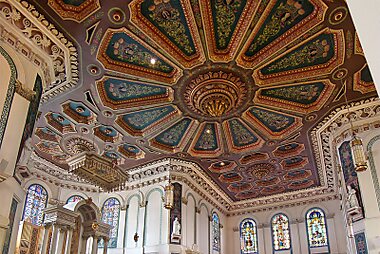
- Basilica of Saint John the Baptist is a large twin-towered church on a hill above downtown.
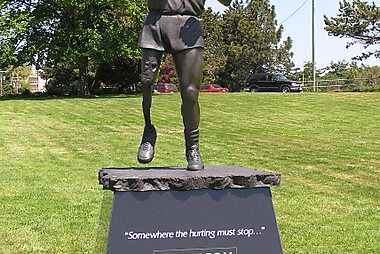
- Terry Fox Mile 0 Site is where Terry Fox began his Marathon of Hope in 1980.
- Fort Amherst Lighthouse guards the entrance to the harbour. Reach it by a coastal road and a short walk.
- Quidi Vidi Battery overlooks the small fishing village of Quidi Vidi, a short drive from downtown.
Featured Lists

What to experience
- Hike the East Coast Trail. Several sections start close to the city. They follow cliffs, coves and sea stacks, and some are rough and steep.
- Take a boat tour to see puffins and whales. Tours leave from Bay Bulls and Witless Bay to the nearby seabird reserve, usually from May to September.
- Watch for icebergs. In spring and early summer, they can be seen from headlands such as Signal Hill and Cape Spear.
- Walk to the Quidi Vidi village. A small harbour with a brewery and fishing stages, a short distance from downtown.
- Catch live music on George Street. Many pubs have performers most nights.
Tours & Activities
St. John's — Map

 Open the interactive map
Day trips
All trips are one way from downtown, in order from closest to farthest.
- Cape Spear and Quidi Vidi: both are within about 15 to 20 minutes by car.
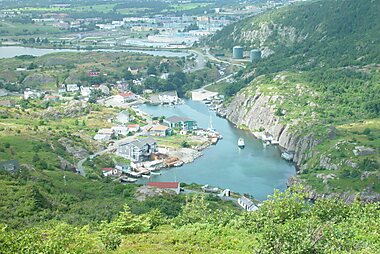
- Petty Harbour: about 25 minutes by car. A small fishing village in a deep cove, with a quiet harbour walk.
- Bay Bulls and Witless Bay: about 40 minutes by car. The base for puffin and whale boat tours in season.
- Ferryland: about 1 hour by car. A historic fishing village on the south shore with an old colony site and a lighthouse.
- Avalon Peninsula: the peninsula that holds the city, with fishing villages, capes and the Irish Loop drive.
Where to explore
- Avalon Peninsula surrounds St. John's, with coastal drives and fishing villages.
- Bay Roberts is a town on Conception Bay, about 1 hour by car.
- Clarenville is a town on the way across the island, about 2 hours by car.
- Corner Brook is the main city on the west side, a long drive across the island.
- Gros Morne National Park is a World Heritage national park on the west coast, a long drive from St. John's.
Getting there
- By air: St. John's International Airport (YYT) is about 10 minutes from downtown by car. Flights connect to Toronto, Halifax, Montreal and other Canadian cities. Taxis are the simplest way into town.
- By ferry and road: There is no train. Marine Atlantic ferries reach Port aux Basques on the west side of the island, from North Sydney in Nova Scotia. From there it is about 900 km by road to St. John's on the Trans-Canada Highway.
Getting around
- Public transit: Metrobus runs buses around the city. Service is thinner in the evening and on Sundays, and it does not reach Cape Spear.
- Taxi: Taxis are easy to find downtown and at the airport. They are the quickest way up to Signal Hill without a car.
- On foot: Downtown is compact, but the streets are steep. Wear good shoes, as wet days make the hills slippery.
- By bike: Cycling is limited. Hills and traffic make it hard outside the quieter roads and trails.
Driving
- Is a car worth it? Yes, if you want to see Cape Spear and the coastal villages. Downtown can be done on foot, and buses and taxis cover the basic needs.
- Parking: Street parking is limited around George Street and the harbour. Paid lots are available downtown.
- Weather: Fog and sudden rain are common, and roads can be icy from late autumn to spring. Watch for moose on roads outside the city, especially at dusk and dawn.
Food & drink
St. John's has a strong local culture of music, humour and seafood. Try cod, fish and brewis (salt cod with hard bread), toutons (fried dough) and Jiggs dinner. Partridgeberries and bakeapples are local berries in sweets and sauces. Craft beer is easy to find.
Evenings centre on George Street, a short street of pubs with live music. Visitors can also join a "screech-in", a playful local welcome ceremony that involves a shot of Newfoundland screech rum and a kiss for a cod. Fishing villages such as Quidi Vidi have small cafés and breweries.
Safety & health
St. John's is a safe city for visitors. Normal city care is enough. George Street can be rowdy late at night.
The coast is the main hazard. Cliffs at Signal Hill, Cape Spear and along the East Coast Trail are steep, and waves can be strong. Stay on marked paths and keep back from the edge. Fog can come in fast, so dress in layers and carry a rain jacket. In summer, bring insect repellent for trail walks.
History
Beothuk and Mi'kmaq peoples used the island long before Europeans arrived. Fishing fleets from Europe used the harbour from the 1500s, and it grew into a permanent port. It was a key naval and trading base for centuries.
The city was struck by fires, notably the Great Fire of 1892, which destroyed much of downtown. Newfoundland joined Canada in 1949. Today the history is told at The Rooms and on Signal Hill, where forts and signal stations once watched the harbour.
Country facts
Quick practical facts for Canada at a glance:
- Currency
- Canadian Dollar CAD $ · Card payments · Widely accepted
- Emergency numbers
- 911
- Electricity
- 120 V · 60 HzType A / Type B
- Languages
- English, French
- Tap water
- Safe to drink
- Driving side
- Right
- Calling code
- +1


St. John's – Plan Your Days
Turn the places from this guide into a real itinerary, with smart routing, time estimates, and everything you need for a perfect trip.


Related destinations

Data: © OpenStreetMap contributors, Wikidata, Wikipedia, Tripomatic, Official websites. Tours by GetYourGuide. We earn commission from bookings. Travel guide generated with AI.
Plan your trip with Tripomatic
- AI-Powered PlanningGet a ready-made day in one tap, let AI spread your shortlist across your trip, or plan everything by chatting.
- Travel AlertsOfficial advisories, severe weather, strikes, and natural hazards for the places on each day of your trip.
- Public Holidays & EventsSee holidays, festivals, and closures on the days of your trip, and what they mean for your plans.
- Cost EstimationAI-powered trip cost breakdowns so you know what to budget before you go.
- Tours & TicketsBook tours, skip-the-line tickets, and activities directly in your plan.